 Estela Núñez-Barriopedro
 Pedro Cuesta-Valiño
 Pablo Gutiérrez-Rodríguez
 Rafael Ravina-Ripoll
- 1Economics and Business Management Department, Faculty of Economics, Business and Tourism, University of Alcalá, Alcalá de Henares, Spain
- 2Department of Business Administration, Faculty of Economic and Management Sciences, University of León, León, Spain
- 3Department of Business Management, Faculty of Economic and Business Sciences, INDESS, University of Cadiz, Cadiz, Spain
Federations are concerned about attracting new sportsmen and sportswomen and increasing the number of members. The purpose of this research was to describe karate federations' strategies for attracting and retaining members through happiness. The analysis was carried out by designing a structural equation modeling (SEM), which allowed to analyze the main variables that influenced the happiness of the karate athlete and consequently to study their effect on people's loyalty to sports federations. In particular, Partial least squares SEM was applied in an overall model when it was possible to understand the happiness role in relation with other traditional relevant variables on loyalty. The data were obtained through primary sources employing a survey sent to the autonomous federations in the discipline of karate, obtaining a sample of 682 federated members in Spain. The results of the model revealed that consumer satisfaction, engagement, and meaningful influence on consumer happiness, but engagement was the most important and relevant variable for affecting this variable. Finally, consumer satisfaction and consumer happiness influence loyalty, and consumer satisfaction was the most important variable, but consumer happiness showed a real alternative for improving loyalty in karate sports federations. Then, one of the implications of this work was that it helped to explain how the federations can be managed to achieve loyal consumers together with a more considerable increase in the number of federated members.
Introduction
Consumer loyalty is a strategic variable that ensures the survival of entities in the long term and has therefore been extensively researched in the literature from the point of view of psychology, marketing, and management (Dwyer et al., 1987; Dick and Basu, 1994; Sheth, 1996). It is generally accepted that consumer satisfaction has a positive influence on loyalty (Taylor, 1998; Bennet and Rundle-Thiele, 2004; Schultz, 2005; Sondoh et al., 2007). However, sports federations perceive that, despite high consumer satisfaction, the number of federated members remains stable over the years. Nowadays, they are concerned about attracting new sportsmen and sportswomen and increasing the number of members. This makes it necessary to introduce new variables in the management model of sports federations, which will have a positive influence on the loyalty of the federate and will make it possible to attract new sportsmen and sportswomen.
More loyalty studies need to be conducted to better understand this concept (Sondoh et al., 2007; Cuesta-Valiño et al., 2020) to understand that there are more variables that can be considered as the background of loyalty, in the context of karate sports federations. Therefore, one of the novelties of this study is the consideration of the consumer satisfaction variables, engagement, and meaningful as determinants of loyalty, as well as the happiness construct, which in turn is a mediator.
Research on happiness is common in the fields of psychology, education, organizational behavior, religion, tourism, and hospitality (Fu and Wang, 2020). One of the novelties of this study is the consideration of the happiness variable as an antecedent to loyalty applied to sport, specifically in the discipline of karate.
In Spanish sport, the federations function as mixed organizations, being of a public and private nature. In other words, they are private non-profit organizations, but they perform functions typical of other public services. Specifically, among the main functions of the karate federations are the promotion and encouragement of high-level and high-performance sport by Spanish karate athletes at the international level (Loranca-Valle et al., 2019).
Despite the growing interest of the general population in physical activity and sport, there has not been a proportional increase in the number of federated karate sportsmen and sportswomen in recent years (Wemmer and Koenigstorfer, 2016). For their part, for-profit sports organizations have made a very strong entry into the market and are attracting more and more sportsmen and sportswomen, to the detriment of non-profit sports organizations (Kotler, 1971; Smith and Stewart, 2010; Liu et al., 2018). Thus, the contributions of this article provide insights into the analysis of loyalty strategies that work best in the context of karate sport. In this way, the members of the Boards of Directors of the karate federations can improve their market share, gaining the loyalty of current sportsmen and sportswomen, and gaining new members.
Thus, the main objective of this research is to propose an SEM model that explains the relationships between consumer satisfaction, engagement, and meaningful and happiness as a background to loyalty. Such a model has important implications both for the contribution to literature and for the practice of loyalty marketing strategies of the federated karate athlete.
Figure 1 shows the model developed with each of the constructs, its dimensions, and the hypotheses to be contrasted.
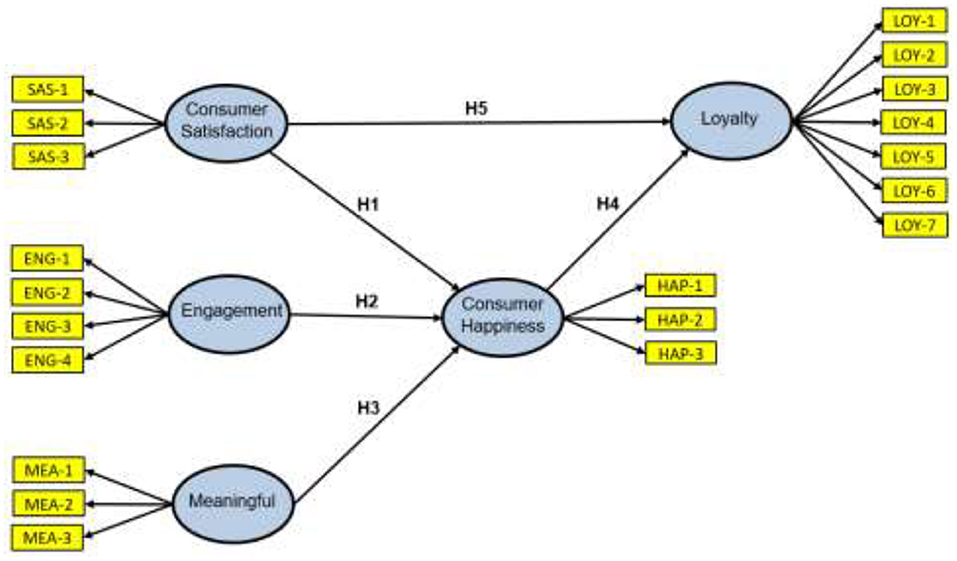
Figure 1. Conceptual model and hypothesis.
Satisfaction is the most emotional antecedent to loyalty and consumer intent (Rauyruen and Miller, 2007). Satisfaction is related to the satisfaction of the consumer's needs, and when these needs are repeatedly satisfied, it is possible to lead the client to feel an emotional bond between the entity and the consumer (Stauss and Neuhaus, 1997). Therefore, satisfaction in the services provided by an entity is formed in a cumulative way with all the exchanges (Maxham and Netemeyer, 2002).
Some authors (Oliver, 1997; Szymanski and Henard, 2001) explain satisfaction as a perception of consumer response to consumption, with levels of compliance being insufficient or excessive with respect to expectations and actual implementation (Fornell, 1992; Andreassen, 2000). Other authors consider other variables such as consumption experience (Cadotte et al., 1987; Anderson et al., 1994; Sirdeshmukh et al., 2018), consumption of the ideal product or service (Tse and Wilton, 1988); equity theory (Oliver and Swan, 1989), and desires (Spreng and Olshavsky, 1993).
Perceptions derived from the experience of consumption form the basis of consumer satisfaction, and in turn, this leads to consumer happiness (Dagger and Sweeney, 2006; Anderson and Mansi, 2009; Sweeney et al., 2015; Gong and Yi, 2018). Han et al. (2019) add that satisfaction has a positive influence on consumer happiness and retention.
In the literature on consumer behavior, several authors argue that the experience of consuming a good or service translated into levels of satisfaction has a positive influence on the consumer's happiness with that consumption (Nicolao et al., 2009; Howell and Guevarra, 2013; Gilovich et al., 2015; Theodorakis et al., 2019).
Satisfaction is reflected in global feelings from the material, and experiential consumption derived from the purchase (Yoshida and James, 2010; Theodorakis et al., 2019). Thus, consumer satisfaction is reflected in the degree of a positive feeling of a client toward a service provider (Cronin et al., 2000; Deng et al., 2010).
Therefore, the following hypothesis is formulated:
H1. Consumer satisfaction positively influences happiness.
Engagement refers to feeling more secure and committed to the entity (Massimini and DelleFave, 2000; Deng et al., 2010). Engagement is also the result of immediate experience (Hom Cary, 2004; Duckworth et al., 2005). Consumers can engage when they go through active and passive experiences (Schmitt, 2012). Multiple points of contact with consumers can be created, such as events and direct interactions, which enhance the direct experience. On the other hand, the experience can be passive through traditional mass media and even make use of online media to foster brand immersion (Schmitt, 2012).
Engagement can be seen as the motivation that drives a party to trust a particular entity (Moorman et al., 1993) or as the psychological attachment to the organization (Gruen et al., 2000). The commitment implies the conviction on both sides that maintaining the relationship will be more beneficial than ending it (Theyskens et al., 1996). All definitions of engagement agree that there is a psychological component (bonding, liaison, promise, or commitment) and a motivational component (maintaining the relationship, repeat purchases, staying in the organization, Meyer and Allen, 1991; Jones et al., 2010). Consumers expressed confidence in service providers to avoid unfair and opportunistic exchanges (Gefen et al., 2003).
Commitment is a very important ingredient for the success of a business relationship (Morgan and Hunt, 1994), and it is also a key variable in marketing (Garbarino and Johnson, 1999). Commitment is closely related to reciprocity, loyalty, and the rejection of alternatives. All these variables are related to the meaning of the relationship (Gundlach et al., 1995). It is the first step in building trust in the relationship and influencing the development of social norms that regulate future exchanges (Williamson, 2007).
Many authors agree that trust is one of the basic ingredients for successful relationships (Dwyer et al., 1987; Moorman et al., 1993; Berry, 1995). Trust in an organization is based on consumer assurance of the quality and integrity of the service offered (Moorman et al., 1993; Morgan and Hunt, 1994; Garbarino and Johnson, 1999; Hennig-Thurau et al., 2001). Trust is the belief of one party that the actions of the other party will necessarily meet its needs (Anderson and Weitz, 1989). In the relationship between consumers and organizations, the psychological benefits of safety and confidence are more important than the special treatment or social benefits derived from that relationship (Gwinner et al., 1998). Trust is a participation in a process, which has been well-planned, whereas affection for the institution is spontaneous, more immediate, and less reasoned (Chaudhuri and Holbrook, 2001). Trust, as engagement, can have both affective and cognitive dimensions (Johnson and Grayson, 2005).
Some authors explain happiness as the positive psychological state derived from a good, pleasant, and satisfying experience (Jang et al., 2017; Loranca-Valle et al., 2019). Therefore, the following hypothesis is formulated:
H2. Engagement positively influences happiness.
There is currently a great deal of research on the economics of happiness that empirically demonstrates that money alone does not bring higher levels of subjective well-being or happiness to human beings in the era of the digital society (Powdthavee, 2010; Ravina-Ripoll et al., 2020). If this issue is examined from the perspectives of positive psychology and happiness management, it shows us, among other things, that people's happiness is conditioned by a wide range of heterogeneous factors, including health, sexual behavior, resilience, stress, or quality of life (Blanchflower and Oswald, 2004; Leite et al., 2020; Tandler et al., 2020). It is generally accepted that happiness is found, on the one hand, in the individual satisfaction that is enjoyed in the long term when our achievements and purposes are fulfilled—eudemonism—and, on the other hand, in the pleasure of carrying out rewarding activities in the short and medium term—hedonism (Huta and Waterman, 2014). Based on this philosophical and psychological adage, an important volume of scientific work emerges focused on exploring that the meaningful originates when people gravitate their individual efforts in undertaking social activities or actions that contribute to the common good and therefore to the collective happiness of the citizens (Duckworth et al., 2005; O'Donovan and Sheikh, 2014; Núñez-Barriopedro et al., 2020). In line with this research, the literature shows that meaningful, at the microindividual level, should be associated not only with negative, depressive, and unhealthy experiences, but also with positive and optimistic emotions. As is known, both elements are excellent drivers for enjoying a healthy, joyful life full of subjective well-being, i.e., good living (Li et al., 2020). This has a strongly subjective, individual, and relational component (Kok et al., 2015). If this issue is approached from the lens of religion, the predominant vectors for living a truly meaningful life will be the love of neighbor, generosity, and altruism (Nielsen, 2014). However, a review of the literature suggests the existence of limited attempts to analyze this link (meaningful–happiness) within the world of sport (Netz et al., 2008; Jang et al., 2020). Many studies have shown that meaningfully contributes holistically to good physical health and psychological well-being, especially in difficult everyday circumstances (Taylor et al., 2000; Crawford, 2006).
Along with this cognitive purpose, it cannot be overlooked that over the last decades, a significant number of academic productions have empirically shown that the happiness of human beings lies entirely in cultivating a meaningful life (Sirgy and Wu, 2009; Baumeister et al., 2013; Bartsch and Oliver, 2017). The questionnaire developed by Morgan and Farsides (2009) on the Measurement of Meaningful Living, as well as the survey designed by Steger et al. (2006) on the Meaning of Life, has undoubtedly contributed to this assumption. Both psychometric scales are characterized by assessing, among other things, whether my life is exciting or whether I am satisfied with my life project.
This growing interest leads us to propose the following hypothesis of analysis:
H3. Meaningful positively influences happiness.
Many studies have identified that happiness has a significant effect on loyalty (Shin, 2008; Khan and Hussain, 2013; Kim et al., 2015; Vittersø et al., 2017; Wu et al., 2017; Cuesta-Valiño et al., 2019).
The importance of making consumers happy not only involves cultivating happiness as a state but also in the favored consumption behavior that results from that state (Higgins, 1997; Fredrickson, 2001).
Also, consumers tend to repeat pleasant and happiness-fostering experiences and avoid unpleasant ones (Higgins, 1997). In this way, positive emotions have the capacity to expand the consumer's momentary thinking and facilitate the construction of lasting physical, intellectual, social, and psychological patterns of purchasing behavior (Fredrickson, 2006).
In addition, authors (Van Boven and Gilovich, 2003) explain that purchase happiness is the sum of material consumption and the experience of such consumption, which affects the consumer's choice to consume the product again and therefore has a positive influence on loyalty.
Likewise, happiness has been defined as the positive psychological state derived from a pleasant and satisfactory experience (Lyubomirsky et al., 2005a; Ahuvia, 2008). Happiness can be seen from two perspectives, one referring to a specific moment and the other to an imperishable duration in time (Ravina-Ripoll et al., 2020). The first results from a particular positive situation or experience, whereas the second is a general positive psychological state that is cumulative over time (Lyubomirsky et al., 2005b).
Loyalty comprises all those behaviors that involve the consumption of a good or service of the same entity repeatedly, both now and in the future (Gong and Yi, 2018; Septianto et al., 2019; Gómez-Suárez and Veloso, 2020), despite the influences of competitive marketing strategies (Septianto et al., 2019).
Loyalty consists of two concepts that combine to give the variable the greatest explanatory power. These two concepts are behavioral aspects or purchase intentions and attitudinal loyalty (Cossío-Silva et al., 2016). Behavioral loyalty has been identified as the willingness of customers to buy back the product or services and to maintain a relationship with the supplier or service provider (Jones et al., 2010). Attitudinal loyalty, however, is the level of consumer commitment to a product/brand and their promotional attitude toward the supplier of goods or services (Dick and Basu, 1994; Chaudhuri and Holbrook, 2001).
As a consequence of loyalty, there are authors who explain the resistance to change (Pritchard et al., 1999; Bansal et al., 2004; Bodet, 2012) and word-of-mouth (Parasuraman et al., 1988; Dick and Basu, 1994; Kim and Trail, 2011; Yaseen et al., 2011).
According to numerous studies, happiness and loyalty are positively related (Cuesta-Valiño et al., 2019). Customer satisfaction does not imply happiness, but in order to lead the customer to loyalty, we must seek his/her happiness (Khan and Hussain, 2013; Cuesta-Valiño et al., 2020) instead of focusing on his/her satisfaction, which is what has been pursued for the last 50 years (Easterlin, 2001).
Therefore, the following hypothesis can be made:
H4. Happiness positively influences loyalty.
Consumer loyalty to a brand is manifested in the fact that there is a commitment to future repurchase behavior of a product or service and is not affected by the marketing influences of competitors (Oliver, 1999). This definition emphasizes the two fundamental aspects of loyalty described in the literature relating to behavior and attitude (Oliver, 1999).
The behavioral component of loyalty is linked to the repurchase of a product or the degree of repeat purchase by an individual with respect to a brand, without analyzing the reasons why it occurs (Chaudhuri and Holbrook, 2001). However, the authors consider that knowing the cause of repurchase is essential to be able to talk about loyalty (Bloemer and Kasper, 1995).
In contrast, the attitudinal approach to loyalty refers to a certain degree of commitment to the brand (Chaudhuri and Holbrook, 2001) and advocates that, to measure true consumer loyalty, one must collect preferences or intentions for future behavior (Bloemer and Kasper, 1995). Even Reichheld (2003) has argued that it is possible for several service companies to properly assess loyalty using only one measure: the willingness to recommend. This feeling corresponds to a positive attitude toward the company (Dick and Basu, 1994; Barroso Castro and Martin Armario, 1999) generated by an internal evaluation process (Bloemer and Kasper, 1995), which is reflected in recommending the product or brand to others (Selnes, 1993) and in other cognitive aspects (Lee and Zeiss, 1980), such as tolerance to pay a higher price for the product (Martin et al., 2009) or being the brand that would be chosen first from a range of alternatives (Ostrowski et al., 1993). Researchers have also argued for the third dimension of service loyalty—the cognitive element (Bloemer and Kasper, 1995; Oliver, 1999)—where loyalty is based on a conscious assessment of brand attributes or the reward and benefits associated with sponsorship (Lee and Cunningham, 2001), leading the consumer to consider this service provider in relation to others (Dwyer et al., 1987).
It is widely accepted in the literature that loyalty is based on satisfaction, which acts as a background to it (Dick and Basu, 1994), helping to increase sales (Lewis, 2004). Thus, it is recognized that consumers with high levels of satisfaction also tend to be more loyal (Fornell, 1992; Bloemer and Kasper, 1995; Oliver, 1997; Chang and Tu, 2005; Li and Green, 2011). Therefore, a satisfied consumer is more likely to buy back a product (Selnes, 1993; Oliver, 1997; Baker and Crompton, 2000; McDougall and Levesque, 2000; Caruana, 2002; Olsen and Johnson, 2003; Yoon and Uysal, 2005; Mao, 2010) and become a prescriber of the product, engaging in positive word-of-mouth communication with other consumers (Andreassen, 2000; Homburg and Giering, 2001; Olsen and Johnson, 2003).
Therefore, the following hypothesis is formulated:
H5. Consumer satisfaction has a positive influence on loyalty.
Methods
Survey Design
The data to test these hypotheses were collected from a cross-sectional descriptive study. This research used primary data from a survey answered by a sample of members of karate federations in Spain from March 2019 to March 2020. The questionnaire analyzes the constructs of the proposed model with the different items. The primary selection of the different items of the five constructs was based on a review of the literature. Previously, the items had been carefully chosen, and before sending out the survey, preceding qualitative research was carried out through a focus group, which included three professors who are experts in psychology and consumer behavior, three managers who work in karate federations, and three members of karate federations.
As a result of this qualitative research, the final questionnaire was achieved, consisting of five constructors with a total of 20 items: three for consumer satisfaction (Maxham and Netemeyer, 2002; Deng et al., 2010), four for engagement (Meyer and Allen, 1991; Hennig-Thurau et al., 2001; Gefen et al., 2003), three for meaningful (Meyer and Allen, 1991), three for consumer happiness (Dagger and Sweeney, 2006; Sweeney et al., 2015; Gong and Yi, 2018; Han et al., 2019), and seven items for loyalty (Miller and Boster, 1988; Holmes and Rempel, 1989; Rauyruen and Miller, 2007; Fu and Wang, 2020). The scale used for these 20 items was a five-point Likert-type response format, in which respondents could value the items from 1 (“strongly disagree”) to 5 (“strongly agree”) (Table 1).
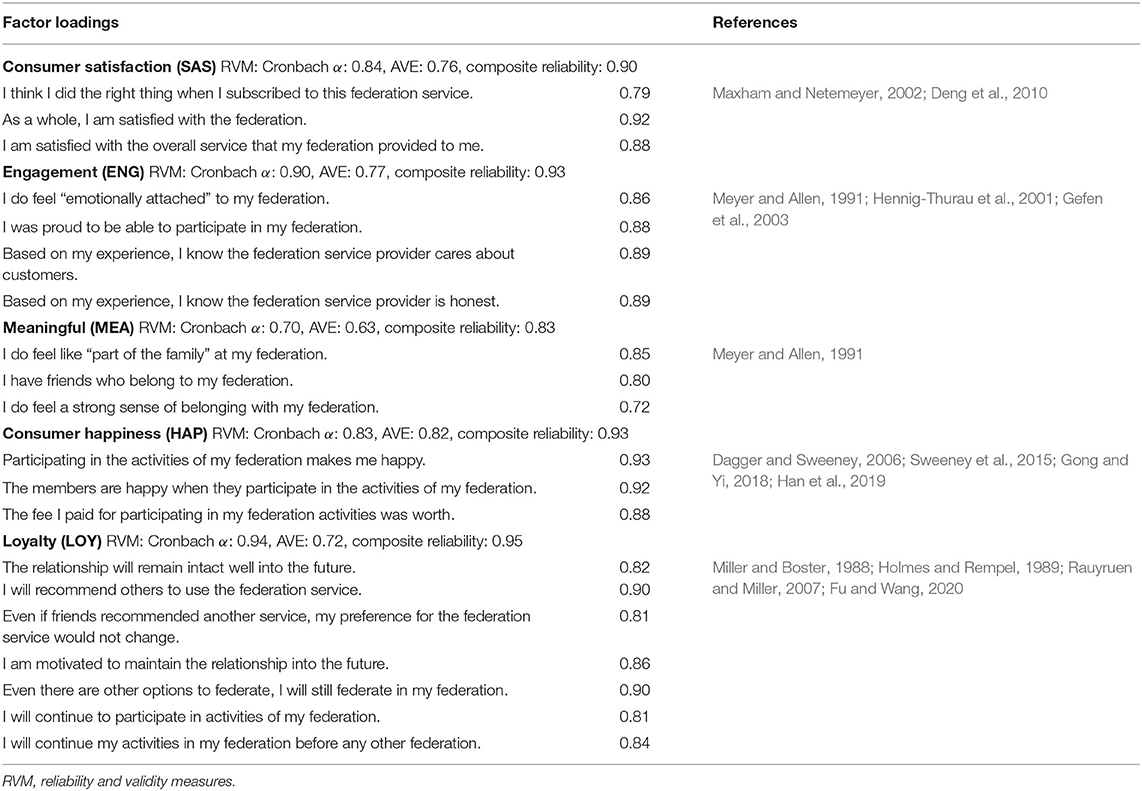
Table 1. Constructs, items, factor loading, reliability, and validity.
A pretest of the questionnaire was carried out in February 2019 on a representative sample of members of karate federations. Some errors were then corrected, and all questions were validated. When the questionnaire had been refined, it was launched online through a discretionary non-probabilistic sampling by quotas, with the objective of completing the distribution of genders as similar as possible to that of the population who are members of karate federations in Spain, which have a total of 75,406 members. The questionnaire was distributed through the main social networks in March 2019 and through karate federation websites from March 2019 to March 2020. The result was that 714 members answered the survey, but 32 surveys were not filled in correctly, so the total number of valid questionnaires was 682, implying a sampling error of 3.81% (with a 95.5% confidence interval and p = q = 0.5).
Sample Size and Composition
A descriptive statistic for the sample is presented below. The total sample size was 682 individuals who represent members of karate federations in Spain. The composition of the sample was 71% male and 28% female. By age group, 19% are younger than 16 years, 27% are 16–29 years old, 20% are 30–44 years old, 32% are 45–64 years old, and 2% are older than 64 years. By years of membership, 3% have <1 year, 16% have 1–5 years, 23% have 6–10 years, 25% have 11–20 years, and 32% have more than 20 years. And finally, from the point of view of Black Belt grade, the most numerous groups are members with Black Belt 1st and 2nd Dan (42%), members with less than Black Belt (29%), and members with Black Belt 3rd and 4th Dan (21%), and only 8% are members with the highest Black Belt grades (Table 2).
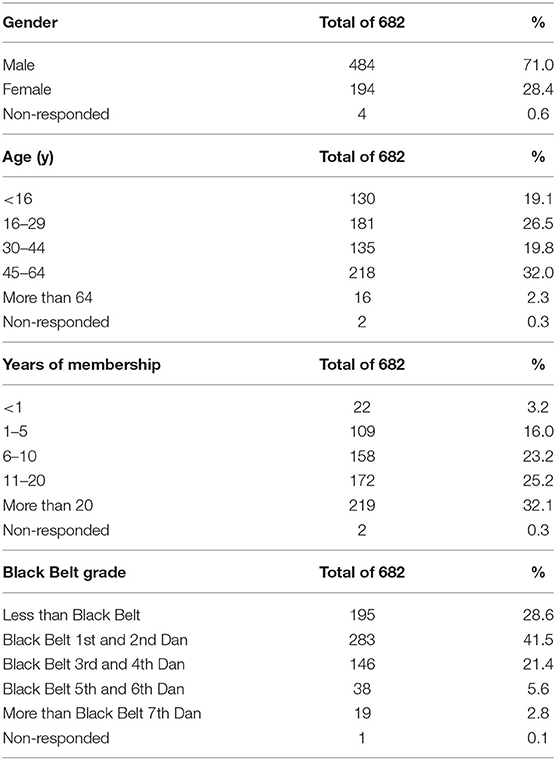
Table 2. Sample composition.
Results
Measurement Model: Reliability and Validity
Partial least squares structural equation modeling (PLS-SEM) is an opportunity to advance the development and testing of theory in sport organization management. SEM has become a mainstream method in many fields of business research, and PLS-SEM provides a flexible method in terms of data requirements, model complexity, and relationship specification. PLS-SEM does not require normally distributed data (Hair et al., 2017) and is therefore the more appropriate method of SEM for many social science studies, where data are often non-normally distributed. Also, as the primary purpose in theory development is to find relationships, their directions, and strengths, as well as observable measures, PLS-SEM is appropriate.
Analyzing the proposed model, there are five different latent constructs, and each of the scales consists reflective items. The main reason that this option was selected can be held on that the effects when items are removed do not affect the content validity and the items are correlated. In the following paragraphs, it will be assessed factor loading, reliability, discriminant validity assessment, and the other measures included in the study to determine the model fit. In order to assess factor loading or indicator reliability, it is examined how each item relates to the latent constructs. Then, the outer loadings of the reflective constructs are well above the threshold value of 0.707, from which it is possible to obtain the indicator reliability. In this study, all of the 20 items reach this level of acceptable reliability because their loadings exceed 0.72 and load more highly on their own construct than on others. These results provide strong support for the reliability of the reflective measures (Table 1).
In order to measure reliability, Cronbach α is commonly used, but it has been criticized for its lower bound value, which underestimates the true reliability (Peterson and Kim, 2013). In Smart PLS 3.3.2 (Ringle et al., 2015), composite reliability (CR) is available to measure reliability because some items will be more important for your construct than others, which implies different outer loadings on the construct. These different outer loadings are taken into account when you determine the CR of your construct. Nunnally and Bernstein (1994) suggest 0.70 as a benchmark for a Cronbach α reasonable reliability, and the CR is suggested 0.80 as “stricter” reliability applicable in basic research. In this case, all constructs exceed the limit values recommended for both measures.
The discriminant validity assessment has the goal to ensure that a reflective construct has the strongest relationships with its own indicators (Hair et al., 2017). Discriminant validity assessment has become a generally accepted prerequisite for analyzing relationships between latent variables (Hair et al., 2017). Traditionally, the Fornell and Larcker (1981) criterion is used, but Henseler et al. (2014b) propose an alternative approach because the heterotrait–monotrait ratio of correlations (HTMT) detect the lack of discriminant validity in common research situations. If the HTMT value is below 0.90, discriminant validity has been established between two reflective constructs. All the HTMT coefficients in the study have a value below 0.9, and the square root of AVE is greater than the correlation between the constructs (Fornell and Larcker, 1981). This last result is referred to the Fornell–Larcker criterion, suggesting that each construct relates more strongly to its own measures than to measures of other constructs.
Structural Model: Goodness-of-Fit Statistics
Absolute fit indices indicate how well a model fits the sample data (McDonald and Ho, 2002). Standardized root mean square residual (SRMR) was introduced by Henseler et al. (2014a) as a goodness-of-fit measure for PLS-SEM. Standardized SRMR is defined as the average magnitude of the discrepancies between observed and expected correlations as an absolute measure of (model) fit criterion. Hu and Bentler (1998) considered that a value <0.10 is a good fit, but a value <0.08 (in a more conservative version) is more recommended. In this model, SRMR is 0.055, suggesting a good fitting model. A large amount of variance is also explained in consumer happiness and loyalty, with R2 values of 0.77 and 0.78, respectively. The Stone–Geisser (Q2) results for the same variables are 0.63 and 0.56, respectively, where values larger than zero indicate a good model's predictive relevance. Predictive validity is included as the last step of confirmatory composite analysis (CCA), which is a systematic methodological process for confirming measurement models in PLS-SEM. The statistical objective of CCA and confirmatory factor analysis (CFA) is confirmation of measurement theory. To achieve measurement confirmation objectives in developing or adapting multi-item measures, researchers could use either CFA or CCA (Hair et al., 2020). These steps with reflective measurement models are significant loadings, indicator reliability, CR, AVE, discriminant validity, nomological validity, and predictive validity. All these elements have been presented previously. Also, the consistent PLS algorithm that performs a correction of reflective constructs' correlations can be used to ensure that the results were consistent with a factor model. The results are very similar, and it was not necessary to apply this algorithm.
Results of SEM
The conceptual model results (Figure 2) show how consumer happiness is related to each of its antecedents. With a coefficient of 0.53, the results suggest that engagement influences consumer happiness in an important and positive way. This situation is followed by consumer satisfaction and meaningful antecedents that are also influencing positively but in a less relevant way. Even so, it can be said that meaningful has a weak influence (with value coefficients of 0.29 and 0.15, respectively). Therefore, the hypotheses H1, H2, and H3 are not rejected (Table 3).
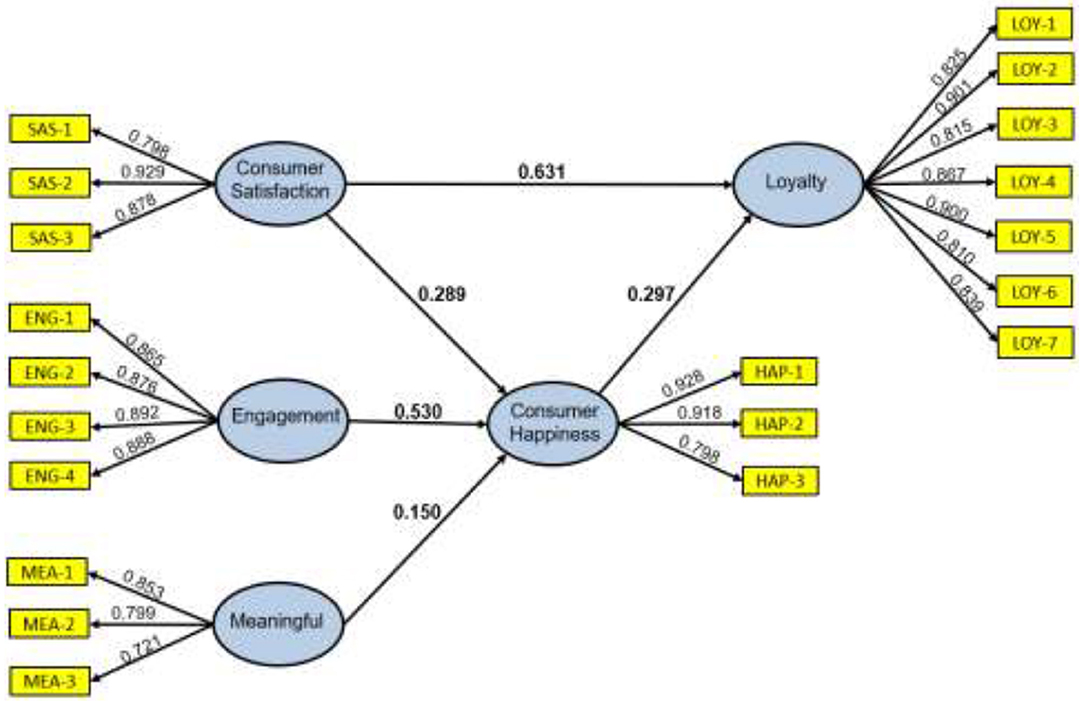
Figure 2. Conceptual model results.
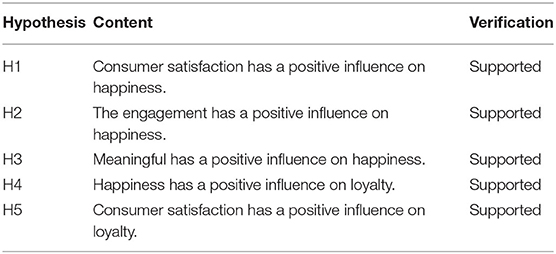
Table 3. Summary of hypothesis verification.
For the hypothesis attempting to discover the relationship between consumer happiness and loyalty, it is very clear that the relationship is relevant and positive (0.30). The relation between consumer satisfaction and loyalty is strong and positive, with a high coefficient (0.63). Then, H4 and H5 are not rejected.
Finally, it is relevant to analyze the results of the total effects on consumer happiness and loyalty. Before, the direct effects were commented on in the hypothesis, but it is also noteworthy to know how indirect effects are influencing the total effects of engagement and meaningful on loyalty (Table 4).
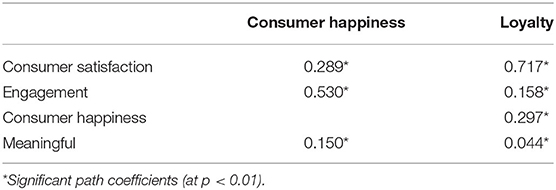
Table 4. Total effects.
Discussion
The present study arises with the purpose of deepening the knowledge about the variables that can positively influence loyalty and specifically how happiness can generate loyalty considering each of its dimensions (Aksoy et al., 2015; Zhong and Moon, 2020) in addition to the satisfaction. For this purpose, a structural equation model (SEM) has been developed, composed of exogenous variables of positive values that aim to explain the happiness dimensionality inferentially, from the perception of consumer satisfaction, engagement, and meaningfulness. The literature shows that these three parameters are significantly associated with people's happiness, understood as a continuous state of pleasure and significance (Ltifi and Gharbi, 2015; Lera-López et al., 2020; Oishi et al., 2020). The empirical results achieved by this research are in line with our theoretical model, despite the fact that there are currently few economic and multidisciplinary studies that analyze the subject matter of our work in the field of sport and particularly in the area of karate (Loranca-Valle et al., 2019).
Reichheld (2003) and Jones et al. (2010) warn that without an understanding of the nature and extent of loyalty, service organizations may be measuring misguided elements of consumer behavior or attitudes when designing loyalty programs. While it is true that the consumer may purchase the same product by chance, lack of alternatives (Chaudhuri and Holbrook, 2001), convenience (Bloemer and Kasper, 1995), or price does not lead to true loyalty. Therefore, the contributions of this work on the dimensions that truly influence loyalty are Happiness, Satisfaction, Engagement, understood as trust, meaningful, or the pleasant life of the consumer to want to maintain the relationship or purchase the same brand and the meaning is fundamental for an efficient allocation of resources in consumer loyalty programmes.
Likewise, one of the findings of this study is that the happiness variable plays a very important role in the loyalty parameter of sportsmen and sportswomen (Gladden and Funk, 2001) in a study environment that has not been explored until now. This suggests that loyalty to this sport is associated with the happiness of its practitioners whenever high levels of engagement are experienced (0.526), which should be accompanied by moderate levels of meaningful (0.150) and consumer satisfaction (0.293). This interpretation is also consistent with previous studies, such as the work of Baena-Arroyo et al. (2020), who empirically demonstrate that the happiness or satisfaction of people who practice sports is strongly conditioned by the quality of the services offered by sports organizations. In this sense, the study by Mirehie and Gibson (2020) should also be noted. This study shows that women who practice skiing and snowboarding enjoy a high level of psychosocial well-being, as the practice of this leisure activity provides them with high doses of positive emotions, commitment, and meaning.
In line with this, our quantitative results reveal that happiness needs to be given greater consideration in its association with loyalty in the context of sport. This gap constitutes a great opportunity to put on the academic agenda that happiness is understood as a strategic differential factor that motivates people to be loyal to practice a sport assiduously under the lens of consumer satisfaction, engagement, and meaningful. This is extremely important as the continuous practice of physical exercise contributes to holistically improve people's health and psychological well-being, factors that cushion stress, depression, vascular diseases, etc. (Ronkainen et al., 2020).
Regarding the practical implications of our work, on the one hand, public institutions can encourage the regular practice of sport to citizens through happiness, as emotional health, self-esteem, cognitive performance, commitment, confidence, socialization, etc. (Jiménez-Marín et al., 2020). On the other hand, it is recommended that sports federations implement Certification Happiness Management in the future as an instrument that certifies that, within these organizations, the collective well-being of all their human capital and stakeholders is cultivated under the guiding principles of the collaborative economy, philosophy, corporate social responsibility, and positive psychology. In this way, sports companies can carry out strategic actions aimed at building positive emotions and satisfactory experiences that help to engage their potential consumers. In light of the above, we believe that a very promising scenario is opening up in the post–COVID-19 era, as well as many opportunities for entities that actively develop this type of culture, marketing, and business management based on the virtuous circle of corporate happiness (Ravina-Ripoll et al., 2020).
Among the limitations of this study is that a transversal study has been designed so that in future research, longitudinal studies can be carried out based on panel data to evaluate the impact of the variables evaluated in the model presented in this work. The geographical area studied was Spain, where karate members from all the Autonomous Communities formed part of the sample for this study. However, in future work, the sample could be extended to other countries. Another limitation is the application of the study to the discipline of karate so that, in future research work, the proposed model can be applied to other sporting disciplines.
Finally, future research on happiness management in the sports context should be focused on exploring whether the individual happiness provided by the daily practice of sport is significantly correlated with other psychological dimensions or with quantitative indicators of subjective well-being. In this way, we will be able to obtain, on the one hand, empirical evidence of new constructs associated with happiness in the environment of sports participation, both an active and passive nature. On the other hand, we can analyze, in a multidisciplinary and cross-cultural way, how daily physical exercise is linked to a meaningful and healthy life, etc., and therefore full of happiness in the broad sense of the word. Hence, the interest in promoting new works can empirically confirm the subject of this research from our structural equation model, bearing in mind that the practice of sport is an important determinant of people's happiness, which is also affected by other socioeconomic and psychological elements.
Conclusion
This study shows how the consumer happiness of the karate federation members could be a good strategy for developing loyalty in this non-profit sports organization. In an overall model, consumer satisfaction is still a well-established variable for influencing loyalty, but consumer happiness plays a mediator role with consumer satisfaction, and it is able to increase loyal members if federations principally work on engagement activities. It would therefore be interesting for karate sports federations to use this information when developing new strategies for improving loyalty.
Data Availability Statement
The raw data supporting the conclusions of this article will be made available by the authors, without undue reservation.
Author Contributions
EN-B, PC-V, PG-R, and RR-R: conceptualization, methodology, validation, formal analysis, investigation, resources, data curation, writing—original draft preparation, writing—review and editing, and supervision. EN-B and PG-R: software. PC-V: funding acquisition. All authors have read and agreed to the published version of the manuscript.
Conflict of Interest
The authors declare that the research was conducted in the absence of any commercial or financial relationships that could be construed as a potential conflict of interest.
Acknowledgments
The authors are grateful to the Spanish Regional Karate Federations, especially to the Madrid Karate Federation, for all their collaboration in the development of this research. Additionally, the authors want to thank the collaboration to the Instituto Universitario de Desarrollo Social y Sostenible (INDESS) of the University of Cádiz.
References
Ahuvia, A. (2008). If money doesn't make us happy, why do we act as if it does? J. Econ. Psychol. 29, 491–507. doi: 10.1016/j.joep.2007.11.005
Aksoy, L., Keiningham, T. L., Buoye, A., Larivière, B., Williams, L., and Wilson, I. (2015). Does loyalty span domains? Examining the relationship between consumer loyalty, other loyalties, and happiness. J. Bus. Res. 68, 2464–2476. doi: 10.1016/j.jbusres.2015.06.033
Anderson, E., Fornell, C., and Lehmann, D. (1994). Customer satisfaction, market share, and profitability: findings from Sweden. J. Mark. 58, 53–66. doi: 10.1177/002224299405800304
Anderson, E., and Weitz, B. (1989). Determinants of continuity in conventional industrial channel dyads. Mark. Sci. 8, 310–323. doi: 10.1287/mksc.8.4.310
Anderson, E. W., and Mansi, S. A. (2009). Does customer satisfaction matter to investors? Findings from the bond market. J. Mark. Res. 46, 703–714. doi: 10.1509/jmkr.46.5.703
Andreassen, T. W. (2000). Antecedents to satisfaction with service recovery. Eur. J. Market. 34, 156–175. doi: 10.1108/03090560010306269
Baena-Arroyo, M. J., García-Fernández, J., Gálvez-Ruiz, P., and Grimaldi-Puyana, M. (2020). Analyzing consumer loyalty through service experience and service convenience: differences between instructor fitness classes and virtual fitness classes. Sustain 12:828. doi: 10.3390/su12030828
Baker, D. A., and Crompton, J. L. (2000). Quality, satisfaction, and behavioral intentions. Ann. Tour. 27, 785–804. doi: 10.1016/S0160-7383(99)00108-5
Bansal, H. S., Irving, P. G., and Taylor, S. F. (2004). A three-component model of customer commitment to service providers. J. Acad. Mark. Sci. 32, 234–250. doi: 10.1177/0092070304263332
Barroso Castro, C. Y., and Martin Armario, E. (1999). Nivel de servicio y retención de clientes: el caso de la banca en España. Rev. Española Invest. Market. 3, 9–36.
Bartsch, A., and Oliver, M. B. (2017). “Appreciation of meaningful entertainment experiences and eudaimonic well-being,” in The Routledge Handbook of Media Use and Well-Being: International Perspectives on Theory and Research on Positive Media Effects, eds L. Reinecke and M. B. Oliver (New York, NY: Routledge/Taylor and Francis Group), 80–92.
Baumeister, R. F., Vohs, K. D., Aaker, J. L., and Garbinsky, E. N. (2013). Some key differences between a happy life and a meaningful life. J. Posit. Psychol. 8, 505–516. doi: 10.1080/17439760.2013.830764
Bennet, R., and Rundle-Thiele, S. (2004). Customer satisfaction should not be the only goal. J. Serv. Mark. 18, 514–523. doi: 10.1108/08876040410561848
Berry, L. (1995). Relationship marketing of services growing interest, emerging perspectives. J. Acad. Mark. Sci. 23, 236–237. doi: 10.1177/009207039502300402
Blanchflower, D. G., and Oswald, A. J. (2004). Money, sex, and happiness: an empirical study. Scand. J. Econ. 106, 393–415. doi: 10.1111/j.0347-0520.2004.00369.x
Bloemer, J. M. M., and Kasper, H. D. P. (1995). The complex relationship between consumer satisfaction and brand loyalty. J. Econ. Psychol. 16, 311–329. doi: 10.1016/0167-4870(95)00007-B
Bodet, G. (2012). Loyalty in sports participation services: an examination of the mediating role of psychological commitment. J. Sports Manage. 25, 458–473. doi: 10.1123/jsm.26.1.30
Cadotte, E. R., Woodruff, R. B., and Jenkins, R. L. (1987). Expectations and norms in models of consumer satisfaction. J. Mark. Res. 24, 305–314. doi: 10.1177/002224378702400307
Caruana, A. (2002). Service loyalty: the effects of service quality and the mediating role of customer satisfaction. Euro. J. Market. 36, 811–828. doi: 10.1108/03090560210430818
Chang, C. H., and Tu, C. Y. (2005). Exploring store image, customer satisfaction and customer loyalty relationship: evidence from Taiwanese hypermarket industry. J Am. Acad. Bus. 7, 197–202.
Chaudhuri, A., and Holbrook, M. B. (2001). The chain of effects from brand trust and brand affect to brand performance: the role of brand loyalty. J. Mark. 65, 81–93. doi: 10.1509/jmkg.65.2.81.18255
Cossío-Silva, F., Revilla-Camacho, M. A., Vega Vazquéz, M., and Palacios Florencio, B. (2016). Value co-creation and customer loyalty. J. Bus. Res. 69, 1621–1625. doi: 10.1016/j.jbusres.2015.10.028
Crawford, R. (2006). Health as a meaningful social practice. Health 10, 401–420. doi: 10.1177/1363459306067310
Cronin, J., Brady, M., and Hult, G. (2000). Assessing the effects of quality, value, and customer satisfaction on behavior intentions in service environments. J. Retail. 76, 193–218. doi: 10.1016/S0022-4359(00)00028-2
Cuesta-Valiño, P., Rodríguez, P. G., and Núñez-Barriopedro, E. (2019). The impact of corporate social responsibility on customer loyalty in hypermarkets: a new socially responsible strategy. Corp. Soc. Respons. Environ. Manag. 26, 761–769. doi: 10.1002/csr.1718
Cuesta-Valiño, P., Rodríguez, P. G., and Núñez-Barriopedro, E. (2020). Perception of advertisements for healthy food on social media: effect of attitude on consumers' response. Int. J. Environ. Res. Public Health 17:6463. doi: 10.3390/ijerph17186463
Dagger, T. S., and Sweeney, J. C. (2006). The effect of service evaluations on behavioral intentions and quality of life. J. Serv. Res. 9, 3–18. doi: 10.1177/1094670506289528
Deng, Z., Lu, Y., Wei, K. K., and Zhang, J. (2010). Understanding customer satisfaction and loyalty: An empirical study of mobile instant messages in China. Int. J. Inf. Manag. 30, 289–300. doi: 10.1016/j.ijinfomgt.2009.10.001
Dick, A. S., and Basu, K. (1994). Customer loyalty: toward an integrated conceptual framework. J. Acad. Mark. Sci. 22, 99–113. doi: 10.1177/0092070394222001
Duckworth, L. A., Steen, T. A., and Seligman, M. E. P. (2005). Positive psychology in clinical practice. Annu. Rev. Clin. Psychol. 1, 629–651. doi: 10.1146/annurev.clinpsy.1.102803.144154
Dwyer, F. R., Schurr, P. H., and Oh, S. (1987). Developing buyer-seller relationships. J. Mark. 51, 11–27. doi: 10.1177/002224298705100202
Easterlin, R. A. (2001). Income and happiness: towards a unified theory. Econ. J. 111, 465–484. doi: 10.1111/1468-0297.00646
Fornell, C., and Larcker, D. F. (1981). Evaluating structural equation models with unobservable variables and measurement error. J. Mark. Res. 18, 39–50. doi: 10.1177/002224378101800104
Fornell, C. A. (1992). National customer satisfaction barometer the Swedish experience. J. Mark. 56, 6–21. doi: 10.1177/002224299205600103
Fredrickson, B. L. (2001). The Role of positive emotions in positive psychology—The Broaden-and-Build Theory of positive emotions. Am. Psychol. 56, 218–226. doi: 10.1037/0003-066X.56.3.218
Fredrickson, B. L. (2006). “The broaden-and-build theory of positive emotions,” in A Life Worth Living: Contributions to Positive Psychology, eds M. Csikszentmihalyi and I. S. Csikszentmihalyi (Oxford: Oxford University Press), 85–103.
Fu, Y. K., and Wang, Y. J. (2020). Experiential value influences authentic happiness and behavioural intention: lessons from Taiwan's tourism accommodation sector. Tour. Rev. 76, 289–303. doi: 10.1108/TR-06-2019-0228
Garbarino, E., and Johnson, M. S. (1999). The different roles of satisfaction, trust, and commitment in customer relationships. J. Mark. 63, 70–87. doi: 10.1177/002224299906300205
Gefen, D., Karahanna, E., and Straub, D. W. (2003). Trust and tam in online shopping: an integrated model. MIS Q. Manag. Inf. Syst. 27, 51–90. doi: 10.2307/30036519
Gilovich, T., Kumar, A., and Jampol, L. (2015). A wonderful life: experiential consumption and the pursuit of happiness. J. Consum. Psychol. 21, 152–165. doi: 10.1016/j.jcps.2014.08.004
Gladden, J. M., and Funk, D. C. (2001). Understanding brand loyalty in professional sport: examining the link between brand associations and brand loyalty. J. Sport. Mark. Spons. 3, 67–95. doi: 10.1108/IJSMS-03-01-2001-B006
Gómez-Suárez, M., and Veloso, M. (2020). Brand experience and brand attachment as drivers of WOM in hospitality. Span. J. Mark.-ESIC. 24, 231–246. doi: 10.1108/SJME-12-2019-0106
Gong, T., and Yi, Y. (2018). The effect of service quality on customer satisfaction, loyalty, and happiness in five Asian countries. Psychol. Mark. 35, 427–442. doi: 10.1002/mar.21096
Gruen, T. W., Summers, J. O., and Acito, F. (2000). Relationship marketing activities, commitment, and membership behaviors in professional associations. J. Mark. 64, 34–49. doi: 10.1509/jmkg.64.3.34.18030
Gundlach, G. T., Achrol, R. S., and Mentzer, J. T. (1995). The structure of commitment in exchange. J. Mark. 59, 78–92. doi: 10.1177/002224299505900107
Gwinner, K. P., Gremler, D. D., and Bitner, M. J. (1998). Relational benefits in services industries: the customer 's perspective. Acad. Mark. Sci. 26, 101–114. doi: 10.1177/0092070398262002
Hair, J. F., Howard, M. C., and Nitzl, C. (2020). Assessing measurement model quality in PLS-SEM using confirmatory composite analysis. J. Bus. Res. 109, 101–110. doi: 10.1016/j.jbusres.2019.11.069
Hair, J. F., Hult, G. T. M., Ringle, C. M., and Sarstedt, M. (2017). A Primer on Partial Least Squares Structural Equation Modeling (PLS-SEM). 2nd Edn. Thousand Oaks: Sage. doi: 10.15358/9783800653614
Han, H., Moon, H., and Hyun, S. S. (2019). Indoor and outdoor physical surroundings and guests' emotional well-being: a luxury resort hotel context. Int. J. Contemp. Hosp. Manag. 31, 2759–2775. doi: 10.1108/IJCHM-10-2018-0852
Hennig-Thurau, T., Langer, M. F., and Hansen, U. (2001). Modeling and managing student loyalty: an approach based on the concept of relationship quality. J. Serv. Res. 3, 331–344. doi: 10.1177/109467050134006
Henseler, J., Dijkstra, T. K., Sarstedt, M., Ringle, C. M., Diamantopoulos, A., Straub, D. W., et al. (2014a). Common beliefs and reality about PLS: comments on Rönkkö and Evermann (2013). Organ. Res. Methods 17, 182–209. doi: 10.1177/1094428114526928
Henseler, J., Ringle, C. M., and Sarstedt, M. (2014b). A new criterion for assessing discriminant validity in variance-based structural equation modeling. J. Acad. Mark. Sci. 43, 115–135. doi: 10.1007/s11747-014-0403-8
Higgins, E. T. (1997). Beyond pleasure and pain. Am. Psychol. 52, 1280–1300. doi: 10.1037/0003-066X.52.12.1280
Holmes, G., and Rempel, K. (1989). “Trust in close relationships,” in Close Relationships, ed C. Hendrick (Newbury Park, CA: Sage Publications, Inc.), 187–220.
Hom Cary, S. (2004). The tourist moment. Ann. Tour. Res. 31, 61–77. doi: 10.1016/j.annals.2003.03.001
Homburg, C., and Giering, A. (2001). Personal characteristics as moderators of the relationship between customer satisfaction and loyalty - an empirical analysis. Psychol. Mark. 18, 43–66. doi: 10.1002/1520-6793(200101)18:1<43::AID-MAR3>3.0.CO;2-I
Howell, R. T., and Guevarra, D. A. (2013). “Buying happiness: Differential consumption experiences for material and experiential purchases,” in Advances in Psychology Research, ed A. M. Columbus (New York, NY: Nova Science), 57–69.
Hu, L., and Bentler, P. M. (1998). Fit indices in covariance structure modeling: sensitivity to under parameterized model misspecification. Psychol. Methods 3, 424–453. doi: 10.1037/1082-989X.3.4.424
Huta, V., and Waterman, A. S. (2014). Eudaimonia and its distinction from hedonia: developing a classification and terminology for understanding conceptual and operational definitions. J. Happiness Stud. 15, 1425–1456. doi: 10.1007/s10902-013-9485-0
Jang, W., Ko, Y. J., Wann, D. L., and Kim, D. (2017). Does spectatorship increase happiness? The energy perspective. J. Sport Manage. 31, 333–344. doi: 10.1123/jsm.2016-0113
Jang, W., Wu, L., and Wen, J. (2020). Understanding the effects of different types of meaningful sports consumption on sports consumers' emotions, motivations, and behavioral intentions. Sport Manage. Rev. doi: 10.1016/j.smr.2020.07.002
Jiménez-Marín, G., Elías Zambrano, R., Galiano-Coronil, A., and Ravina-Ripoll, R. (2020). Food and beverage advertising aimed at spanish children issued through mobile devices: a study from a social marketing and happiness management perspective. Int. J. Environ. Res. Public Health 17:5056. doi: 10.3390/ijerph17145056
Johnson, D., and Grayson, K. (2005). Cognitive and affective trust in service relationships. J. Bus. Res. 58, 500–507. doi: 10.1016/S0148-2963(03)00140-1
Jones, T., Fox, G. L., Taylor, S. F., and Fabrigar, L. R. (2010). Service customer commitment and response. J. Serv. Mark. 24, 16–28. doi: 10.1108/08876041011017862
Khan, S., and Hussain, M. (2013). Determinants of consumer happiness and its role in customer loyalty. SSRN Electron. J. 2, 11–19. doi: 10.2139/ssrn.2269677
Kim, H., Lee, S., Uysal, M., Kim, J., and Ahn, K. (2015). Nature-based tourism: motivation and subjective well-being. J. Travel Tour. Mark. 32, 1–21. doi: 10.1080/10548408.2014.997958
Kim, Y. K., and Trail, G. A. (2011). Conceptual framework for understanding relationships between sport consumers and sport organizations: a relationship quality approach. J. Sport Manage. 25, 57–70. doi: 10.1123/jsm.25.1.57
Kok, J. K., Goh, L. Y., and Gan, C. C. (2015). Meaningful life and happiness: perspective from Malaysian Youth. Soc. Sci. J. 52, 69–77. doi: 10.1016/j.soscij.2014.10.002
Kotler, P. (1971). Social marketing: an approach to planned social change. J. Mark. 35, 3–12. doi: 10.1177/002224297103500302
Lee, B. A., and Zeiss, C. A. (1980). Behavioural commitment to the role of sport consumer: an exploratory analysis. Social. Soc. Res. 64, 405–419.
Lee, M., and Cunningham, L. F. (2001). A cost/benefit approach to understanding service loyalty. J. Serv. Market. 15, 113–130. doi: 10.1108/08876040110387917
Leite, Â., Sousa, H. E., Vidal, D. G., and Dinis, M. A. P. (2020). Finding a path for happiness in the context of sustainable development: a possible key. Int. J. Sustain. Dev. World Ecol. 27, 396–404. doi: 10.1080/13504509.2019.1708509
Lera-López, F., Ollo-López, A., and Sánchez-Santos, J. M. (2020). Is passive sport engagement positively associated with happiness? Appl. Psychol. Heal. Well Being. 13, 195–218. doi: 10.1111/aphw.12227
Lewis, M. (2004). The influence of loyalty programs and short-term promotions on customer retention. J. Mark. Res. 41, 281–292. doi: 10.1509/jmkr.41.3.281.35986
Li, M., and Green, R. D. (2011). A mediating influence on customer loyalty: the role of perceived value. Manag. Mark. Res. 7, 1–12. doi: 10.1163/EJ.9789004202269.i-228.5
Li, S. B., Liu, D., Zhang, X. Y., and Zhao, J. B. (2020). The mediator effect of meaningfulness on the relationship between schizotypy traits and suicidality. Front. Psychol. 11:493. doi: 10.3389/fpsyg.2020.00493
Liu, Y.-H., See, L.-C., Chang, S.-T., Lee, J.-S., Shieh, L.-C., Ning, Y.-L., et al. (2018). Simple and choice response time among elite and novice karate athletes and non-athletes. Arch. Budo. 14, 267–276.
Loranca-Valle, C., Cuesta-Valiño, P., and Núñez-Barriopedro, E. (2019). Quality Management as a key strategy for happiness in federation-based sport. Retos 9, 195–210. doi: 10.17163/ret.n18.2019.02
Ltifi, M., and Gharbi, J. (2015). The effect of logistics performance in retail store on the happiness and satisfaction of consumers. Procedia Econ. Finance 23, 1347–1353. doi: 10.1016/S2212-5671(15)00516-X
Lyubomirsky, S., King, L., and Diener, E. (2005a). The benefits of frequent positive affect: does happiness lead to success? Psychol. Bull. 131, 803–855. doi: 10.1037/0033-2909.131.6.803
Lyubomirsky, S., Sheldon, K. M., and Schkade, D. (2005b). Pursuing happiness: the architecture of sustainable change. Rev. Gen. Psychol. 9, 111–131. doi: 10.1037/1089-2680.9.2.111
Martin, W. C., Ponder, N., and Lueg, J. E. (2009). Price fairness perceptions and customer loyalty in a retail context. J. Bus. Res. 62, 588–593. doi: 10.1016/j.jbusres.2008.05.017
Massimini, F., and DelleFave, A. (2000). Individual development in a biocultural Perspective. Am. Psychol. 55, 24–33. doi: 10.1037/0003-066X.55.1.24
Maxham, I. I. I. J. G., and Netemeyer, R. G. (2002). Modeling customer perceptions of complaint handling over time: the effects of perceived justice on satisfaction and intent. J. Retail. 78, 239–252. doi: 10.1016/S0022-4359(02)00100-8
McDonald, R., and Ho, M.-H. (2002). Principles and practice in reporting structural equation analyses. Psychol. Methods 7, 64–82. doi: 10.1037/1082-989X.7.1.64
McDougall, G. H. G., and Levesque, T. (2000). Customer satisfaction with services: putting perceived value into the equation. J. Serv. Market. 14, 392–410. doi: 10.1108/08876040010340937
Meyer, J. P., and Allen, N. J. (1991). A three-component conceptualization of organizational commitment. Hum. Resour. Manag. Rev. 1, 61–89. doi: 10.1016/1053-4822(91)90011-Z
Miller, G. R., and Boster, F. (1988). “Persuasion in personal relationships,” in Handbook of Personal Relationships: Theory, Research and Interventions, eds S. Duck, D. F. Hay, S. E. Hobfoll, W. Ickes, and B. M. Montgomery (Hoboken, NJ: John Wiley and Sons), 275–288.
Mirehie, M., and Gibson, H. J. (2020). Women's participation in snow-sports and sense of well-being: a positive psychology approach. J. Leis. Res. 51, 397–415. doi: 10.1080/00222216.2019.1702485
Moorman, C., Deshpandé, R., and Zaltman, G. (1993). Factors affecting trust in market research relationships. J. Mark. 57, 81–101. doi: 10.1177/002224299305700106
Morgan, J., and Farsides, T. (2009). Measuring meaning in life. J. Happiness Stud. 10, 197–214. doi: 10.1007/s10902-007-9075-0
Morgan, R. M., and Hunt, S. D. (1994). The commitment-trust theory of relationship marketing. J. Mark. 58, 20–38. doi: 10.1177/002224299405800302
Netz, Y., Zach, S., Taffe, J. R., Guthrie, J., and Dennerstein, L. (2008). Habitual physical activity is a meaningful predictor of well-being in mid-life women: a longitudinal analysis. Climacteric 11, 337–344. doi: 10.1080/13697130802239083
Nicolao, L., Irwin, J. R., and Goodman, J. K. (2009). Happiness for sale: do experiential purchases make consumers happier than material purchases? J. Consum. Res. 36, 188–198. doi: 10.1086/597049
Nielsen, T. W. (2014). “Finding the keys to meaningful happiness: beyond being happy or sad is to love,” in Meaning in Positive and Existential Psychology, eds A. Batthyany and P. Russo-Netzer (New York, NY: Springer), 81–93. doi: 10.1007/978-1-4939-0308-5_6
Núñez-Barriopedro, E., Ravina-Ripoll, R., and Ahumada-Tello, E. (2020). Happiness perception in Spain, a SEM approach to evidence from the sociological research center. Qual. Quant. 54, 761–779. doi: 10.1007/s11135-019-00955-w
O'Donovan, T., and Sheikh, M. (2014). Welfare reforms and the refugee resettlement strategy: an opportunity to achieve meaningful employment outcomes for New Zealanders from refugee backgrounds? Kotuitui New Zeal. J. Soc. Sci. Online 9, 82–88. doi: 10.1080/1177083X.2014.944193
Oishi, S., Choi, H., Koo, M., Galinha, I., Ishii, K., Komiya, A., et al. (2020). Happiness, meaning, and psychological richness. Affect. Sci. 1, 107–115. doi: 10.1007/s42761-020-00011-z
Oliver, R. L. (1997). Satisfaction: A Behavioral Perspective on the Consumer. New York, NY: Irwin/McGraw-Hill.
Oliver, R. L., and Swan, J. E. (1989). Equity and disconfirmation perceptions as influences on merchant and product satisfaction. J. Consum. Res. 16, 372–383. doi: 10.1086/209223
Olsen, L. L., and Johnson, M. D. (2003). Service equity, satisfaction and loyalty: from transaction-specific to cumulative evaluations. J. Serv. Res. 5, 184–195. doi: 10.1177/1094670502238914
Ostrowski, P. L., O'Brien, T. V., and Gordon, G. L. (1993). Service quality and customer loyalty in the commercial airline industry. J. Travel Res. 32, 16–24. doi: 10.1177/004728759303200203
Parasuraman, A., Zeithaml, V. A., and Berry, L. L. (1988). Servqual: a multiple-item scale for measuring consumer perc. J. Retail. 64, 12–40.
Peterson, R. A., and Kim, Y. (2013). On the relationship between coefficient alpha and composite reliability. J. Appl. Psychol. 98, 194–198. doi: 10.1037/a0030767
Powdthavee, N. (2010). How much does money really matter? Estimating the causal effects of income on happiness. Empir. Econ. 39, 77–92. doi: 10.1007/s00181-009-0295-5
Pritchard, M. P., Havitz, M. E., and Howard, D. R. (1999). Analyzing the commitment-loyalty link in service contexts. J. Acad. Mark. Sci. 27, 333–348. doi: 10.1177/0092070399273004
Rauyruen, P., and Miller, K. E. (2007). Relationship quality as a predictor of B2B customer loyalty. J. Bus. Res. 60, 21–31. doi: 10.1016/j.jbusres.2005.11.006
Ravina-Ripoll, R., Foncubierta-Rodríguez, M. J., Ahumada-Tello, E., and Evans, R. D. (2020). “Does money makes entrepreneurs happy in the age of industries 4.0?,” in 2020 IEEE Technology and Engineering Management Conference (TEMSCON) (Novi, MI: IEEE), 1–5. doi: 10.1109/TEMSCON47658.2020.9140146
Ronkainen, N. J., McDougall, M., Tikkanen, O., Feddersen, N., and Tahtinen, R. (2020). Beyond health and happiness: an exploratory study into the relationship between craftsmanship and meaningfulness of sport. Social. Sport J. 1, 1–10. doi: 10.1123/ssj.2020-0047
Schmitt, B. (2012). Happy Customers Everywhere: How Your Business Can Profit from the Insights of Positive Psychology. New York, NY: Palgrave Macmillan.
Schultz, D. E. (2005). The loyalty paradox: what is brand loyalty after all? Mark. Manag. 14, 10–11.
Selnes, F. (1993). An examination of the effect of product performance on brand reputation, satisfaction and loyalty. Eur. J. Mark. 27, 19–35. doi: 10.1108/03090569310043179
Septianto, F., An, J., Chiew, T. M., Paramita, W., and Tanudharma, I. (2019). The similar versus divergent effects of pride and happiness on the effectiveness of loyalty programs. J. Bus. Res. 99, 12–22. doi: 10.1016/j.jbusres.2019.02.021
Sheth, J. N. (1996). “Relationship marketing: frameworks and concepts,” in International Conference on Relationship Marketing: Development, Management and Governance of Relationships (Berlin).
Shin, J. H. (2008). The concept of subjective well-being and its process in restaurant experiences. [dissertation] (UMI No. 3342291), Iowa State University Capstones, Ames, IA, United States.
Sirdeshmukh, D., Ahmad, N. B., Khan, M. S., and Ashill, N. J. (2018). Drivers of user loyalty intention and commitment to a search engine: an exploratory study. J. Retail. Consum. Serv. 44, 71–81. doi: 10.1016/j.jretconser.2018.06.002
Sirgy, M. J., and Wu, J. (2009). The pleasant life, the engaged life, and the meaningful life: what about the balanced life? J. Happiness Stud. 10, 183–196. doi: 10.1007/s10902-007-9074-1
Smith, A., and Stewart, B. (2010). The special features of sport: a critical revisit. Sport Manage. Rev. 13, 1–13. doi: 10.1016/j.smr.2009.07.002
Sondoh, S. L., Omar, M. W., Wahid, N. A., Ismail, I., and Harun, A. (2007). The effect of brand image on overall satisfaction and loyalty intention in the context of color cosmetic. Asian Acad. Manag. J. 12, 83–107.
Spreng, R. A., and Olshavsky, R. W. (1993). A desires congruency model of consumer satisfaction. J. Acad. Mark. Sci. 21, 169–177. doi: 10.1177/0092070393213001
Stauss, B., and Neuhaus, P. (1997). The qualitative satisfaction model. Int. J. Serv. Ind. Manag. 8, 236–249. doi: 10.1108/09564239710185424
Steger, M. F., Frazier, P., Oishi, S., and Kaler, M. (2006). The meaning in life questionnaire: assessing the presence of and search for meaning in life. J. Couns. Psychol. 53, 80–93. doi: 10.1037/0022-0167.53.1.80
Sweeney, J. C., Danaher, T. S., and Mccoll-kennedy, J. R. (2015). Customer effort in value cocreation activities: improving quality of life and behavioral intentions of health care customers. J. Serv. Res. 18, 318–335. doi: 10.1177/1094670515572128
Szymanski, D. M., and Henard, D. H. (2001). Customer satisfaction: a meta-analysis of the empirical evidence. J. Acad. Mark. Sci. 29, 16–35. doi: 10.1177/0092070301291002
Tandler, N., Krauss, A., and Proyer, R. T. (2020). Authentic happiness at work: self-and peer-rated orientations to happiness, work satisfaction, and stress coping. Front. Psychol. 11:1931. doi: 10.3389/fpsyg.2020.01931
Taylor, S. E., Kemeny, M. E., Reed, G. M., Bower, J. E., and Gruenewald, T. L. (2000). Psychological resources, positive illusions, and health. Am. Psychol. 55, 99–109. doi: 10.1037/0003-066X.55.1.99
Theodorakis, N. D., Kaplanidou, K., Alexandris, K., and Papadimitriou, D. (2019). From sport event quality to quality of life: the role of satisfaction and purchase happiness. J. Conv. Event Tour. 20, 241–260. doi: 10.1080/15470148.2019.1637805
Theyskens, I., Steenkamp, J. E. M., Scheer, L. K., and Kumar, N. (1996). The effects of trust and interdependence on relationship commitment: a trans-Atlantic study. Int. J. Res. Mark. 13, 303–317. doi: 10.1016/S0167-8116(96)00006-7
Tse, D. K., and Wilton, P. C. (1988). Models of consumer satisfaction formation: an extension. J. Mark. Res. 25, 204–212. doi: 10.1177/002224378802500209
Van Boven, L., and Gilovich, T. (2003). To do or to have? That is the question. J. Pers. Soc. Psychol. 85, 1193–1202. doi: 10.1037/0022-3514.85.6.1193
Vittersø, J., Prebensen, N., Hetland, A., and Dahl, T. (2017). The emotional traveler: happiness and engagement as predictors of behavioral intentions among tourists in Northern Norway. Adv. Hosp. Leis. 13, 3–16. doi: 10.1108/S1745-354220170000013001
Wemmer, F., and Koenigstorfer, J. (2016). Open innovation in nonprofit sports clubs. Voluntas 27, 1923–1949. doi: 10.1007/s11266-015-9571-5
Williamson, O. E. (2007). “The economic institutions of capitalism. Firms, markets, relational contracting,”in Das Summa Summarum des Management, eds A. R. Bolinger and K. D. Brown (Wiesbaden: Springer Gabler), 61–75. doi: 10.1007/978-3-8349-9320-5_6
Wu, H., Ai, C., and Cheng, C. (2017). A study of experiential quality, equity, happiness, rural image, experiential satisfaction, and behavioral intentions for the rural tourism industry in China. Int. J. Hosp. Tour. Adm. 18, 393–428. doi: 10.1080/15256480.2017.1289138
Yaseen, N., Tahira, M., Gulzar, A., and Anwar, A. (2011). Impact of brand awareness, perceived quality and customer loyalty on brand profitability and purchase intention: a Resellers' view. Interdiscip. J. Contemp. Bus. 3, 833–839.
Yoon, Y., and Uysal, M. (2005). An examination of the effects of motivation and satisfaction on destination loyalty: a structural model. Tour. Manag. 26, 45–56. doi: 10.1016/j.tourman.2003.08.016
Yoshida, M., and James, J. D. (2010). Customer satisfaction with game and service experiences: antecedents and consequences. J. Sport Manag. 24, 338–361. doi: 10.1123/jsm.24.3.338
Keywords: happiness, loyalty, consumer satisfaction, commitment, quality, engagement, meaningful, SEM
Citation: Núñez-Barriopedro E, Cuesta-Valiño P, Gutiérrez-Rodríguez P and Ravina-Ripoll R (2021) How Does Happiness Influence the Loyalty of Karate Athletes? A Model of Structural Equations From the Constructs: Consumer Satisfaction, Engagement, and Meaningful. Front. Psychol. 12:653034. doi: 10.3389/fpsyg.2021.653034
Received: 13 January 2021; Accepted: 23 February 2021;
Published: 07 April 2021.
Edited by:
Rubén Maneiro, Pontifical University of Salamanca, SpainReviewed by:
Antonio S. Cabaco, Pontifical University of Salamanca, SpainAntoni Serra Cantallops, University of the Balearic Islands, Spain
Monica Gomez-Suárez, Autonomous University of Madrid, Spain
Antonio Monroy, University of Valladolid, Spain
Copyright © 2021 Núñez-Barriopedro, Cuesta-Valiño, Gutiérrez-Rodríguez and Ravina-Ripoll. This is an open-access article distributed under the terms of the Creative Commons Attribution License (CC BY). The use, distribution or reproduction in other forums is permitted, provided the original author(s) and the copyright owner(s) are credited and that the original publication in this journal is cited, in accordance with accepted academic practice. No use, distribution or reproduction is permitted which does not comply with these terms.
*Correspondence: Rafael Ravina-Ripoll, cmFmYWVsLnJhdmluYUB1Y2EuZXM=
†These authors have contributed equally to this work and share first authorship