Abstract
Background:
Problem-Based Learning (PBL) is an instructional method of hands-on, active learning centered on investigating and resolving messy, real-world problems. This study aims to systematically analyze the current status and hotspots of PBL research and provide insights for research in the field.
Methods:
Problem-based learning-related publications were retrieved from the Web of Science Core Collection using “Problem-Based Learning”. Annual publications, countries, institutions, authors, journals, references, and keywords in the field were visually analyzed using the R, VOSviewer, and Microsoft Excel 2019 software.
Results:
A total of 2,790 articles and reviews were analyzed, with a steady increase in publications in the field of PBL. Overall, the United States was the major contributor to the study of PBL. Van Der Vleuten CPM was the key researcher in this field. Moreover, most of the publications were published in Medical Education. Keyword analysis showed that current research hotspots focus on the extensions of PBL teaching mode, application of PBL teaching method, and reform of PBL.
Conclusion:
Research on PBL is flourishing. Cooperation and exchange between countries and institutions should be strengthened in the future. These findings will provide a better understanding of the state of PBL research and inform future research ideas.
Introduction
Problem-based learning (PBL) is a pedagogy that has received widespread attention in recent years (Albanese and Mitchell, 1993). It emphasizes setting learning into complex problem situations, allowing learners to solve authenticity problems collaboratively, understand the scientific knowledge implicit behind the problems (Wood, 2003; Dolmans et al., 2005). In addition to course content, PBL can promote the development of critical thinking skills, problem-solving abilities, and communication skills (van der Vleuten and Schuwirth, 2019). It can also allow working in groups, finding and evaluating research materials, and life-long learning (Compton et al., 2020).
As a broad approach, PBL first originated in medical education in the 1960s at the medical school at McMaster University in Canada (Jones, 2006) and has since been promoted and modified in more than 60 medical schools (Servant-Miklos et al., 2019). PBL was most used in the first 2 years of medical courses, replacing traditional teaching methods in anatomy, pharmacology, and physiology (Devine et al., 2020). Today, PBL has been widely used in business, dentistry, health sciences, law, engineering, education (Huth et al., 2021; Kühner et al., 2021; Michalsky and Cohen, 2021).
Bibliometrics analysis refers to the qualitative and quantitative evaluation of specific research areas using mathematical and statistical methods to understand the knowledge structure and explore development trends (Bornmann and Leydesdorff, 2014). In recent years, bibliometric types of research have received extensive attention to provide a comprehensive overview of the published literature and identify research frontiers and future research trends (Liu et al., 2021; Shawahna, 2021; Yu et al., 2021).
Previously published bibliometric studies on PBL have been limited to highly cited articles (Azer, 2017). In order to understand the research trends of PBL teaching, the aim of the study, therefore, is to analyze international scientific publications using both quantitative and qualitative bibliometric analysis on PBL teaching. This work will provide new perspectives and references for future PBL research.
Materials and Methods
Data Sources
Publications about PBL were retrieved from the Web of Science Core Collection database. The database covers over 21,000 peer-reviewed, high-quality academic journals, including open access journals published in over 250 medical, social science and humanities disciplines worldwide, and is widely used for bibliometric analysis.
Moreover, the database provides access to the authors (country), affiliation, keywords, and references cited for each publication, which is necessary for this study.
Search Strategy
The searched strategy was TS = “Problem-Based Learning” from inception to 27 October 2021. No language restrictions. A total of 3,339 publications was retrieved, and after excluding meeting abstracts, editors, letters, and corrections, 2,790 publications were included, of which 156 were reviews, and 2,634 were articles.
Data Analysis
All downloaded documents were imported to the R (version 4.1.1), VOSviewer (version 1.6.15), and Microsoft Excel 2019.
Bibliometrix R package is an open-source tool for quantitative research in scientometrics and bibliometrics (Aria, 2017). VOSviewer is a software tool for constructing and visualizing bibliometric networks, including countries, journals, and authors based on citation, co-citation, or co-authorship relations. VOSviewer also offers text mining functionality that can be used to construct and visualize co-occurrence networks of important terms extracted from a body of scientific literature (van Eck and Waltman, 2010). Scientific knowledge mapping can intuitively understand the research hotspots and development process of each field in the knowledge system and predict the development trend of each field (Chen, 2004).
Results
Trends in Global Publication
Based on the number of annual publications, this period was preliminarily divided into three phases (Figure 1): the first phase is the initial period (1981–1990), with an average of two publications per year; the second phase, from 1991 to 2009, was considered as the development period, with an average of annual publications of 70; and the third phase, from 2010 to present, was known as the stable period when the annual number in this period was at a relatively stable state, and 120 publications were published annually.
FIGURE 1
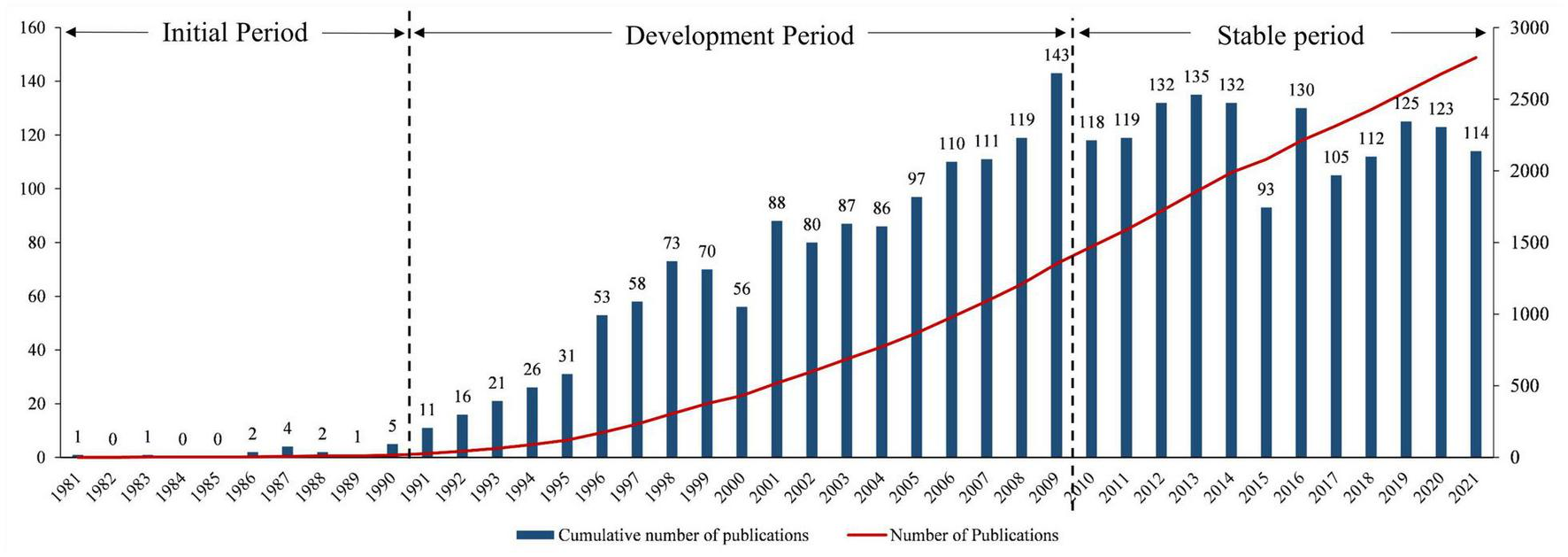
Annual number of publications in the field of PBL research.
Distribution of Countries/Regions
A world map based on the number of publications published in each country is shown in Figure 2A. A total of 87 countries/regions have been published in the field. The United States contributed the most publications (801, 28.71% of all publications), followed by the United Kingdom (267, 9.57%), Canada (249, 8.92%), Australia (201, 7.20%), and the Netherlands (159, 5.70%) (Figure 2B). Publications from the United States (21,139 citations) were the most cited, with the United Kingdom (6,402 citations), the Netherlands (6,002 citations), Canada (5,263 citations), and Australia (3,580 citations) ranking second through fifth, respectively (Figure 2C).
FIGURE 2
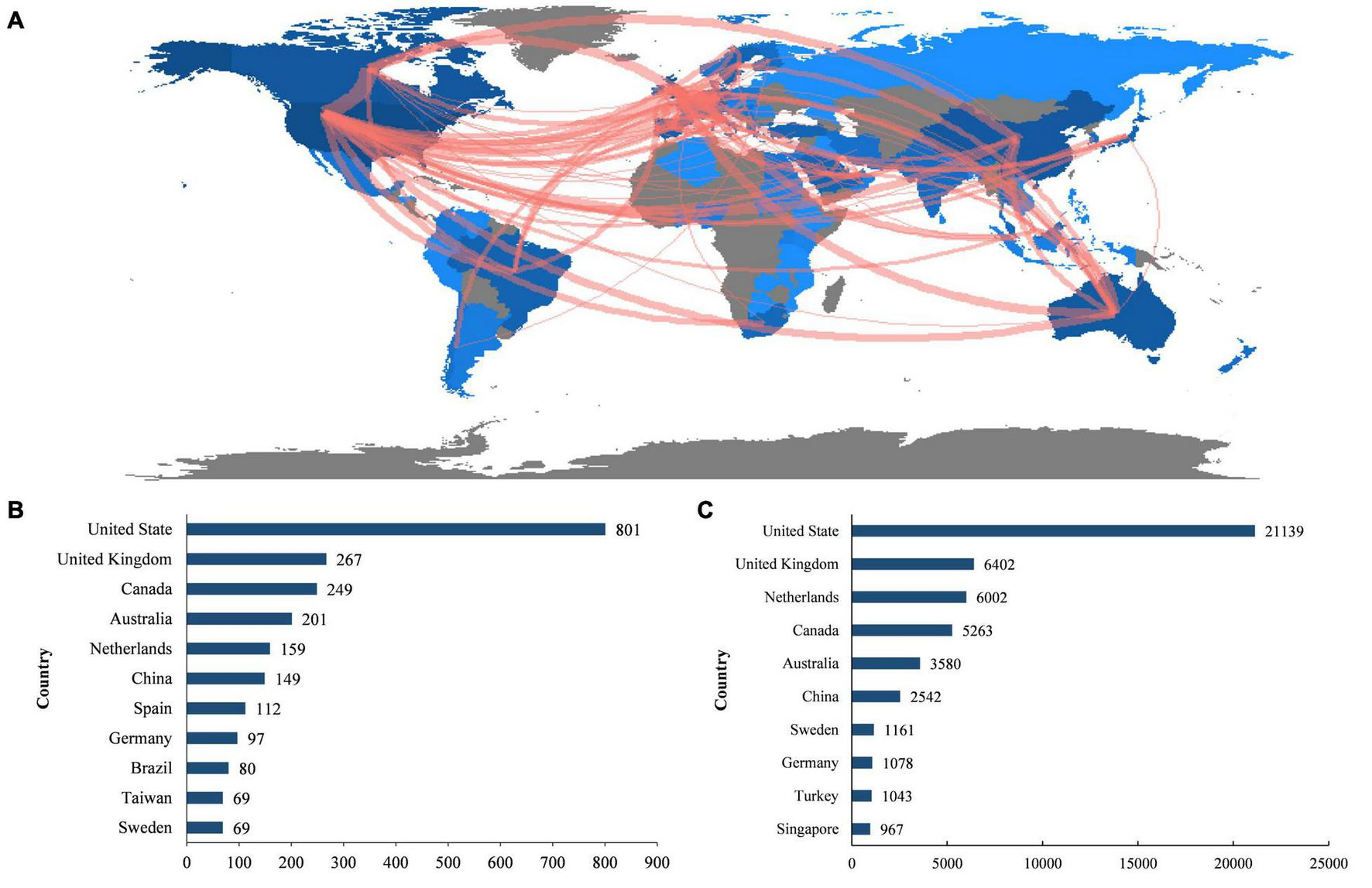
Countries were contributing to PBL research. (A) World map of the number of publications published by countries. (B) Top ten countries with the largest number of publications. (C) Total citations of publications from different countries.
The co-authorship analysis found a total of 56 countries/regions with at least five publications published in this field. The five countries with the highest total link strength were the United States (total link strength = 150), the United Kingdom (total link strength = 132), the Netherlands (total link strength = 93), Canada (total link strength = 79) and Australia (total link strength = 65). The network of cooperative relationships between countries is shown in Figure 2A.
Distribution of Institutions
A total of 1,973 institutions have published papers in this field. Among them, the Maastricht University contributed the most (95 records), followed by McMaster University (66 records), Harvard University (47 records), University of Pennsylvania (43 records), and University of Manchester (42 records) (Figure 3A).
FIGURE 3
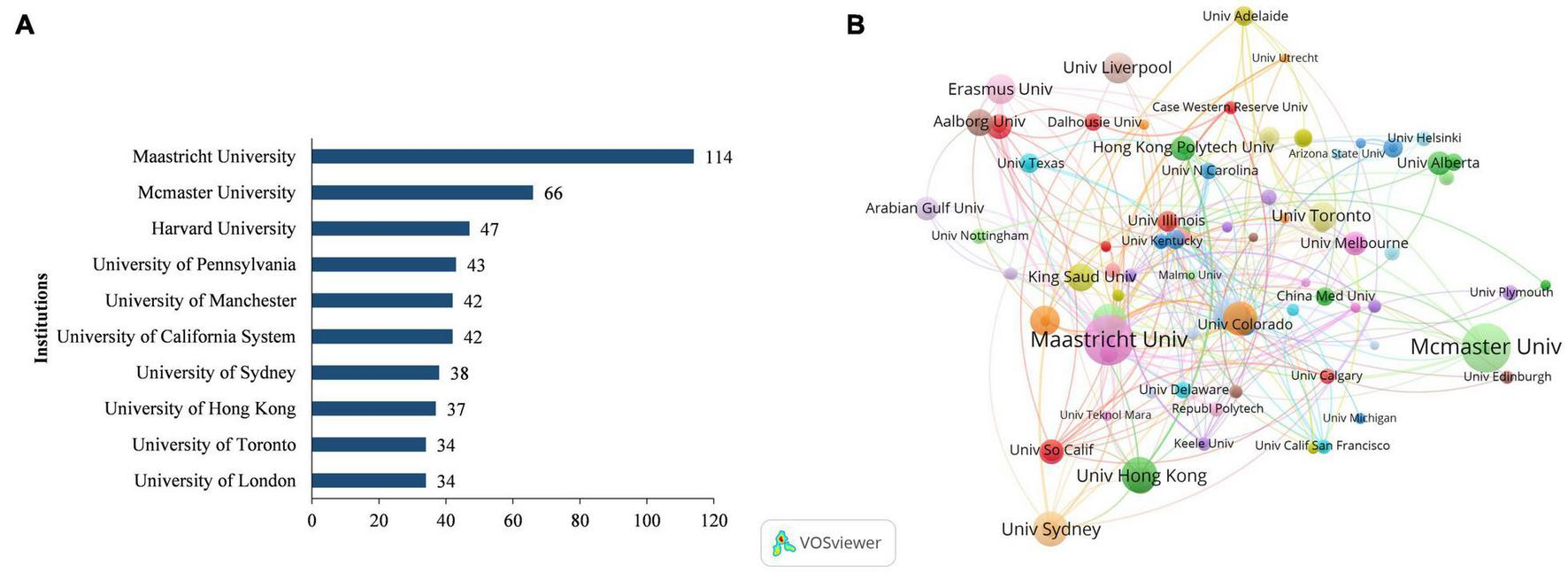
Institutions were contributing to PBL research. (A) Top ten institutions with the largest number of publications. (B) Network map of co-authorship between institutions with more than five publications.
We analyzed co-authorship relationships between 187 institutions with at least five publications. Excluding the 24 unconnected items, Figure 3B shows the collaborations of 163 institutions. The five institutions with the highest connection total link strength were Maastricht University (total link strength = 34), Erasmus University Rotterdam (total link strength = 25), Harvard University (total link strength = 25), the University of Sydney (total link strength = 18), and Johns Hopkins University (total link strength = 14).
Analysis of Journals and Research Areas
There are 2,890 papers published in 608 journals. Table 1 lists the top ten most popular journals for publishing papers on PBL. Medical Education published 235 articles, by far the most, followed by Medical Teacher (n = 194), International Journal of Engineering Education (n = 127), Advances in Health Sciences Education (n = 111), Academic Medicine (n = 100).
TABLE 1
| Rank | Journals | Records (n) | 2020 IF | Cited journals | Records (n) | 2020 IF |
| 1 | Medical Education | 235 | 6.251 | Medical Education | 4,757 | 6.251 |
| 2 | Medical Teacher | 194 | 3.650 | Academic Medicine | 4,482 | 6.893 |
| 3 | International Journal of Engineering Education | 127 | 0.969 | Medical Teacher | 2,252 | 3.650 |
| 4 | Advances in Health Sciences Education | 111 | 3.853 | Journal of Dental Education | 894 | 2.264 |
| 5 | Academic Medicine | 100 | 6.893 | Advances in Health Sciences Education | 817 | 3.853 |
| 6 | BMC Medical Education | 86 | 2.463 | Nurse Education Today | 773 | 3.442 |
| 7 | Nurse Education Today | 72 | 3.442 | Problem Based Learning | 732 | – |
| 8 | Biochemistry and Molecular Biology Education | 69 | 1.160 | Teaching and Learning in Medicine | 647 | 2.414 |
| 9 | American Journal of Pharmaceutical Education | 66 | 2.047 | American Journal of Pharmaceutical Education | 624 | 2.047 |
| 10 | Journal of Dental Education | 62 | 2.264 | Journal of Chemical Education | 589 | 2.979 |
The top ten popular journals and cited journals.
We analyzed a total of 141 journals that were co-cited at least 50 publications (Figure 4). Table 1 lists the top ten journals. Of these, Medical Education has the most citations (4,757 citations), followed by Academic Medicine (4,482 citations), Medical Teacher (2,252 citations), Journal of Dental Education (894 citations), and Advances in Health Sciences Education (817 citations).
FIGURE 4
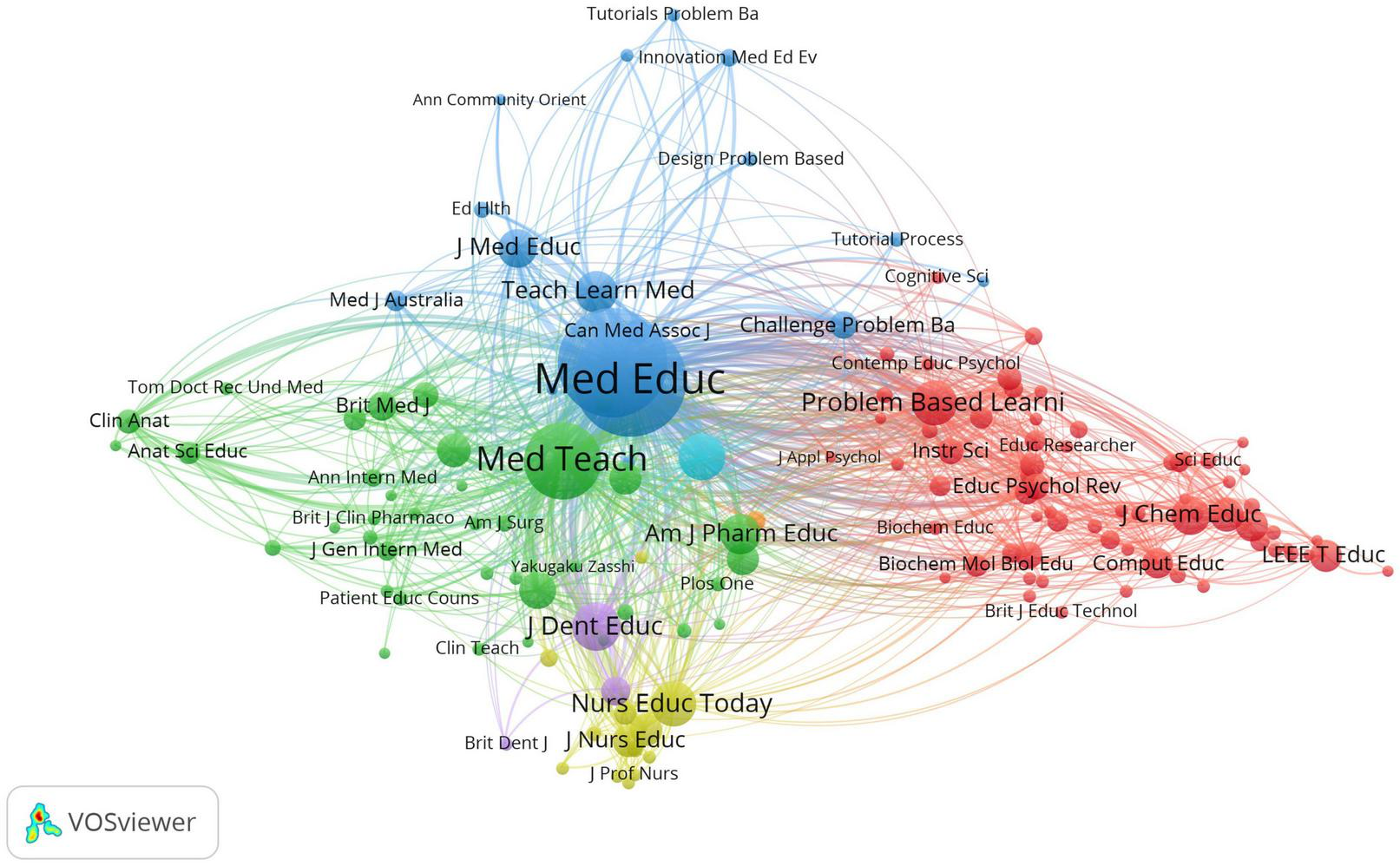
Network map of journals that were co-cited at least 50 publications.
The included publications were categorized into 108 research areas. The most representative research areas were Educational Research (1,573 records), HealthCare Sciences (774 records), Engineering (359 records), General Internal Medicine (230 records), Nursing (212 records) (Table 2).
TABLE 2
| Rank | Research areas | Records (n) | % (of 2,790) |
| 1 | Educational research | 1,573 | 56.38% |
| 2 | Healthcare sciences | 774 | 27.74% |
| 3 | Engineering | 359 | 12.87% |
| 4 | General internal medicine | 230 | 8.24% |
| 5 | Nursing | 212 | 7.60% |
| 6 | Pharmacology pharmacy | 153 | 5.48% |
| 7 | Computer science | 148 | 5.30% |
| 8 | Dentistry oral surgery medicine | 113 | 4.05% |
| 9 | Biochemistry molecular biology | 88 | 3.15% |
| 10 | Physiology | 61 | 2.19% |
The top ten representative research areas.
Analysis of Authors
In terms of the number of publications, Van Der Vleuten CPM was the most prolific author (n = 43), followed by Dolmans DHJM (n = 40), Schmidt HG (n = 32), Azer SA (n = 24), Scherpbier AJJA (n = 21) (Figure 5A). From the author’s influence, Schmidt HG has the largest number of citations in this field (1,074), followed by Dolmans DHJM (561), Van Der Vleuten CPM (540), Norman GR (445), Mitchell S (423) (Figure 5B). Publications from Van Der Vleuten CPM had the highest h-index (27), followed by Schmidt HG (22), Dolmans DHJM (22), Scherpbier AJJA (16), Wolfhagen IHAP (13) (Figure 5C).
FIGURE 5
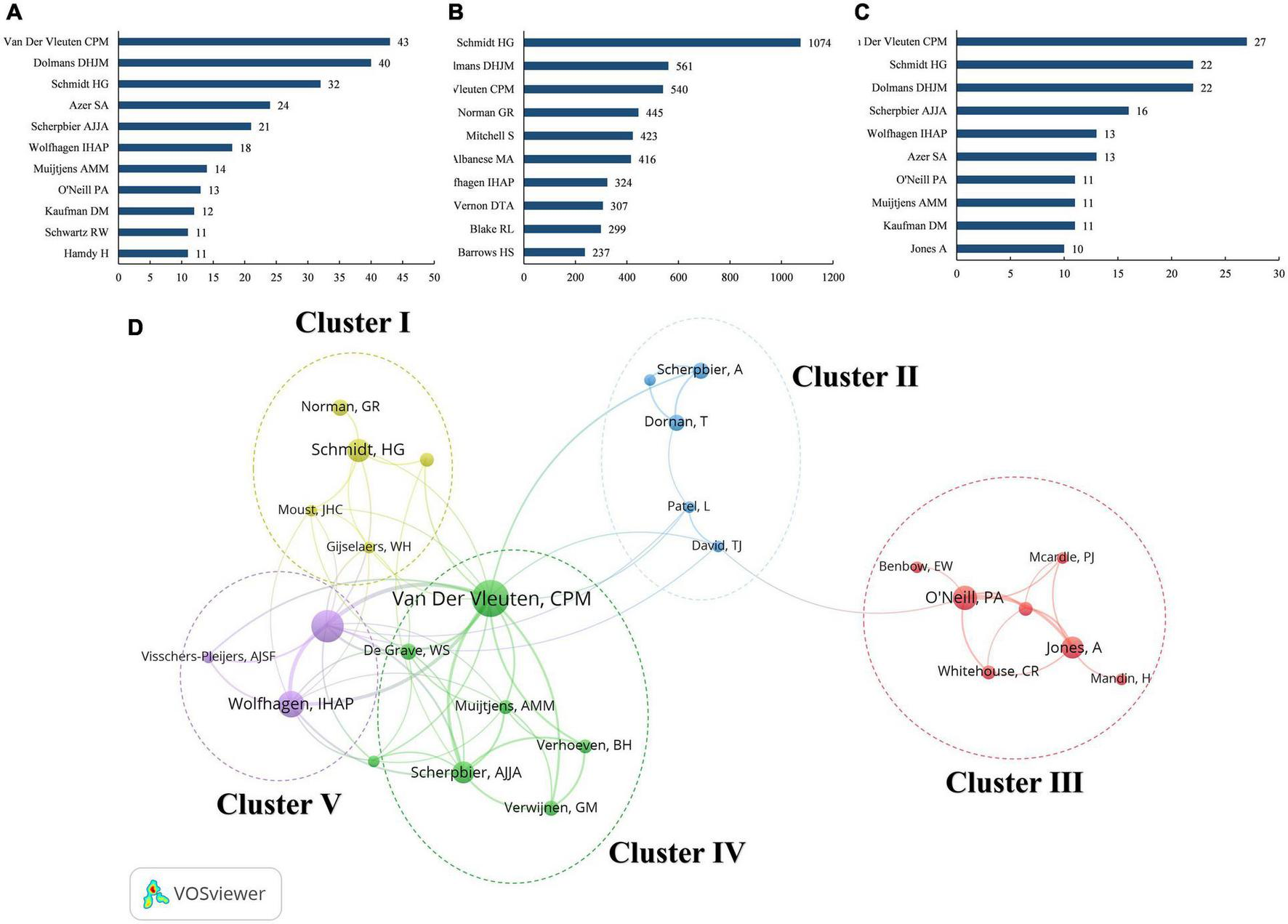
Analysis of authors. (A) The number of author publications. (B) Total citations from different authors in the field of PBL. (C)h-index for authors. (D) Network map of co-authorship between authors with more than three publications.
We further analyzed a total of 212 authors that were co-authorship in more than three publications. After removing non-connected authors from each other, the network shows the collaboration of 29 authors (Figure 5D). The five authors with the highest total link strength were Van Der Vleuten CPM (total link strength = 66 times), Dolmans DHJM (52), Wolfhagen IHAP (40), Scherpbier AJJA (33), and Schmidt HG (32).
Citation and Co-citation Analysis
The citation analysis showed that 243 documents had at least 50 citations (Figure 6A). Table 3 lists the top ten documents with the highest citations. In addition, we analyzed the 32 references that were co-cited in more than 50 citations (Figure 6B). Table 4 lists the top ten references with the highest citations.
FIGURE 6
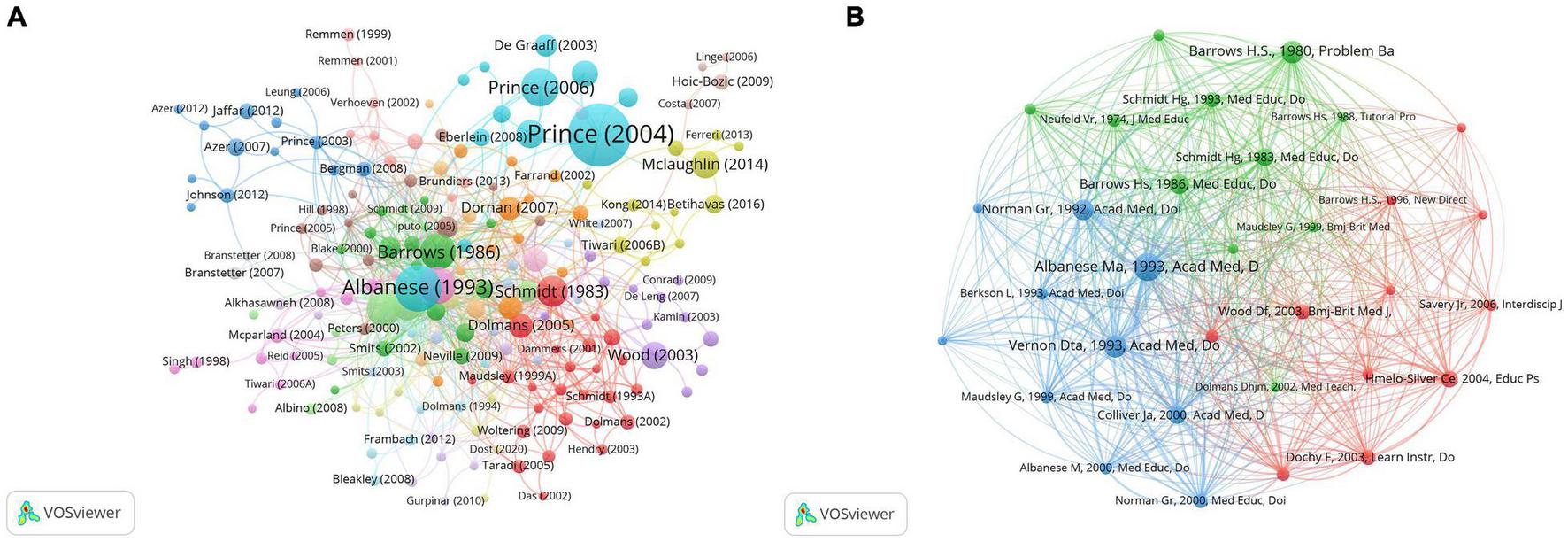
Citations analysis. (A) Network map of citation analysis of documents with more than 50 citations. (B) Network map of co-citations analysis of references with more than 50 citations.
TABLE 3
| Rank | Title | First Author | Source | Publication Year | Citations (n) |
| 1 | Problem-based learning: a review of literature on its outcomes and implementation issues (Albanese and Mitchell, 1993) | Albanese MA | Academic Medicine (IF: 6.893) | 1993 | 413 |
| 2 | Does problem-based learning work? A meta-analysis of evaluative research (Vernon and Blake, 1993) | Vernon DTA | Academic Medicine (IF: 6.893) | 1993 | 266 |
| 3 | The psychological basis of problem-based learning: a review of the evidence (Norman and Schmidt, 1992) | Norman GR | Academic Medicine (IF: 6.893) | 1992 | 234 |
| 4 | A taxonomy of problem-based learning methods (Barrows, 1986) | Barrows HS | Medical Education (IF: 6.251) | 1986 | 198 |
| 5 | Effectiveness of problem-based learning curricula: research and theory (Colliver, 2000) | Colliver JA | Academic Medicine (IF: 6.893) | 2000 | 177 |
| 6 | Problem-based learning: rationale and description (Schmidt, 1983) | Schmidt HG | Medical Education (IF: 6.251) | 1983 | 171 |
| 7 | Problem based learning (Wood, 2008) | Wood DF | BMJ (IF: 39.890) | 2003 | 123 |
| 8 | Foundations of problem-based learning: some explanatory notes (Schmidt, 1993) | Schmidt HG | Medical Education (IF: 6.251) | 1993 | 115 |
| 9 | Effectiveness of problem-based learning curricula: theory, practice and paper darts (Norman and Schmidt, 2000) | Norman GR | Medical Education (IF: 6.251) | 2000 | 102 |
| 10 | Problem-based learning: future challenges for educational practice and research (Dolmans et al., 2005) | Dolmans DHJM | Medical Education (IF: 6.251) | 2005 | 94 |
Top ten citations analysis of publications on this field.
TABLE 4
| Rank | Title | First author | Source | Publication year | Citations (n) |
| 1 | Problem-based learning: a review of literature on its outcomes and implementation issues (Albanese and Mitchell, 1993) | Albanese MA | Academic Medicine (IF: 6.893) | 1993 | 413 |
| 2 | Problem-Based Learning:An Approach to Medical Education (Barrows and Tamblyn, 1980) | Barrows HS | New York: Springer | 1980 | 270 |
| 3 | Does problem-based learning work? A meta-analysis of evaluative research (Vernon and Blake, 1993) | Vernon DTA | Academic Medicine (IF: 6.893) | 1993 | 266 |
| 4 | The psychological basis of problem-based learning: a review of the evidence (Norman and Schmidt, 1992) | Norman GR | Academic Medicine (IF: 6.893) | 1992 | 234 |
| 5 | A taxonomy of problem-based learning methods (Barrows, 1986) | Barrows HS | Medical Education (IF: 6.251) | 1986 | 198 |
| 6 | Effectiveness of problem-based learning curricula: research and theory (Colliver, 2000) | Colliver JA | Academic Medicine (IF: 6.893) | 2000 | 177 |
| 7 | Problem-based learning: rationale and description (Schmidt, 1983) | Schmidt HG | Medical Education (IF: 6.251) | 1983 | 171 |
| 8 | Problem-based learning: What and how do students learn? (Hmelo-Silver, 2004) | Hmelo-Silver CE | Education Psychology Review (IF:5.167) | 2004 | 157 |
| 9 | Problem based learning (Wood, 2003) | Wood DF | BMJ (IF:30.223) | 2003 | 123 |
| 10 | Effects of problem-based learning: A meta-analysis (Dochy et al., 2003) | Dochy F | Learn and Instruction (IF:3.323) | 2003 | 116 |
Top ten co-citation analyses of cited references on this field.
Co-occurrence Analysis of Keywords
We analyzed a total of 86 keywords that were identified as having occurred more than five times (Figure 7A). The colors in the overlay visualization shown in Figure 7B indicate the average publication year of the identified keywords. Most keywords were published after 2012, with greener or yellower colors. The density visualization showed the exact identified keywords mapped by frequency of appearance (Figure 7C).
FIGURE 7
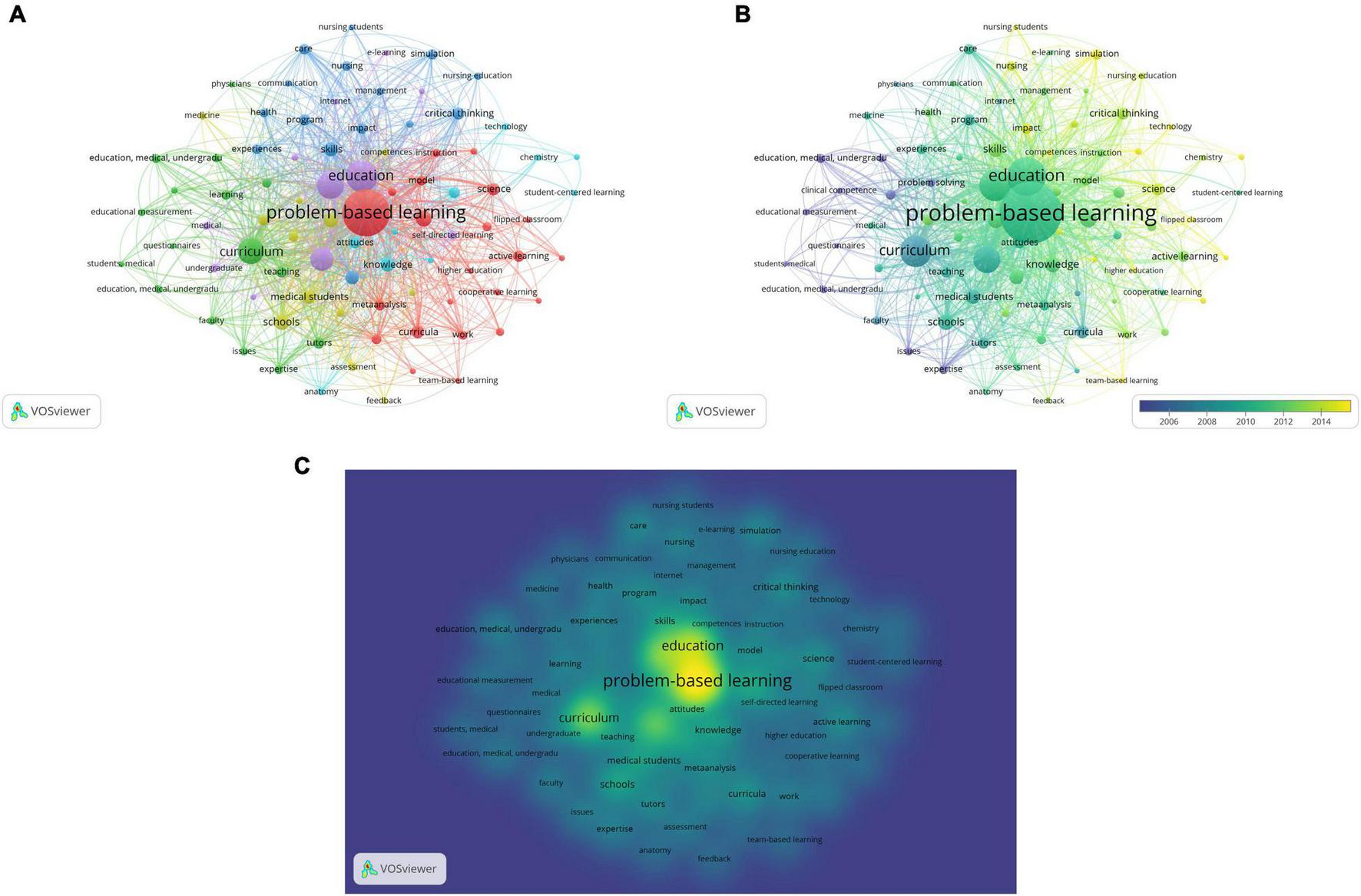
Co-occurrence analysis of keywords. (A) Network visualization. (B) Overlay visualization. (C) Density visualization.
Discussion
This study analyzed the bibliometric properties of 2,790 publications included in a citation index of PBL studies conducted over the past 40 years. The trend of annual publications demonstrated that the studies during this period were stable growth. The bibliometric results provide researchers, policymakers, and teaching staff with valuable insights and enable them to get meaningful references based on objective data.
A quantitative and visual analysis of the distribution of countries/regions and institutions shows that the United States and the United Kingdom are the leading countries where PBL research is being conducted. As shown in Figure 3A, there is a greater density and breadth of collaboration between the various countries. Research teams in the United States mainly collaborated with the United Kingdom, Canada, China, Australia, and Europe. In addition, although each institution has its collaborative network, the breadth and intensity of the collaboration are not ideal. The cooperation center mainly revolves around Maastricht University, Mcmaster University, and Havard University, the three institutions with the largest publications. The intricacies of the mapping illustrate two things: first, the close cooperation among institutions that have contributed to the results of PBL research, and second, the continuous development of PBL in the teaching of different disciplines.
Problem-based learning is a problem-oriented teaching method (Savery and Duffy, 1997). It is a teaching model in which students collect information independently around problems, find out and solve problems, and develop independent learning and innovation abilities (Domingo-Osle et al., 2021). Most studies of PBL were published in influential education-related journals such as Medical Education and Medical Teacher. Regarding co-cited journals, we can see that most studies were from high-impact journals. These journals are equally focused on education and influence the direction of research in the field. As shown in Table 2, in addition to educational research, PBL teaching has now been extended to clinical medicine, engineering, computer science. This result is similar to the findings of another study, in which Azer found that highly cited articles in the field of PBL were distributed among journals in dental and medical education, general medicine, and teaching psychology (Azer, 2017).
In the past decade, the focus of teaching and learning, including medical education, has gradually shifted to developing students’ problem-solving, critical thinking, and self-directed learning skills (Merisier et al., 2018). PBL is being adopted and valued by an increasing number of universities and hospitals as a teaching model that fits well with constructivist learning theory and medical teaching principles (Al-Azri and Ratnapalan, 2014). This phenomenon is corroborated by the results of PBL posting journals and citations presented in Tables 1–4. Dentistry stands out in medical education as one of the most widely implemented disciplines for PBL teaching. Various branches of dentistry such as prosthodontics and orthodontics are convenient subjects and have close cross-fertilization with many fields such as material science, clinical medicine, pathology, physiology (Ferro et al., 2019). Therefore, dentistry teaching requires students to be proficient in dentistry-related courses and, more importantly, to apply and integrate them. As Azer said, the bibliometric analysis of PBL has implications for dental teaching and research (Azer, 2017).
The most prolific authors in PBL studies and the global citations to their work differed. The most prolific and influential author is Van Der Vleuten CPM, while the most cited author was Schmidt HG. In terms of the number of citations, “PBL: a review of literature on its outcomes and implementation issues” (Albanese and Mitchell, 1993) published by Albanese MA was the more influential article, consistent with Azer’s bibliometric results (Azer, 2017), suggesting that this article is a classic citation in the field of PBL. The study compared the effects of PBL teaching and traditional teaching through meta-analysis, thus pointing out the advantages and disadvantages of PBL teaching. However, as shown in Figure 5D, the range of co-author can be roughly divided into five clusters, and the density of collaboration between authors is lower, which may be related to the interdisciplinary application of PBL.
From keyword analysis, the current research focuses on three orientations: (1) Extensions of PBL teaching mode, such as case-based learning, flipped classroom, team-based learning. The pedagogical research around PBL gradually extends to different teaching modes, which is to promote better active and positive learning of learners and the development of education. (2) Applying PBL methods to clinical medicine, especially nursing; “Question” is the best way to promote critical thinking, which is urgently needed in modern nursing to promote the overall quality of nurses; hence, its proper use is essential in fostering the development of clinical reasoning. (3) The reform of PBL, like think, challenge, and decision making. Today, problem-oriented teaching models often involve computer-based programs. Regardless of the technique used, the core of the approach remains the same: real-world problems. Reflections on the PBL reform could be the future direction of the following research in this field.
It is worth noting that the bibliometric analysis also provides new ideas for teaching research. First, PBL is a student-centered teaching model that has been widely used in various disciplines. However, different teaching characteristics in different disciplines exist, and long-term quantitative assessments of its effectiveness are scarce. Second, Problem-based learning is an advanced teaching method, but the classical, traditional teaching methods cannot be rejected wholesale due to reform needs; both can coexist and complement each other’s strengths (Payne, 2004). From the teachers’ perspective, planning the important and difficult points of learning and developing targeted discussion outlines to motivate students is undoubtedly the key to PBL research. Third, questions are the core of PBL, and all learning activities revolve around questions. However, the purpose of PBL is to accomplish the course objectives, such as developing students’ knowledge base and various abilities. Setting up the curriculum and designing the questions according to the learning objectives are the key issues in PBL.
There are several inevitable limitations in this study. First, bibliometric data change with time, and different conclusions may be drawn with time; Second, the bibliometric analysis is only an auxiliary tool, and the results may differ from real-world research conditions; Third, the literature search was limited to Web of Science Core Collection databases, which might have resulted in an election bias to the outcomes; Forth, we limited the search term for the study topic to “PBL,” some relevant articles may be missed, such as “PBL.”
Conclusion
The current study provides an overview of research findings and valuable insights into PBL worldwide. Research on PBL has continued to increase over the past few decades. The most productive country is the United States, participating in nearly 30% of publications, and the leading institution is the Maastricht University. The most attractive journal in terms of PBL is Medical Education. In addition, collaborative research initiatives need to be established between institutions in developing countries and those in developed countries.
Publisher’s Note
All claims expressed in this article are solely those of the authors and do not necessarily represent those of their affiliated organizations, or those of the publisher, the editors and the reviewers. Any product that may be evaluated in this article, or claim that may be made by its manufacturer, is not guaranteed or endorsed by the publisher.
Statements
Data availability statement
The raw data supporting the conclusions of this article will be made available by the authors, without undue reservation.
Author contributions
FZ: conceptualization. FZ and HW: methodology and writing-original draft preparation. FZ and YB: software and data curation. HCZ: writing-review and editing. All authors have read and agreed to the published version of the manuscript.
Funding
This study was supported by the Teaching Department of Longhua Hospital, Shanghai University of Traditional Chinese Medicine (Teaching 542).
Acknowledgments
We are grateful for the support and assistance of Wu Xiaoli from the Teaching Department of Longhua Hospital, Shanghai University of Traditional Chinese Medicine.
Conflict of interest
The authors declare that the research was conducted in the absence of any commercial or financial relationships that could be construed as a potential conflict of interest.
References
1
Al-Azri H. Ratnapalan S. (2014). Problem-based learning in continuing medical education: review of randomized controlled trials.Can. Fam. Physician60157–165.
2
Albanese M. A. Mitchell S. (1993). Problem-based learning: a review of literature on its outcomes and implementation issues.Acad. Med.6852–81. 10.1097/00001888-199301000-00012
3
Aria M. (2017). Bibliometrix: an R-tool for comprehensive science mapping analysis.J. Informetr.11959–975.
4
Azer S. A. (2017). Top-Cited articles in problem-based learning: a bibliometric analysis and quality of evidence assessment.J. Dent. Educ.81458–478. 10.21815/JDE.016.011
5
Barrows H. S. (1986). A taxonomy of problem-based learning methods.Med. Educ.20481–486. 10.1111/j.1365-2923.1986.tb01386.x
6
Barrows H. S. Tamblyn R. B. (1980). Problem-Based Learning:An Approach to Medical Education.New York, NY: Springer.
7
Bornmann L. Leydesdorff L. (2014). Scientometrics in a changing research landscape: bibliometrics has become an integral part of research quality evaluation and has been changing the practice of research.EMBO Rep.151228–1232. 10.15252/embr.201439608
8
Chen C. (2004). Searching for intellectual turning points: progressive knowledge domain visualization.Proc. Natl. Acad Sci U S A1015303–5310. 10.1073/pnas.0307513100
9
Colliver J. A. (2000). Effectiveness of problem-based learning curricula: research and theory.Acad. Med.75259–266. 10.1097/00001888-200003000-00017
10
Compton R. M. Owilli A. O. Norlin E. E. Hubbard Murdoch N. L. (2020). Does problem-based learning in nursing education empower learning?Nurse Educ. Pract.44:102752. 10.1016/j.nepr.2020.102752
11
Devine O. P. Harborne A. C. Horsfall H. L. Joseph T. Marshall-Andon T. Samuels R. et al (2020). The analysis of teaching of medical schools (AToMS) survey: an analysis of 47,258 timetabled teaching events in 25 UK medical schools relating to timing, duration, teaching formats, teaching content, and problem-based learning.BMC Med.18:126. 10.1186/s12916-020-01571-4
12
Dochy F. Segers M. Van den Bossche P. Gijbels D. (2003). Effects of problem-based learning: a meta-analysis.Learn. Instr.13533–568.
13
Dolmans D. H. J. M. De Grave W. Wolfhagen I. H. A. P. van der Vleuten C. P. M. (2005). Problem-based learning: future challenges for educational practice and research.Med. Educ.39732–741. 10.1111/j.1365-2929.2005.02205.x
14
Domingo-Osle M. La Rosa-Salas V. Ambrosio L. Elizondo-Rodriguez N. Garcia-Vivar C. (2021). Educational methods used in cancer training for health sciences students: an integrative review.Nurse Educ. Today97:104704. 10.1016/j.nedt.2020.104704
15
Ferro A. S. Nicholson K. Koka S. (2019). Innovative trends in implant dentistry training and education: a narrative review.J. Clin. Med.8:1618.
16
Hmelo-Silver C. E. (2004). Problem-Based learning: what and how do students learn?Educ. Psychol. Rev.16235–266.
17
Huth K. C. von Bronk L. Kollmuss M. Lindner S. Durner J. Hickel R. et al (2021). Special teaching formats during the COVID-19 pandemic-a survey with implications for a crisis-proof education.J. Clin. Med.10:5099.
18
Jones R. W. (2006). Problem-based learning: description, advantages, disadvantages, scenarios and facilitation.Anaesth. Intens. Care34485–488. 10.1177/0310057X0603400417
19
Kühner S. Ekblad S. Larsson J. Löfgren J. (2021). Global surgery for medical students - is it meaningful? A mixed-method study.PLoS One16:e0257297. 10.1371/journal.pone.0257297
20
Liu Y. Li X. Ma L. Wang Y. (2021). Mapping theme trends and knowledge structures of dignity in nursing: a quantitative and co-word biclustering analysis. J. Adv. Nurs.. 10.1111/jan.15097
21
Merisier S. Larue C. Boyer L. (2018). How does questioning influence nursing students’ clinical reasoning in problem-based learning? A scoping review.Nurse Educ. Today65108–115.
22
Michalsky T. Cohen A. (2021). Prompting socially shared regulation of learning and creativity in solving STEM problems.Front. Psychol.12:722535. 10.3389/fpsyg.2021.722535
23
Norman G. R. Schmidt H. G. (1992). The psychological basis of problem-based learning: a review of the evidence.Acad. Med.67557–565. 10.1097/00001888-199209000-00002
24
Norman G. R. Schmidt H. G. (2000). Effectiveness of problem-based learning curricula: theory, practice and paper darts.Med. Educ.34721–728.
25
Payne J. D. (2004). Reform of undergraduate medical teaching in the United Kingdom: “problem based learning” v “traditional” is a false debate.BMJ329:799. 10.1136/bmj.329.7469.799-b
26
Savery J. Duffy T. (1997). Problem based learning: an instructional model and its constructivist framework.Educ. Technol.35. 31–38.
27
Schmidt H. G. (1983). Problem-based learning: rationale and description.Med. Educ.1711–16. 10.1111/j.1365-2923.1983.tb01086.x
28
Schmidt H. G. (1993). Foundations of problem-based learning: some explanatory notes.Med. Educ.27422–432.
29
Servant-Miklos V. F. C. Woods N. N. Dolmans D. H. J. M. (2019). Celebrating 50 years of problem-based learning: progress, pitfalls and possibilities.Adv. Health Sci. Educ.24849–851. 10.1007/s10459-019-09947-9
30
Shawahna R. (2021). Scoping and bibliometric analysis of promoters of therapeutic inertia in hypertension.Am. J. Manag. Care27e386–e394. 10.37765/ajmc.2021.88782
31
van der Vleuten C. P. M. Schuwirth L. W. T. (2019). Assessment in the context of problem-based learning.Adv. Health Sci. Educ.24903–914. 10.1007/s10459-019-09909-1
32
van Eck N. J. Waltman L. (2010). Software survey: VOSviewer, a computer program for bibliometric mapping.Scientometrics84523–538. 10.1007/s11192-009-0146-3
33
Vernon D. T. Blake R. L. (1993). Does problem-based learning work? A meta-analysis of evaluative research.Acad. Med.68550–563. 10.1097/00001888-199307000-00015
34
Wood D. F. (2003). Problem based learning.BMJ326328–330.
35
Wood D. F. (2008). Problem based learning.BMJ336:971.
36
Yu H. Wang Q. Wu W. Zeng W. Feng Y. (2021). Therapeutic effects of melatonin on ocular diseases: knowledge map and perspective.Front. Pharmacol.12:721869. 10.3389/fphar.2021.721869
Summary
Keywords
problem-based learning, bibliometric analysis, education, citation, research
Citation
Zhang F, Wang H, Bai Y and Zhang H (2022) A Bibliometric Analysis of the Landscape of Problem-Based Learning Research (1981–2021). Front. Psychol. 13:828390. doi: 10.3389/fpsyg.2022.828390
Received
03 December 2021
Accepted
22 February 2022
Published
15 March 2022
Volume
13 - 2022
Edited by
Kuen-Yi Lin, National Taiwan Normal University, Taiwan
Reviewed by
Andy Wai Kan Yeung, University of Hong Kong, China; Kyeongmin Jang, Bucheon University, South Korea
Updates
Copyright
© 2022 Zhang, Wang, Bai and Zhang.
This is an open-access article distributed under the terms of the Creative Commons Attribution License (CC BY). The use, distribution or reproduction in other forums is permitted, provided the original author(s) and the copyright owner(s) are credited and that the original publication in this journal is cited, in accordance with accepted academic practice. No use, distribution or reproduction is permitted which does not comply with these terms.
*Correspondence: Huachun Zhang, lhhlky@163.com
†These authors have contributed equally to this work
This article was submitted to Educational Psychology, a section of the journal Frontiers in Psychology
Disclaimer
All claims expressed in this article are solely those of the authors and do not necessarily represent those of their affiliated organizations, or those of the publisher, the editors and the reviewers. Any product that may be evaluated in this article or claim that may be made by its manufacturer is not guaranteed or endorsed by the publisher.