 Banggang Wu
 Peng Luo
 Mengqiao Li
 Xiao Hu2*
- 1Business School, Sichuan University, Chengdu, China
- 2School of Finance, Southwestern University of Finance and Economics, Chengdu, China
Online health communities (OHCs) have enjoyed increasing popularity in recent years, especially in the context of the COVID-19 pandemic. However, several concerns have been raised regarding the privacy of users’ personal information in OHCs. Considering that OHCs are a type of data-sharing or data-driven platform, it is crucial to determine whether users’ health information privacy concerns influence their behaviors in OHCs. Thus, by conducting a survey, this study explores the impact of users’ health information privacy concerns on their engagement and payment behavior (Paid) in OHCs. The empirical results show that users’ concerns about health information privacy reduce their Paid in OHCs by negatively influencing their OHC engagement. Further analysis reveals that if users have higher benefit appraisals (i.e., perceived informational and emotional support from OHCs) and lower threat appraisals (i.e., perceived severity and vulnerability of information disclosure from OHCs), the negative effect of health information privacy concerns on users’ OHC engagement will decrease.
Introduction
Supported by the rapid development of cutting-edge internet technologies, online health communities (OHCs) are enjoying unprecedented popularity because of the increased demand for timely and high-quality medical services (Nangsangna and Da-Costa Vroom, 2019; Wong and Cheung, 2019; Wang X. et al., 2020). Additionally, the COVID-19 pandemic may have further fostered their use due to individuals’ concerns about infection (Gong et al., 2020; Wang D. et al., 2020; Huang et al., 2021). For instance, Chunyu, one of the most popular OHCs in China, has 140 million active users and 630,000 health professionals, cumulatively serving more than 400 million patients. Moreover, OHCs provide a platform for patients to access health information, share treatment solutions, discuss medical concerns, and consult health professionals about medical issues (Yan and Tan, 2014; Zhang et al., 2018; Silver and Huang, 2020; Dahl et al., 2021). More importantly, OHCs generate enormous economic (Nambisan, 2011) and social value (Goh et al., 2016; Liu S. et al., 2020). For instance, engaging in OHCs not only provides patients with informational and social support (Mo and Coulson, 2012; Petrovčič and Petrič, 2014; Zhang et al., 2018; Agarwal et al., 2019), but also narrows the gap in the quality of medical services between urban and rural areas (Goh et al., 2016; Cao and Wang, 2018). Online health communities also allow the relationship between health professionals and patients to be improved (Liu Q. B. et al., 2020). However, some people may be reluctant to engage in OHCs due to privacy concerns, as sharing of information in OHCs is inevitably linked with the possibility of privacy violations. A survey by Auxier et al. (2020) showed that most users feel insecure about their personal information and that they have little or no control over it. In the context of health information, the consequences of data breaches are significant (Grundy et al., 2019). For instance, users may face social stigma and discrimination when buying insurance and finding jobs (Rohm and Milne, 2004; Goldfarb and Tucker, 2012; Zhang et al., 2017; Pettinico et al., 2020). Thus, this study focuses on the impact of users’ health information privacy concerns on their engagement and payment behavior (Paid) in OHCs and the moderating effects of users’ benefit appraisal (BA) and threat appraisals (TA) for information-sharing behaviors.
Although some scholars have analyzed the impact of health information privacy concern on information disclosure intention in OHCs (Zhang et al., 2017), the influence of privacy concerns on some forms of engagement needs to be explored. Therefore, we extend the existing literature by exploring the relationship between health information privacy concerns and users’ information consumption, information production, and Paid in OHCs. The extant research has analyzed the impact of information privacy concerns on users’ online engagement. As online activities play an increasingly important role in people’s everyday lives, it is widely acknowledged that privacy concerns influence users’ online behaviors (Dinev and Hart, 2005; Jang and Sung, 2021). Users may have a completely different attitude toward health records, financial information, personal identity, and eating habits (Smith et al., 2011; Gal-Or et al., 2018; Pettinico et al., 2020; Slepchuk et al., 2022), as well as varying sensitivities to privacy concerns (Jozani et al., 2020). When users have a more robust privacy control, they have increased awareness of how their data are collected and used, tend to have lower privacy concerns, and engage more frequently with online communities (Jozani et al., 2020), for example, by making more online payments for services. However, the privacy concerns on OHC are unique and important compared to other online platforms, which could be clarified from the much more serious consequences of privacy violation (e.g., discrimination and social stigma). For example, when people with infectious diseases (e.g., Tuberculosis, Hepatitis B) seek treatment advice on OHCs, they may face employment discrimination by the employer if their personal information is leaked. Also, lesbian, gay, bisexual, and transgender people may encounter discrimination when the sexual orientation they choose on OHC is exposed to their friends or family. Thus, considering the high sensitivity of health information (Kopalle and Lehmann, 2021), different motivations for engagement (Ward et al., 2005), and strict requirements for information accuracy (Zhao and Zhang, 2017), the influencing mechanism may show a different pattern, while conclusions based on other online communities should not be extended directly to OHCs. To this end, the relationship between users’ health information privacy concerns and their OHC behaviors should be explored.
The previous research has not considered the moderating effect of users’ perceived benefits and threats of sharing decision-related information on their OHC behaviors. As for the perceived benefits, people could obtain social support (e.g., informational support and social support) by participating in OHCs, where they can search for health information, receive suggestions on health issues, and obtain timely medical help in a more convenient, efficient, and effective manner (Wang X. et al., 2020), as well as reduce their stress and loneliness by talking to people in similar situations. Sharing of information is inevitably linked to privacy violations that may lead to negative consequences such as employment issues, insurance discrimination, identity theft, blackmail, targeted ad, and embarrassment (Crossler and Bélanger, 2019; Pettinico et al., 2020; Slepchuk et al., 2022), which increase users’ TA of their OHC engagement. Given that previous research suggests that people may act less rationally when they weigh the benefits and threats of OHC engagement (Barth et al., 2019; Jang and Sung, 2021), it is reasonable to assume that users’ evaluation of potential benefits and threats may moderate the relationship between users’ health information privacy concerns and their OHC behaviors.
Thus, by conducting a survey on Credamo (a platform that provides scientific questionnaire data services for scholars in more than 1,800 universities worldwide), this study explores the impact of users’ health information privacy concerns on their engagement and Paid in OHCs and the moderating effects of users’ BA and TA for information-sharing behaviors. We find that users’ health information privacy concerns have a negative relationship with their Paid in OHCs, which is mediated by users’ OHC engagement. Additionally, users’ benefit appraisals (BA) regarding informational and emotional support from OHCs positively moderate the negative relationship between their concerns about health information privacy and their OHC engagement. Further, users’ TA regarding the severity and vulnerability of information sharing in OHCs negatively moderate the effect.
Literature Review
Health Information Privacy Concerns and Online Engagement
Users must accept service providers’ privacy terms before being granted access to online platforms; these terms typically state that users agree to provide their private information as well as grant service providers the right to use their data (Bansal et al., 2010; Zhang et al., 2017). Nowadays, online platforms automatically track users’ behavior and constantly collect data (Dogruel et al., 2017; Wottrich et al., 2018). They tend to share said data with third parties such as businesses and the government (Acquisti et al., 2015). Inevitably, this is associated with an increased risk of privacy violations (Crossler and Bélanger, 2019; Gerhart and Koohikamali, 2019). Thus, the lack of basic security regulations on online platforms (Pour et al., 2019) fuels privacy concerns, as users’ private information may become exposed (Malm, 2018) and their anonymity could become compromised—only 15 demographic features are needed to correctly identify an individual based on online data (Rocher et al., 2019).
The extant research suggests a negative relationship between information privacy concerns and users’ engagement (UE) in online communities, which can be analyzed from two perspectives: the sensitivity of the information and users’ control over their data (Büchi et al., 2016; Jozani et al., 2020). Privacy concerns are affected by information sensitivity, whereas the level of sensitivity is determined by potential monetary, physical, social, and psychological risks caused by misuse (Milne et al., 2016; Gu et al., 2017; Kim et al., 2019). For instance, when information with a low sensitivity level (e.g., dietary habits) is collected, users may not be concerned; since the service provider may process the data comprehensively, more customized services will be provided and enhance users’ experiences (Smith et al., 2011; Gal-Or et al., 2018). However, information such as health information, financial information, shopping history, and personal identity is considered highly sensitive. The unintended disclosure of these personal data may cause significant consequences such as employment issues, insurance discrimination, identity theft, extortion, targeted ads, and embarrassment (Goldfarb and Tucker, 2012; Crossler and Bélanger, 2019; Pettinico et al., 2020; Slepchuk et al., 2022), which may reduce the level of user engagement in online communities (Jozani et al., 2020).
Furthermore, users feel that they have higher control over their data when they have more knowledge regarding how a specific data are collected and used (Büchi et al., 2016; Jozani et al., 2020). However, users seldom know the concrete procedure of the data collection and sharing process (Zarouali et al., 2018). A vivid example of this is the Facebook–Cambridge Analytica incident (Cadwalladr and Graham-Harrison, 2018). If users believe they have a higher degree of privacy control, their privacy concerns may be reduced, leading to higher engagement in online communities (Jozani et al., 2020). Accordingly, clear privacy notifications, the use of explicit permission requests and more restrictive privacy settings, and legislative actions could reduce users’ privacy concerns and motivate them to be engaged (Acquisti et al., 2015; Widjaja et al., 2019).
Privacy concerns comprise an important factor that influences UE in online communities (Dinev and Hart, 2005; Jang and Sung, 2021) as people’s lives have become increasingly entwined with online services. Thus, the potential benefits of the engagement may outweigh users’ privacy concerns when conducting a cost-benefit analysis, which may lead them to play an active role in online communities (Debatin et al., 2009). Furthermore, personal traits may serve as a moderator when users assess the privacy threats and engagement benefits (Aivazpour and Rao, 2020; Wirth et al., 2021).
Antecedents of Engagement in Online Health Communities
People decide to be involved in OHCs by analyzing the benefits and threats of using them. The extant research has identified the antecedents of engagement, among which informational support and emotional support are the most significant (Ray et al., 2014; Gibbs et al., 2016; Yan et al., 2016; Wang et al., 2017). Informational support and emotional support, taken together, comprises social support (Chen et al., 2020), which has been regarded as the key benefit for engagement in OHCs sought by the users (Welbourne et al., 2013; Yan and Tan, 2014; Zhang et al., 2018). First, regarding the informational support, OHCs serve as platforms that connect patients in similar situations (Chou et al., 2018; Li et al., 2018). By communicating with each other, patients may obtain timely treatment solutions more conveniently and efficiently (Wang X. et al., 2020), especially considering the significant medical burden (Wu and Lu, 2018) of Chinese hospitals, where it is quite difficult to make an appointment with elite physicians (Huang et al., 2021). Moreover, searching for an information in OHCs is cost-effective, which may increase the possibility that patients use OHCs (Gao et al., 2021), since the high costs of medical treatment may worsen patients’ physical health due to stress (Gao et al., 2021). Second, emotional support is also important for patients (Yan and Tan, 2014; Gibbs et al., 2016), who require sympathy, encouragement, companionship, and other kinds of emotional support (Jin et al., 2016). The OHCs may serve as a source of emotional support by allowing users to communicate with each other (Yu et al., 2015). Compared with health professionals’ suggestions—which are more direct due to doctors’ tight schedules (Wang L. et al., 2020)—exchanges in OHCs are more emotionally supportive (Van Oerle et al., 2016) and can reduce patients’ stress (Rains and Young, 2009; Goldsmith et al., 2013). Third, regarding additional factors, psychological benefits like individual reputation, self-esteem, and self-efficacy also facilitate people’s engagement with OHCs (Van Uden-Kraan et al., 2009; Bansal et al., 2010; Mo and Coulson, 2012; Petrovčič and Petrič, 2014). Moreover, by providing suggestions and helping others, users may obtain more accurate medical knowledge and increase their health literacy, eventually developing non-professional expertise (Nettleton et al., 2005; Griffiths et al., 2012; Chen et al., 2019). The safety concerns related to the COVID-19 pandemic provide another reason for the usage of online medical services (Gong et al., 2020; Huang et al., 2021), as nearly 41% of cases are associated with hospital visits (Wang D. et al., 2020).
Certain risks may reduce the benefits from engagement in OHCs and impair people’s eagerness to participate. The previous research has mainly focused on concerns regarding health misinformation. Additionally, oversimplification (Zhao et al., 2021), lack of scientific evidence (Chou et al., 2018), and deliberate distortion (Waszak et al., 2018) may generate misinformation. The lack of gatekeepers causes misinformation to spread quickly (Bode and Vraga, 2017; Li et al., 2022). Additionally, people who lack health and scientific knowledge may be misled via the echo chamber effect (Brady et al., 2017; Vogel, 2017). Therefore, for health issues, the accuracy of the information is important because misinformation may lead to poor health outcomes or even death (Zhao and Zhang, 2017). Thus, using OHCs carries significant risks (Chen et al., 2018). Although some cutting-edge technologies, such as deep learning and machine learning (Sicilia et al., 2018; Kumar et al., 2019; Ruokolainen and Widén, 2020; Song et al., 2021) are used to develop a filtering system for misinformation; however, these methods still face many challenges and cannot fully eliminate risks (Li et al., 2022). Thus, people should exercise caution when seeking advice through OHCs to avoid misinformation (Pluye et al., 2019).
Health professionals are significant participants in OHCs and their decision process for engagement is also worth investigating in order to have a comprehensive view of the antecedents of engagement in OHCs. Three main drivers can be identified in prior literature on engagement in OHCs (Zhou et al., 2019). First, there is technical competence, which refers to the ability to provide patients with professional services (Robin DiMatteo and Hays, 1980). Many researchers have found a positive relationship between health professionals’ technical competence and OHC engagement (Zhou et al., 2018, 2019; Li et al., 2019). Online services may also improve health professionals’ performance in hospitals, including operational efficiency, resource utilization efficiency, and patient satisfaction, which may, in turn, enhance their technical competence and satisfy their self-efficacy (Wu et al., 2021). Second, regarding online reputation and economic rewards, positive relationships have been identified among engagement in OHCs, online reputation, and economic rewards (Zhang et al., 2017). For health professionals, having a good reputation not only helps them improve their self-efficacy and achieve internal satisfaction (Constant et al., 1996) but also brings potential economic benefits. In the context of information asymmetry (Yan et al., 2016), wherein patients choose their physicians, they often use their online reputation as reference (Deng et al., 2019). A higher online reputation is associated with more appointments (Liu et al., 2016). In addition, more votes and thumbs will be received with an increasing number of views of their homepages (Luo et al., 2017; Deng et al., 2019; Li et al., 2019). Therefore, health professionals are motivated to provide services in OHCs, which will, in turn, gradually help them build their brand (Lu and Wu, 2016), attract more patients, and increase sales (Li et al., 2019), eventually resulting in economic and social benefits (Guo et al., 2017).
Nevertheless, two factors may prevent health professionals from participating in OHCs. First, as specialists, health professionals must ensure that their answers are accurate, professional, and precise, compared with normal users (Hennig-Schmidt and Wiesen, 2014), since even a small mistake may incur tremendous criticism that potentially damages their reputation. In other words, health professionals pay a high price when helping others in OHCs (Zhang et al., 2017). Second, health professionals in China are required to carry out scientific research outside of their working hours. Thus, resource constraints (e.g., limited time and energy) may prevent them from continuing their online activities (Wang L. et al., 2020).
Summary
After reviewing relevant literature comprehensively, to the best of our knowledge, the research gap could be concluded into the following three aspects. First, few studies have been conducted on the impact of information privacy concerns on users’ OHC engagement. Second, previous research has mainly discussed UE in OHCs, whereas Paid remains relatively unexplored. Third, although many scholars have suggested that people may become less rational when carrying out benefit-threat analysis, BA and TA within the context of OHCs are not clarified.
To fill in these research gaps, this study takes health information privacy concerns into the antecedents’ analysis of UE in OHCs, and sheds light on users’ Paid in OHCs, while also incorporates BA and TA within the context of OHCs. All the results and conclusions are based on and summarized from a well-designed survey that is conducted on a professional scientific data services platform, Credamo.
Hypothesis Development
Health Information Privacy Concerns and User Engagement in Online Health Communities
Users make their engagement decisions by evaluating their potential threats and benefits. To assess the potential benefits of informational and emotional support, users must accept OHCs’ privacy terms and finish the form containing their health information. Unlike other online communities (Kopalle and Lehmann, 2021), information in OHCs has two main features: higher accuracy and higher sensitivity (Markos et al., 2018). First, users cannot falsify or withhold their health information due to privacy concerns because less accurate health information could lead to wrong treatment solutions or even death (Crié and Chebat, 2013). For example, if a person is allergic to a particular drug and does not inform the doctor, the doctor uses the drug and surely the effect is counterproductive. Second, the higher sensitivity of the information contained in OHCs may lead to data breaches, causing significant problems such as discrimination and annoying advertisements. Huge commercial interests motivate privacy violations. For example, in many families with newborns, advertisements for various products and services have been accurately sent to phones and mailboxes of young parents. Employers also want to buy health private data to get real health status of job applicants. Although some regulations and laws on information use have been introduced to the public (Kopalle and Lehmann, 2021), the effects of these policies remain to be seen.
In summary, if the users are prepared to engage in OHCs, it is important to ensure the accuracy of the information they disclose. Given the potential threat of information disclosure and privacy concerns, the foreseeable benefits from engagement may be hedged. Thus, we propose Hypothesis 1 as follows:
Hypothesis 1 (H1): Health information privacy concerns negatively influence OHC engagement.
User Engagement and Payment Decision for Services in Online Health Communities
On sharing their experiences with others, users can establish a deep and meaningful connections, which in turn enhances trust and communication among users; thus, users eventually gain informational and emotional support via OHCs. Users develop a sense of engagement and belongingness when they frequently share and seek information online (Wellman and Gulia, 1999; Bateman et al., 2011). The more frequently they use OHCs, the easier it is for users to get emotionally attached to OHCs (Mirzaei and Esmaeilzadeh, 2021). Furthermore, the users tend to feel ashamed and guilty if they simply access information and emotional support without providing the same to others (Mirzaei and Esmaeilzadeh, 2021). Only when the users strike a balance between providing and receiving support can they develop a sense of belongingness, which they subsequently become afraid of losing (Guo et al., 2016; Gao et al., 2017). Therefore, most users tend to make contributions to OHCs (Bowden et al., 2018; Liu S. et al., 2020), eventually reaching a higher level of engagement (Mirzaei and Esmaeilzadeh, 2021). Obviously, the Paid is a form of higher-level engagement. For example, you will never transfer money to strangers, and will never buy services from unknown providers due to quality concerns.
Moreover, research on other online communities has shown that users are more inclined to pay for online services in order to gain stable socializing functions and entertainment value from online communities after they have become emotionally attached to said communities (Oestreicher-Singer and Zalmanson, 2013; Brettel et al., 2015; Meng et al., 2020). Thus, we develop the following hypothesis:
Hypothesis 2 (H2): OHC engagement positively influences users’ Paid in OHCs.
The Mediating Effect of User Online Health Communities Engagement
The previous research has suggested that when users frequently engage in online communities, they may gain a sense of belongingness, which in turn increases the possibility that they pay for online services (Brettel et al., 2015; Meng et al., 2020). Thus, we can regard Paid as a deeper level of engagement. Based on H1 and H2, it is reasonable to assume that health privacy information concerns (PICs) may influence Paid in OHCs. Intuitively speaking, lower-level engagement should serve as a transitional phase for deeper engagement (e.g., Paid). For instance, you won’t know how to run unless you know how to walk. Therefore, it is reasonable to postulate that OHC engagement plays a mediating role in the relationship between users’ health information privacy concerns and their Paid in OHCs. To this end, we hypothesize the following:
Hypothesis 3 (H3): Health information privacy concerns have a negative relationship with users’ Paid in OHCs, mediated by their OHC engagement.
The Moderating Effects of Benefit and Threat Appraisals
On engaging in online communities, the users can obtain multiple benefits, such as increased convenience in daily life activities, a sense of self-value, and enjoyment (Heravi et al., 2018). These merits may influence users’ degree of engagement, which could moderate the relationship between health information privacy concerns and OHC engagement. The users may have different motivations for using OHCs, where seeking social support (i.e., informational and emotional support) is the priority instead of monetary rewards (Mirzaei and Esmaeilzadeh, 2021). This is easy to understand since money can never buy health. Informational support refers to the possibility for OHC users to search for health information, suggestions on health issues, and timely medical help in a convenient, efficient, and effective manner (Wang X. et al., 2020). Emotional support refers to the possibility for OHC users to gain valuable insights from individuals in similar situations, which could reduce their stress and loneliness, cultivate a positive attitude, and help them develop self-value and self-efficacy (Gibbs et al., 2016). Although deeper privacy concerns may reduce users’ willingness to share their sensitive health information (Dinev and Hart, 2005) and may lead to a lower degree of engagement, an individual’s evaluation of potential benefits could have a significant moderating effect on this negative relationship. The previous research has suggested that people may act less rationally when carrying out a benefit–threat analysis (Barth et al., 2019; Jang and Sung, 2021) and often overestimate benefits (Manago and Melton, 2019). For example, when we are so enthusiastic for a new dress, we may only see how good the dress is, ignoring the fact that we may already have a lot of them in similar style, which leads to irrational purchase. This lack of rationality paves the way for analyzing the moderating effect from the perspective of users’ BA. Specifically, users who perceive the benefits of information-sharing and emotional support in OHCs to be higher tend to have lower privacy concerns regarding OHC engagement. Thus, we propose the following hypothesis:
Hypothesis 4a (H4a): Users’ BA (i.e., perceived benefits of informational and emotional support in OHCs) increase the likelihood that users with high health information privacy concerns will engage in OHCs.
Threat appraisals (which negatively moderate the relationship between health information privacy concerns and OHC engagement) comprise two dimensions: perceived severity and perceived vulnerability of information disclosure. The former relates to the seriousness of the consequences of a potential data misuse, as evaluated by the user; the latter refers to the self-evaluation of the possibility of data misuse (Rogers, 1975; Zhang et al., 2017). First, a higher perceived severity means greater expected seriousness. Privacy violations may result in negative consequences like discrimination as well as social stigma (Crossler and Bélanger, 2019; Pettinico et al., 2020; Slepchuk et al., 2022), some of which can be severe. Users tend to adjust their level of engagement based on the perceived severity of potential privacy violations (Zhang et al., 2017; Barth et al., 2019). They are inclined to be more prudential when perceived severity remains at a higher level (Dinev and Hart, 2005; Herath et al., 2014). In other words, people may be less involved in OHC when the consequences are deemed too severe to bear. Second, a higher perceived vulnerability indicates that users believe they are more prone to privacy violations—that is, that their data are likely to be misused. Accordingly, users will take protective measures to reduce the expected threat and become less active in OHCs (Liu et al., 2017; Barth et al., 2019). Thus, it is reasonable to assume that both perceived severity and vulnerability (which comprise OHC users’ TA) amplify the negative relationship between the health information privacy concerns and the users’ OHC engagement. In other words, the users who have greater expected seriousness or believe they are more prone to privacy violations will be less active in OHCs. Thus, we posit the following hypothesis:
Hypothesis 4b (H4b): Users’ TA (i.e., perceived severity and vulnerability of information disclosure in OHCs) decrease the likelihood that users with significant health information privacy concerns will engage in OHCs.
Figure 1 shows the theoretical model of this study based on its theoretical framework and research hypotheses.
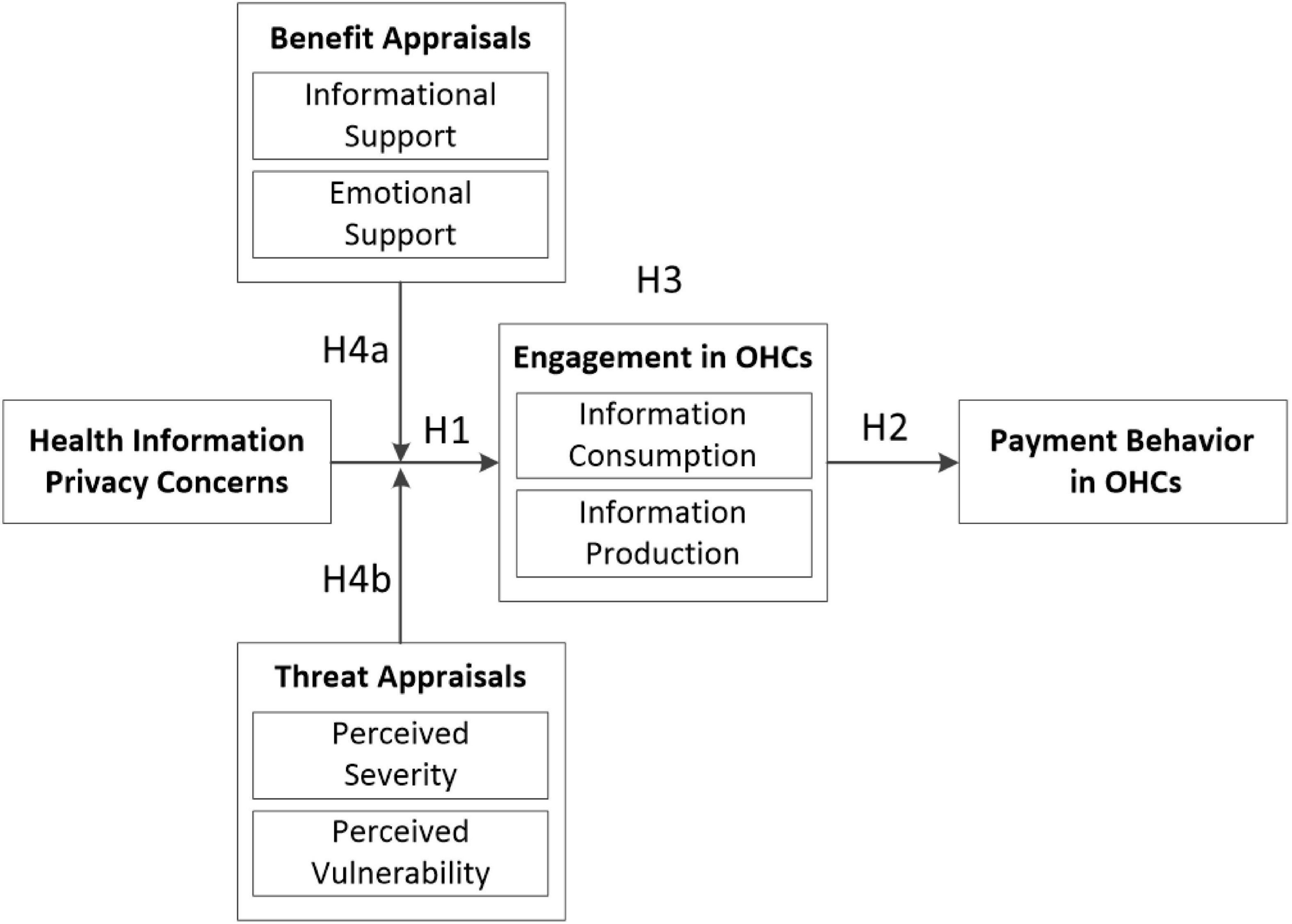
Figure 1. Theoretical model.
Research Design
Data Source
For this study, we designed a questionnaire and uploaded it to the online platform, Credamo. Credamo is a data platform committed to providing solutions for large-scale research, data collection, modeling analysis, and commercial applications for scientific research institutions, enterprises, and individuals. Credamo provides scientific research and educational data services for teachers and students in more than 1,800 universities worldwide. The scope of services covers various disciplines such as management, psychology, medicine, sociology, tourism, and hotel management, while its research studies are accepted by top academic journals. Credamo also provides large-scale research, government affairs management, human resource management, consumer product development, and other information services for both governments and enterprises.
Note that all the data for the present study were collected from Credamo, where data representativeness is guaranteed because of Credamo’s unique sampling method and comprehensive register of users, which covers all provinces, cities, and regions in China and most of their occupations. Table 1 presents the sample statistics.
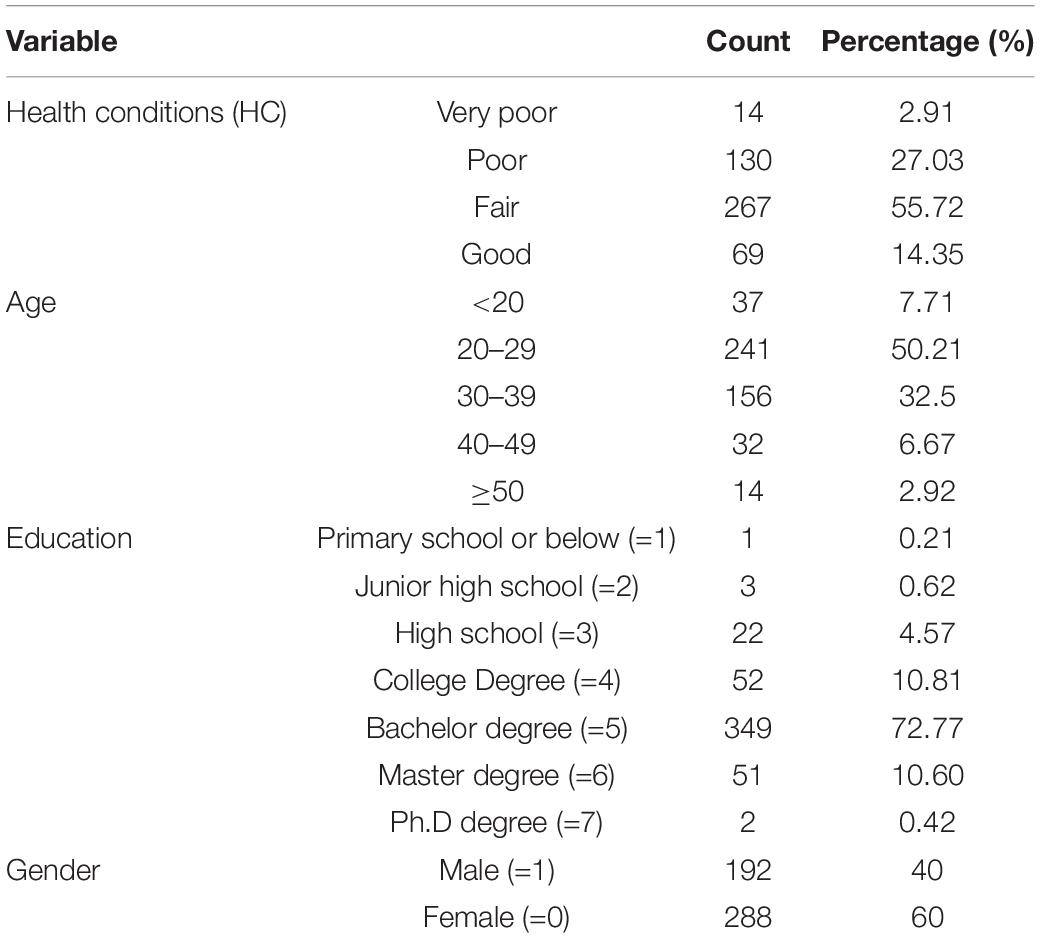
Table 1. Sample characteristics (N = 480).
The questionnaire design process was divided into two stages. First, we sent the questionnaire to experts, who made suggestions on its design. After receiving their feedback, we optimized and modified the questionnaire and developed a final version. Second, we uploaded the questionnaire to Credamo and collected users’ answers. Specifically, the final version of the questionnaire comprised four parts. The first section details the purpose of the questionnaire, emphasizing that data collection is purely conducted for academic purposes, and guarantees the absolute confidentiality of the information. Then, we confirm whether the applicant has previously used OHCs. If not, the survey ends directly, which allows us to ensure the reliability of the results. Next comes the core section, collects data on UE in OHCs, including “views on filling in personal health information,” “views on personal health information leakage,” “specific usage behaviors,” and “the possibility of paying for online medical consulting.” Finally, we asked the participants to fill in their demographic information such as gender, education level, and health status. The constructs and corresponding items are outlined in the first two columns of Table 2.
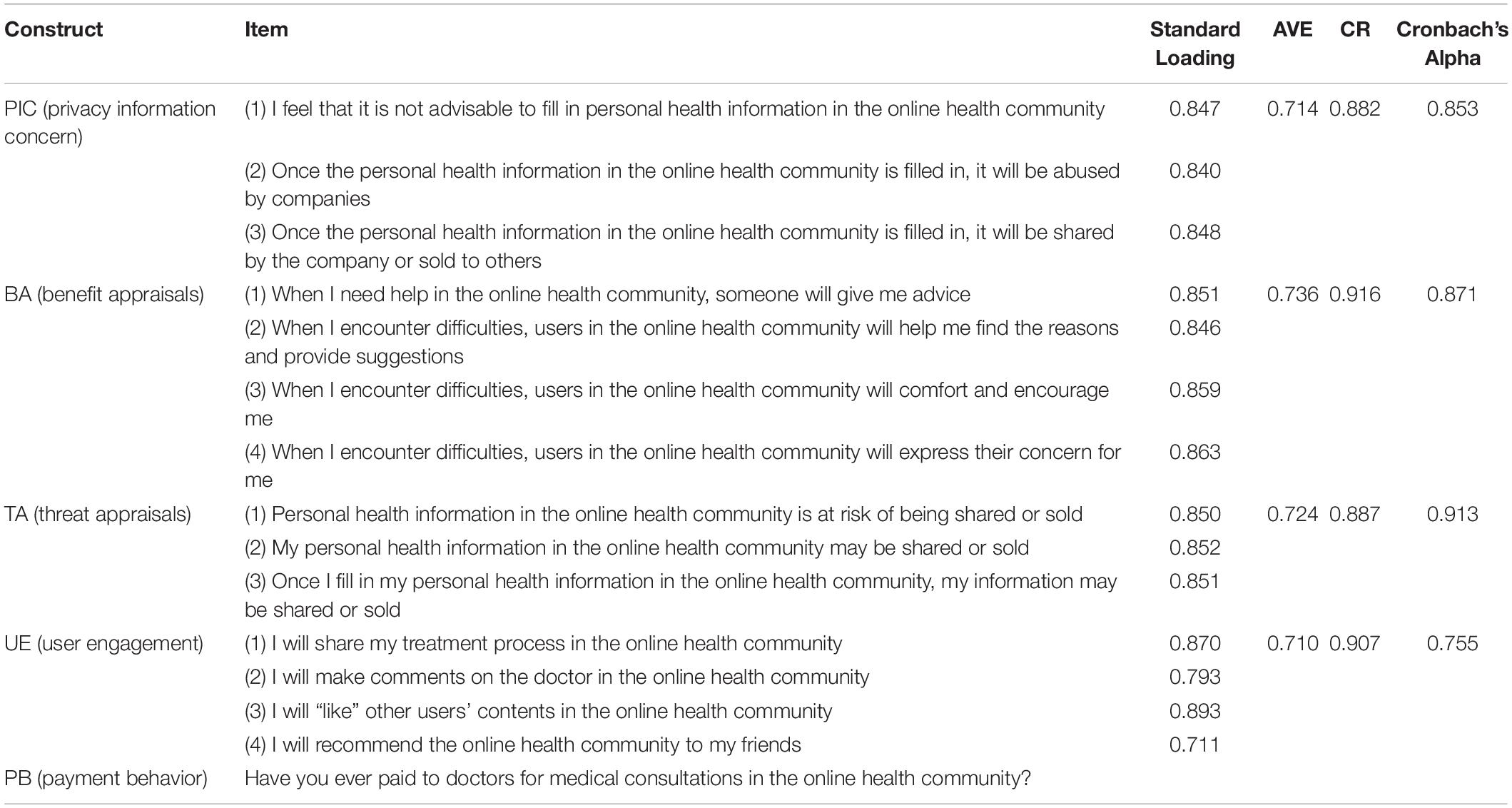
Table 2. Research constructs, measurements, item loadings, and validities.
To accurately identify the impact of privacy concerns on users’ participation in OHCs, the model incorporates many control variables. Considering that factors such as age, educational level, gender, and health status may impact the relationship between privacy concerns and OHC engagement, we incorporated them into the model as control variables. The introduced control variables were consistent with those in the existing literature.
Measurement Assessment
Before identifying the structural model and testing for mediating and moderating effects, several tests were carried out to ensure the validity of the data. First, the standardized loadings of each item on the construct were computed, as shown in the third column of Table 2. We may safely draw the conclusion that the item reliability of all measures is good because all standard loadings are greater than 0.7 (Fornell and Larcker, 1981). Second, the average variance extracted values were calculated, and all four values were greater than 0.5 (Fornell and Larcker, 1981). Third, we derived composite reliability and Cronbach’s alpha. All the values are greater than 0.7 (Hair et al., 2011), indicating the internal consistency and reliability of the measures. Combining the results of the four tests mentioned (see Table 2), we can conclude the validity of the data.
Empirical Results
Correlation
To exclude the influence of multicollinearity, we derived the correlation matrix; the results are shown in Table 3. Note that we only show the correlation coefficients. Multicollinearity exists only when the coefficient is greater than 0.5 and is statistically significant. Table 3 shows that no coefficients satisfied this condition, indicating that no multicollinearity effects exist in the model. Additionally, consistent with the intuitive negative relationship between UE and their Paid, the correlation coefficient between the UE and Paid is positive. Variance inflation factors (VIFs) were calculated to test for other potential multicollinearity problems. The maximum VIF obtained in any of the models was 4.23 and the mean VIF of the complete model [i.e., Model (4) in Table 4] was 3.38, which was substantially below the rule-of-thumb cutoff of 10 for regression models (Ryan, 1997). Therefore, multicollinearity was not considered an important issue in these analyses.
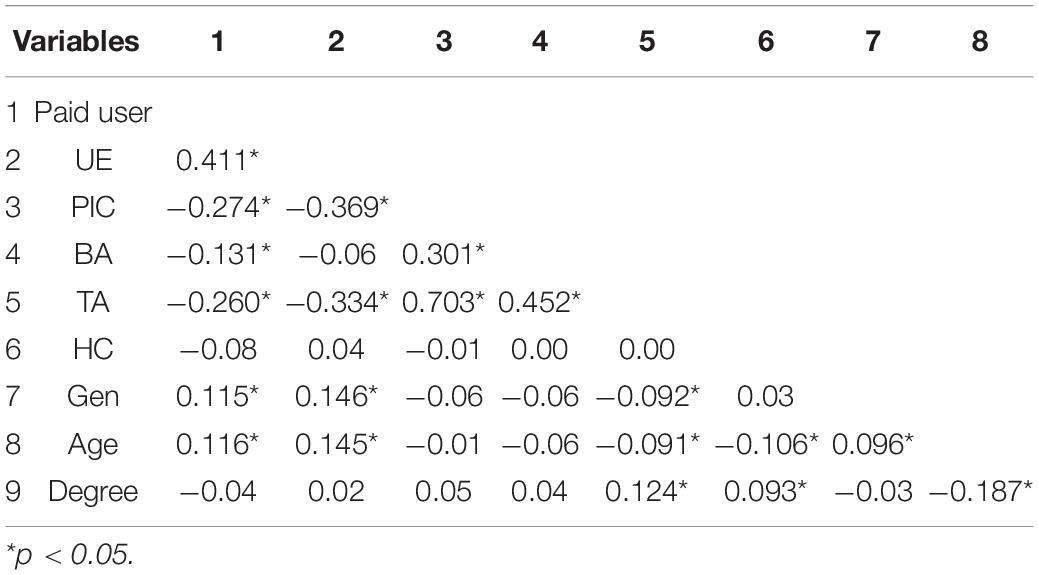
Table 3. Correlation matrix.
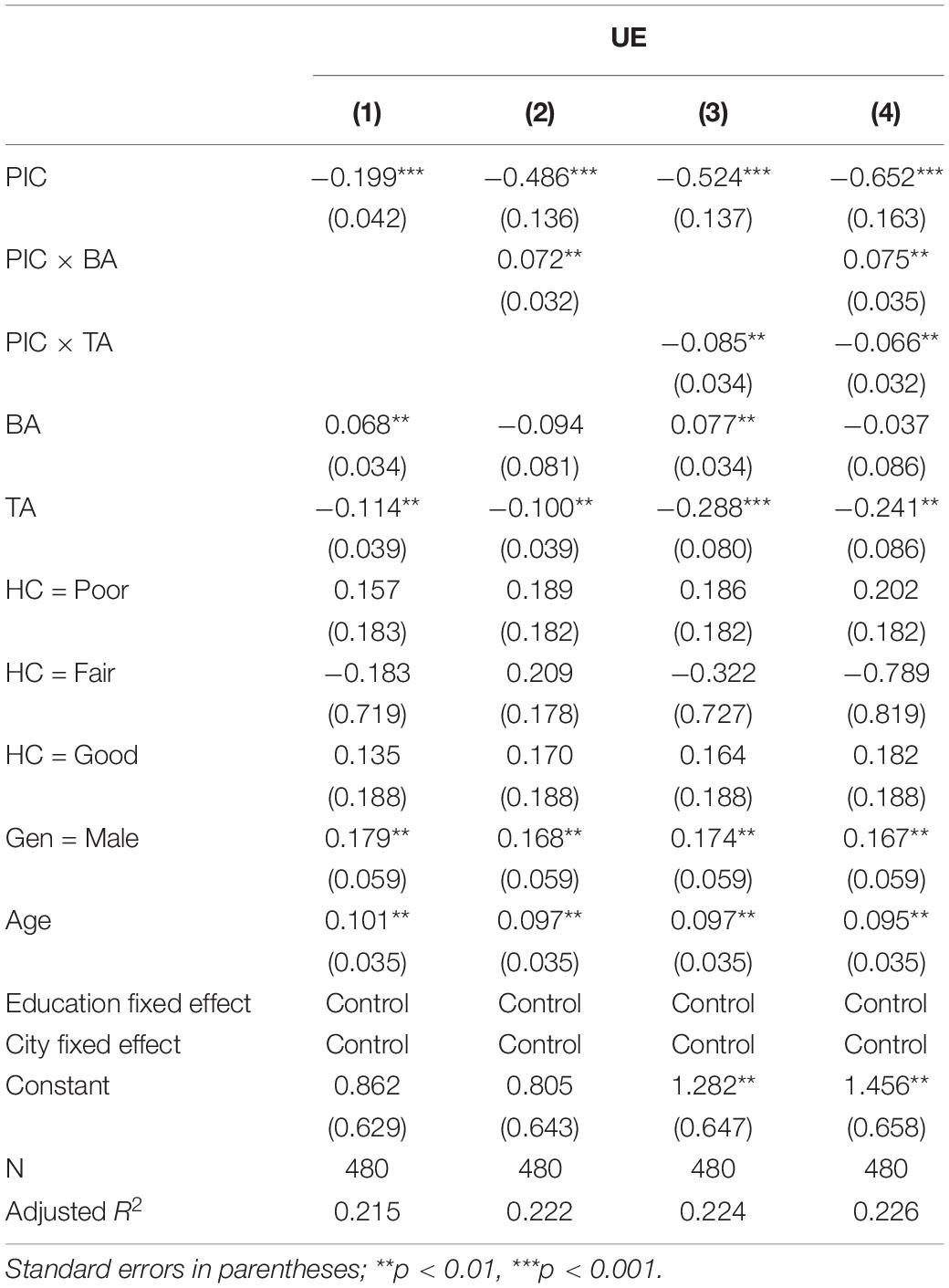
Table 4. Results of the moderating effects.
Main Effect
This study employs the ordinary least squares method (OLS) to test the relationship between users’ health information privacy concerns and their engagement in OHCs. The results are shown in Models (1) and (2) of Table 5. Model (1) only incorporates the control variables. Model (2) adds the dependent variable PIC and shows that the effect of PIC on UE is significantly negative (β = −0.199, p < 0.001). Therefore, H1 (health information privacy concern negatively influences UE in OHCs) is supported.
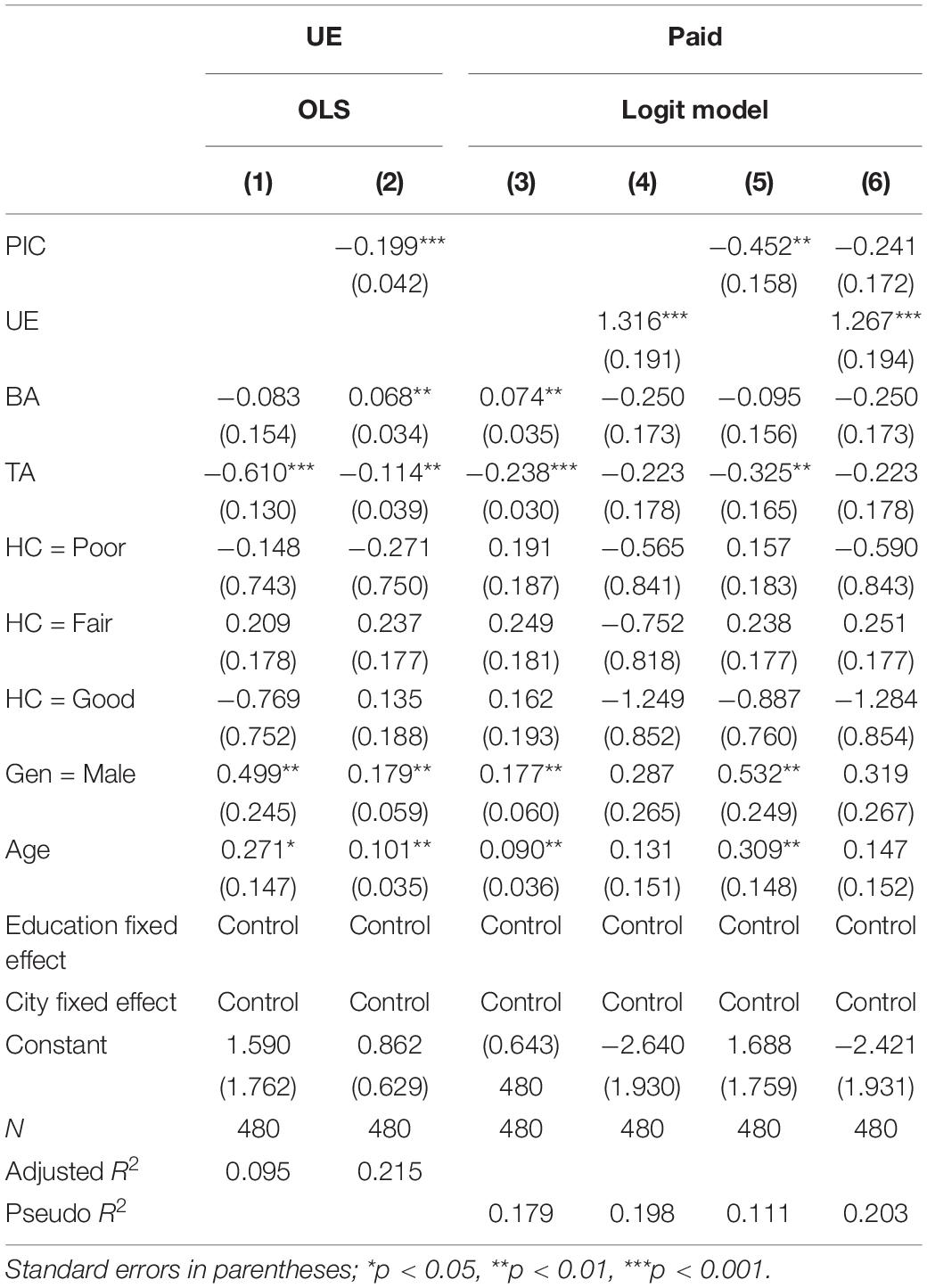
Table 5. Results of the main and mediating effects.
Since Paid is a dichotomous variable, we use a logit model to test the relationship between user OHC engagement and Paid. The results are shown in Models (3) and (4). Model (3) is the baseline. Model (4) shows that the coefficient of UE is positively significant (β = 1.316, p < 0.001). Therefore, H2 (OHCs engagement positively influences users’ Paid in OHCs) is supported.
The coefficients of the control variables show that a higher degree of engagement exists for users who are male and older.
Mediating Effect
We refer to the method of Baron and Kenny (1986) and conduct three-step econometric models to test the mediating model. The first step examines whether health information privacy concerns have an impact on user OHC engagement (i.e., PIC → UE). The results in Model (2) of Table 5 support this relationship. The second step examines whether UE in OHCs has an impact on their Paid (i.e., UE → Paid). The results in Model (4) of Table 5 support this.
Based on these results, the third step examines the relationship between health information privacy concerns and users’ Paid (i.e., PIC → Paid). Model (5) shows that the effect of PIC on Paid is significantly negative (β = -0.452, p < 0.01). After incorporating the mediating variable UE in Model (5), the coefficient of UE is still significant at the significance level of 0.001, while the marginal effect of UE on Paid changes from -0.452 to -0.241, and becomes insignificant (p > 0.05). The results indicate that user OHC engagement plays a fully mediating role in the impact of health information privacy concerns on users’ Paid, supporting H3.
Moderating Effects
To test the moderating effect of BA and TA on the relationship between users’ health information privacy concerns and their OHC engagement, we add the interaction term between health information privacy concerns and BA (i.e., PIC × BA), as well as the interaction term between PIC and TA (i.e., PIC × TA) into the regression model. The results are shown in Table 4.
Models (2) and (4) show that the impact of PIC × BA on UE is positive at the significance level of 0.01, indicating that users’ BA positively moderate the relationship between health information privacy concerns and users’ OHCs engagement. Thus, H4a is supported. In addition, the coefficient of PIC × TA is negative at the significance level of 0.01, which supports H4b that users’ TA increase the likelihood for users with significant health information privacy concerns to engage in OHCs.
Figure 2 shows the moderating effects more intuitively. We added and subtracted a standard deviation on BA and TA and further drew on the relationship between PIC and UE at the different levels of BA or TA. The analysis logic of the two graphs is similar, and both focus on the steepness of the line. As shown on the left side of Figure 2, when BA changed from BA – SD to BA + SD, the line becomes flattener, and the absolute value of the slope decreased, indicating that users’ BA positively moderate the negative relationship between users’ health information privacy concerns and their OHCs engagement. The right side of Figure 2 shows that when TA changed from TA − SD to TA + SD, the line becomes steeper, indicating that users’ TA negatively moderate the relationship between users’ health information privacy concerns and their OHC engagement.
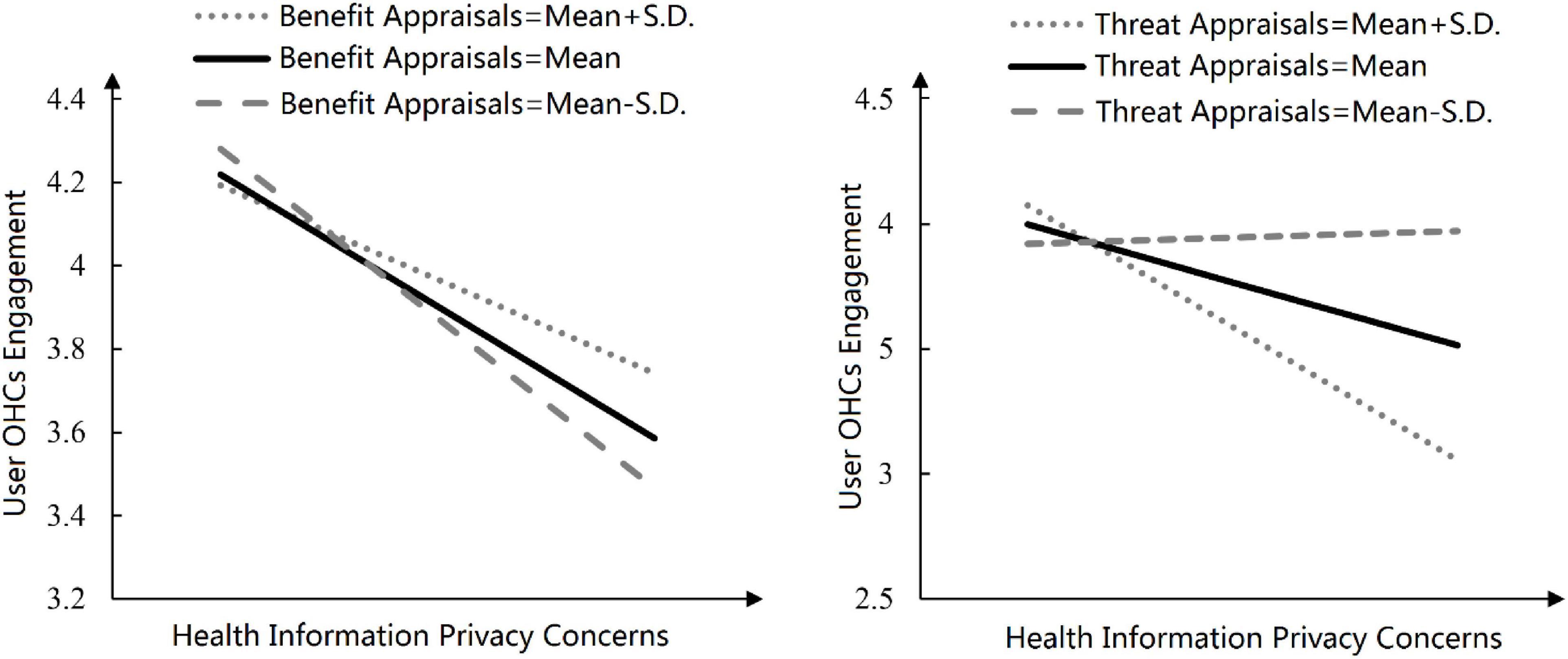
Figure 2. Interaction graphs.
Discussion and Conclusion
Conclusion
This study explores the impact of users’ health information privacy concerns on their engagement and Paid in OHCs, as well as the moderating effects of users’ benefits and TA of sharing information. There are three main conclusions. First, we indicate a negative relationship between users’ health information privacy concerns and their OHC engagement. The higher users’ health information privacy concerns, the lower their OHC engagement. Second, after analyzing Paid in the context of OHCs, we find that UE in OHCs mediates the relationship between users’ health information privacy concerns and their Paid in OHCs. That is, health information privacy concerns affect users’ Paid by influencing their OHC engagement. Third, we identify the moderating effects of BA and TA on the negative relationship between health information privacy concerns and user OHC engagement. Benefit appraisals of using OHCs increase the likelihood that individuals with high health information privacy concerns would engage in OHCs, while TA will decrease the likelihood that individuals with high health information privacy concerns would engage in OHCs.
Theoretical Contributions
Our study’s theoretical contributions can be summarized as follows. First, it extends the existing literature on the antecedents of UE in OHCs by incorporating health information privacy concerns into its analysis. Extant research has identified the antecedents of OHC engagement, and to gain informational support, as well as emotional support, are considered the primary motivations (Ray et al., 2014; Gibbs et al., 2016; Yan et al., 2016; Wang et al., 2017). Safety concerns related to the ongoing COVID-19 pandemic have also fostered enthusiasm for engagement in OHCs (Huang et al., 2021). However, to the best of our knowledge, few studies have been conducted on the impact of information privacy concerns on user engagement. Actually, health information is highly sensitive and requires high accuracy (Markos et al., 2018), which is significantly different from the information in other online communities (Kopalle and Lehmann, 2021). Thus, conclusions in other online communities cannot be applied directly in the context of OHCs. Considering the severe consequences of data breaches, the importance of privacy concerns should not be ignored in users’ decisions to participate in OHCs.
Second, this study sheds light on users’ Paid in OHCs. On the one hand, previous research has mainly discussed UE in OHCs, whereas Paid remains relatively unexplored. OHC users primarily search for health-related information (Wang X. et al., 2020) and professional online medical services (Huang et al., 2021), while aiming to communicate with individuals who have similar experiences (Chou et al., 2018). On the other hand, the scarce studies on Paid in online communities have not been carried out within the context of OHCs. Research on other online communities has shown that users are more inclined to pay for online services to gain stable socializing functions and entertainment value from online communities after they have become emotionally attached (Oestreicher-Singer and Zalmanson, 2013; Brettel et al., 2015; Meng et al., 2020). Thus, combining health information privacy concern and online Paid could provide valuable insights.
Third, this study deals with a research gap by incorporating BA and TA within the context of OHCs. The previous research has suggested that people may become less rational when carrying out benefit–threat analysis (Barth et al., 2019; Jang and Sung, 2021), in which they are inclined to overvalue the merits (Manago and Melton, 2019). The lack of rationality paves the way for analyzing the moderating effect from the perspective of users’ benefits and TA. In contrast, users tend to be more prudential (Pluye et al., 2019) and may take protective measures to mitigate the expected threat by becoming less active in OHCs (Liu et al., 2017; Barth et al., 2019). Thus, elucidating the effects of benefit and threat appraisal is of great significance to understand OHC engagement.
Practical Implications
The practical implications of this study can be summarized as follows. For OHC administrators, at least two objectives are elucidated in this study. First, they should aim to guarantee the protection of users’ private information. This study shows that the more concerned users are about their health information privacy, the lower their engagement in OHCs. Thus, OHC administrators should reduce users’ privacy concerns to foster the long-term development of OHCs, since OHCs are information sharing or information-driven platforms. Specifically, administrators could provide users with more options for information disclosure and increase transparency by informing users why and how their information will be used. Second, administrators should improve users’ stickiness and cultivate their sense of belonging. This study suggests that health information privacy concerns affect users’ Paid via their engagement in OHCs. Intuitively, if a higher proportion of users is willing to pay for services, the platform will reap higher profits; thus, OHC administrators should introduce more measures to increase UE and gradually cultivate their loyalty and sense of belongingness to the platform, which will, in turn, increase the possibility that they will pay for online services (Brettel et al., 2015; Meng et al., 2020).
Additionally, there is one meaningful implication for users. This study indicates that people who perceive the benefits of informational and emotional support from OHCs to be higher tend to engage more frequently in OHCs. In contrast, individuals who perceive the threats inherent to information disclosure to be higher reduce their OHC engagement. The previous research has suggested that people may act less rationally when carrying out benefit-threat analyses (Barth et al., 2019; Jang and Sung, 2021). Thus, users should act rationally and not overestimate or underestimate the perceived benefits and threats, thereby developing reasonable expectations for the support provided in OHCs, which could allow them to obtain a better user experience.
Limitations and Further Research
This study has some limitations that can also provide promising directions for future research. First, the effect of differences in medical service quality should be considered, as the unbalanced distribution of medical resources caused by geographical dispersion influences UE in OHCs. Although the questionnaire designed in this study collected users’ geographic information, it did not analyze these data vis-à-vis the distribution of medical resources or its heterogeneity effect. China has a vast territory, and the distribution of medical resources is highly uneven. The previous studies have shown that OHCs could narrow the quality gap of medical services between urban and rural areas (Goh et al., 2016; Cao and Wang, 2018). Thus, it would be valuable to conduct more research on how medical conditions influence the decision of users with high health information privacy concerns regarding OHC engagement.
Second, the effect of the size of OHCs. Larger communities have more stable cash flows and, in turn, are less likely to suffer data breaches. Additionally, they often have more advanced technology to protect users’ data from being hacked. Thus, OHCs’ size may moderate the relationship between PICs and user engagement, which requires further exploration in future studies.
Data Availability Statement
The original contributions presented in the study are included in the article/supplementary material, further inquiries can be directed to the corresponding author/s.
Ethics Statement
Ethical review and approval was not required for the study on human participants in accordance with the local legislation and institutional requirements. Written informed consent from the (patients/participants or patients/participants legal guardian/next of kin) was not required to participate in this study in accordance with the national legislation and the institutional requirements.
Author Contributions
BW designed the research framework. PL carried out the survey. ML and XH analyzed the data. BW, PL, XH, and ML wrote the manuscript. BW and PL contributed equally to the manuscript. All authors contributed to the article and approved the submitted version.
Funding
This research was funded by the National Social Science Foundation of China (Nos. 72002175, 71902148, and 71972082). China Postdoctoral Science Foundation (No. 2019M660243), Sichuan University (No. 2020CXQ23), and the Fundamental Research Funds for the Central Universities (No. skbsh2020-25).
Conflict of Interest
The authors declare that the research was conducted in the absence of any commercial or financial relationships that could be construed as a potential conflict of interest.
Publisher’s Note
All claims expressed in this article are solely those of the authors and do not necessarily represent those of their affiliated organizations, or those of the publisher, the editors and the reviewers. Any product that may be evaluated in this article, or claim that may be made by its manufacturer, is not guaranteed or endorsed by the publisher.
References
Acquisti, A., Brandimarte, L., and Loewenstein, G. (2015). Privacy and human behavior in the age of information. Science 347, 509–514. doi: 10.1126/science.aaa1465
Agarwal, R., Dugas, M., Gao, G., and Kannan, P. K. (2019). Emerging technologies and analytics for a new era of value-centered marketing in Healthcare. J. Acad. Mark. Sci. 48, 9–23. doi: 10.1007/s11747-019-00692-4
Aivazpour, Z., and Rao, V. S. (2020). Information disclosure and privacy paradox. Database Adv. Inf. Syst. 51, 14–36. doi: 10.1145/3380799.3380803
Auxier, B., Rainie, L., Anderson, M., Perrin, A., Kumar, M., and Turner, E. (2020). Americans and Privacy: Concerned, Confused and Feeling Lack of Control Over their Personal Information. Pew Research Center: Internet, Science & Tech. Available online at: https://www.pewresearch.org/internet/2019/11/15/americans-and-privacy-concerned-confused-and-feeling-lack-of-control-over-their-personal-information/ (accessed January 23, 2022).
Bansal, G., Zahedi, F. M., and Gefen, D. (2010). The impact of personal dispositions on information sensitivity, privacy concern and trust in disclosing health information online. Decis. Support Syst. 49, 138–150. doi: 10.1016/j.dss.2010.01.010
Baron, R. M., and Kenny, D. A. (1986). The moderator–mediator variable distinction in social psychological research: conceptual, strategic, and statistical considerations. J. Pers. Soc. Psychol. 51, 1173–1182. doi: 10.1037/0022-3514.51.6.1173
Barth, S., de Jong, M. D. T., Junger, M., Hartel, P. H., and Roppelt, J. C. (2019). Putting the privacy paradox to the test: online privacy and security behaviors among users with technical knowledge, privacy awareness, and financial resources. Telemat. Inf. 41, 55–69. doi: 10.1016/j.tele.2019.03.003
Bateman, P. J., Gray, P. H., and Butler, B. S. (2011). Research note: the impact of community commitment on participation in online communities. Inf. Syst. Res. 22, 841–854. doi: 10.1287/isre.1090.0265
Bode, L., and Vraga, E. K. (2017). See something, say something: correction of global health misinformation on social media. Health Commun. 33, 1131–1140. doi: 10.1080/10410236.2017.1331312
Bowden, J. L. H., Conduit, J., Hollebeek, L. D., Luoma-aho, V., and Solem, B. A. (2018). “The role of social capital in shaping consumer engagement within online brand communities,” in The Handbook of Communication Engagement, eds K. A. Johnston and M. Taylor (Hoboken, NJ: Wiley), 491–504. doi: 10.1002/9781119167600.ch33
Brady, J., Kelly, M., and Stein, S. (2017). The trump effect: with no peer review, how do we know what to really believe on social media? Clin. Colon Rectal Surg. 30, 270–276. doi: 10.1055/s-0037-1604256
Brettel, M., Reich, J. C., Gavilanes, J. M., and Flatten, T. C. (2015). What drives advertising success on Facebook? An advertising-effectiveness model. J. Adv. Res. 55, 162–175. doi: 10.2501/jar-55-2-162-175
Büchi, M., Just, N., and Latzer, M. (2016). Caring is not enough: the importance of internet skills for online privacy protection. Inf. Commun. Soc. 20, 1261–1278. doi: 10.1080/1369118x.2016.1229001
Cadwalladr, C., and Graham-Harrison, E. (2018). Revealed: 50 Million Facebook Profiles Harvested for Cambridge Analytica in Major Data Breach. The Guardian. Available online at: https://www.theguardian.com/news/2018/mar/17/cambridge-analytica-facebook-influence-us-election (accessed January 11, 2022).
Cao, X., and Wang, D. (2018). The role of online communities in reducing urban-rural health disparities in China. J. Assoc. Inf. Sci. Technol. 69, 890–899. doi: 10.1002/asi.24013
Chen, L., Baird, A., and Straub, D. (2019). Fostering participant health knowledge and attitudes: an econometric study of a chronic disease-focused online health community. J. Manag. Inf. Syst. 36, 194–229. doi: 10.1080/07421222.2018.1550547
Chen, L., Baird, A., and Straub, D. (2020). A linguistic signaling model of social support exchange in online health communities. Decis. Support Syst. 130:113233. doi: 10.1016/j.dss.2019.113233
Chen, L., Wang, X., and Peng, T. Q. (2018). Nature and diffusion of gynecologic cancer–related misinformation on social media: analysis of tweets. J. Med. Internet Res. 20:e11515. doi: 10.2196/11515
Chou, W. Y. S., Oh, A., and Klein, W. M. (2018). Addressing health-related misinformation on social media. JAMA. 320, 2417. doi: 10.1001/jama.2018.16865
Constant, D., Kiesler, S., and Sproull, L. (1996). The kindness of strangers: the usefulness of electronic weak ties for technical advice. Organ. Sci. 7, 119–135. doi: 10.1287/orsc.7.2.119
Crié, D., and Chebat, J. C. (2013). Health marketing: toward an integrative perspective. J. Bus. Res. 66, 123–126. doi: 10.1016/j.jbusres.2012.09.002
Crossler, R. E., and Bélanger, F. (2019). Why would I use location-protective settings on my smartphone? Motivating protective behaviors and the existence of the privacy knowledge-belief gap. Inf. Syst. Res. 30, 995–1006. doi: 10.1287/isre.2019.0846
Dahl, A. J., Milne, G. R., and Peltier, J. W. (2021). Digital health information seeking in an omni-channel environment: a shared decision-making and service-dominant logic perspective. J. Bus. Res. 125, 840–850. doi: 10.1016/j.jbusres.2019.02.025
Debatin, B., Lovejoy, J. P., Horn, A. K., and Hughes, B. N. (2009). Facebook and online privacy: attitudes, behaviors, and unintended consequences. J. Comput. Mediat. Commun. 15, 83–108. doi: 10.1111/j.1083-6101.2009.01494.x
Deng, Z., Hong, Z., Zhang, W., Evans, R., and Chen, Y. (2019). The effect of online effort and reputation of physicians on patients’ choice: 3-wave data analysis of china’s good doctor website. J. Med. Internet Res. 21:e10170. doi: 10.2196/10170
Dinev, T., and Hart, P. (2005). Internet privacy concerns and social awareness as determinants of intention to transact. Int. J. Electron. Commer. 10, 7–29. doi: 10.2753/jec1086-4415100201
Dogruel, L., Joeckel, S., and Vitak, J. (2017). The valuation of privacy premium features for smartphone Apps: the influence of defaults and expert recommendations. Comput. Hum. Behav. 77, 230–239. doi: 10.1016/j.chb.2017.08.035
Fornell, C., and Larcker, D. F. (1981). Structural equation models with unobservable variables and measurement error: algebra and statistics. J. Mark. Res. 18, 39–50. doi: 10.2307/3151335
Gal-Or, E., Gal-Or, R., and Penmetsa, N. (2018). The role of user privacy concerns in shaping competition among platforms. Inf. Syst. Res. 29, 698–722. doi: 10.1287/isre.2017.0730
Gao, C. C., Espinoza Suarez, N. R., Toloza, F. J. K., Malaga Zuniga, A. S., McCarthy, S. R., Boehmer, K. R., et al. (2021). Patients’ perspective about the cost of diabetes management: an analysis of online health communities. Mayo Clin. Proc. Innov. Qual. Outcomes 5, 898–906. doi: 10.1016/j.mayocpiqo.2021.07.003
Gao, W., Liu, Z., and Li, J. (2017). How does social presence influence SNS addiction? A belongingness theory perspective. Comput. Hum. Behav. 77, 347–355. doi: 10.1016/j.chb.2017.09.002
Gerhart, N., and Koohikamali, M. (2019). Social network migration and anonymity expectations: what anonymous social network Apps offer. Comput. Hum. Behav. 95, 101–113. doi: 10.1016/j.chb.2019.01.030
Gibbs, J. L., Kim, H., and Ki, S. (2016). Investigating the role of control and support mechanisms in members’ sense of virtual community. Commun. Res. 46, 117–145. doi: 10.1177/0093650216644023
Goh, J. M., Gao, G., and Agarwal, R. (2016). The creation of social value: can an online health community reduce rural-urban health disparities? MIS Q. 40, 247–263. doi: 10.25300/misq/2016/40.1.11
Goldfarb, A., and Tucker, C. (2012). Shifts in privacy concerns. Am. Econ. Rev. 102, 349–353. doi: 10.1257/aer.102.3.349
Goldsmith, D. J., Vangelisti, A. L., Fitzpatrick, M. A., and Reis, H. T. (2013). Communicating Social Support. Cambridge: Cambridge University Press.
Gong, K., Xu, Z., Cai, Z., Chen, Y., and Wang, Z. (2020). Internet hospitals help prevent and control the epidemic of COVID-19 in China: multicenter user profiling study. J. Med. Internet Res. 22:e18908. doi: 10.2196/18908
Griffiths, F., Cave, J., Boardman, F., Ren, J., Pawlikowska, T., Ball, R., et al. (2012). Social networks: the future for health care delivery. Soc. Sci. Med. 75, 2233–2241. doi: 10.1016/j.socscimed.2012.08.023
Grundy, Q., Chiu, K., Held, F., Continella, A., Bero, L., and Holz, R. (2019). Data sharing practices of medicines related Apps and the mobile ecosystem: traffic, content, and network analysis. BMJ 364:l920. doi: 10.1136/bmj.l920
Gu, J., Xu, Y., Xu, H., Zhang, C., and Ling, H. (2017). Privacy concerns for mobile App download: an elaboration likelihood model perspective. Decis. Support Syst. 94, 19–28. doi: 10.1016/j.dss.2016.10.002
Guo, J., Liu, Z., and Liu, Y. (2016). Key success factors for the launch of government social media platform: identifying the formation mechanism of continuance intention. Comput. Hum. Behav. 55, 750–763. doi: 10.1016/j.chb.2015.10.004
Guo, S., Guo, X., Fang, Y., and Vogel, D. (2017). How doctors gain social and economic returns in online health-care communities: a professional capital perspective. J. Manag. Inf. Syst. 34, 487–519. doi: 10.1080/07421222.2017.1334480
Hair, J. F., Ringle, C. M., and Sarstedt, M. (2011). PLS-SEM: indeed a silver bullet. J. Mark. Theory Pract. 19, 139–152. doi: 10.2753/mtp1069-6679190202
Hennig-Schmidt, H., and Wiesen, D. (2014). Other-regarding behavior and motivation in health care provision: an experiment with medical and non-medical students. Soc. Sci. Med. 108, 156–165. doi: 10.1016/j.socscimed.2014.03.001
Herath, T., Chen, R., Wang, J., Banjara, K., Wilbur, J., and Rao, H. R. (2014). Security services as coping mechanisms: an investigation into user intention to adopt an email authentication service. Inf. Syst. J. 24, 61–84. doi: 10.1111/j.1365-2575.2012.00420.x
Heravi, A., Mubarak, S., and Raymond Choo, K.-K. (2018). Information privacy in online social networks: uses and gratification perspective. Comput. Hum. Behav. 84, 441–459. doi: 10.1016/j.chb.2018.03.016
Huang, W., Cao, B., Yang, G., Luo, N., and Chao, N. (2021). Turn to the internet first? Using online medical behavioral data to forecast COVID-19 epidemic trend. Inf. Process. Manag. 58:102486. doi: 10.1016/j.ipm.2020.102486
Jang, C., and Sung, W. J. (2021). Beyond the privacy paradox: the moderating effect of online privacy concerns on online service use behavior. Telemat. Inf. 65:101715. doi: 10.1016/j.tele.2021.101715
Jin, J., Yan, X., Li, Y., and Li, Y. (2016). How users adopt healthcare information: an empirical study of an online Q&A Community. Int. J. Med. Inf. 86, 91–103. doi: 10.1016/j.ijmedinf.2015.11.002
Jozani, M., Ayaburi, E., Ko, M., and Choo, K.-K. R. (2020). Privacy concerns and benefits of engagement with social media-enabled Apps: a privacy calculus perspective. Comput. Hum. Behav. 107:106260. doi: 10.1016/j.chb.2020.106260
Kim, D., Park, K., Park, Y., and Ahn, J. H. (2019). Willingness to provide personal information: perspective of privacy calculus in IOT Services. Comput. Hum. Behav. 92, 273–281. doi: 10.1016/j.chb.2018.11.022
Kopalle, P. K., and Lehmann, D. R. (2021). Big Data, marketing analytics, and public policy: implications for health care. J. Public Policy Mark. 40, 453–456. doi: 10.1177/0743915621999031
Kumar, S., Asthana, R., Upadhyay, S., Upreti, N., and Akbar, M. (2019). Fake news detection using deep learning models: a novel approach. Trans. Emerg. Telecommun. Technol. 31:e3767. doi: 10.1002/ett.3767
Li, Y., Fan, Z., Yuan, X., and Zhang, X. (2022). Recognizing fake information through a developed feature scheme: a user study of health misinformation on social media in China. Inf. Process. Manage. 59:102769. doi: 10.1016/j.ipm.2021.102769
Li, Y., Ma, X., Song, J., Yang, Y., and Ju, X. (2019). Exploring the effects of online rating and the activeness of physicians on the number of patients in an online health community. Telemed. Health. 25, 1090–1098. doi: 10.1089/tmj.2018.0192
Li, Y., Wang, X., Lin, X., and Hajli, M. (2018). Seeking and sharing health information on social media: a net valence model and cross-cultural comparison. Technol. Forecast. Soc. Change 126, 28–40. doi: 10.1016/j.techfore.2016.07.021
Liu, Q. B., Liu, X., and Guo, X. (2020). The effects of participating in a physician-driven online health community in managing chronic disease: evidence from two natural experiments. MIS Q. 44, 391–419. doi: 10.25300/misq/2020/15102
Liu, S., Wang, L., and Huang, W. W. (2017). Effects of process and outcome controls on business process outsourcing performance: moderating roles of vendor and client capability risks. Eur. J. Oper. Res. 260, 1115–1128. doi: 10.1016/j.ejor.2017.01.020
Liu, S., Xiao, W., Fang, C., Zhang, X., and Lin, J. (2020). Social support, belongingness, and value co-creation behaviors in online health communities. Telemat. Inf. 50:101398. doi: 10.1016/j.tele.2020.101398
Liu, X., Guo, X., Wu, H., and Wu, T. (2016). The impact of individual and organizational reputation on physicians’ appointments online. Int. J. Electron. Commer. 20, 551–577. doi: 10.1080/10864415.2016.1171977
Lu, N., and Wu, H. (2016). Exploring the impact of word-of-mouth about physicians’ service quality on patient choice based on online health communities. BMC Med. Inf. Decis. Mak. 16:151. doi: 10.1186/s12911-016-0386-0
Luo, P., Chen, K., Wu, C., and Li, Y. (2017). Exploring the social influence of multichannel access in an online health community. J. Assoc. Inf. Sci. Technol. 69, 98–109. doi: 10.1002/asi.23928
Malm, S. (2018). Hushand Divorces Wife After Seeing her with Another Man on Google Maps. Daily Mail Online. Available online at: https://www.dailymail.co.uk/news/article-6264139/Husband-divorces-wife-seeing-cuddling-man-Google-Maps.html (accessed January 24, 2022).
Manago, A. M., and Melton, C. J. (2019). Emerging adults’ views on masspersonal self-disclosure and their bridging social capital on Facebook. J. Adolesc. Res. 35, 111–146. doi: 10.1177/0743558419883789
Markos, E., Labrecque, L. I., and Milne, G. R. (2018). A new information lens: the self-concept and exchange context as a means to understand information sensitivity of anonymous and personal identifying information. J. Interact. Mark. 42, 46–62. doi: 10.1016/j.intmar.2018.01.004
Meng, L., Liu, F., Chen, S., and Duan, K. (2020). Can I arouse you: study on the influence mechanism of different types of live internet celebrity information source characteristics on consumers’ purchase intention. Nankai Manage. Rev. 23, 131–143.
Milne, G. R., Pettinico, G., Hajjat, F. M., and Markos, E. (2016). Information sensitivity typology: mapping the degree and type of risk consumers perceive in personal data sharing. J. Consum. Aff. 51, 133–161. doi: 10.1111/joca.12111
Mirzaei, T., and Esmaeilzadeh, P. (2021). Engagement in online health communities: channel expansion and social exchanges. Inf. Manag. 58:103404. doi: 10.1016/j.im.2020.103404
Mo, P. K., and Coulson, N. S. (2012). Developing a model for online support group use, empowering processes and psychosocial outcomes for individuals living with HIV/AIDS. Psychol. Health 27, 445–459. doi: 10.1080/08870446.2011.592981
Nambisan, P. (2011). Information seeking and social support in online health communities: impact on patients’ perceived empathy. J. Am. Med. Inf. Assoc. 18, 298–304. doi: 10.1136/amiajnl-2010-000058
Nangsangna, R. D., and Da-Costa Vroom, F. (2019). Factors influencing online health information seeking behavior among patients in Kwahu West Municipal, Nkawkaw, Ghana. Online J. Public Health Inf. 11:e13. doi: 10.5210/ojphi.v11i2.10141
Nettleton, S., Burrows, R., and O’Malley, L. (2005). The mundane realities of the everyday lay use of the internet for health, and their consequences for media convergence. Sociol. Health Ill. 27, 972–992. doi: 10.1111/j.1467-9566.2005.00466.x
Oestreicher-Singer, G., and Zalmanson, L. (2013). Content or community? A digital business strategy for content providers in the social age. MIS Q. 37, 591–616. doi: 10.25300/misq/2013/37.2.12
Petrovčič, A., and Petrič, G. (2014). Differences in intrapersonal and interactional empowerment between lurkers and posters in health-related online support communities. Comput. Hum. Behav. 34, 39–48. doi: 10.1016/j.chb.2014.01.008
Pettinico, G., Milne, G. R., and Miller, E. G. (2020). Quantification of self in third-party-administered wellness programs: the impact of perceived self-empowerment. J. Consum. Aff. 54, 159–176. doi: 10.1111/joca.12250
Pluye, P., El Sherif, R., Granikov, V., Hong, Q. N., Vedel, I., Galvao, M. C., et al. (2019). Health outcomes of online consumer health information: a systematic mixed studies review with framework synthesis. J. Assoc. Inf. Sci. Technol. 70, 643–659. doi: 10.1002/asi.24178
Pour, M. S., Mangino, A., Friday, K., Rathbun, M., Bou-Harb, E., Iqbal, F., et al. (2019). “Data-driven curation, learning and analysis for inferring evolving IOT botnets in the wild,” in Proceedings of the 14th International Conference on Availability, Reliability and Security, (New YorkNY: Association for Computing Machinery), 1–10. doi: 10.1145/3339252.3339272
Rains, S. A., and Young, V. (2009). A meta-analysis of research on formal computer-mediated support groups: examining group characteristics and health outcomes. Hum. Commun. Res. 35, 309–336. doi: 10.1111/j.1468-2958.2009.01353.x
Ray, S., Kim, S. S., and Morris, J. G. (2014). The central role of engagement in online communities. Inf. Syst. Res. 25, 528–546. doi: 10.1287/isre.2014.0525
Robin DiMatteo, M., and Hays, R. (1980). The significance of patients’ perceptions of physician conduct. J. Commun. Health 6, 18–34. doi: 10.1007/bf01324054
Rocher, L., Hendrickx, J. M., and de Montjoye, Y. A. (2019). Estimating the success of re-identifications in incomplete datasets using generative models. Nat. Commun. 10:3069. doi: 10.1038/s41467-019-10933-3
Rogers, R. W. (1975). A protection motivation theory of fear appeals and attitude change1. J. Psychol. 91, 93–114. doi: 10.1080/00223980.1975.9915803
Rohm, A. J., and Milne, G. R. (2004). Just what the doctor ordered: the role of information sensitivity and trust in reducing medical information privacy concern. J. Bus. Res. 57, 1000–1011. doi: 10.1016/S0148-2963(02)00345-4
Ruokolainen, H., and Widén, G. (2020). Conceptualising misinformation in the context of asylum seekers. Inf. Process. Manag. 57:102127. doi: 10.1016/j.ipm.2019.102127
Sicilia, R., Lo Giudice, S., Pei, Y., Pechenizkiy, M., and Soda, P. (2018). Twitter rumour detection in the health domain. Expert Syst. Appl. 110, 33–40. doi: 10.1016/j.eswa.2018.05.019
Silver, L., and Huang, C. (2020). Smartphone, Social Media Users have Broader Social Networks in Emerging Economies. Pew Research Center: Internet, Science & Tech. Available online at: https://www.pewresearch.org/internet/2019/08/22/in-emerging-economies-smartphone-and-social-media-users-have-broader-social-networks/ (accessed January 12, 2022).
Slepchuk, A. N., Milne, G. R., and Swani, K. (2022). Overcoming privacy concerns in consumers’ use of health information technologies: a justice framework. J. Bus. Res. 141, 782–793. doi: 10.1016/j.jbusres.2021.11.073
Smith, H. J., Dinev, T., and Xu, H. (2011). Information privacy research: an interdisciplinary review. MIS Q. 35, 989–1015. doi: 10.2307/41409970
Song, C., Ning, N., Zhang, Y., and Wu, B. (2021). A multimodal fake news detection model based on crossmodal attention residual and multichannel convolutional neural networks. Inf. Process. Manag. 58:102437. doi: 10.1016/j.ipm.2020.102437
Van Oerle, S., Mahr, D., and Lievens, A. (2016). Coordinating online health communities for cognitive and affective value creation. J. Serv. Manag. 27, 481–506. doi: 10.1108/josm-09-2015-0264
Van Uden-Kraan, C. F., Drossaert, C. H. C., Taal, E., Seydel, E. R., and van de Laar, M. A. F. J. (2009). Participation in online patient support groups endorses patients’ empowerment. Patient Educ. Couns. 74, 61–69. doi: 10.1016/j.pec.2008.07.044
Vogel, L. (2017). Viral misinformation threatens public health. Can. Med. Assoc. J. 189:e1567. doi: 10.1503/cmaj.109-5536
Wang, D., Hu, B., Hu, C., Zhu, F., Liu, X., Zhang, J., et al. (2020). Clinical characteristics of 138 hospitalized patients with 2019 novel coronavirus-infected pneumonia in Wuhan, China. JAMA 323:1061. doi: 10.1001/jama.2020.1585
Wang, L., Yan, L., Zhou, T., Guo, X., and Heim, G. R. (2020). Understanding physicians’ online-offline behavior dynamics: an empirical study. Inf. Syst. Res. 31, 537–555. doi: 10.1287/isre.2019.0901
Wang, X., Shi, J., and Kong, H. (2020). Online health information seeking: a review and meta-analysis. Health Commun. 36, 1163–1175. doi: 10.1080/10410236.2020.1748829
Wang, X., Zhao, K., and Street, N. (2017). Analyzing and predicting user participations in online health communities: a social support perspective. J. Med. Internet Res. 19:e130. doi: 10.2196/jmir.6834
Ward, S., Bridges, K., and Chitty, B. (2005). Do incentives matter? An examination of online privacy concerns and willingness to provide personal and financial information. J. Mark. Commun. 11, 21–40. doi: 10.1080/1352726042000263575
Waszak, P. M., Kasprzycka-Waszak, W., and Kubanek, A. (2018). The spread of medical fake news in social media: the pilot quantitative study. Health Policy Technol. 7, 115–118. doi: 10.1016/j.hlpt.2018.03.002
Welbourne, J. L., Blanchard, A. L., and Wadsworth, M. B. (2013). Motivations in virtual health communities and their relationship to community, connectedness and stress. Comput. Hum. Behav. 29, 129–139. doi: 10.1016/j.chb.2012.07.024
Wellman, B., and Gulia, M. (1999). “Net surfers don’t ride alone: virtual communities as communities,” in Communities in Cyberspace, eds P. Kollock and M. Smith (Berkley, CA: University of California Press).
Widjaja, A. E., Chen, J. V., Sukoco, B. M., and Ha, Q. A. (2019). Understanding users’ willingness to put their personal information on the personal cloud-based storage applications: an empirical study. Comput. Hum. Behav. 91, 167–185. doi: 10.1016/j.chb.2018.09.034
Wirth, J., Maier, C., Laumer, S., and Weitzel, T. (2021). Laziness as an explanation for the privacy paradox: a longitudinal empirical investigation. Internet Res. 32, 24–54. doi: 10.1108/intr-10-2019-0439
Wong, D. K. K., and Cheung, M.-K. (2019). Online health information seeking and eHealth literacy among patients attending a primary care clinic in Hong Kong: a cross-sectional survey. J. Med. Internet Res. 21:e10831. doi: 10.2196/10831
Wottrich, V. M., Reijmersdal, E. A., and Smit, E. G. (2018). App users unwittingly in the spotlight: a model of privacy protection in mobile Apps. J. Consum. Aff. 53, 1056–1083. doi: 10.1111/joca.12218
Wu, H., and Lu, N. (2018). Service provision, pricing, and patient satisfaction in online health communities. Int. J. Med. Inf. 110, 77–89. doi: 10.1016/j.ijmedinf.2017.11.009
Wu, H., Deng, Z., Wang, B., and Wang, H. (2021). How online health community participation affects physicians’ performance in hospitals: empirical evidence from China. Inf. Manage. 58:103443. doi: 10.1016/j.im.2021.103443
Yan, L., and Tan, Y. (2014). Feeling blue? Go online: an empirical study of social support among patients. Inf. Syst. Res. 25, 690–709. doi: 10.1287/isre.2014.0538
Yan, Z., Wang, T., Chen, Y., and Zhang, H. (2016). Knowledge sharing in online health communities: a social exchange theory perspective. Inf. Manag. 53, 643–653. doi: 10.1016/j.im.2016.02.001
Yu, Y., Yang, J. P., Shiu, C.-S., Simoni, J. M., Xiao, S., Chen, W. T., et al. (2015). Psychometric testing of the Chinese version of the medical outcomes study social support survey among people living with HIV/AIDS in China. Appl. Nurs. Res. 28, 328–333. doi: 10.1016/j.apnr.2015.03.006
Zarouali, B., Poels, K., Ponnet, K., and Walrave, M. (2018). “Everything under control?”: privacy control salience influences both critical processing and perceived persuasiveness of targeted advertising among adolescents. Cyberpsychology 12:5. doi: 10.5817/cp2018-1-5
Zhang, X., Liu, S., Chen, X., Wang, L., Gao, B., and Zhu, Q. (2018). Health information privacy concerns, antecedents, and information disclosure intention in online health communities. Inf. Manag. 55, 482–493. doi: 10.1016/j.im.2017.11.003
Zhang, X., Liu, S., Deng, Z., and Chen, X. (2017). Knowledge sharing motivations in online health communities: a comparative study of health professionals and normal users. Comput. Hum. Behav. 75, 797–810. doi: 10.1016/j.chb.2017.06.028
Zhao, Y., and Zhang, J. (2017). Consumer health information seeking in social media: a literature review. Health Inf. Librar. J. 34, 268–283. doi: 10.1111/hir.12192
Zhao, Y., Da, J., and Yan, J. (2021). Detecting health misinformation in online health communities: incorporating behavioral features into machine learning based approaches. Inf. Process. Manage. 58:102390. doi: 10.1016/j.ipm.2020.102390
Zhou, J., Liu, F., and Zhou, H. (2018). Understanding health food messages on Twitter for health literacy promotion. Perspect. Public Health 138, 173–179. doi: 10.1177/1757913918760359
Keywords: privacy concerns, health information, online behavior, payment behavior, online health communities
Citation: Wu B, Luo P, Li M and Hu X (2022) The Impact of Health Information Privacy Concerns on Engagement and Payment Behaviors in Online Health Communities. Front. Psychol. 13:861903. doi: 10.3389/fpsyg.2022.861903
Received: 25 January 2022; Accepted: 08 March 2022;
Published: 08 April 2022.
Edited by:
Libo Liu, The University of Melbourne, AustraliaReviewed by:
Kristijan Mirkovski, Deakin University, AustraliaChunxiao Yin, Southwest University, China
Copyright © 2022 Wu, Luo, Li and Hu. This is an open-access article distributed under the terms of the Creative Commons Attribution License (CC BY). The use, distribution or reproduction in other forums is permitted, provided the original author(s) and the copyright owner(s) are credited and that the original publication in this journal is cited, in accordance with accepted academic practice. No use, distribution or reproduction is permitted which does not comply with these terms.
*Correspondence: Xiao Hu, aHV4aWFvQHN3dWZlLmVkdS5jbg==