 Wenli Xiong1
 Lijuan He
- 1Health Management Center, Affiliated Hospital of Southwest Medical University, Luzhou, Sichuan, China
- 2Department of Urology, Yibin Fifth People’s Hospital, Yibin, Sichuan, China
Objective: The rise of online platforms like Douyin, Baidu, and other Chinese search engines has changed how gynecologic oncology patients seek information about their diagnosis or condition. This study aimed to investigate the factors associated with information seeking among these patients and to evaluate their predictive performance.
Methods: A cross-sectional study was conducted among 199 gynecologic oncology patients at a single hospital in China. The patients’ demographic characteristics and scores on the State–Trait Anxiety Inventory (STAI-S and STAI-T) and the Hospital Anxiety and Depression Scale (HADS-A and HADS-D) were compared between those who sought information online and those who did not. Logistic regression analyses and receiver operating characteristic (ROC) curve analyses were performed.
Results: The patients’ age, marital status, STAI-S scores, and HADS-A scores were significantly associated with online information seeking. The combined model that included these factors showed good predictive performance with an area under the ROC curve of 0.841.
Conclusion: The combination of demographic and psychological factors can be used to predict the likelihood of gynecologic oncology patients seeking information online. These findings can help healthcare providers understand their patients’ information-seeking behaviors and tailor their communication strategies accordingly.
Introduction
In the digital age, the internet plays an increasingly central role in the way patients seek and obtain health-related information. Online platforms have grown to become a vital source of health information for patients, enabling them to learn about their conditions, understand treatment options, and engage more effectively in their healthcare (Moorhead et al., 2013; Duggan et al., 2014; Amante et al., 2015). In China, the trend of online health information seeking is pronounced, with individuals frequently turning to the internet for health science popularization, health behaviors, traditional Chinese medicine, and medical inquiries (Xiong et al., 2021). The outbreak of Severe Acute Respiratory Syndrome (SARS) in 2003 marked a significant rise in online health information-seeking behaviors, leading to the burgeoning of health websites in the country (Cao et al., 2016).
With over 989 million active users, Douyin, known internationally as TikTok, has emerged as one of China’s most popular social media platforms (Iqbal, 2021). In addition, Baidu, China’s leading search engine, attracts hundreds of millions of users each month (McDougall, 2014). These platforms and other Chinese search engines have significantly altered the landscape of patient education and health information seeking. A particular study among college students in Guangdong Province revealed that individuals sought health information primarily for self-care, general health, disease prevention, self-medication, family treatment, and drug information, among others, utilizing platforms like Baike.baidu.com, Zhihu.com, and Zhidao.baidu.com (Zhang et al., 2021).
A key demographic group navigating this digital landscape is patients diagnosed with gynecologic cancers, a group of cancers that affect women’s reproductive organs. These include cervical cancer, ovarian cancer, uterine cancer, vaginal cancer, and vulvar cancer, which together represent a significant health burden for women worldwide (Bray et al., 2018). As the complexity of gynecologic oncology increases with advancements in diagnosis and treatment modalities, so too does the necessity for patients to seek comprehensible and reliable information about their condition (Miller et al., 2022). This narrative aligns with the overarching themes elucidated in a comprehensive review on gynecologic oncology, emphasizing the paramountcy of accurate diagnostic methodologies and prognostic stratifications in enhancing patients’ survival and quality of life amidst the battle against gynecological malignancies (Perelli et al., 2023).
The process of seeking health information online is influenced by a myriad of factors, including demographic characteristics such as age, gender, education level, and income, as well as psychological factors like anxiety and depression (Gray et al., 2005; Wang et al., 2013; Tennant et al., 2015). The State–Trait Anxiety Inventory (STAI) and the Hospital Anxiety and Depression Scale (HADS) are among the validated instruments used to measure these psychological states (Spielberger et al., 1971; Zigmond and Snaith, 1983). However, the specific factors associated with online information seeking among gynecologic oncology patients, particularly on platforms like Douyin and Baidu, remain poorly understood.
Given these online platforms’ growing prevalence and potential impact on patient health outcomes, a comprehensive understanding of the characteristics and psychological states influencing a patient’s propensity to seek online health information is critical. Studies have demonstrated that patients who actively seek health information tend to be more involved in decision-making about their health, exhibit better self-management of their conditions, and generally have better health outcomes (McMullan, 2006; Lambert and Loiselle, 2007). However, it is also worth noting that the information seeking process can result in increased anxiety and distress, especially if the information obtained is conflicting, misunderstood, or if the patient stumbles upon worst-case scenarios (Broom, 2005; Leykin et al., 2012). Thus, it is crucial to identify which patients are more likely to seek online health information and understand their psychological states to provide appropriate guidance and support.
Further, in the era of personalized medicine, it is crucial to use predictive models that allow healthcare professionals to identify patients who are more likely to seek online information about their diagnosis or condition. These predictive models can aid in tailoring patient education and communication strategies, thus enhancing patient care (Schapira et al., 2017). Although numerous studies have focused on the relationship between internet use and health outcomes, few have attempted to develop predictive models for online information seeking behavior (Leung and Lee, 2005; Lee et al., 2014). The vast landscape of online health information in China and the particular preferences of individuals in seeking such information underscore the importance of our case study.
Our study seeks to fill the gap in understanding the online health information-seeking behaviors among gynecologic oncology patients in China, leveraging demographic and psychological data. By doing so, we aim to build a predictive model that could help clinicians better understand their patients’ information-seeking behaviors, inform strategies for patient communication and education, and contribute to improved patient outcomes in the realm of gynecologic oncology.
Methods
Study design and participants
This was a cross-sectional study conducted among gynecologic oncology patients at a single hospital in China utilizing a convenience sampling method. All patients visiting the Gynecologic Oncology department during the study period and meeting the inclusion criteria were invited to participate. The study included patients who were over 18 years of age, had a confirmed diagnosis of gynecologic cancer, and had the ability to use online platforms such as Douyin, Baidu, and other Chinese search engines. Patients were excluded if they were unable to comprehend or complete the survey. The types of gynecological cancers considered in this study included Ovarian Cancer, Uterine Cancer, and Cervical Cancer. In total, 199 patients participated in the study, 91 of whom sought information about their diagnosis or condition online, and 108 of whom did not.
Data collection
A structured questionnaire was administered through face-to-face interviews conducted by trained medical staff. Data was collected on patients’ demographic characteristics, including age, marital status, education level, and annual income. The patients’ psychological states were assessed using the State–Trait Anxiety Inventory (STAI-S and STAI-T) and the Hospital Anxiety and Depression Scale (HADS-A and HADS-D). Participants were assured of the confidentiality of their responses, with data being anonymized before analysis and securely stored with restricted access.
Translation, validation, and administration of questionnaires
The State–Trait Anxiety Inventory (STAI) and the Hospital Anxiety and Depression Scale (HADS) were translated into Mandarin Chinese by bilingual experts, using a forward and backward translation method to ensure accuracy. A small sample of gynecologic oncology patients participated in cognitive interviews to assess the clarity and relevance of the translated questionnaires. Previous studies have validated the translated versions of STAI and HADS in Mandarin Chinese, showing satisfactory psychometric properties. Our preliminary analysis also confirmed good internal consistency with Cronbach’s alpha values consistent with those reported in existing literature. Questionnaires were administered by trained research staff fluent in Mandarin Chinese, with assistance provided to participants as needed to clarify any uncertainties and ensure accurate responses.
Statistical analysis
Descriptive statistics were used to summarize the characteristics of the patients. Chi-square tests and t-tests were conducted to compare the demographic and psychological characteristics between patients who sought information online and those who did not. Univariate and multivariate logistic regression analyses were used to identify the factors associated with online information seeking. The performance of the identified predictors was assessed using receiver operating characteristic (ROC) curve analysis, and the optimal cut-off values were determined based on the Youden index. All statistical analyses were conducted using R software, with a p-value of less than 0.05 considered statistically significant.
Results
Characteristics of gynecologic oncology patients seeking information on Douyin, Baidu, and other Chinese search engines
Table 1 provides an overview of the demographic and psychological characteristics of the gynecologic oncology patients in our study who used platforms such as Douyin, Baidu, and other Chinese search engines to seek information about their diagnosis or condition, compared to those who did not. The table shows the data for both groups, including the number of patients (91 who used the platforms and 108 who did not), average age, marital status, educational background, annual income, as well as scores on the STAI-S, STAI-T, HADS-A, and HADS-D psychological scales. From this table, we can see some statistically significant differences between the two groups. Patients who sought information on these platforms were younger on average (54.956 ± 8.029 years) compared to those who did not (62.593 ± 6.6206 years, p < 0.001). Marital status also varied significantly between the groups (p = 0.045), with a larger proportion of unmarried patients in the group that did not use these platforms. Differences in education levels were striking, with a significantly larger percentage of patients with high school education or less in the group not using the platforms. Annual income also varied, with the group using the platforms having a larger percentage in the higher income brackets. Psychologically, patients who sought information had higher STAI-S and STAI-T scores, indicative of greater levels of state and trait anxiety, respectively. Their median HADS-A scores were also higher, suggesting more symptoms of anxiety, but there was no significant difference in the HADS-D scores, indicating depressive symptoms.
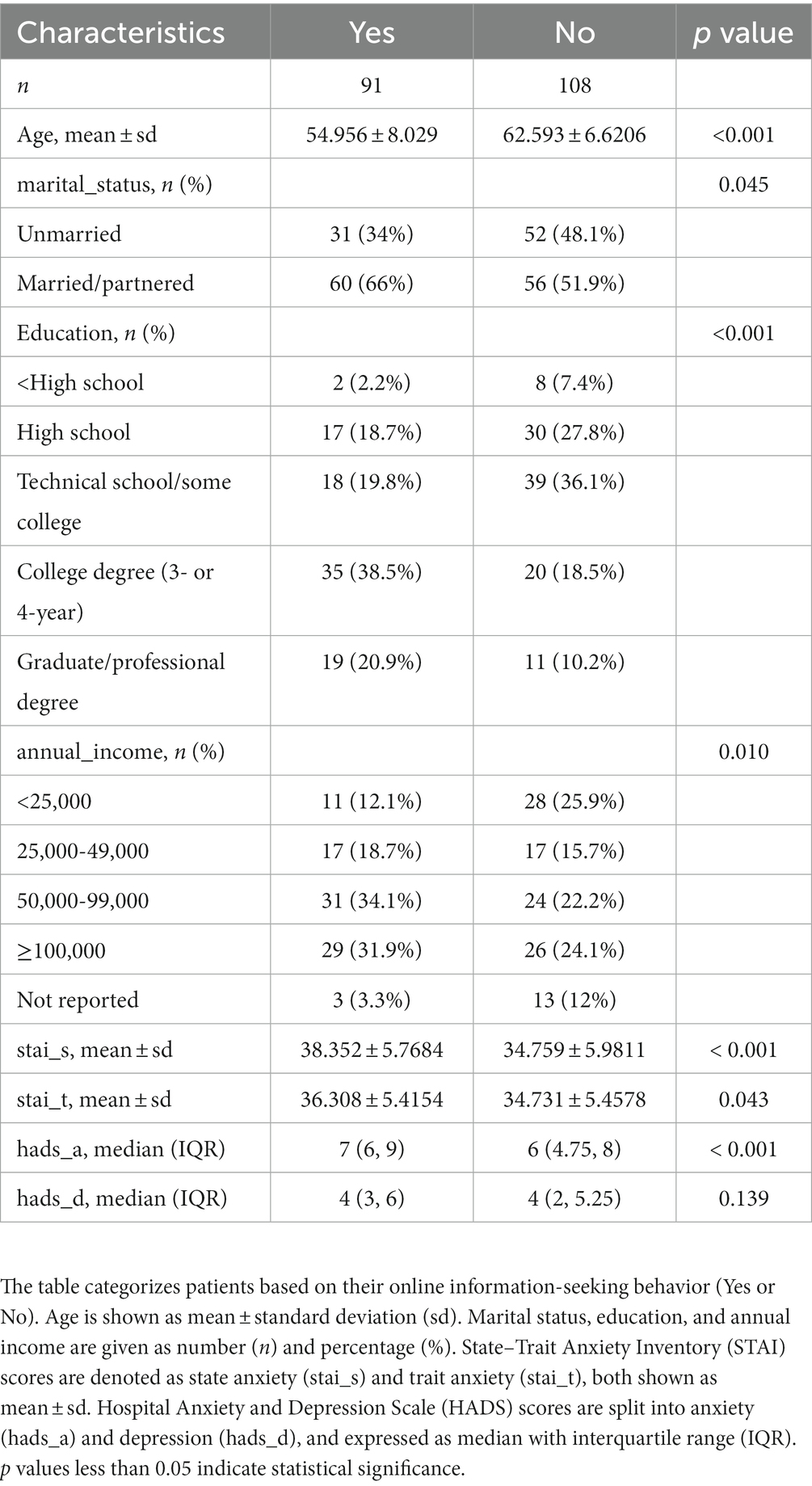
Table 1. Characteristics of gynecologic oncology patients seeking information on Douyin, Baidu, and other Chinese search engines.
Univariate and multivariate analysis of factors associated with information seeking on Douyin, Baidu, and other Chinese search engines among gynecologic oncology patients
Table 2 elucidates the outcomes of both univariate and multivariate analyses probing the factors associated with gynecologic oncology patients seeking information regarding their diagnosis or condition on platforms like Douyin, Baidu, and other Chinese search engines. The table delineates odds ratios, confidence intervals, and p-values for each scrutinized factor, encompassing age, marital status, and scores on the STAI-S, STAI-T, HADS-A, and HADS-D psychological scales. In the univariate analysis, age exhibited a significant association with information-seeking behavior, presenting an odds ratio of 0.870 (95% CI: 0.827–0.915, p < 0.001). This association was further accentuated in the multivariate analysis, with an odds ratio of 0.853 (95% CI: 0.807–0.901, p < 0.001), indicating a decrease in the likelihood of seeking information online with advancing age. When examining marital status, the ‘married/partnered’ category was juxtaposed against the ‘unmarried’ category, serving as the reference group. Both univariate and multivariate analyses disclosed that being married or partnered was linked with higher odds of seeking information (OR = 2.25, 95% CI: 1.25–4.05, p = 0.008 in univariate; OR = 2.50, 95% CI: 1.40–4.45, p = 0.002 in multivariate). Additionally, scores on the STAI-S, STAI-T, and HADS-A scales were significantly associated with information seeking in both univariate and multivariate analyses, suggesting a relationship between certain psychological well-being facets and the propensity to seek information online. Conversely, HADS-D scores, indicative of depressive symptoms, demonstrated no significant association in the univariate analysis and hence, were excluded from the multivariate analysis.
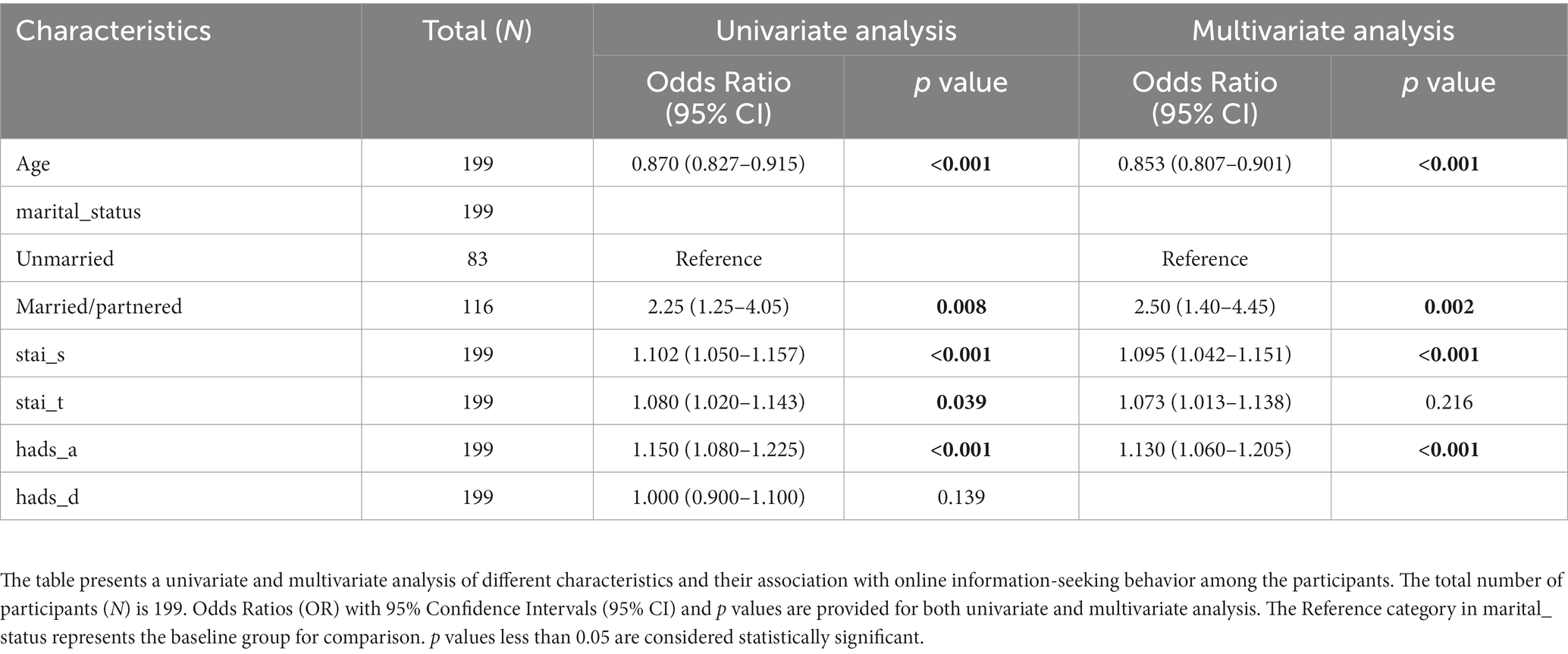
Table 2. Univariate and multivariate analysis of factors associated with information seeking on Douyin, Baidu, and other Chinese search engines among gynecologic oncology patients.
Performance of age, STAI-S, STAI-T, HADS-A, and the combined model in predicting information seeking on Douyin, Baidu, and other Chinese search engines among gynecologic oncology patients
Table 3 compares the performance of age, STAI-S, STAI-T, and HADS-A scores, as well as a combined model, in predicting whether gynecologic oncology patients would seek information about their diagnosis or condition on platforms like Douyin, Baidu, and other Chinese search engines. The parameters evaluated include area under the receiver operating characteristic curve (AUC), 95% confidence interval (CI), cut-off values for each predictor, and specificity and sensitivity at these cut-off values. For each of the predictors, age performed the best with an AUC of 0.776 (95% CI: 0.709–0.843), a cut-off value of 57.5, specificity of 64.835%, and sensitivity of 81.481%. The STAI-S and HADS-A scores showed moderate performance, with AUCs of 0.673 (95% CI: 0.598–0.747) and 0.645 (95% CI: 0.569–0.721), respectively. The STAI-T scores had the lowest AUC at 0.591 (95% CI: 0.511–0.670). The combined model, which takes all these factors into account, outperformed any single predictor, with an AUC of 0.841 (95% CI: 0.787–0.895), specificity of 75.824%, and sensitivity of 77.778%. These results highlight the potential of using a combination of demographic and psychological factors to predict information-seeking behavior in this patient population. A ROC curve was plotted for the model, see Figure 1.
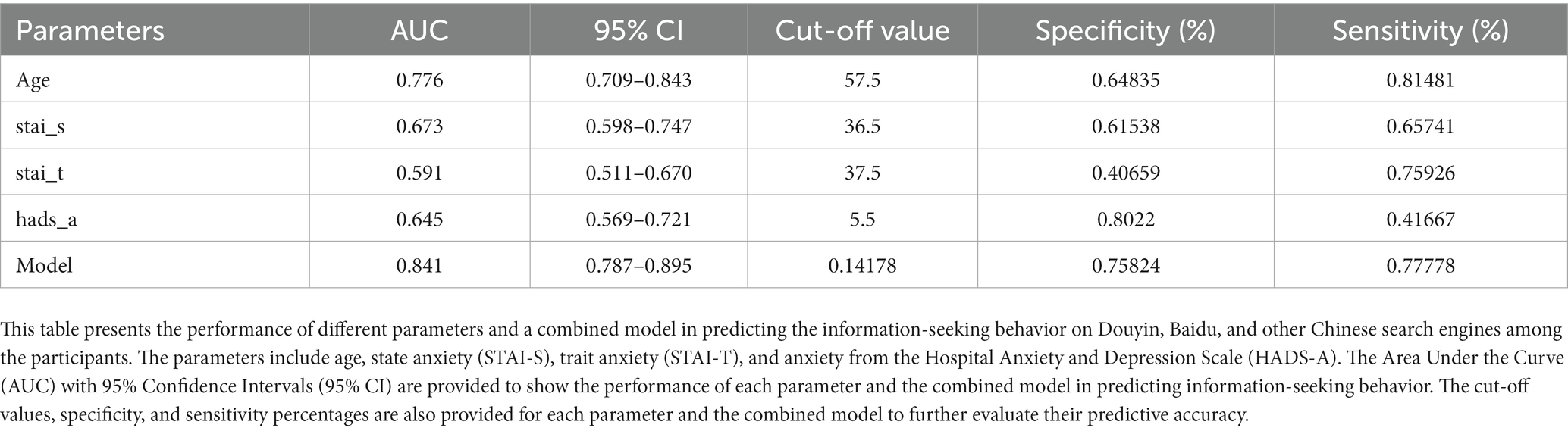
Table 3. Performance of age, STAI-S, STAI-T, HADS-A, and the combined model in predicting information seeking on Douyin, Baidu, and other Chinese search engines among gynecologic oncology patients.
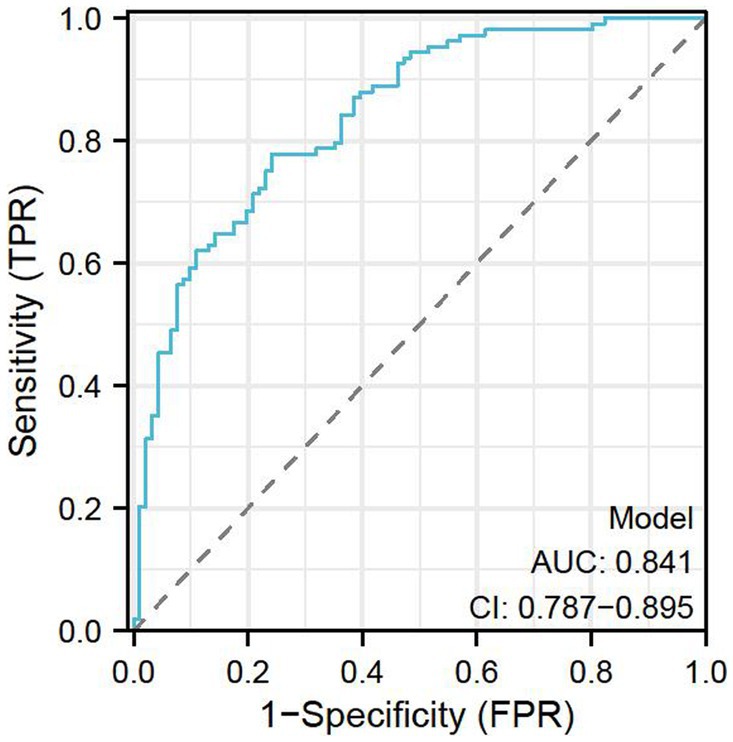
Figure 1. A ROC curve for the model.
Discussion
This research illuminates the online health information-seeking behaviors among gynecologic oncology patients in China, a demographic navigating the digital landscape primarily through popular platforms like Douyin and Baidu. The comprehensive analysis conducted in this study underscores the critical influence of demographic and psychological factors on these behaviors.
China, with its vast population and rapidly evolving digital infrastructure, presents a unique context for exploring online health information-seeking behaviors. The penetration of internet services and digital platforms has significantly increased over the years, enabling a large segment of the population to access online resources for health-related information. This backdrop provides a fertile ground for understanding the interplay of demographic and psychological factors in influencing online health information-seeking tendencies among gynecologic oncology patients.
The association of older age with reduced online information seeking, as observed in our study, aligns with previous studies (Smith, 2014), hinting at a digital divide based on age. However, ongoing digital literacy initiatives and the proliferation of internet-enabled devices may potentially bridge this divide over time, a trajectory worthy of investigation in future research (Anderson and Perrin, 2017).
Furthermore, the differing online information-seeking behaviors between married or partnered individuals and their unmarried counterparts open avenues for exploring the role of social support in health information-seeking processes (LaCoursiere et al., 2005). The intricacies of social dynamics and their impact on online health information-seeking behaviors could be a focal point for future research.
From a psychological lens, our findings accentuate the role of state anxiety in online health information-seeking behavior. Although previous research has highlighted the roles of both anxiety and depression in health information seeking (Eastin and Guinsler, 2006; Bessière et al., 2010), our study uniquely reveals that only state anxiety significantly associates with this behavior within the Chinese context, where mental health symptoms may manifest or be reported differently (Hsiao et al., 2006).
The predictive model crafted in this study serves as a robust tool in forecasting online health information-seeking behaviors among gynecologic oncology patients, holding substantial implications for healthcare providers. By understanding a patient’s demographic and psychological profile, healthcare providers can tailor communication strategies to better meet the informational needs of their patients.
Nonetheless, the model’s predictive prowess was not flawless, hinting at other possibly influential factors not encapsulated in our study. Future explorations could delve into additional predictors like health literacy, perceived health status, and trust in online health information to further refine the understanding of online health information-seeking behaviors among gynecologic oncology patients in China.
Conclusion
In summation, our investigation unveils the complex tapestry of factors shaping online health information-seeking behaviors among gynecologic oncology patients in China. The insights gleaned from this study lay a solid groundwork for devising targeted patient education and communication strategies, ultimately fostering enhanced patient engagement and healthcare outcomes in the burgeoning digital age. Through a nuanced understanding of the demographic and psychological factors at play, healthcare providers can better navigate the digital health information landscape alongside their patients, driving forward the agenda of informed patient-centric care in the digital epoch.
Data availability statement
The original contributions presented in the study are included in the article/Supplementary material, further inquiries can be directed to the corresponding author.
Ethics statement
This investigation was undertaken with the sanction of the Ethics Committee of The Affiliated Hospital of Southwest Medical University (Ethics code number: KY2023200). All methods were conducted in compliance with relevant guidelines, regulations, and the Declaration of Helsinki. All participants provided written informed consent before participating in the study.
Author contributions
WX: Data curation, Investigation, Software, Writing – original draft. XL: Writing - review & editing. YH: Data curation, Writing – original draft. LH: Conceptualization, Data curation, Writing – original draft.
Funding
The author(s) declare that no financial support was received for the research, authorship, and/or publication of this article.
Acknowledgments
We would like to express our sincere gratitude to all individuals who contributed to the completion of this study.
Conflict of interest
The authors declare that the research was conducted in the absence of any commercial or financial relationships that could be construed as a potential conflict of interest.
Publisher’s note
All claims expressed in this article are solely those of the authors and do not necessarily represent those of their affiliated organizations, or those of the publisher, the editors and the reviewers. Any product that may be evaluated in this article, or claim that may be made by its manufacturer, is not guaranteed or endorsed by the publisher.
Supplementary material
The Supplementary material for this article can be found online at: https://www.frontiersin.org/articles/10.3389/fpsyg.2023.1255604/full#supplementary-material
References
Amante, D. J., Hogan, T. P., Pagoto, S. L., English, T. M., and Lapane, K. L. (2015). Access to care and use of the internet to search for health information: results from the US National Health Interview Survey. J. Med. Internet Res. 17:e106. doi: 10.2196/jmir.4126
Anderson, M., and Perrin, A., (2017). Tech Adoption Climbs Among Older Adults, Pew Research Center: Internet, Science & Tech. United States of America. Available at: https://policycommons.net/artifacts/617864/tech-adoption-climbs-among-older-adults/1598740/ [Accessed June 22, 2023].
Bessière, K., Pressman, S., Kiesler, S., and Kraut, R. (2010). Effects of internet use on health and depression: a longitudinal study. J. Med. Internet Res. 12:e6. doi: 10.2196/jmir.1149
Bray, F., Ferlay, J., Soerjomataram, I., Siegel, R. L., Torre, L. A., and Jemal, A. (2018). Global cancer statistics 2018: GLOBOCAN estimates of incidence and mortality worldwide for 36 cancers in 185 countries. CA Cancer J. Clin. 68, 394–424. doi: 10.3322/caac.21492
Broom, A. (2005). Virtually he@lthy: the impact of internet use on disease experience and the doctor-patient relationship. Qual. Health Res. 15, 325–345. doi: 10.1177/1049732304272916
Cao, W., Zhang, X., Xu, K., and Wang, Y. (2016). Modeling online health information-seeking behavior in China: the roles of source characteristics, reward assessment, and internet self-efficacy. Health Commun. 31, 1105–1114. doi: 10.1080/10410236.2015.1045236
Duggan, M, Ellison, N B, Lampe, C, Lenhart, Amanda, and Madden, Mary (2014). Pew Research Center Internet science and Tech. Retrieved from Social Media Update.
Eastin, M. S., and Guinsler, N. M. (2006). Worried and wired: effects of health anxiety on information-seeking and health care utilization behaviors. CyberPsychol. Behav. 9, 494–498. doi: 10.1089/cpb.2006.9.494
Gray, N. J., Klein, J. D., Noyce, P. R., Sesselberg, T. S., and Cantrill, J. A. (2005). The internet: a window on adolescent health literacy. J. Adolesc. Health 37:243. doi: 10.1016/j.jadohealth.2004.08.023
Hsiao, F. H., Klimidis, S., Minas, H., and Tan, E. S. (2006). Cultural attribution of mental health suffering in Chinese societies: the views of Chinese patients with mental illness and their caregivers. J. Clin. Nurs. 15, 998–1006. doi: 10.1111/j.1365-2702.2006.01331.x
LaCoursiere, S. P., Knobf, M. T., and McCorkle, R. (2005). Cancer patients' self-reported attitudes about the internet. J. Med. Internet Res. 7:e22. doi: 10.2196/jmir.7.3.e22
Lambert, S. D., and Loiselle, C. G. (2007). Health information seeking behavior. Qual. Health Res. 17, 1006–1019. doi: 10.1177/1049732307305199
Lee, K., Hoti, K., Hughes, J. D., and Emmerton, L. (2014). Dr Google and the consumer: a qualitative study exploring the navigational needs and online health information-seeking behaviors of consumers with chronic health conditions. J. Med. Internet Res. 16:e262. doi: 10.2196/jmir.3706
Leung, L., and Lee, P. S. N. (2005). Multiple determinants of life quality: the roles of internet activities, use of new media, social support, and leisure activities. Telematics Inform. 22, 161–180. doi: 10.1016/j.tele.2004.04.003
Leykin, Y., Thekdi, S. M., Shumay, D. M., Muñoz, R. F., Riba, M., and Dunn, L. B. (2012). Internet interventions for improving psychological well-being in psycho-oncology: review and recommendations. Psychooncology 21, 1016–1025. doi: 10.1002/pon.1993
McDougall, M. (2014). Digital marketing strategies for entering the Chinese market. J. Digital Soc. Media Mark. 2, 48–56.
McMullan, M. (2006). Patients using the internet to obtain health information: how this affects the patient-health professional relationship. Patient Educ. Couns. 63, 24–28. doi: 10.1016/j.pec.2005.10.006
Miller, K. D., Nogueira, L., Devasia, T., Mariotto, A. B., Yabroff, K. R., Jemal, A., et al. (2022). Cancer treatment and survivorship statistics, 2022. CA Cancer J. Clin. 72, 409–436. doi: 10.3322/caac.21731
Moorhead, S. A., Hazlett, D. E., Harrison, L., Carroll, J. K., Irwin, A., and Hoving, C. (2013). A new dimension of health care: systematic review of the uses, benefits, and limitations of social media for health communication. J. Med. Internet Res. 15:e85. doi: 10.2196/jmir.1933
Perelli, F., Mattei, A., Scambia, G., and Cavaliere, A. F. (2023). Editorial: methods in gynecological oncology. Front. Oncol. 13:1167088. doi: 10.3389/fonc.2023.1167088
Schapira, M. M., Swartz, S., Ganschow, P. S., Jacobs, E. A., Neuner, J. M., Walker, C. M., et al. (2017). Tailoring educational and Behavioral interventions to level of health literacy: a systematic review. MDM Policy Pract. 2:2381468317714474. doi: 10.1177/2381468317714474
Smith, A. (2014). Older Adults and Technology Use, Pew Research Center: Internet, Science & Tech. United States of America. Available at: https://policycommons.net/artifacts/620165/older-adults-and-technology-use/1601368/ [Accessed June 22, 2023].
Spielberger, C. D., Gonzalez-Reigosa, F., Martinez-Urrutia, A., Natalicio, L. F. S., and Natalicio, D. S. (1971). The state-trait anxiety inventory. Interamerican J. Psychol. 5
Tennant, B., Stellefson, M., Dodd, V., Chaney, B., Chaney, D., Paige, S., et al. (2015). eHealth literacy and web 2.0 health information seeking behaviors among baby boomers and older adults. J. Med. Internet Res. 17:e70. doi: 10.2196/jmir.3992
Wang, M. P., Viswanath, K., Lam, T. H., Wang, X., and Chan, S. S. (2013). Social determinants of health information seeking among Chinese adults in Hong Kong. PLoS One 8:e73049. doi: 10.1371/journal.pone.0073049
Xiong, Z., Zhang, L., Li, Z., Xu, W., Zhang, Y., and Ye, T. (2021). Frequency of online health information seeking and types of information sought among the general Chinese population: cross-sectional study. J. Med. Internet Res. 23:e30855. doi: 10.2196/30855
Zhang, D., Zhan, W., Zheng, C., Zhang, J., Huang, A., Hu, S., et al. (2021). Online health information-seeking behaviors and skills of Chinese college students. BMC Public Health 21:736. doi: 10.1186/s12889-021-10801-0
Keywords: gynecologic oncology, information seeking, online platforms, Douyin, Baidu, anxiety, depression, prediction model
Citation: Xiong W, Li X, Han Y and He L (2023) Predicting online information seeking on Douyin, Baidu, and other Chinese search engines among gynecologic oncology patients: a cross-sectional study. Front. Psychol. 14:1255604. doi: 10.3389/fpsyg.2023.1255604
Edited by:
Renata Colombo Bonadio, University of São Paulo, BrazilReviewed by:
Iuliana Raluca Gheorghe, Carol Davila University of Medicine and Pharmacy, RomaniaFederica Perelli, Santa Maria Annunziata Hospital, Italy
Copyright © 2023 Xiong, Li, Han and He. This is an open-access article distributed under the terms of the Creative Commons Attribution License (CC BY). The use, distribution or reproduction in other forums is permitted, provided the original author(s) and the copyright owner(s) are credited and that the original publication in this journal is cited, in accordance with accepted academic practice. No use, distribution or reproduction is permitted which does not comply with these terms.
*Correspondence: Lijuan He, MTUxODE5OTMyMDBAMTYzLmNvbQ==