Abstract
Objective:
To identify the impacts of the COVID-19 pandemic on the health of university professors and students. Method: Scoping review following the protocol recommended by the Joanna Briggs Institute. The research question followed the order imposed by the mnemonic “PCC” (Population, Concept, and Context), namely: what are the impacts of the COVID-19 pandemic on the health of university professors and students?
Results:
The analysis sample consisted of 29 texts in article format. Two main categories of health repercussions were observed, namely: category 1—repercussions on mental health; category 2—repercussions on physical health.
Conclusion:
It is understood that harmful effects on mental health will be an ever-present reality in the university context, since exhaustion is a characteristic of academic work itself. This situation can have serious consequences for the individual, requiring intervention projects combined with public policies that minimize these effects. It is necessary to review the role of the university in today’s society.
Introduction
The health restrictions following the emergence of the COVID-19 pandemic gave rise to new habits and work routines across the entire population (Organização Pan-Americana de Saúde, 2022). In the university scenario, the need for social isolation virtualized teaching and research practices, requiring teachers and students to quickly adapt to the use of new technologies, without training or equipment made available by the institutions (Trust and Whalen, 2020).
Despite being indispensable, the periods of lockdown combined with emergency remote teaching revealed numerous vulnerable situations, such as the absence of electronic devices and a suitable environment for maintaining teaching activities (de Klerk and Palmer, 2021), the difficulty in handling the equipment technological mediation (Dadaczynski and Tolks, 2021), intensification of work during the period of adaptation to the new reality (Scheel et al., 2023) and even food insecurity, as many university restaurants were closed during the period (Owens et al., 2020). Such issues were also influenced by the international context of the COVID-19 pandemic, especially due to the increase in the infodemic and the maintenance of uncertainties and insecurities (Banerjee and Meena, 2021).
Adapting to the new demands arising from the period of isolation imposed by COVID-19 contributed to the increase in hours worked and to the creation of a “new normal” in which exhaustion is part of academic work (Horta et al., 2022). The COVID-19 pandemic has brought drastic changes in behavior and work processes, and the absence of similar phenomena in contemporary history makes this analysis essential for preparing society in the event of similar future events.
We understand that the global crisis caused by COVID-19 may not be the last phenomenon of this nature, and understanding the lessons learned during this period will certainly contribute to increasing resilience in future events. In addition, it is necessary to emphasize that the health repercussions evidenced in this investigation may be associated with subsequent events such as students’ intention to drop out of university (Schriek et al., 2024), increased use of psychoactive substances as a defense mechanism (Petrović et al., 2022), and even signs of suicidal ideation (Jones et al., 2023).
Therefore, the present study aims to identify the impacts of the COVID-19 pandemic on the health of university teachers and students.
Methods
This is a scoping review, following the protocol of the Joanna Briggs Institute (Peters M. D. J. et al., 2020). The method consists of mapping studies on the topic, which aims to provide a description of the articles analyzed, not critically evaluating the evidence found, as seen in systematic reviews, but rather using identified concepts that support the research. Thus, another important characteristic is the ability to delve deeper into the topic, analyzing everything that has already been constructed, approached conceptually, to assist in future research (Peters M. et al., 2020).
The review protocol for this investigation was registered on 05/23/2023 on the Open Science Framework platform, under the link https://osf.io/3rkbg.
Using the PCC strategy (population, context and concept), the following review question was outlined: what are the impacts of the COVID-19 pandemic on the health of university teachers and students? Being the population, the students and university teachers. For a better understanding of the reader, the understanding of “university students” was established, those individuals enrolled in higher education, regardless of the course or type of institution, be it public, private or any other format. In relation to university professors, professors and researchers linked to higher education institutions were included regardless of their employment relationship (whether permanent or temporary), the course they were linked to and the type of institution.
In this concept, any and all repercussions for health were considered, be they health protective factors or illness processes of any nature, regardless of physical or mental evidence. The context of this study is the COVID-19 pandemic period from its establishment in 2020 until the end of the international health emergency established by the Organização Mundial da Saúde (2023).
Eligibility criteria
Publications with methodological approaches comprising: qualitative, quantitative, mixed, reflections, editorials, guidelines, manuals, policies published between 2020 and 2023. The time frame occurred due to the non-existence of the COVID-19 phenomenon in time prior to the year 2020 and the end of the international health emergency established by the Organização Mundial da Saúde (2023).
Sources and search strategies
Concept mapping was developed using controlled health vocabularies, Health Sciences Descriptors (DeCS), produced by the Latin American and Caribbean Center for Health Sciences Information/Pan American Health Organization (2022)/World Health Organization (BIREME/PAHO/WHO), and the Medical Subject Headings (MeSH), produced by the US National Library of Medicine (NLM), which can be seen in Table 1.
Table 1
| Concept mapping | ||
|---|---|---|
| University teachers and students | Docentes OR Faculty OR “Corps enseignant” OR Estudantes OR Students OR Estudiantes OR Étudiants | MESH/DECS Controlled Vocabulary Terms |
| University Professor* OR “School Enrollment” OR “School Enrollments” OR Student* | Alternative terms in English | |
| “Corpo Docente” OR Docent* OR Educador* OR Professor* OR “Professor de Ensino Terciário” OR “Professor Universitário” OR “Professores de Ensino Superior” OR “Professores do Ensino Superior” OR “Professores Universitários” OR “Cuerpo Docente” OR Profesor* OR “Profesor Universitario” OR “Profesores Universitarios” OR “Corps enseignants” OR Alun* OR Estudant* OR Alumn* OR Estudiant* OR Élèves OR Étudiantes OR “Inscription à l’école” OR “Inscription scolaire” | Alternative terms in Portuguese, Spanish and French | |
| Health repercussions | “Avaliação do Impacto na Saúde” OR “Health Impact Assessment” OR “Evaluación del Impacto en la Salud” OR “Évaluation des impacts sur la santé” | MESH/DECS Controlled Vocabulary Terms |
| “Health Impact Assessments” | Alternative terms in English | |
| “EIS (Évaluation de l’Impact sur la Santé)” OR “Évaluation des effets sanitaires” OR “Évaluation des effets sur la santé” OR “Évaluation des impacts sanitaires” OR “Évaluation des incidences sanitaires” OR “Évaluation des incidences sur la santé” | Alternative terms in Portuguese, Spanish and French | |
| Pandemic COVID-19 | COVID-19 | MESH/DECS Controlled Vocabulary Terms |
| “covid-19 Pandemic” OR “covid-19 Pandemics” OR “2019 Novel Coronavirus Pandemic” OR “2019-nCoV Pandemic” OR “covid-19 Pandemic” OR “covid-19 pandemic” OR “covid-19 Pandemics” OR “Wuhan Coronavirus Pandemic” | Alternative terms in English | |
| “Pandemia covid-19” OR “Pandemia por covid-19” OR “Pandemias por covid-19” OR “Pandemia de covid-19” OR “Pandemia de la covid-19” OR “Pandemia del Nuevo Coronavirus 2019” OR “Pandemia por el Coronavirus de Wuhan” OR “Pandemia por el Nuevo Coronavirus (2019-nCoV)” OR “Pandemia por el Nuevo Coronavírus 2019” OR “Pandemias de covid-19” OR “Pandémie de coronavírus de 2019–2020” OR “Pandémie de covid-19” OR “Pandémies de covid-19” | Alternative terms in Portuguese, Spanish and French | |
Concept mapping.
With DeCS, the mapping was created using the four languages recommended by BIREME, Portuguese, English, Spanish and French. As for MeSH, the terms are exclusively in English. In both cases, the main descriptors and alternative terms were used using the Boolean operators AND (inclusion) and OR (alternative) and truncation*, which retrieves all terms with the prefix and/or suffix with the radical that accompanies it.
Search strategy
The first stage of bibliographic search was carried out in the following databases: MEDLINE via pubmed, EMBASE, Scopus, Cumulative Index to Nursing and Allied Health Literature (CINAHL) and the Portals: PERIÓDICOS CAPES and Scielo. The second stage of the search is related to the search in gray literature that occurred in the Google Scholar database and in the Digital Library of Theses and Dissertations.
Study selection
The results obtained after the search were imported into the Rayyan Reviews manager (Ouzzani et al., 2016), an open access web application developed by the Qatar Computing Research Institute (QCRI). With Rayyan, the title and abstract were read blindly by three independent researchers, where those who answered the research question were chosen to read the full text. The search, exclusion and selection flow of studies can be seen in Figure 1.
Figure 1
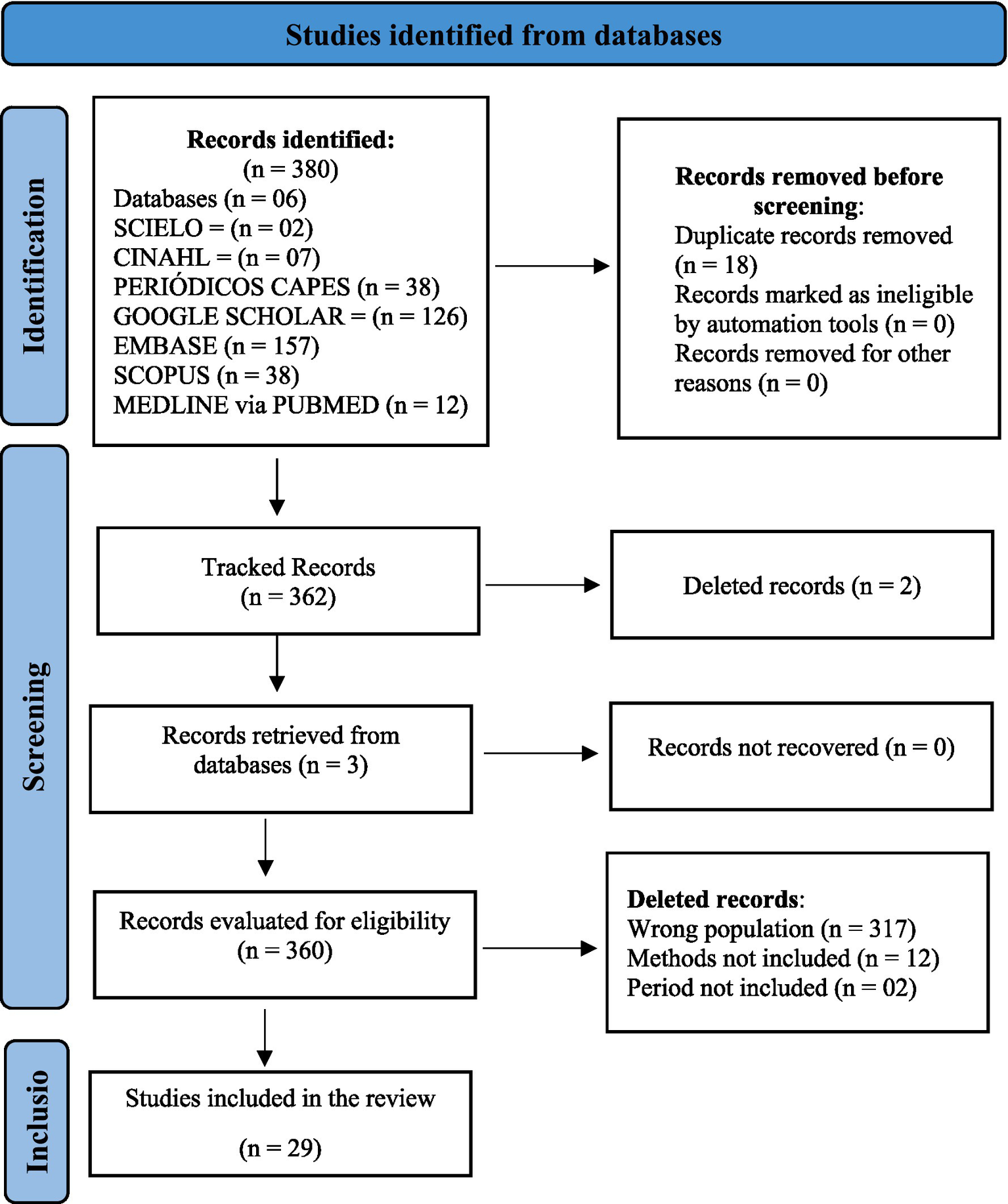
PRISMA flowchart of articles selected for inclusion in the scoping review.
Data extraction strategies
The data were extracted and arranged in a single table composed of the following information: Identification (title, year, author, country), objective, method, population studied and repercussions of the pandemic on health.
Data extraction was performed by three independent reviewers and followed the guidelines proposed by Pollock et al. (2023) (a) Use of a standardized extraction form; (b) Conducting analysis in a pilot project to identify information that was not included in the form; (c) Group discussion with the authors to define the data to be extracted; (d) Data extraction focused solely on the review question; (e) Collective analysis of the extracted data to identify possible discrepancies.
Results and discussion
A total of 380 records were identified in the initial search, using different sources of study references. The search for gray literature was carried out in the CAPES Theses and Dissertations Bank and on the Google Scholar platform. After the first exclusion, that is, that of duplicate texts, 362 studies were identified that were retrieved in full texts and evaluated by three independent researchers, where a final sample of 29 texts was obtained, according to the results in Table 2.
Table 2
| Objective | Population and sample size | Method | Health repercussions |
|---|---|---|---|
| Identify and compare the impact of COVID-19 on the exam of final year medical students from two universities with scores prior to the pandemic period (Aaraj et al., 2022) | 118 final year students from Shifa Tameer and Millat Universities were evaluated. | Cross-sectional study using validated analysis instruments. | Perception of stress and anxiety. |
| Assess the impact of COVID-19 on lifestyle in a sample of Pakistani medical students (Haider et al., 2020) | Online study carried out with 1,100 Pakistani medical students. | Cross-sectional online study using a self-administered questionnaire | Modifications in lifestyle, ranging from nutritional to social behavior impairment. |
| Understanding the impact of vaccination on stress levels among medical students (Huda et al., 2022) | 58 medical interns participated in the study. | Cross-sectional study carried out in the hospital setting, using validated scales. | Increase in the stress level of interns. |
| Investigating the associations between stress response and mental health status among college students during the early phase of COVID-19 in China (Xu and Huang, 2022) | 1,351 university students from China. | Online cross-sectional survey. It was based on a quantitative proposal using descriptive statistical analysis. | Students’ negative emotions point to an apparent relationship with mental health and cognition. |
| IIdentify the repercussions of the first COVID-19 lockdown on the lives of higher education students, teachers and staff (Nowrouzi-Kia et al., 2022) | The survey included 27,804 participants from 121 countries and 6 continents, including higher education students, teachers and staff around the world. | Global online cross-sectional questionnaire survey using a mixed-method design and disseminated to college students, faculty, and staff from April to November 2020. | Increased stress and anxiety levels and decreased quality of life during the first 2 weeks of lockdown. |
| Identify academic burnout and problematic smartphone use during the COVID-19 pandemic (Hao et al., 2021) | 748 Chinese undergraduate students participated in the study. | Cross-sectional quantitative research. Data collection was carried out online using validated scales and subsequent statistical analysis. | Academic burnout is related to the compulsive use of smartphones, especially due to anxiety. |
| Investigate the effect of COVID-19 on student mental health and related factors (Hekmat et al., 2021) | Eight articles were selected and evaluated quantitatively and qualitatively. | Systematic literature review | Increased levels of stress, anxiety and depression. |
| Explore the impact of COVID-19 on the mental health of optometry students at a higher education institution (Simjee et al., 2021) | 147 students currently enrolled at a South African university. | Cross-sectional study using the validated DASS-21 scale. Interview data were analyzed using thematic content analysis. | Increased levels of stress, anxiety and depression. |
| Identify the relationship between stress factors, general health and academic performance (Al-Rouq et al., 2022) | 421 medical students participated. | Online survey using a validated perceived stress scale. | Elevated stress levels in their final educational years. |
| Investigate the impact of the COVID-19 pandemic on the mental health and sleep of university students in Saudi Arabia (Alyoubi et al., 2021) | 582 university students in Saudi Arabia participated. | Online and cross-sectional questionnaire assessing depression, anxiety, stress, resilience and insomnia during the COVID-19 pandemic. | Indication of high levels of depression, anxiety and stress and low levels of resilience. |
| Assess the mental situation of college students during the epidemic (Cao et al., 2020) | 7,143 university students participated. | Cross-sectional investigation carried out using anonymous structured questionnaires. | Noticeable impairment in the mental health of university students. |
| Assess the impact of COVID-19 on medical student internships in public and private institutions in Brazil (Carrascosa et al., 2020) | 317 Brazilian medical students participated. | Cross-sectional quantitative research with online data collection and subsequent statistical analysis. | The presence of feelings and symptoms of anxiety was observed. |
| Analyze the impact of the COVID-19 lockdown on BMI changes. Sleep quality and time spent on physical activities in an Italian academic community of students and workers (Cremasco et al., 2021) | Academic community in Northern Italy, with 2,838 students and 828 workers. | Cross-sectional online survey was distributed in May 2020, after 2 months of lockdown in Italy. | An increase in BMI, worsening of nighttime sleep quality and daily excess of sedentary activities were observed. |
| Investigate university students’ perceptions of their learning process and the influence on mental health during the COVID-19 pandemic period (El-Sakran et al., 2022) | A total of 588 university students in the UAE. | Cross-sectional quantitative research with online data collection, use of validated scales and subsequent statistical analysis. | The occurrence of psychological suffering, anxiety, anguish and financial problems caused by COVID-19 is observed. |
| To analyze the educational, emotional and social impact of the state of emergency period imposed by the COVID-19 pandemic on Romanian university students (Gavriluță et al., 2022) | 1,013 Romanian university students participated. | Cross-sectional quantitative research with online data collection, use of validated scales and subsequent statistical analysis. | Feelings of loneliness, panic, fear and aggression were observed. |
| Identify the impact of COVID-19 on the assessment exams of medical students (Harky et al., 2020) | 46 medical students from a UK university participated. | A retrospective observational study, using a questionnaire. | The impacts were diverse, with an emphasis on students’ mental health. |
| Assess factors associated with increased levels of mental health burden among North American college students during COVID-19 (Kecojevic et al., 2020) | 162 college students in northern New Jersey, the US region, participated. | Cross-sectional research that collected with multivariate regression analysis. | High levels of mental suffering were observed, with an emphasis on depression and anxiety. |
| Investigate the mental and psychological impact of the COVID-19 pandemic and associated factors on a sample of Portuguese higher education students (Laranjeira et al., 2022) | 1,522 Portuguese higher education students participated. | Online cross-sectional study with convenience sampling. | Moderate prevalence of feelings of hopelessness and lack of resilient coping. |
| Describe the use of telepsychiatry and the acceptance of medical students to use it for their mental health needs (Lavergne and Kennedy, 2021) | Not applicable | The prevalence of anxiety and stress symptoms was observed. | |
| Identify the psychological impact of COVID-19 on university students in Wuhan (Li et al., 2021) | 4,355 university students from Wuhan - China participated. | Online cross-sectional quantitative research carried out in April 2020. | High severity emotional and mental impacts were observed. |
| Identify the repercussions of COVID-19 for college students at a minority-serving academic institution in New York (López-Castro et al., 2021) | 909 college students from New York City participated. | Cross-sectional quantitative research with online data collection, use of validated scales and subsequent statistical analysis. | The presence of anxiety and stress disorders was observed. |
| Understanding the impact of COVID-19 on teachers at the Faculty of Medicine of the University of Porto-Portugal (Miguel et al., 2021) | Medicine professors at the University of Porto-Portugal | Cross-sectional, quantitative, qualitative and analytical online study using validated scales. | High levels of exhaustion were observed. |
| Assess the impact of isolation on the health and comfort of college students and the role that home characteristics may have played (Millán-Jiménez et al., 2021) | 188 medical and architecture students from a Spanish University participated. | Observational, descriptive and cross-sectional study. | The presence of anxiety symptoms and increased alcohol consumption was observed. |
| Analyze the psychological impact of COVID-19 on the university community during the first weeks of confinement (Odriozola-González et al., 2020) | 2,530 members from a Spanish university participated. | Cross-sectional investigation carried out with an online questionnaire sent in March 2020. | There was an intense impact on the mental health of students and workers. |
| Evaluate the impact of the three blocks on the mental health and engagement of doctoral students during the construction of the thesis and evaluate the protective role of self-compassion in depression, anxiety and stress (Paucsik et al., 2022) | 134 PhD students from three French universities participated. | Longitudinal research using online questionnaires. | An increase in depression, anxiety and stress was observed, as well as a significant decrease in wellbeing and engagement with the doctorate during the first year of the pandemic. |
| Explore student perceptions of COVID-19 risks and preventive measures by assessing the health, social and financial impacts of national lockdown measures on students in Uganda (Rawlings et al., 2022) | 398 undergraduate and postgraduate students in Uganda participated. | Cross-sectional quantitative research with online data collection, use of validated scales and subsequent statistical analysis. | Students indicated their perception of depression, frustration, stress and anxiety during the lockdown; they became less physically active and spent most of their time on social media. |
| Assess changes in the mental health and wellbeing of medical and nursing students 1 year after COVID-19 (Richardson et al., 2022) | 2,275 students studying medicine or nursing at UK universities participated. | Cross-sectional and multi-institutional study using an online questionnaire. | The existence of anxiety disorders, stress and fear was noted. |
| To evaluate the impact of headache symptoms in a population of Italian university students during the period COVID-19 (Saracco et al., 2022) | 4,926 university students from all over Italy participated. | Cross-sectional study using an online questionnaire. | The negative impact of stress was observed, with repercussions on physical symptoms such as headache. |
| Investigate perceptions and expectations about the health of university students’ physical living environments and the implications for health (Zhao et al., 2022) | 301 university students studying in Zhejiang, China participated. | Cross-sectional study using an online questionnaire. | The presence of physical and mental repercussions was observed. |
Characterization of selected studies.
There was a preponderance of studies conducted in countries of the global north, while studies conducted in developing countries were scarce. This scenario is believed to be due to limitations in research funding. Furthermore, there was a lack of qualitative research, which can be explained by the period of social distancing, which made the use of online forms the most viable way to obtain research data.
Data analysis helped identify themes with greater relevance to the study, namely: (1) Repercussions for mental health and; (2) Repercussions for physical health. The synthesis of the relationship between these themes can be seen in Figure 2 and, later, a discussion of the findings will be presented.
Figure 2
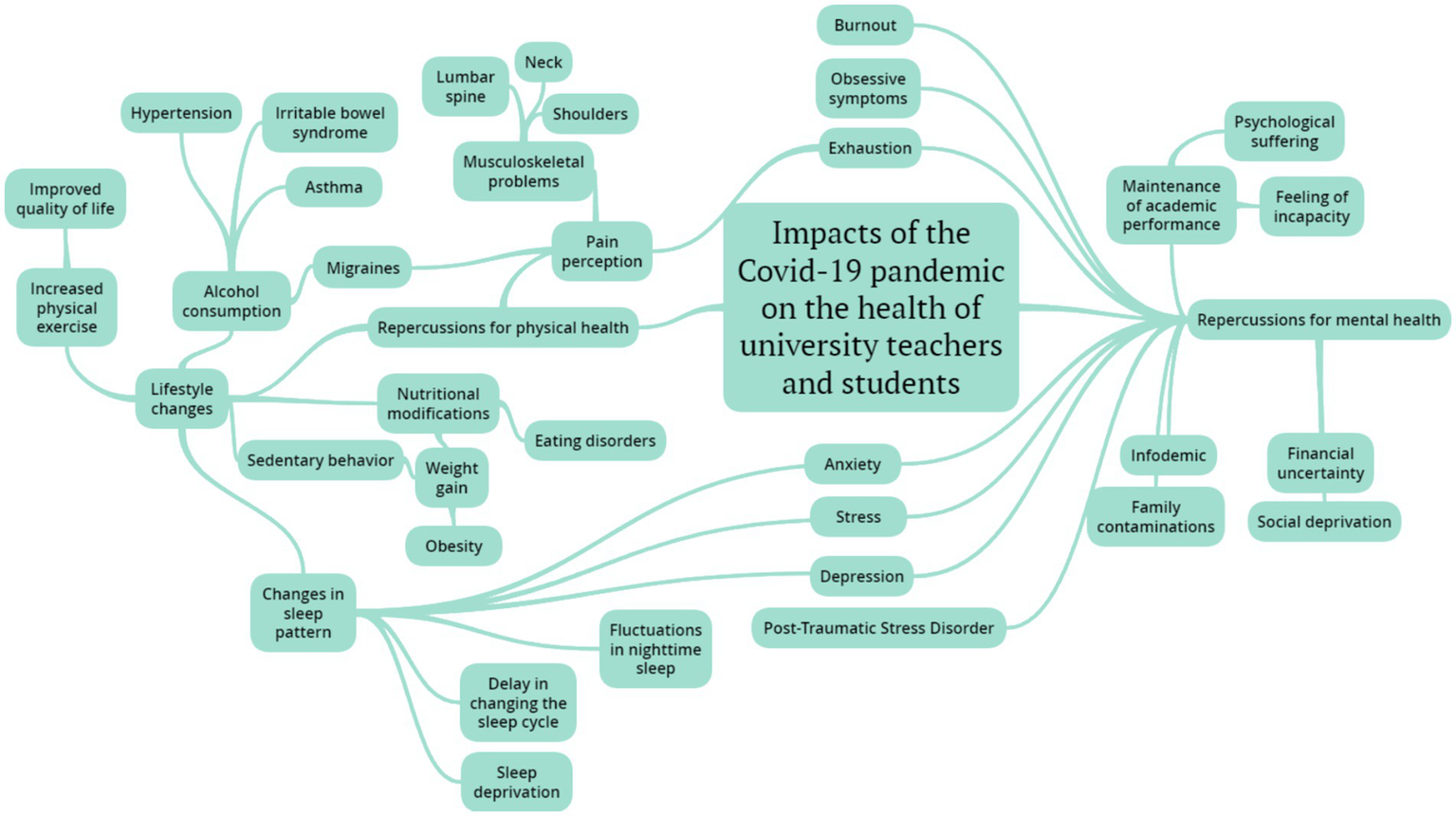
Synthesis of the relationships between physical and mental repercussions of COVID-19 on the health of the university population.
Repercussions for mental health
It is observed that most of the findings refer to repercussions on mental health, whether by worsening a pre-existing mental impairment or as the emergence of a new comorbidity, due to the pandemic period (Aaraj et al., 2022; Al-Rouq et al., 2022; Alyoubi et al., 2021; Cao et al., 2020; Carrascosa et al., 2020; El-Sakran et al., 2022; Gavriluță et al., 2022; Hao et al., 2021; Harky et al., 2020; Hekmat et al., 2021; Huda et al., 2022; Kecojevic et al., 2020; Laranjeira et al., 2022; Lavergne and Kennedy, 2021; Li et al., 2021; López-Castro et al., 2021; Miguel et al., 2021; Millán-Jiménez et al., 2021; Nowrouzi-Kia et al., 2022; Odriozola-González et al., 2020; Paucsik et al., 2022; Rawlings et al., 2022; Richardson et al., 2022; Saracco et al., 2022; Simjee et al., 2021; Xu and Huang, 2022; Zhao et al., 2022).
The pandemic and confinement had a major impact on educational institutions around the world and perhaps this was the first major phenomenon on a global scale to affect educational processes, given the need to quickly adapt to emergency remote teaching (Nowrouzi-Kia et al., 2022). Furthermore, in the student context, the uncertainties of the future were compounded by the maintenance of academic performance and the identification of neglected content in the virtual context, which required effort in the search for complementing knowledge, contributing to the psychological suffering of this population (El-Sakran et al., 2022; Harky et al., 2020).
In this sense, the change in the learning process had an impact on students’ confidence in their own training, leading to a feeling of incapacity. Only 54% of health students felt able to take on care activities for other human beings (Carrascosa et al., 2020). Another important point was the loss of student identity with their own training and with the institution of attachment (Gavriluță et al., 2022).
Among the most frequent mental health problems among university students, stress, anxiety and depressive symptoms stand out (Araújo et al., 2020). The first two may have common characteristics such as a complex combination of emotions, such as: fear, apprehension and worry, which may arise as a brain disorder or associated with other pre-existing problems (Asif et al., 2020). Depressive symptoms can worsen with an increase in depressed mood, decreased energy and limited interest in day-to-day activities (Haider et al., 2020). It is worth noting that pre-existing mental health conditions may have contributed to the increase in the aforementioned symptoms among the general population (Shigemura et al., 2020) and among university students (Alyoubi et al., 2021; Kecojevic et al., 2020). Dissatisfaction with the learning environment was the main reason for these symptoms (Harky et al., 2020; Paucsik et al., 2022).
In an initial attack, a significant correlation was observed between negative emotions caused by the pandemic and the perception of stress symptoms (Xu and Huang, 2022), impacting academic performance, which in turn, increased perceived stress (Aaraj et al., 2022).
In relation to anxiety disorders, it was observed that the mass movement of information contributed to the emergence or worsening of the condition in the population (Sher, 2020). Among higher education students, symptoms of anxiety and stress appeared at a higher incidence than in the rest of the population and were aggravated by the temporal barriers to seeking specialized help (Lavergne and Kennedy, 2021). This situation is even more serious when related to students in the health area, as they face a greater risk of exposure and increased workload, in addition to setbacks and thinking dilemmas during clinical teaching, leading to an increased risk of psychological disorders (Huda et al., 2022).
The time of exposure in a risk situation is also a rival in the quality of life of students and, in this sense, a progressive increase in stress, anxiety and depression scores was observed throughout the confinements caused by the COVID-19COVID-19 pandemic (Essadek and Rabeyron, 2020). Academic life is permeated with the sociability inherent to the university context and the deprivation of this experience, combined with the demands of the moment, contributed to the development of specific symptoms (Juniper et al., 2012). Furthermore, as mental health care was delayed and rescheduled, individuals became committed to dealing with the long-lasting repercussions of the pandemic (Richardson et al., 2022).
The prolongation of the pandemic also increased the risk of having your support network infected by COVID-19, which proved to be an independent risk factor for anxiety, as well as financial uncertainty (Cao et al., 2020).
It was possible to observe significantly higher levels of Post-Traumatic Stress Disorder (PTSD) in university students compared to people with other occupations (Li et al., 2021). The high prevalence of PTSD may reflect multiple and cumulative stressors that students face at individual, relational and more distant social levels (López-Castro et al., 2021). Fear also intensified obsessive symptoms, where it was observed that individuals diagnosed with Obsessive Compulsive Disorder (OCD) experienced an increase in the frequency and intensity of concerns about contamination and cleanliness related to COVID-19 (Haider et al., 2020).
Contrary to literature findings, some studies have identified normal levels of depression, anxiety and stress among students during the period of isolation and the causes for this phenomenon may be related to the cultural and social aspects of this specific group (Laranjeira et al., 2022; Simjee et al., 2021).
In line with the student context, the repercussions for teachers’ mental health contributed to a feeling of exhaustion, especially related to emergency remote teaching (Mariño-Narvaez et al., 2021). A burned-out faculty member may experience anxiety, irritability, and sadness, which can lead to somatic symptoms such as sleep disturbances, headaches, digestive problems, and alcohol and drug abuse. There is a combination of factors that make burnout a complex and multifactorial phenomenon (Ramos et al., 2023).
Adaptations to remote work required the teacher to adapt to a new work dynamic, which often exceeded the negotiated workload, whether in synchronous classes or asynchronous activities and continuous availability on messaging applications (Saraiva et al., 2020). The abrupt change of their teaching activities to the remote environment, at the same time that they experienced insecurity, fears and uncertainties related to the possibility of contagion and death related to the pandemic, further increased the frequency of negative feelings and mental illnesses (Baptista et al., 2023).
In this sense, around 41.2% of teachers suffered serious personal burnout and 16% of teachers suffered serious student-related burnout. These teachers tend to be less involved in teaching activities, thus impacting the learning process. Furthermore, life satisfaction and resilience appeared to be a protective variable, while stress and changes in sleeping habits were negatively associated with burnout among teachers (Miguel et al., 2021).
The negative impacts are not only on mental health, but also on social life and the quality of life of the social body in higher education around the world, hindering productivity processes (Nowrouzi-Kia et al., 2022). Social isolation intensified the feeling of frustration, increasing social vulnerabilities and catalyzing the processes of psychological suffering (Lima et al., 2022; Rawlings et al., 2022).
The development of mental health protection factors, such as strengthening social support for the academic group and promoting coping mechanisms in crisis situations, help the university population in difficult times (Paucsik et al., 2022). In this sense, university and health system management seem to be preponderant for adequate psychological counseling that can, in the long term, reduce the negative impact of COVID-19 on mental health (Hekmat et al., 2021). The construction of new service protocols, online psychological interventions or psychological interventions aimed at specific groups are considered necessary measures (Odriozola-González et al., 2020).
Repercussions for physical health
Regarding the physical health of the university social body, evidence was also found of the negative impacts resulting from the COVID-19 pandemic, resulting in direct changes in lifestyle and pain perception (Cremasco et al., 2021; Haider et al., 2020; Millán-Jiménez et al., 2021; Zhao et al., 2022).
The changes that occurred during this period were very significant in the lifestyle of the entire academic community. Weight gain, for example, was present in 38% of a certain sample of Spanish students (Millán-Jiménez et al., 2021). The results were similar to a general Brazilian sample, where an increase in body mass index (BMI) was noticed in almost 20% of respondents (Costa et al., 2021). Obesity can be understood as a direct risk to health, whether in the emergence of chronic conditions or in the congestion of the health service in the face of the assistance actions necessary to maintain the quality of life of this population (Bolsoni-Lopes et al., 2021).
The constant bombardment of news and information in the media about the pandemic can be stressful and consequently lead people to overeat, especially when looking for foods that help relieve stress (Mattioli et al., 2020), however, the practice of Diets were common during the isolation period and were associated with the risk of eating disorders (Andrade et al., 2021).
Weight gain during the pandemic is associated with an increase in the quantity and quality of food eaten (Balanzá-Martínez et al., 2020). It is interesting to note that the main leisure activity of the university population was associated with sedentary behavior, such as passive entertainment in front of screens. In this sense, physical activity was restricted to between one and 6 h per week, contributing to weight gain associated with low physical activity and to an increased risk of developing physical and mental problems (Cremasco et al., 2021; Ferrara et al., 2022).
On the other hand, performing physical activities was associated with a protective factor against psychological symptoms, whether among students or university employees (Nowrouzi-Kia et al., 2022). Furthermore, it is noteworthy that individuals who already maintained an exercise routine before the pandemic and maintained this commitment, had their quality of life less affected, while those who exercised and stopped practicing during the pandemic period, had worse rates even when compared to previously sedentary people (López-Castro et al., 2021).
Moments of rest also had a negative impact on the overall health of the studied population, as poor sleep quality was often associated with greater quantity and worse quality of sleep, with patterns such as: fluctuations in nighttime sleep, delay in changing the sleep cycle, sleep and sleep deprivation, being more prevalent among individuals who suffer from anxiety, depression or stress (Cremasco et al., 2021; López-Castro et al., 2021).
Another phenomenon with physical repercussions was alcohol consumption during the COVID-19 pandemic, reaching 59% of consumption (Millán-Jiménez et al., 2021). Despite being considered a high percentage, the increase in alcohol intake by university students was 11.79% (Oliveira et al., 2022). In addition to the slight increase in alcohol consumption, it was observed that students with reports of comorbidities had reported conditions such as hypertension, asthma, irritable bowel syndrome, headache and migraines (Al-Rouq et al., 2022).
The negative effect of regular headaches on academic performance was confirmed by general performance in academic work and only 20% of affected students sought specific treatment (Saracco et al., 2022).
Added to this, it is understood that the carrying out of work activities in the domestic environment often came up against the lack of structure for their development, the increase in overload related to the extension of the working day and the lack of rest and leisure for teachers and university students, which harmed mental health as well as physical health for ergonomic reasons (Geller et al., 2023; Huang and Zhao, 2020; Rodrigues et al., 2020).
Musculoskeletal problems have become common and adapting to the pandemic scenario has resulted in great difficulties and limitations, leading to physical and emotional exhaustion on the entire academic staff. The body regions with the highest prevalence of pain complaints were the lumbar spine (60%), neck (56%) and shoulders (48%) (Kraemer et al., 2020; Šagát et al., 2020).
It is worth highlighting that low back pain could be directly related to inadequate posture when carrying out work activities (Kraemer et al., 2020; Matias et al., 2022), while pain in the neck, shoulders, arms and wrists was related to prolonged exposure to the use of electronic devices (Gammoh, 2021).
Limitations of the study
The data collection for this study was carried out immediately after the end of the COVID-19 health emergency and we understand that the number of texts on the subject tends to grow, especially because we are still experiencing the repercussions of COVID-19. Therefore, we understand that this subject is inexhaustible, making it impossible to capture all existing bibliography.
Conclusion
The study addresses the impacts of the pandemic on the physical and mental health of university teachers and students, highlighting the rapid transition to remote teaching and its consequences. Psychological impairments, including anxiety, stress and sleep disorders, as well as physical symptoms such as sedentary lifestyle and pain, are highlighted.
The need for interventions and public policies to mitigate the effects of the pandemic in the medium and long term is highlighted, and it is essential to reassess the role of universities in promoting health. Although there are challenges, initiatives such as the international networks of healthy universities and other similar groups indicate paths for sustainable actions.
This research serves as a basis for understanding the negative repercussions of the pandemic on the health of the university community, but new research is suggested to determine viable strategies for health recovery, focusing on the local, epidemiological, social and political characteristics of the affected population, especially in developing countries as these have presented a low number of research on the subject.
Statements
Author contributions
MG: Conceptualization, Data curation, Funding acquisition, Project administration, Resources, Supervision, Validation, Visualization, Writing – review & editing. CS: Conceptualization, Formal analysis, Investigation, Visualization, Writing – original draft, Writing – review & editing. FC: Data curation, Investigation, Methodology, Software, Visualization, Writing – review & editing. FF: Resources, Supervision, Validation, Visualization, Writing – review & editing. LV: Resources, Supervision Validation, Visualization, Writing – review & editing. PM: Resources, Supervision Validation, Visualization, Writing – review & editing.
Funding
The author(s) declare that no financial support was received for the research, authorship, and/or publication of this article.
Conflict of interest
The authors declare that the research was conducted in the absence of any commercial or financial relationships that could be construed as a potential conflict of interest.
Publisher’s note
All claims expressed in this article are solely those of the authors and do not necessarily represent those of their affiliated organizations, or those of the publisher, the editors and the reviewers. Any product that may be evaluated in this article, or claim that may be made by its manufacturer, is not guaranteed or endorsed by the publisher.
References
1
Aaraj S. Farooqi F. Saeed N. Khan S. (2022). Impact of COVID pandemic and hybrid teaching on final year MBBS students’ end of clerkship exam performance. Pakistan J. Med. Sci.38, 113–117. doi: 10.12669/pjms.38.1.4645
2
Al-Rouq F. Al-Otaibi A. AlSaikhan A. Al-Essa M. Al-Mazidi S. (2022). Assessing physiological and psychological factors contributing to stress among medical students: implications for health. Int. J. Environ. Res. Public Health19:6822. doi: 10.3390/ijerph192416822
3
Alyoubi A. Halstead E. J. Zambelli Z. Dimitriou D. (2021). The impact of the COVID-19 pandemic on students’ mental health and sleep in Saudi Arabia. Int. J. Environ. Res. Public Health18:9344. doi: 10.3390/ijerph18179344
4
Andrade C. Bezerra R. A. Magnavita A. P. A. Silva L. S. G. (2021). Restrictive diets and the risk of development of food compulsion in adolecents. Brazilian J. Dev.7, 50918–50928.
5
Araújo F. J. Cidade P. Nobre C. Neto M. (2020). Impact of Sars-Cov-2 and its reverberation in global higher education and mental health. Psychiatry Res.288:112977. doi: 10.1016/j.psychres.2020.112977
6
Asif S. Mudassar A. Shahzad T. Z. Raouf M. Pervaiz T. (2020). Frequency of depression, anxiety and stress among university students. Pakistan J. Med. Sci.36, 971–976. doi: 10.12669/pjms.36.5.1873
7
Balanzá-Martínez V. Atienza-Carbonell B. Kapczinski F. De Boni R. B. (2020). Lifestyle behaviours during the COVID-19 – time to connect. Acta Psychiatr. Scand.141:13177. doi: 10.1111/acps.13177
8
Banerjee D. Meena K. S. (2021). COVID-19 as an “Infodemic” in public health: critical role of the social media. Front. Pub. Health9:610623. doi: 10.3389/fpubh.2021.610623
9
Baptista C. J. Martins A. M. Escalda P. M. F. (2023). Fatores associados a altos escores de saúde mental de professores universitários durante a pandemia de COVID-19. Saúde e Pesquisa16, 1–12. doi: 10.17765/2176-9206.2023v16n1.e11419
10
Bolsoni-Lopes A. Furieri L. Alonso-Vale M. I. C. (2021). Obesidade e a COVID-19: uma reflexão sobre a relação entre as pandemias. Rev. Gaucha Enferm.42:e20200216. doi: 10.1590/1983-1447.2021.20200216
11
Cao W. Fang Z. Hou G. Han M. Xu X. Dong J. et al . (2020). The psychological impact of the COVID-19 epidemic on college students in China. Psychiatry Res.287:112934. doi: 10.1016/j.psychres.2020.112934
12
Carrascosa M. M. C. de Campos T. Sampaio J. E. Souza R. R. F. Ribeiro V. L. Maia M. L. N. et al . (2020). Medical interns and COVID-19: results national research. Rev. Assoc. Med. Brasileira66, 812–817. doi: 10.1590/1806-9282.66.6.812
13
Costa C. Dos S. Steele E. M. Leite M. A. Rauber F. Levy R. B. et al . (2021). Body weight changes in the NutriNet Brasil cohort during the COVID-19 pandemic TT - Mudanças no peso corporal na coorte NutriNet Brasil durante a pandemia de COVID-19. Rev. Saúde Pública1:55.
14
Cremasco M. M. Mulasso A. Moroni A. Testa A. Degan R. Rainoldi A. et al . (2021). Relation among perceived weight change, sedentary activities and sleep quality during COVID-19 lockdown: A study in an academic community in northern Italy. Int. J. Environ. Res. Public Health18:2943. doi: 10.3390/ijerph18062943
15
Dadaczynski K. Tolks D. (2021). Digital health communication and health literacy in times of COVID-19. Planning and implementation of a special course of study in health promotion and prevention. GMS J. Med. Educ.38, 1–8. doi: 10.3205/zma001427
16
de Klerk E. D. Palmer J. M. (2021). Resetting education priorities during COVID-19: towards equitable learning opportunities through inclusion and equity. Perspect. Educ.39, 12–28. doi: 10.18820/2519593X/pie.v39.i1.2
17
El-Sakran A. Salman R. Alzaatreh A. (2022). Impacts of emergency remote teaching on college students amid COVID-19 in the UAE. Int. J. Environ. Res. Public Health19:979. doi: 10.3390/ijerph19052979
18
Essadek A. Rabeyron T. (2020). Mental health of French students during the COVID-19 pandemic. J. Affect. Disord.277, 392–393. doi: 10.1016/j.jad.2020.08.042
19
Ferrara M. Langiano E. Falese L. Diotaiuti P. Cortis C. De Vito E. (2022). Changes in physical activity levels and eating behaviours during the COVID-19 pandemic: sociodemographic analysis in university students. Int. J. Environ. Res. Public Health19:550. doi: 10.3390/ijerph19095550
20
Gammoh Y. (2021). Digital eye strain and its risk factors among a university student population in Jordan: a cross-sectional study. Cureus.13:e13575. doi: 10.7759/cureus.13575
21
Gavriluță C. Dalban C. M. Ioan B. G. (2022). Educational, emotional, and social impact of the emergency state of COVID-19 on Romanian university students. Int. J. Environ. Res. Public Health19:990. doi: 10.3390/ijerph19073990
22
Geller I. V. Ilkiu G. S. Amarantes W. Ruski M. Gonzales D. (2023). Não foi só ensinar: alterações osteomusculares em docentes no sistema home office de ensino. Espaço Para a Saúde - Revista de Saúde Pública Do Paraná24, 1–11. doi: 10.22421/1517-7130/es.2023v24.e903
23
Haider I. I. Tiwana F. Tahir S. M. (2020). Impact of the COVID-19 pandemic on adult mental health. Pakistan J. Med. Sci.36, S90–S94. doi: 10.12669/pjms.36.COVID19-S4.2756
24
Hao Z. Jin L. Huang J. Lyu R. Cui Q. (2021). Academic burnout and problematic smartphone use during the COVID-19 pandemic: the effects of anxiety and resilience. Front. Psych.12:725740. doi: 10.3389/fpsyt.2021.725740
25
Harky A. Karimaghaei D. Katmeh H. Hewage S. (2020). The impact of COVID-19 on medical examinations. Acta Bio-Medica: Atenei Parmensis91:e2020135. doi: 10.23750/abm.v91i4.10487
26
Hekmat A. Divanbeigi R. Yegane S. A. F. (2021). Effects of COVID-19 on student’s mental health: a systematic review. Pakistan J. Med. Health Sci.15, 1543–1550.
27
Horta H. Panova A. Santos J. Yudkevich M. (2022). The adaptation of academics to the COVID-19 crisis in terms of work time allocation. PLoS One17:e0273246. doi: 10.1371/journal.pone.0273246
28
Huang Y. Zhao N. (2020). Chinese mental health burden during the COVID-19 pandemic. Asian J. Psychiatr.51:102052. doi: 10.1016/j.ajp.2020.102052
29
Huda A. U. Yasir M. Shamsuddin A. S. (2022). The impact of vaccination on stress level of trainee doctors during COVID-19 pandemic. Anaesthesia Pain Int. Care26:1916. doi: 10.35975/apic.v26i3.1916
30
Jones L. B. Vereschagin M. Wang A. Y. Munthali R. J. Pei J. Richardson C. G. et al . (2023). Suicidal ideation amongst university students during the COVID-19 pandemic: time trends and risk factors. Can. J. Psychiatry68, 531–546. doi: 10.1177/07067437221140375
31
Juniper B. Walsh E. Richardson A. Morley B. (2012). A new approach to evaluating the well-being of PhD research students. Assess. Eval. High. Educ.37, 563–576. doi: 10.1080/02602938.2011.555816
32
Kecojevic A. Basch C. H. Sullivan M. Davi N. K. (2020). The impact of the COVID-19 epidemic on mental health of undergraduate students in New Jersey, cross-sectional study. PLoS One15:9696. doi: 10.1371/journal.pone.0239696
33
Kraemer M. U. G. Yang C. H. Gutierrez B. Wu C. H. Klein B. Pigott D. M. et al . (2020). The effect of human mobility and control measures on the COVID-19 epidemic in China. Science368, 493–497. doi: 10.1126/science.abb4218
34
Laranjeira C. Dixe M. A. Valentim O. Charepe Z. Querido A. (2022). Mental health and psychological impact during COVID-19 pandemic: an online survey of Portuguese higher education students. Int. J. Environ. Res. Public Health19:337. doi: 10.3390/ijerph19010337
35
Lavergne J. A. Kennedy M. L. (2021). Telepsychiatry and medical students: a promising mental health treatment for medical student use both personally and professionally. Curr. Psychiatr. Rep.23:31. doi: 10.1007/s11920-021-01248-6
36
Li X. Fu P. Fan C. Zhu M. Li M. (2021). COVID-19 stress and mental health of students in locked-down colleges. Int. J. Environ. Res. Public Health18:771. doi: 10.3390/ijerph18020771
37
Lima H. D. P. Arruda G. O. D. Santos E. G. P. D. Lopes S. G. R. Maisatto R. D. O. Souza V. S. D. (2022). The experience of fear by university students during the Covid-19 pandemic. Ciênc. Cuid. Saúde21:e58691. doi: 10.4025/cienccuidsaude.v21i0.58691
38
López-Castro T. Brandt L. Anthonipillai N. J. Espinosa A. Melara R. (2021). Experiences, impacts and mental health functioning during a COVID-19 outbreak and lockdown: data from a diverse New York City sample of college students. PLoS One16:249768. doi: 10.1371/journal.pone.0249768
39
Mariño-Narvaez C. Puertas-Gonzalez J. A. Romero-Gonzalez B. Peralta-Ramirez M. I. (2021). Giving birth during the COVID-19 pandemic: the impact on birth satisfaction and postpartum depression. Int. J. Gynecol. Obstet.153, 83–88. doi: 10.1002/ijgo.13565
40
Matias N. M. D. S. Bezerra L. Â. Nascimento S. E. A. Ferreira P. G. S. Raposo M. C. F. Melo R. S. (2022). Correlação entre dor musculoesquelética e níveis de estresse em professores durante o período de ensino remoto na pandemia de COVID-19. Fisioterapia Em Movimento35:35140. doi: 10.1590/fm.2022.35140.0
41
Mattioli A. V. Pinti M. Farinetti A. Nasi M. (2020). Obesity risk during collective quarantine for the COVID-19 epidemic. Obesity Med.20:100263. doi: 10.1016/j.obmed.2020.100263
42
Miguel C. Castro L. Marques Dos Santos J. P. Serrão C. Duarte I. (2021). Impact of COVID-19 on medicine lecturers’ mental health and emergency remote teaching challenges. Int. J. Environ. Res. Public Health18:792. doi: 10.3390/ijerph18136792
43
Millán-Jiménez A. Herrera-Limones R. López-Escamilla Á. López-Rubio E. Torres-García M. (2021). Confinement, comfort and health: analysis of the real influence of lockdown on university students during the COVID-19 pandemic. Int. J. Environ. Res. Public Health18:5572. doi: 10.3390/ijerph18115572
44
Nowrouzi-Kia B. Osipenko L. Eftekhar P. Othman N. Alotaibi S. Schuster A. M. et al . (2022). The early impact of the global lockdown on post-secondary students and staff: A global, descriptive study. SAGE Open Med.10:20503121221074480. doi: 10.1177/20503121221074480
45
Odriozola-González P. Planchuelo-Gómez Á. Irurtia M. J. de Luis-García R. (2020). Psychological effects of the COVID-19 outbreak and lockdown among students and workers of a Spanish university. Psychiatry Res.290:113108. doi: 10.1016/j.psychres.2020.113108
46
Oliveira E. N. Vasconcelos M. I. O. Almeida P. C. Pereira P. J. D. A. Linhares M. S. C. Ximenes Neto F. R. G. et al . (2022). COVID-19: repercussions on the mental health of higher education students. Saúde Em Debate46, 206–220. doi: 10.1590/0103-11042022e114
47
Organização Mundial da Saúde . (2023). Histórico da pandemia de COVID-19 - OPAS/OMS | Organização Pan-Americana da Saúde. Available at:https://www.paho.org/pt/covid19/historico-da-pandemia-covid-19
48
Organização Pan-Americana de Saúde . (2022). Histórico da pandemia de COVID-19 - OPAS/OMS | Organização Pan-Americana da Saúde. Available at:https://www.paho.org/pt/covid19/historico-da-pandemia-covid-19
49
Ouzzani M. Hammady H. Fedorowicz Z. Elmagarmid A. (2016). Rayyan-a web and mobile app for systematic reviews. Syst. Rev.5:210. doi: 10.1186/s13643-016-0384-4
50
Owens M. R. Brito-Silva F. Kirkland T. Moore C. E. Davis K. E. Patterson M. A. et al . (2020). Prevalence and social determinants of food insecurity among college students during the COVID-19 pandemic. Nutrients12:2515. doi: 10.3390/nu12092515
51
Paucsik M. Leys C. Marais G. Baeyens C. Shankland R. (2022). Self-compassion and savouring buffer the impact of the first year of the COVID-19 on PhD students’ mental health. Stress. Health38, 891–901. doi: 10.1002/smi.3142
52
Peters M. Godfrey C. McInerney P. Munn Z. Tricco A. Khalil H. (2020). Scoping reviews - JBI manual for evidence synthesis. Adelaide, SA: JBI Reviewer’s Manual.
53
Peters M. D. J. Marnie C. Tricco A. C. Pollock D. Munn Z. Alexander L. et al . (2020). Updated methodological guidance for the conduct of scoping reviews. JBI Evid. Synth.18, 2119–2126. doi: 10.11124/JBIES-20-00167
54
Petrović Z. Peraica T. Blažev M. Tomašić L. Kozarić-Kovačić D. (2022). Use of psychoactive substances and alcohol during the first three waves of the COVID-19 pandemic: Croatian experience. J. Addict. Dis.42, 91–102. doi: 10.1080/10550887.2022.2145076
55
Pollock D. Peters M. D. J. Khalil H. McInerney P. Alexander L. Tricco A. et al . (2023). Recommendations for the extraction, analysis, and presentation of results in scoping reviews. JBI Evid. Synth.21, 520–532. doi: 10.11124/JBIES-22-00123
56
Ramos D. K. Anastácio B. S. da Silva G. A. Rosso L. U. Mattar J. (2023). Burnout syndrome in different teaching levels during the COVID-19 pandemic in Brazil. BMC Public Health23:235. doi: 10.1186/s12889-023-15134-8
57
Rawlings N. N. Akwah E. A. Musisi J. Awanchiri K. Babirye R. Emalieu D. et al . (2022). Perceived risks of COVID-19, attitudes towards preventive guidelines and impact of the lockdown on students in Uganda: a cross-sectional study. PLoS One17:0266249. doi: 10.1371/journal.pone.0266249
58
Richardson G. E. Gillespie C. S. Mantle O. Clynch A. Ooi S. Z. Y. Park J. J. et al . (2022). Social and psychological impact of the COVID-19 pandemic on UK medical and nursing students: protocol for a national medical and nursing student survey. BMJ Open12:e057467. doi: 10.1136/bmjopen-2021-057467
59
Rodrigues A. M. Souza K. R. Teixeira L. R. Larentis A. L. (2020). A temporalidade social do trabalho docente em universidade pública e a saúde. Ciênc. Saúde Colet.25, 1829–1838. doi: 10.1590/1413-81232020255.33222019
60
Šagát P. Bartík P. González P. P. Tohănean D. I. Knjaz D. (2020). Impact of COVID-19 quarantine on low back pain intensity, prevalence, and associated risk factors among adult citizens residing in Riyadh (Saudi Arabia): a cross-sectional study. Int. J. Environ. Res. Public Health17:302. doi: 10.3390/ijerph17197302
61
Saracco M. G. Bergesio G. Cuniberti A. Rinaldi B. Cavallini M. (2022). The impact of headache symptoms in a population of Italian university students during the COVID period: an observational study based on 4926 cases. Neurol. Sci.43, 5739–5740. doi: 10.1007/s10072-022-06277-4
62
Saraiva K. Traversini C. Lockmann K. (2020). A educação em tempos de COVID-19: ensino remoto e exaustão docente. Praxis Educ.15, 1–24. doi: 10.5212/praxeduc.v.15.16289.094
63
Scheel T. E. Bendixen L. Procházka J. Acquadro Maran D. (2023). Working during the COVID-19 pandemic: demands, resources, and mental wellbeing. Front. Psychol.13:1037866. doi: 10.3389/fpsyg.2022.1037866
64
Schriek J. Carstensen B. Soellner R. Klusmann U. (2024). Pandemic rollercoaster: university students’ trajectories of emotional exhaustion, satisfaction, enthusiasm, and dropout intentions pre-, during, and post-COVID-19. Teach. Teach. Educ.148:104709. doi: 10.1016/j.tate.2024.104709
65
Sher L. (2020). An infectious disease pandemic and increased suicide risk. Braz. J. Psychiatry42, 239–240. doi: 10.1590/1516-4446-2020-0989
66
Shigemura J. Ursano R. J. Morganstein J. C. Kurosawa M. Benedek D. M. (2020). Public responses to the novel 2019 coronavirus (2019-nCoV) in Japan: mental health consequences and target populations. Psychiatr. Clin. Neurosci.74, 281–282. doi: 10.1111/pcn.12988
67
Simjee Y. Mncwabe Z. Sindhrajh K. Khan R. Seedat M. Xulu L. et al . (2021). Impact of COVID-19 on the mental health of optometry students at a higher education institution: a case study. African Vision Eye Health80:652. doi: 10.4102/aveh.v80i1.652
68
Trust T. Whalen J. (2020). Should teachers be trained in emergency remote teaching? Lessons learned from the COVID-19 pandemic. J. Technol. Teacher Educ.28, 189–199.
69
Xu F. Huang L. (2022). Impacts of stress response and negative emotion on mental health of college students during the COVID-19 outbreak. Front. Psych.12:784661. doi: 10.3389/fpsyt.2021.784661
70
Zhao Y. Xu X. Cai G. Hu Z. Hong Y. (2022). Promoting strategies for healthy environments in university halls of residence under regular epidemic prevention and control: an importance—performance analysis from Zhejiang, China. Int. J. Environ. Res. Public Health19:16014. doi: 10.3390/ijerph192316014
Summary
Keywords
COVID-19, universities, health promotion, mental health, health impact assessment
Citation
Guimarães de Araujo Faria M, da Silva Freitas Venâncio CG, Carvalho Pacheco F, Ferreira Koopmans F, Valadão Vasconcelos Alves L and Maia Valente P (2025) Impacts of the COVID-19 pandemic on the health of university teachers and students: a scoping review. Front. Psychol. 16:1428707. doi: 10.3389/fpsyg.2025.1428707
Received
06 May 2024
Accepted
30 January 2025
Published
27 February 2025
Volume
16 - 2025
Edited by
Prisla Ücker Calvetti, Federal University of Health Sciences of Porto Alegre, Brazil
Reviewed by
Nahia Idoiaga, University of the Basque Country, Spain
Andrea Tenorio Correia da Silva, University of São Paulo, Brazil
Yu Deng, Sichuan International Studies University, China
Updates
Copyright
© 2025 Guimarães de Araujo Faria, da Silva Freitas Venâncio, Carvalho Pacheco, Ferreira Koopmans, Valadão Vasconcelos Alves and Maia Valente.
This is an open-access article distributed under the terms of the Creative Commons Attribution License (CC BY). The use, distribution or reproduction in other forums is permitted, provided the original author(s) and the copyright owner(s) are credited and that the original publication in this journal is cited, in accordance with accepted academic practice. No use, distribution or reproduction is permitted which does not comply with these terms.
*Correspondence: Magda Guimarães de Araujo Faria, magda.faria@uerj.br
†ORCID: Fádia Carvalho Pacheco, orcid.org/0000-0003-1150-0900
Disclaimer
All claims expressed in this article are solely those of the authors and do not necessarily represent those of their affiliated organizations, or those of the publisher, the editors and the reviewers. Any product that may be evaluated in this article or claim that may be made by its manufacturer is not guaranteed or endorsed by the publisher.