 Victoria Gottwald
 Marianne Davies
 Robin Owen
- 1Department of Sport and Exercise Sciences, Bangor University, Bangor, United Kingdom
- 2Sport and Physical Activity Research Centre, Sheffield Hallam University, Sheffield, United Kingdom
- 3School of Health and Sport Sciences, Liverpool Hope University, Liverpool, United Kingdom
Directing our focus of attention appropriately during task execution can benefit outcome performance, cognitive efficiency, and physiological efficiency. For instance, individuals may benefit from adopting an external focus of attention (i.e., by focusing attention on the effects of one's movements on the environment) over an internal focus of attention (e.g., focusing on one's body movements). However, accounts concerning the theoretical functioning of such effects have primarily relied on hierarchical information processing perspectives; far less consideration has been given to potentially alternative explanations based on ecological dynamics, instances where an internal focus may be desirable over an external focus, and the associated applied implications. Within the present review, we: (a) outline the most recent developments in attentional focus research; (b) evaluate similarities and differences between information processing and ecological dynamics explanations of the focus of attention effect; (c) provide practical recommendations; and (d) discuss future research avenues. In doing so, a case is made for an “Ecological Dynamics Account of Attentional Focus” to act as an alternative to information processing-based hypotheses.
Introduction: the focus of attention phenomenon
Verbal instruction is one of the most common methods of conveying information to individuals when learning and performing motor skills. However, it is now well established that the language we use when providing instruction can influence the skill acquisition process, particularly in relation to whether it directs an individual's attention internally towards the body or externally towards the effect of one's movements on the environment (1). This phenomenon is consistent with early rhetoric from James (2) when discussing the influence of attention on movement outcomes: “Keep your eye at the place aimed at, and your hand will fetch the target; think of your hand, and you will likely miss your aim” (p. 520). There is now a wealth of literature supporting an external focus of attention for several performance outcomes; including accuracy, speed, cardiovascular endurance, maximum force production, movement kinematics and motor economy [for reviews see (1, 3)]. Benefits of an external focus also extend beyond sport and have been applied to enhance movement solutions within varying domains, including the military (4) and healthcare fields. Examples include when working with Parkinson's (5), stroke (6), or multiple sclerosis patients (7), as well as those with intellectual disabilities (8), in older populations (9), requiring falls prevention (10), and in rehabilitation environments such as individuals recovering from ankle sprains (11) or ACL reconstructive surgery (12).
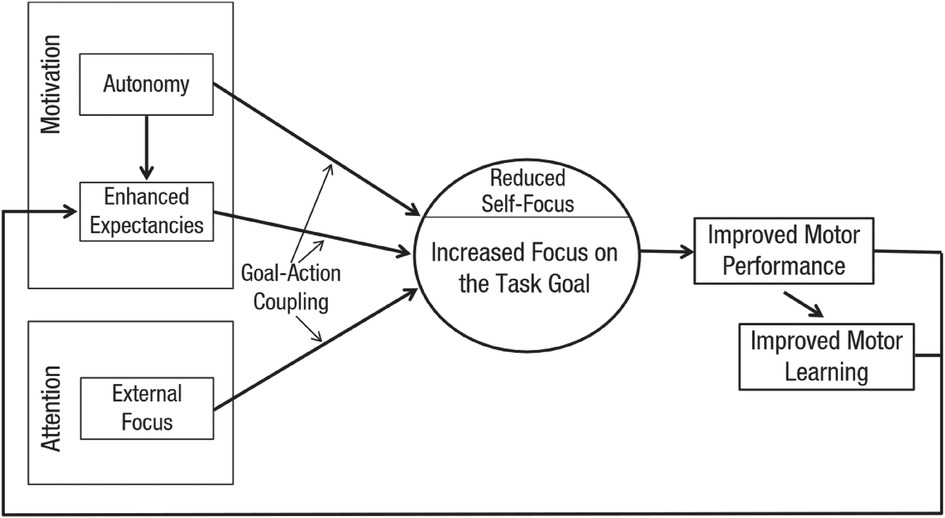
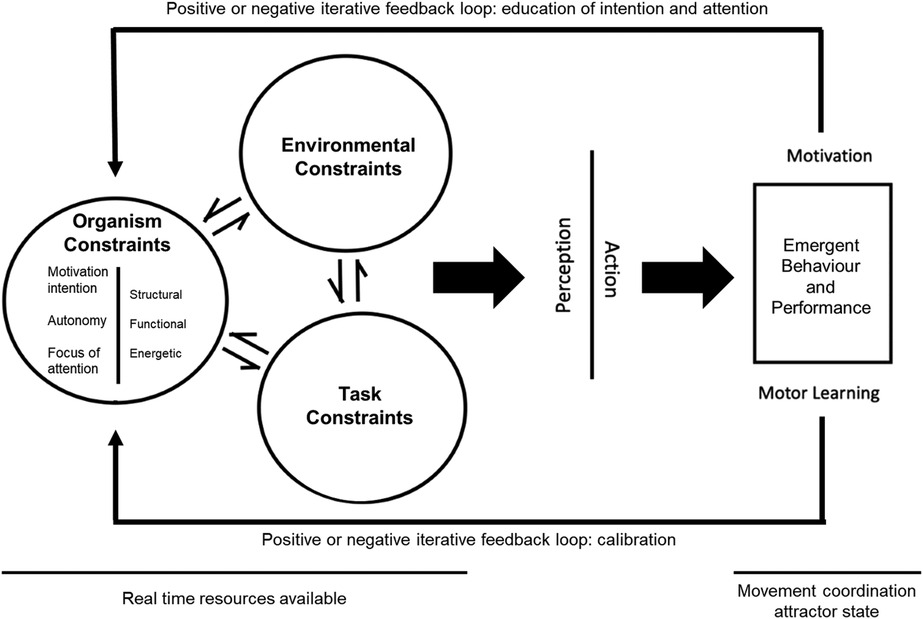
Figure 2. An ecological account of focus of attention, adapted from Davies & Davies (105), Newell's (83) constraints model, and Wulf and Lewthwaite's OPTIMAL model (24, 25).
However, accounts concerning the theoretical mechanisms underpinning such effects have primarily relied on hierarchical information processing perspectives, whilst far less consideration has been given to alternative explanations based on ecological dynamics and the applied implications thereof. There remains debate in the skill acquisition field with regards to the extent to which end-uses of theory (i.e., practitioners such as sports coaches) should comprehend the theoretical underpinnings of skill learning so that they may best align practice decisions with their chosen perspective. Philosophically, if we adopt a “shed-building metaphor”: one belief is that if you build a shed in your garden, whether you believe the earth is flat or spherical, has little influence on the way in which the shed is built. However, there should be little doubt that for the best practice conditions to occur, coaches must be able to justify their decision making and articulate the rationale underpinning applied practice decisions. This has implications on coach education, where adequate skill acquisition and pedagogical training is arguably sporadic on a global scale (13).
The present review aims to address these issues by providing greater clarity in relation to the fundamental theoretical principles underpinning differing perspectives that account for the focus of attention effect within skill learning/performance, and aim to address implications for applied practice. More specifically, the review will: (a) outline the most pertinent developments in the attentional focus literature; (b) evaluate similarities and differences between information processing and ecological dynamics explanations of the focus of attention effect; (c) provide practical recommendations and suggestions for coach education; and (d) discuss future research avenues. In doing so, a case is made for an Ecological Dynamics Account of Attentional Focus to act as an alternative to information processing-based hypotheses.
Recent research directions
Focus distance
When selecting appropriate external foci, some contexts require practitioners to decide between multiple alternatives. For example, a hockey coach choosing to direct attention towards the club vs. the ball, or a medical doctor choosing to attend to their scalpel vs. the target epidermis. This conundrum has led researchers to investigate “the distance effect”, whereby benefits of distal external foci (i.e., environmental/task information far from the body) over proximal external foci (i.e., environmental/task information close to the body) were first identified by McNevin et al. (14), on the basis that attending to external movement effects further from the body are more easily differentiated from the body and thus more likely to facilitate automaticity. At first glance, this finding seems robust across experts and novices (14–16), but more recently, Singh and Wulf (17) have reported some interesting nuances. Whilst the authors provide further evidence to support a more distal focus for the expert performer, for tasks that require coordination of greater degrees of freedom (e.g., a snatch in weightlifting), then it is argued that a proximal external focus that is better aligned with technique, may be more appropriate for novices. Differential findings as a function of expertise were also supported with measures of focus preference (i.e., experts preferred a distal focus and novices more proximal). Singh et al. (18) have accounted for these findings with the notion of functional variability when distality of focus is appropriately matched to expertise level. The authors showed evidence for enhanced coordination of the shoulder, elbow and wrist in a volleyball serve, for skilled performers adopting a more distal as opposed to proximal focus.
Interestingly, the distance effect has also been considered in the context of an internal focus. Pelleck and Passmore (19) investigated a range of performance metrics when adopting an internal attentional focus more proximal or distal to technical features of the task. The authors hypothesised that the detrimental effects of an internal focus would be exacerbated when more proximal to critical elements of the technique, by crating greater interference with automatic self-organisation thereof. Indeed, in a golf putt, measures of movement accuracy, muscle activity, and kinematics were all adversely affected when directing attention proximally towards technique-relevant upper-body as opposed to distally towards technique-irrelevant lower-body limb mechanics.
Focus relevance
Findings from Pelleck and Passmore (19) suggest that any disturbances to the motor system when focusing internally, may be concentrated towards more skill-relevant bodily factors in tasks otherwise reliant on environmental afferent information. It is conceivable that focusing internally on limb mechanics which are responsible for action (e.g., upper-body in golf) may be of least task relevance in far-aiming tasks, since the motor system is capable of self-organising limb mechanics without a need for conscious monitoring [see also (20)]. In this manner, it is possible that focus relevance may moderate the relationship between expertise and focus distance (17, 21). Indeed, Amini and Vaezmousavi (4) reveal enhanced shooting performance in elite military personnel when adopting a more task relevant external focus (regardless of distality) [see also (22)]. An external-relevant focus which comprised mentally focusing on the target facilitated superior shooting performance compared to an external-irrelevant focus which comprised focusing mentally on a randomly presented auditory stimulus to judge its bass and treble. Therefore, relevance of the external focus to the task may be a key consideration when formulating instruction.
Focus salience
With focus relevance intricacies in mind, recent research has emphasized the complexities of selecting appropriate external foci for learning and performance. Mechanistic explanations underpinning the attentional focus phenomenon have tended to emphasize the role of an external focus to augment congruence between planning and action, and ultimately enhance automaticity of motor programming (see Wulf et al.'s (23)], constrained action hypothesis, and Wulf & Lewthwaite's (24, 25) notion of goal-action coupling, respectively). However, it stands to reason that these mechanisms rely on there being a more tangible (i.e., relevant) movement effect such as motion of a club, racket, or ball. In the absence of this, Lawrence et al. (26) argue that the benefits of an external focus may be diminished. Whilst there remain some inconsistencies in the literature when investigating this type of form task [see also (27)], there is little doubt that from a practitioner perspective, some tasks may exhibit challenges when identifying more salient external movement effects e.g., within floor gymnastics or dance. More recently, Becker et al. (28) present a novel solution to such instances, via a holistic attentional focus that is targeted towards generalised feelings of the movement to inhibit conscious control of effectors. When tested in a standing long jump, findings revealed that both an external and holistic focus enhanced performance, with no statistical difference between the two. Becker and colleagues advocate a holistic focus when an external focus is neither practical nor desired. A similar solution which adopts what the authors term a “mind over body” approach, entails replacing body parts (in this instance, the supine forearms in a volleyball pass), with the depicted image of an external object (a “platform”) (29). This shows promising findings and is consistent with more traditional implicit learning techniques such as analogy learning (30).
Wider psychological mechanisms
Irrespective of nuances surrounding the distance effect and skill relevance, the literature to date presents a robust representation of the attentional focus phenomenon, and benefits of an external focus. However, this literature has typically considered the relationship between small numbers of variables in isolation, for example the influence of an external focus of attention on electromyography (EMG) or movement amplitude, somewhat removed from interactive psychological functioning (see 1 for a review). These linear methodologies have justifiably been adopted in the name of conserving methodological integrity and rigour. However, a more recent research direction has begun to embrace more holistic and non-linear methodologies, arguably more consistent with skill acquisition in practice. In this manner, Wulf and Lewthwaite's (24, 25) OPTIMAL theory (optimising performance through intrinsic motivation and attention for learning) (see Figure 1), proposes that learning is a consequence of interactions between both attentional and motivational factors. The authors speculate that the ideal sensorimotor and motivational conditions can lead to enhanced goal-action coupling via use of more efficient functional connections across brain networks. Specifically, learning environments which promote autonomy (e.g., choice in the training activity undertaken) and enhanced expectancies (e.g., belief that the training activity will benefit performance) should increase dopamingergic responses and engagement with the task, which when combined with an optimal external attentional focus direction, enables individuals to achieve greater neural coupling between the task goal and action being organised. Therefore, wider psychological mechanisms may be a valuable consideration in focus of attention literature and applied practice going forward.
Ecological validity
The shift in research direction to investigate the attentional focus phenomenon more holistically, has also cemented a need to test in in more ecologically valid environments. Despite an extensive literature-base supporting the robustness of an external focus of attention to enhance a breadth of movement outcomes (see 1 Wulf, 2013), the field has arguably failed to bridge the gulf between theory and practice. There remain significant discrepancies between what is advocated by empirical research and the language being observed from coaches and practitioners in the field (31). Research methodologies embracing the value of investigating attentional focus in more “naturalised” environments, are likely to give us a better understanding of the “what, when, why, and how” of different focus instructions and strategies, and subsequently identify why these discrepancies exist so that we might ensure efficacy of coach education. Whilst several studies have now adopted observational approaches to identify the nature of attentional focus instructions and strategies employed in sport and rehabilitation environments [e.g., (32–35)], richer qualitative approaches [e.g. (36)], have advanced this further to: (a) explore the functionality of different focus instructions across both practice and competition environments; (b) investigate differences in attentional focus across different aspects of the game i.e., the short vs. long game; and (c) identify the mechanisms influencing adoption of attentional foci, e.g., self-generated vs. coach-led instruction. Findings highlight the complexities underpinning the attentional focus phenomenon and likely account for discrepancies between research and practice. For example, whilst coaches had a role in influencing the attentional focus adopted in elite-level golf, there was a lack of consistency between the attentional focus advocated by coaches and what was adopted by players in practice and competition. Furthermore, the attentional focus adopted by players varied between the short- and long-game, with players more likely to focus on the body during the short-game, and focus during competition environments typically being self-generated by players as opposed to coming from the coach. Isolated coach education interventions are therefore unlikely to be sufficient in enhancing the extent to which an external focus is employed during practice environments.
When investigated in more ecologically valid settings with athletes, Anderson et al.'s (37) findings are consistent with the notion that the attentional focus effect is likely more complex than is currently portrayed by the literature. The authors adopted machine learning techniques to identify patterns of attributes that differentiated between two groups of athletes: high and low performing Olympic weightlifters. Associated odds ratios revealed that athletes were 9.5 times more likely to achieve high-performing status if they had completed over 281 h of practice using an internal focus of attention by the first phase of testing. It is important to note however, that whilst this was the case, athletes were also 9.3 times more likely to reach the same status if they had completed over 346 h using an external focus of attention by the same stage. Together, these findings suggest that different types of focus instructions might possess different functions during an athlete's development.
Facilitative somaesthetic awareness
Similarly to the complexities associated with ecological settings, the purpose of focus of attention prescription also appears to play an important role in determining optimal attentional foci. Toner and Moran (38) propose a functional “somaesthetic awareness” for correcting bad habits. They advocate switching between what they term more reflective (internal) and unreflective (external) modes of bodily awareness, the same way in which an athlete might switch between the autonomous and associative phases of learning (39) when making adjustments to problematic movements that would normally be executed outside of conscious control. This is also consistent with Carson and Collins’ (40–42) non-linear Five-A model of technical refinement [analysis, awareness, adjustment, (re)automation, and assurance], wherein the process of skill refinement is differentiated from that of skill learning. The second stage of the process centres around “awareness” with the authors arguing that the skill must be “de-automised” prior to technical corrections being made. More recently, Gottwald et al. (43) suggest that an internal focus (or somaesthetic awareness) may also have value when congruent with afferent information more useful for task success e.g., proprioceptive tasks such as artistic gymnastics. This was tested over a series of three studies using upper and lower limb extension tasks, where pertinence of proprioceptive information was enhanced by removing vision or adding weighted objects to limbs involved in movement production. Enhanced movement economy via reduced EMG activity was consistent with outcome measures of performance accuracy when adopting a congruent internal focus. These findings warrant further investigation in more ecologically valid tasks but may account for the incongruous findings in Olympic weightlifting (37), where proprioception is arguably integral to successful movement execution of the snatch and clean and jerk. In a similar task, Kal et al. (44) also revealed trends supporting enhanced automaticity for stroke patients when adopting an internal focus. The authors accounted for these findings with the notion that this population may have preferred using an internal focus in daily life, perhaps strengthened by familiarity as inferred from Collins et al. (45).
This notion of a facilitative somaesthetic awareness is also supported by Moore et al. (46), who investigate the value of using different attentional focus prompts in rearfoot-striking runners, to correct problems in their gait and achieve a flatter foot at ground contact. An internal focus was shown to be more effective for retraining kinematics with no detriment to physiological responses. Similarly, Schücker et al. (47) showed that focusing on the feeling of the body in endurance running did not disrupt movement economy if the focus was not directed towards a highly automated process such as breathing. This has implications for use of an internal focus for pacing. Similarly, Neumann et al. (48) have revealed benefits of an internal focus in rowing where performance outputs were not constrained. Participants focusing on a series of internal vs. external cues, showed performance benefits via distance rowed, power output per stroke and physical exertion. These complexities are consistent with the notion that internal and external foci might be more appropriate for different functional roles. Recent evidence (49, 50) suggests that switching attention between movement preparation and execution might benefit performance. This is also supported by Gottwald et al. (43) who identified benefits of an internal focus for motor planning, but not control, in proprioceptive tasks.
Focus of attention from an information processing perspective
Accounts concerning the theoretical functioning of the attentional focus effect have arguably been skewed towards hierarchical information processing perspectives, wherein movement plans are purportedly stored in memory and transmitted to the limbs for execution (51). Cognitive, or “information processing” accounts of motor learning, adopt the standpoint that the brain is a metaphoric “computer”, processing sensory inputs prior to providing an output in the manner of an appropriate motor response (52). This theoretical perspective relies heavily on schema theory (53, 54), which proposes that the general characteristics of actions (i.e., relative timing and force) are represented cognitively in memory and can be drawn upon for motor execution when required. Different states of memory, or “schemas” have responsibility for different processes, with the recall schema responsible for movement production and the recognition schema responsible for movement evaluation, allowing for error detection and correction. Whilst some features of Schmidt's original (53) motor schema theory have been contradicted empirically in the literature [see (54)], the primary tenet of information processing accounts of motor learning, which still stand today, supports the notion that actions are “pre-programmed”, a direct contradiction to mechanisms underpinning ecological dynamics frameworks.
Wulf et al.'s seminal (55) series of studies, which were arguably the impetus for the attentional focus research, first accounted for the benefits of an external focus in a ski-simulator and balance task, with ideomotor-based principles of motor learning [see (56)]. Whilst traditional information processing models present a certain dissociation between perception and action (i.e., input and output), ideomotor principles propose that actions are indeed represented in the brain but in relation to their anticipatory sensory consequences. Prinz's (57) common-coding theory proposes a shared coding system for perception and action. In line with this, Prinz's action-effect principle suggests that “actions are planned and controlled in terms of their effects” (p. 152). Wulf et al. suggested that providing (external) instructions that direct attention towards the effects of one's movements on the environment, only serves to augment the intrinsic association between afferent and efferent information and enhance skill learning. If actions are “coded” in line with their movement effects, then it stands to reason that adopting an internal focus of attention will likely inhibit automaticity of response programming.
Wulf and colleagues (23) tested this hypothesis in a balance task, where participants had to respond to an auditory tone by pressing a button as fast as possible whilst balancing under either internal or external focus conditions. As hypothesised, an external focus of attention facilitated automaticity of the motor system, evidenced by faster probe reaction times combined with enhanced balance performance. These findings led to the conception of what is now well established in the literature as the “constrained action hypothesis”. Specifically, Wulf et al. proposed that an internal focus directs conscious attention to otherwise automatic movement processes, that operate more efficiently and effectively if left unattended via an external focus. These mechanisms have since been supported rigorously with various neurophysiological and kinematic measures, including electromyography (EMG), electroencephalography (EEG), and movement variability (58). More specifically, reductions in muscular activity via EMG support the notion of increased movement economy when using an external focus (59) and this effect has now been replicated in dynamic tasks such as jumping (60) or shooting in basketball (61), as well as more static tasks where EMG data is arguably more stable [e.g., within isometric force production; (62)]. Parr et al. (20) extended this by testing EMG together with EEG, during an isometric upper limb force precision task to better understand neuromuscular control as a function of attentional focus. Findings were consistent with previous literature, with the forearm flexor showing greater EMG activity when using an internal focus but also increased EEG alpha activity across the parieto-occipital cortex, a possible indication of increased conscious processing. Support for enhanced cortical processing has also been corroborated with measures of movement planning. Data suggests that an external focus may facilitate offline planning efficiency via reduced pre-movement times in an isometric force production task (63). This is further evidence for increased automaticity and reduced conscious processing. Furthermore, and not surprisingly, these neurophysiological benefits seem to result in more optimal movement kinematics. For example, Lohse et al. (64) showed evidence for increased variability (standard deviation) at the shoulder joint upon extension, when adopting an external focus of attention in a darts throw. This “functional variability” is consistent with Bernstein's (65) degrees of freedom problem, which proposes that movements are only constrained to the point where functionality is optimised.
Wulf and Lewthwaite (24, 25) have since tried to consider these attentional mechanisms in conjunction with psychological factors underpinning motor learning, on the basis that the role of motor, social, cognitive, and affective mechanisms should be considered as complex interactions in line with human function, and not in isolation. Specifically, OPTIMAL theory proposes that adopting an external focus of attention in conjunction with autonomy and enhanced expectancies for success, stimulates advantageous dopamine responses, augmenting “goal-action coupling”. This is based on the notion that learners working in these sensorimotor and motivational environments will become more focused on their task goals and direct focus away from the self. Wulf and Lewthwaite speculate that this can result in a continuous cycle of enhanced motor learning, whereby an external focus of attention combined with enhanced expectancies for success results in not only successful movement outcomes, but also increased levels of self-efficacy and positive affect, which in turn influence perceived competence and so the cycle continues. However, early empirical tests of OPTIMAL theory, provide equivocal support for this framework [e.g., (66–68)]. Simpson and colleagues (67) revealed that although an external focus, led to enhanced motivational states (i.e., self-efficacy, perceived competence, task effort, and positive affect), integrating attentional focus with conditions that enhanced expectancies for success did not provide additional motor-performance benefits over and above an external focus alone, in a standing long-jump task. Further research testing the complex interactions between attentional and psychological mechanisms is warranted.
The ecological dynamics account of attentional focus
Ecological dynamics is underpinned by the interlinking of dynamical systems theory and ecological dynamics, focusing on the individual-environment relationship mediated through perception-action coupling (69–72). Rather than a linear top-down control of movement, it is the interaction of intention and the information perceived in the environment that controls movement. Consequently, perception and movement are inextricably entwined and cannot be separated. The ecological dynamics approach to motor learning posits that, instead of movement plans being stored in memory and called upon when needed, movement is continuously (re)organised based on the dynamical interaction between organism, task, and environmental constraints.
Individuals' direct perception of the situational opportunities for action (i.e., affordances) in relation to their organismic, environmental, and task constraints, enables them to dynamically self-organise movement coordination into stable states (i.e., attractors), which achieve the desired goal. Consequently, an ecological dynamics framework features greater explanatory power than information processing accounts, with regards to individuals' functional adaptability within a world high in degrees of freedom (72, 73). For example, even in the most exceptional of circumstances when playing soccer (e.g., opposition players obstructing the field of vision, heavy rain, uneven pitch terrain, and temporarily reduced range of movement because of injury), players can still exhibit capacity for successful passes. For both novelty and storage reasons, information processing-based mechanisms are less able to account for such instances than ecological dynamics. Given the explanatory power of ecological dynamics and its growing prominence within motor learning (74), it is timely to develop an “Ecological Dynamics Account of Attentional Focus”.
Firstly, the action-effect principle of common coding (57) and the goal-action coupling of OPTIMAL theory (24, 25), account for attentional focus effects by suggesting that movements should be planned in relation to their intended effects/goal for optimal parameter selection; this seminal work predominantly assumes that an external focus most closely aligns with intended effects/goals in all tasks, since actions take place in the external environment (1, 24, 25, 55). However, the presently proposed Ecological Dynamics Account of Attentional Focus (see Figure 2) offers a more nuanced explanation for common coding and goal-action coupling effects, based on direct perception. This concept proposes that individuals do not perceive the world in terms of absolute physical parameters (e.g., speed and angle of a player) but instead in terms of affordances [e.g., whether the player can be tackled; (75, 76)]. Essentially, the external environment is directly perceived in proportion to the organism's intention and internal bodily motor capacities. Within this framework of perception, cognition plays the role of a supervisor (77, 78) and distributes the organism's limited resources for the perception of information across the body and environment (i.e., specifying information for the constraining of action); thus, adopting a specific focus of attention may be a product of cognition's attempt to distribute limited attentional resources to specifying information deemed most relevant. Similar to previous common coding and goal-action coupling accounts, it can be assumed that within far-aiming tasks [e.g., golf (16)], an external focus of attention on environmental specifying information such as the target, may identify more desirable opportunities for action (affordances) and allows individuals to organise into more accurate and efficient attractor states which hit the target. Relatedly, focus of attention distance (distal vs. proximal) and task relevance (relevant vs. irrelevant) effects may be a product of limited attentional resources being allocated to more vs. less useful specifying information when determining affordances for action. For example, in a far aiming task such as a golf putt, a proximal external (e.g., focus on the club) may provide less valuable specifying information than an external distal (e.g., focus on the ball's trajectory into the target hole), since the latter aligns closer with intention. However, converse to previous common coding and goal-action coupling accounts, within form tasks [e.g., gymnastics: (26)] and proprioceptively guided tasks [e.g., Olympic weightlifting: (37)], an internal focus of attention on bodily specifying information (e.g., arm straightness), may likewise result in the identification of more accurate and efficient attractor states which achieve superior form/technique required by the task. Essentially, tasks guided by environmental specifying information may benefit from an external focus on relevant aspects in the environment, while tasks guided by bodily specifying information may benefit from an internal focus on relevant aspects concerning the body. Therefore, an Ecological Dynamics Account of Attentional Focus features explanatory power across a wider range of foci (i.e., including instances where internal foci yield superior performance) compared to previous common coding and goal-action coupling accounts.|
Secondly, the constrained action hypothesis (23) suggests that an external focus of attention facilitates movement accuracy, physiological efficiency, and cognitive efficiency by directing individuals' attention towards external environmental aspects, which proposedly do not consciously interfere/constrain the motor system's ability to self-organise. However, as identified by Davies (79), the constrained action hypothesis account of external focus effects is already closely aligned with ecological dynamics. The Ecological Dynamics Account of Attentional Focus would predict that directing attention to situationally relevant specifying information would facilitate emergent self-organisation in relation to intention. An internal focus of attention in tasks guided by external environmental specifying information may result in the use of less relevant bodily specifying information for natural self-organisation processes. This may result in reduced accuracy and physiological efficiency via misinformed attractor states, as well as reduced cognitive capacity via inefficient use of attention by needing to evaluate task-essential environmental specifying information while also consciously monitoring less relevant bodily specifying information via an internal focus. Instances of external foci in tasks guided by bodily specifying information may follow a similar pattern. Unlike the constrained action hypothesis, such processes would explain the performance and efficiency benefits when adopting: (a) an external focus of attention in primarily external-information-reliant far aiming tasks [e.g., (61)]; (b) an internal focus of attention in primarily internal information-reliant form or proprioception tasks [e.g., (43)]; and (c) more vs. less task-relevant versions of either focus of attention [e.g., (4, 22, 19)]. For example, in situations where proprioceptive information is paramount for task success, an external focus of attention may direct conscious attention to task-irrelevant environmental constraints; thus, reducing accuracy and efficiency of actions whilst also increasing attentional load.
Lastly, OPTIMAL theory of motor learning posits that adopting an external focus of attention in conjunction with an appropriate motivational climate (i.e., enhanced expectancies and autonomy) augments the “goal-action coupling” (24, 25). Within the Ecological Dynamics Account of Attentional Focus and in line with ecological psychology, the education of intention (e.g., motivation via autonomy and enhanced expectancies), education of attention (e.g., increased sensitivity to specifying information), and the calibration of perception and action sub-systems is assumed to facilitate perception of energy (e.g., wind, object momentum, or ground composition) as lawfully structured specifying-information, which is direct and functionally meaningful to the organism without interpretation (69, 70). Based on this, it is possible to reinterpret the central “goal-action coupling” of OPTIMAL as the use of appropriate specifying information to facilitate perception of detailed and relevant interactions between environmental, organismic, and task constraints (80). Of note is that the organism may indeed have their own motivational (intention) and focus of attention (attentional) constraints, which affect optimal functioning and computation of structured energy as functional specifying information. Motivational constraints may influence the organism's ability to identify affordances (opportunities for action) that align with their goals, sustain task-relevant attention, or inhibit task-irrelevant distractions. Focus of attention constraints may influence whether individuals pick-up or become sensitised to task-relevant specifying information. These constraints interact with environmental (e.g., opposition player location) and task (e.g., environmental external vs. proprioceptive internal) demands to inform perception and guide self-organisation into stable attractor states for action. Through interaction with tasks and the environment, feedback loops in response to action would subsequently lead to adaptations of the organisms' constraints via education and calibration of perception, ultimately influencing action going forward. These changes are more akin to tuning a radio set to be more sensitive to picking up desired frequencies, than changes in a computer programme made by a programmer. As with more modern and high-tech radios, the changes influence the organism-environment/task relationship (what can be perceived), not what is stored inside the organism. Learning is a gradual process of becoming attentive to, and interested in, what is going on around us. It is a process that requires us to learn to attend to things, rather than acquiring the knowledge that absolves us of the need to do so (81). Consequently, behaviour emerges through the coupling of movement to perceptual information due to the self-organisation of the movement degrees of freedom.
To summarise the aforementioned sections, the Ecological Dynamics Account of Attentional Focus has three core tenets. Firstly, to facilitate optimal perception for action, the direction of the attentional focus needs to be congruent with task demands and their most relevant specifying information. Tasks guided by external environmental specifying information may exhibit superior self-organisation via an external focus on relevant aspects in the environment, while tasks guided by internal bodily specifying information may exhibit superior self-organisation via an internal focus on relevant aspects concerning the body. Secondly, utilisation of foci incongruent with task demands may result in the use of less relevant specifying information for natural self-organisation processes; this may result in reduced accuracy and physiological efficiency via misinformed attractor states, as well as reduced cognitive capacity via inefficient use of attention which needs to evaluate task-essential specifying information while also consciously monitoring less relevant specifying information derived from the adopted focus. Thirdly, it is possible to reinterpret the central “goal-action coupling” of OPTIMAL theory as the identification of appropriate specifying information from the structured energy comprising the world, to facilitate perception of detailed and relevant interactions between environmental, organismic, and task constraints. This reaffirms the impetus to select an attentional focus (organism constraint) in relation to environment and task constraints. Overall, the Ecological Dynamics Account of Attentional Focus assumes that attentional focus is not one size fits all, but dependent on its suitability when combined with the interacting constraints which influence perception for action; even intra-individually as performers continuously attune to perceptual information that specifies action. This links to the ecological mantra for coaching, helping the individual to define “where to look, not what to see” (82).
Crucially, the Ecological Dynamics Account of Attentional Focus provides a novel and arguably more congruous explanation for focus of attention effects than common coding, constrained action hypothesis, and OPTIMAL theory (23–25, 55). As noted by Davids (79), the mechanistic explanations put forward by Wulf and colleagues, somewhat borrow from both information processing and ecological dynamics (i.e., constrained action hypothesis' championing of self-organisation), while also constraining themselves via assumptions of an external focus of attention's superiority in all conditions. An ecological dynamics standpoint provides a more conceptually consistent framework, as well as a more flexible account in instances where an internal focus of attention may prove desirable. This latter aspect may be in part because, from an ecological dynamics perspective, the distinction between an internal and external focus of attention is less clear-cut. An external focus of attention and its resultant benefits have long been conceptualized as focus on “movement effects” (55). However, an affordance is a relationship between an organism (internal aspects) and the environment (external aspects). From an ecological dynamics perspective, it may be beneficial to reconceptualise the beneficial effects of focusing on “movement effects” as representing focus on task-relevant aspects of performance or specifying information, rather than exclusively external information per se, as suggested by Herrebroden (21).
Practical recommendations
When designing effective practice environments in relation to attentional focus, we would advise the following process is adhered to: “function before context” i.e., first consider the primary objective of the practitioner (e.g., skill learning, technical refinement, fostering movements that minimise injury risk, or developing techniques that are under robust pressure) and then consider the context in relation to the motor skill (e.g., far aiming vs. proprioceptive tasks), the relevance and proximity of possible foci (where appropriate) and the appropriateness of instructions altogether (see Table 1).
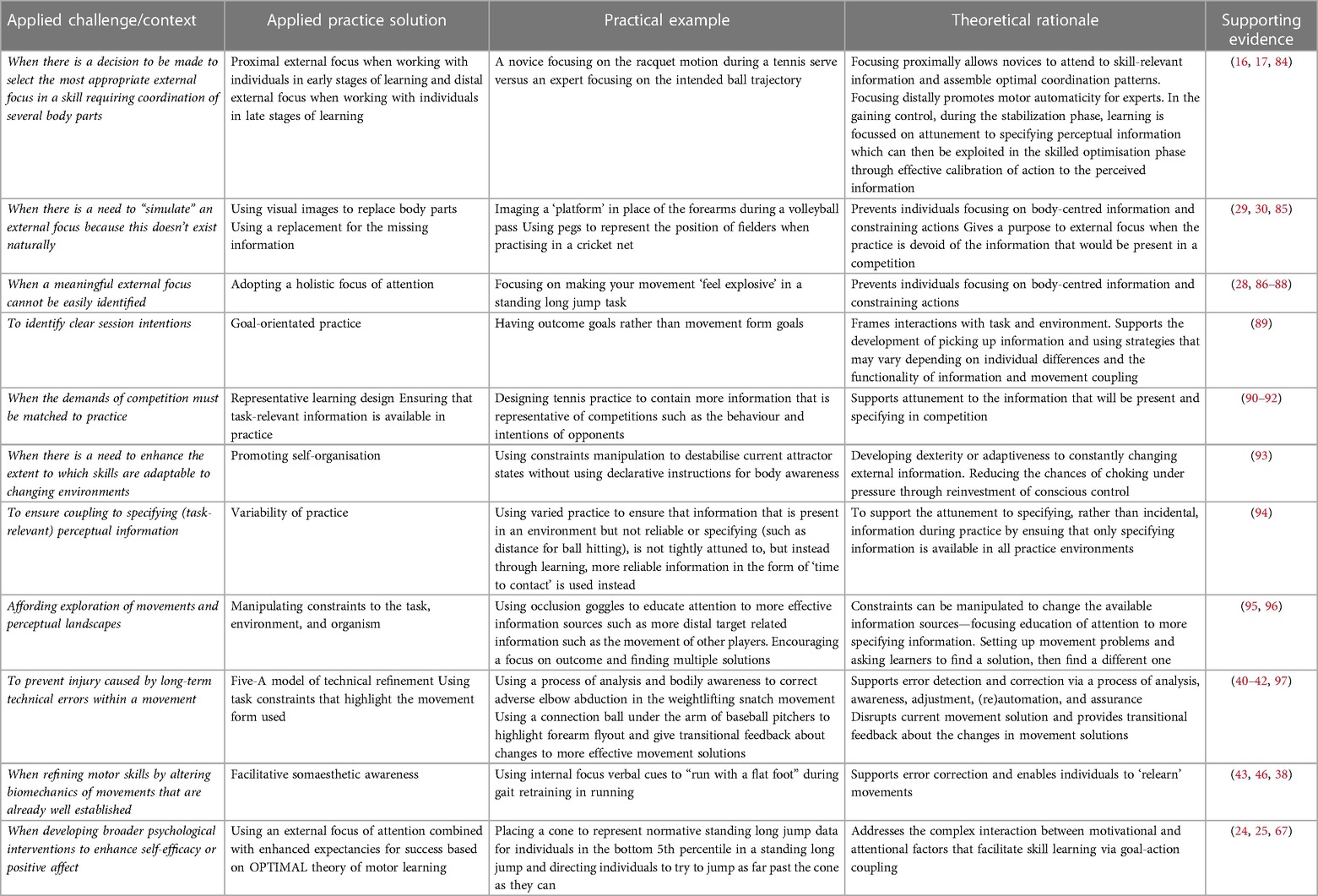
Table 1. Practical solutions to support applied practice.
Whilst these practice decisions may well be underpinned by competing theoretical approaches, an applied solution can still be found. For example, the benefits of a proximal attentional focus for novices can be underpinned by theoretical components of constrained action hypothesis (23) as well as Newell's (83) stages of skill acquisition (i.e., assembling a coordination pattern; gaining control and adaption of coordination; and skilled optimisation of coordination). In assembling coordination patterns, an individual is likely to need and use more proximal information. In the gaining control, during the stabilization phase, learning is focussed on attunement to specifying perceptual information, which can then be exploited in the skilled optimisation phase through effective calibration of action to the perceived information.
The principles of a constraints-led approach can be used to guide practice design that supports an education of focus of attention toward task-relevant information. These principles being: (a) goal orientated practice with clear session intentions; (b) manipulation of constraints to afford exploration of opportunities for action; (c) representative learning design that includes perceptual information that will be available in performance; and (d) repetition without repetition, encouraging the development of adaptable and effective movement solutions.
Future research directions
Although the fundamental principle of adopting an internal or external focus of attention is simple, there remain ample avenues for future research. Above all else, the presently proposed ecological dynamics-based mechanisms for focus of attention effects are conjecture. However, so are information processing-based explanations until it is understood whether underlying neurophysiological mechanisms resemble information processing or ecological dynamics (98, 99). Out of the rather limited number of studies that have investigated the cortical processes underlying attentional foci, results suggest that internal foci of lesser task relevance may: (a) prevent visual inflow of environmental information to shield internal body-focused processing, via reductions in posterior alpha power (20, 100); (b) induce volitional control of attention to adjust behaviour responses to feedback via decreased frontal midline theta (101, 20); and (c) unbind muscles from a synergistic control strategy via reduced beta corticomuscular coherence between the contralateral motor cortex and effectors (20). Importantly, these neural mechanisms align with the proposals of ecological dynamics; the selective shielding/prioritisation of environmental vs. organismic constraints, cognition's supervision of attention to benefit perception for action, and binding/unbinding of synergistic control strategies, supporting the notion of an organism's self-organisation in response to its environment and task. Future research should continue to elucidate the neural mechanisms underlying both focus of attention and ecological dynamics, to inform theoretical understanding.
Another benefit of an ecological dynamics standpoint is its ability to account for results that are ill explained by common coding (57), constrained action hypothesis (23), or OPTIMAL theory (24, 25). Seminal literature's staunch advocacy of an external focus of attention (1) has resulted in comparatively little evaluation of instances where an external focus of attention may not be superior. However, noteworthy exceptions include appraisals of internal foci for somaesthetic awareness (38), a holistic focus of attention in instances without a clear external movement effect (28), and developmental benefits of adopting an internal focus of attention in proprioceptive sports [Olympic Weightlifting: (37)]. Overall, a body of literature is beginning to emerge which aligns with the concepts of ecological dynamics in suggesting that foci other than an external focus of attention can be facilitative. Future research should make concerted efforts to further understand applied and theoretical nuances within focus of attention.
With regards to applied nuances, the ecological dynamics-based framework has demonstrated itself popular within talent development research for its pertinent emphasis of multivariable effects [e.g., (102)]. It is proposed that no single independent factor can account for real-world differences in performance; instead, it is the combination of task (e.g., practice history), organism (e.g., anthropometrics and technical/tactical awareness), and environmental (e.g., relative age and sociocultural) constraints (73). Consequently, ecological dynamics offers a useful framework through which to investigate focus of attention effects observed in highly applied (i.e., ecologically valid) settings. For example, when comparing external vs. internal focus effects in a complex five-part gymnastics floor routine, assessed via the Federation Internationale de Gymnastique Code of Points, Lawrence et al. (26), observed no significant difference in performance based on attentional focus. In the absence of a more nuanced theoretical framework, null findings in the ecological study of Lawrence et al. were subsequently argued to be a product of methodological limitations (1, 27). However, it is possible that nuanced interactions between a multitude of variables meant that an internal focus of attention was able to yield unique benefits for participants. Going forward, ecological dynamics provides a promising framework for investigations in ecologically valid settings to avoid interpretational/publication bias.
Lastly, given doubts raised by recent research concerning an external focus’ ubiquitous superiority over an internal focus [e.g., (37, 38, 43)], it may be timely to re-evaluate what constitutes an optimal focus of attention, depending on skill and individual differences. To-date, investigations concerning possible foci of attention have been “top down” in their exploration of available foci; researchers traditionally identifying and prescribing the focus adopted by participants. Comparatively little research has attempted to utilise a “bottom up” approach [e.g., (36)], wherein optimal/preferred foci are identified by participants themselves. Such approaches may help identify further nuances to the focus of attention effect, in addition to distance (14), task relevance (19, 22), and breadth (50). Promising avenues to address this omission in current literature include think aloud protocols (103) and virtual reality (104). These methods respectively allow researchers to better assess and manipulate contextual information to ascertain novel nuances within the attentional foci adopted by participants.
Conclusion
Literature surrounding focus of attention has come a long way since the original conception of internal and external labels by Wulf et al. (5). This initially binary choice has now expanded to encompass distance (14), relevance [e.g., (4)], salience [e.g., (26)], ecological validity [e.g., (37)], somaesthetic awareness [e.g., (38)], and wider psychological motivational factor considerations (24, 25). However, despite these advances in understanding attentional focus, theoretical explanations still rigidly advocate external foci [see (23, 24, 55)]. This is in stark contrast to the growing body of evidence demonstrating that external and internal foci of attention have distinct advantages depending on situational constraints. Accordingly, the presently proposed Ecological Dynamics Account of Attentional Focus is one of the first to provide a sufficiently flexible theoretical framework, which can explain instances of internal “and” external focus superiority. The implications of this are plentiful in facilitating more varied consideration of which focus may be optimal for a given scenario; research into both theoretical and applied aspects of the focus of attention phenomenon may just be getting started.
Author contributions
All authors contributed equally. All authors contributed to the article and approved the submitted version.
Conflict of interest
The authors declare that the research was conducted in the absence of any commercial or financial relationships that could be construed as a potential conflict of interest.
Publisher's note
All claims expressed in this article are solely those of the authors and do not necessarily represent those of their affiliated organizations, or those of the publisher, the editors and the reviewers. Any product that may be evaluated in this article, or claim that may be made by its manufacturer, is not guaranteed or endorsed by the publisher.
References
1. Wulf G. Attentional focus and motor learning: a review of 15 years. Int Rev Sport Exerc Psychol. (2013) 6:77–104. doi: 10.1080/1750984X.2012.723728
3. Neumann DL. A systematic review of attentional focus strategies in weightlifting. Front Sports Act Living. (2019) 1:1–14. doi: 10.3389/fspor.2019.00007
4. Amini A, Vaezmousavi M. The effect of differential attentional focus strategies on the performance of military elite shooters. Behav Neurol. (2020) 26:2020. doi: 10.1155/2020/1067610
5. Wulf G, Landers M, Lewthwaite R, Töllner T. External focus instructions reduce postural instability in individuals with Parkinson disease. Phys Therap. (2009) 89(2):162–8. doi: 10.2522/ptj.20080045
6. Aloraini SM, Glazebrook CM, Pooyania S, Sibley KM, Singer J, Passmore S. An external focus of attention compared to an internal focus of attention improves anticipatory postural adjustments among people post-stroke. Gait & Post. (2020) 82:100–5. doi: 10.1016/j.gaitpost.2020.08.133
7. Shafizadeh M, Platt GK, Mohammadi B. Effects of different focus of attention rehabilitative training on gait performance in multiple sclerosis patients. J Body Move Therap. (2013) 17(1):28–34. doi: 10.1016/j.jbmt.2012.04.005
8. Chiviacowsky S, Wulf G, Ávila ATG. An external focus of attention enhances motor learning in children with intellectual disabilities. J Int Dis Res. (2013) 57(7):627–34. doi: 10.1111/j.1365-2788.2012.01569
9. Chiviacowsky S, Wulf G, Wally R. An external focus of attention enhances balance learning in older adults. Gait Posture. (2010) 32(4):572–5. doi: 10.1016/j.gaitpost.2010.08.004
10. Rhea CK, Diekfuss JA, Fairbrother JT, Raisbeck LD. Postural control entropy is increased when adopting an external focus of attention. Mot Cont. (2019) 23(2):230–42. doi: 10.1123/mc.2017-0089
11. Laufer Y, Rotem-Lehrer N, Ronen Z, Khayutin G, Rozenberg I. Effect of attention focus on acquisition and retention of postural control following ankle sprain. Phys Med Rehab. (2007) 88(1):105–8. doi: 10.1016/j.apmr.2006.10.028
12. Ghaderi M, Letafatkar A, Thomas AC, Keyhani S. Effects of a neuromuscular training program using external focus attention cues in male athletes with anterior cruciate ligament reconstruction: a randomized clinical trial. BMC Sports Sci Med Rehabil. (2021) 13:49. doi: 10.1186/s13102-021-00275-3
13. Dempsey N, Cope E, Richardson DJ, Littlewood MA, Cronin C. An examination of content knowledge in formal coach education curriculum. Sport Educ Soc. (2022):1–9. doi: 10.1080/13573322.2022.2131761
14. McNevin NH, Shea CH, Wulf G. Increasing the distance of an external focus of attention enhances learning. Psychol Res. (2003) 67:22–9. doi: 10.1007/s00426-002-0093-6
15. Kearney PE. A distal focus of attention leads to superior performance on a golf putting task. Int J Sport Exer Psychol. (2015) 13(4):371–81. doi: 10.1080/1612197X.2014.993682
16. Bell JJ, Hardy J. Effects of attentional focus on skilled performance in golf. J Appl Sport Psychol. (2009) 21(2):163–77. doi: 10.1080/10413200902795323
17. Singh H, Wulf G. The distance effect and level of expertise: is the optimal external focus different for low-skilled and high-skilled performers? Hum Mov Sci. (2020) 73:102663. doi: 10.1016/j.humov.2020.102663
18. Singh H, Shih HT, Kal E, Bennett T, Wulf G. A distal external focus of attention facilitates compensatory coordination of body parts. J Sport Sci. (2022) 26:2282–91. doi: 10.1080/02640414.2022.2150419
19. Pelleck V, Passmore SR. Location versus task relevance: the impact of differing internal focus of attention instructions on motor performance. Acta Psychol. (2017) 176:23–31. doi: 10.1016/j.actpsy.2017.03.007
20. Parr JVV, Gallicchio G, Canales-Johnson A, Uiga L, Wood G. Cortical, muscular, and kinetic activity underpinning attentional focus strategies during visuomotor control. Psychophys. (2023) 10:e14249. doi: 10.1111/psyp.14249
21. Herrebrøden H. Motor performers need task-relevant information: proposing an alternative mechanism for the attentional focus effect. J Motor Behav. (2022) 55(1):125–34. doi: 10.1080/00222895.2022.2122920
22. Russell R, Porter J, Campbell O. An external skill focus is necessary to enhance performance. J Mot Learn Devel. (2014) 2(2):37–46. doi: 10.1123/jmld.2014-0038
23. Wulf G, McNevin N, Shea CH. The automaticity of complex motor skill learning as a function of attentional focus. Quart J Exp Psych Section A. (2001) 54(4):1143–54. doi: 10.1080/713756012
24. Wulf G, Lewthwaite R. Optimizing performance through intrinsic motivation and attention for learning: the OPTIMAL theory of motor learning. Psychon Bull Rev. (2016) 23:1382–414. doi: 10.3758/s13423-015-0999-9
25. Wulf G, Lewthwaite R. Translating thoughts into action: optimizing motor performance and learning through brief motivational and attentional influences. Curr Dir Psychol Sci. (2021) 30(6):535–41. doi: 10.1177/09637214211046199
26. Lawrence GP, Gottwald VM, Hardy J, Khan MA. Internal and external focus of attention in a novice form sport. Res Quart Exerc Sport. (2011) 82(3):431–41. doi: 10.1080/02701367.2011.10599775
27. Abdollahipour R, Wulf G, Psotta R, Palomo Nieto M. Performance of gymnastics skill benefits from an external focus of attention. J Sport Sci. (2015) 33(17):1807–13. doi: 10.1080/02640414.2015.1012102
28. Becker KA, Georges AF, Aiken CA. Considering a holistic focus of attention as an alternative to an external focus. J Mot Learn Dev. (2019) 7(2):194–203. doi: 10.1123/jmld.2017-0065
29. Singh H, Wulf G. Mind over body: creating an external focus for sport skills. Europ J Sport Sci. (2022) 22(4):610–6. doi: 10.1080/17461391.2021.1887367
30. Liao CM, Masters RS. Analogy learning: a means to implicit motor learning. J Sport Sci. (2001) 19(5):307–19. doi: 10.1080/02640410152006081
31. Winkelman N. The language of coaching: The art & science of teaching movement. Champaign, IL: Human Kinetics (2021).
32. Keller M, Schweizer J, Gerber M. Pay attention! The influence of coach-, content-, and player-related factors on focus of attention statements during tennis training. Euro J Sport Sci. (2022):1–9. doi: 10.1080/17461391.2022.2056082
33. Lee SP, Bonczyk A, Dimapilis MK, Partridge S, Ruiz S, Chien LC, et al. Direction of attentional focus in prosthetic training: current practice and potential for improving motor learning in individuals with lower limb loss. PLoS One. (2022) 17(7):e0262977. doi: 10.1371/journal.pone.0262977
34. Porter J, Wu W, Partridge J. Focus of attention and verbal instructions: strategies of elite track and field coaches and athletes. Sport Sci Rev. (2010) 19(3–4):77. doi: 10.2478/v10237-011-0018-7
35. Powell D, Wood G, Kearney PE, Payton C. Skill acquisition practices of coaches on the British para swimming world class programme. Int J Sport Sci Coach. (2021) 16(5):1097–110. doi: 10.1177/17479541211026248
36. Orr S, Cruickshank A, Carson HJ. From the lesson tee to the course: a naturalistic investigation of attentional focus in elite golf. T Sport Psych. (2021) 35(4):305–19. doi: 10.1123/tsp.2021-0003
37. Anderson DN, Gottwald VM, Lawrence GP. Capturing the holistic profile of high performance Olympic weightlifting development. Front Sports Active Living. (2022) 4:986134. doi: 10.3389/fspor.2022.986134
38. Toner J, Moran A. Enhancing performance proficiency at the expert level: considering the role of “somaesthetic awareness”. Psych Sport Ex. (2015) 16:110–7. doi: 10.1016/j.psychsport.2014.07.006
40. Carson HJ, Collins D. Refining and regaining skills in fixation/diversification stage performers: the five-A model. Int Rev Sport Exerc Psychol. (2011) 4:146–67. doi: 10.1080/1750984x.2011.613682
41. Carson HJ, Collins D. Effective skill refinement: focusing on process to ensure outcome. Cent Europ J Sport Sci Med. (2014) 7:5–21.
42. Carson HJ, Collins D. Implementing the five-A model of technical refinement: key roles of the sport psychologist. J App Sport Psychol. (2016) 28(4):392–409. doi: 10.1080/10413200.2016.1162224
43. Gottwald VM, Owen RO, Lawrence GP. An internal focus of attention is optimal when congruent with afferent proprioceptive task information. Psych Sport Ex. (2020) 47:1–17. doi: 10.1016/j.psychsport.2019.101634
44. Kal EC, van der Kamp J, Houdijk H, Groet E, van Bennekom CAM, Scherder EJA. Stay focused! The effects of internal and external focus of attention on movement automaticity in patients with stroke. PLoS ONE. (2015) 10(8):e0136917. doi: 10.1371/journal.pone.0136917
45. Collins D, Carson HJ, Toner J. Letter to the editor concerning the article “performance of gymnastics skill benefits from an external focus of attention” by Abdollahipour, Wulf, Psotta & Nieto (2015). J Sport Scienc. (2016) 34:1288–92. doi: 10.1080/02640414.2015.1098782
46. Moore IS, Phillips DJ, Ashford KJ, Mullen R, Goom T, Gittoes MR. An interdisciplinary examination of attentional focus strategies used during running gait retraining. Scan J Med Sci Sport. (2019) 29(10):1572–82. doi: 10.1111/sms.13490
47. Schücker L, Knopf C, Strauss B, Hagemann N. An internal focus of attention is not always as bad as its reputation: how specific aspects of internally focused attention do not hinder running efficiency. J Sport Exerc Psychol. (2014) 36(3):233–43. doi: 10.1123/jsep.2013-0200
48. Neumann DL, Walsh N, Moffitt RL, Hannan TE. Specific internal and external attentional focus instructions have differential effects on rowing performance. Psych Sport Exerc. (2020) 50:101722. doi: 10.1016/j.psychsport.2020.101722
49. Aiken CA, Becker KA. Utilising an internal focus of attention during preparation and an external focus during execution may facilitate motor learning. Euro J Sport Sci. (2022) 1:1–8. doi: 10.1080/17461391.2022.2042604
50. Becker KA, Fairbrother JT, Couvillion KF. The effects of attentional focus in the preparation and execution of a standing long jump. Psychol Res. (2020) 84:285–91. doi: 10.1007/s00426-018-0999-2
51. Newell KM. Motor skill acquisition. Annu Rev Psychol. (1991) 42(1):213–37. doi: 10.1146/annurev.ps.42.020191.001241
53. Schmidt RA. A schema theory of discrete motor skill learning. Psychol Rev. (1975) 82(4):225. doi: 10.1037/h0076770
54. Schmidt RA. Motor schema theory after 27 years: reflections and implications for a new theory. Res Quart Exerc Sport. (2003) 74(4):366–75. doi: 10.1080/02701367.2003.10609106
55. Wulf G, Höß M, Prinz W. Instructions for motor learning: differential effects of internal versus external focus of attention. J Motor Behav. (1998) 30(2):169–79. doi: 10.1080/00222899809601334
56. Greenwald AG. Sensory feedback mechanisms in performance control: with special reference to the ideo-motor mechanism. Psychol Rev. (1970) 77:73–99. doi: 10.1037/h0028689
57. Prinz W. Perception and action planning. Europ J Cog Psychol. (1997) 9:129–54. doi: 10.1080/71375255
58. Gray R. Links between attention, performance pressure, and movement in skilled motor action. Curr Dir Psychol Scien. (2011) 20(5):301–6. doi: 10.1177/0963721411416572
59. Vance J, Wulf G, Tollner T, McNevin NH, Mercer J. EMG Activity as a function of the performer’s focus of attention. J Mot Behav. (2004) 36:450–9. doi: 10.3200/JMBR.36.4.450-459
60. Wulf G, Dufek JS, Lozano L, Pettigrew C. Increased jump height and reduced EMG activity with an external focus. Hum Move Sci. (2010) 29(3):440–8. doi: 10.1016/j.humov.2009.11.008
61. Zachry T, Wulf G, Mercer J, Bezodis N. Increased movement accuracy and reduced EMG activity as the result of adopting an external focus of attention. Brain Res Bull. (2005) 67(4):304–9. doi: 10.1016/j.brainresbull.2005.06.035
62. Lohse KR, Sherwood DE, Healy AF. Neuromuscular effects of shifting the focus of attention in a simple force production task. J Mot Behav. (2011) 43(2):173–84. doi: 10.1080/00222895.2011.555436
63. Lohse KR. The influence of attention on learning and performance: pre-movement time and accuracy in an isometric force production task. Hum Movem Sci. (2012) 31:12–25. doi: 10.1016/j.humov.2011.06.001
64. Lohse KR, Sherwood DE, Healy AF. How changing the focus of attention affects performance, kinematics, and electromyography in dart throwing. Hum Move Sci. (2010) 29:542–55. 10.1016/
66. Sertic JV, Avedesian JM, Navalta JW. Skilled throwing performance: a test of the OPTIMAL theory. Int J Exer Sci. (2021) 14(5):358.
67. Simpson T, Cronin L, Ellison P, Carnegie E, Marchant D. A test of optimal theory on young adolescents’ standing long jump performance and motivation. Hum Mov Sci. (2020) 1(72):102651. doi: 10.1016/j.humov.2020.102651
68. Simpson T, Ellison P, Carnegie E, Marchant D. A systematic review of motivational and attentional variables on children’s fundamental movement skill development: the OPTIMAL theory. Int Rev Sport and Exer Psych. (2021) 14(1):312–58. doi: 10.1080/1750984X.2020.180900
69. Gibson JJ, Gibson EJ. Perceptual learning: differentiation or enrichment? Psychol Rev. (1955) 62(1):32. doi: 10.1037/h0048826
70. Gibson EJ, Pick AD. An ecological approach to perceptual learning and development. New York: Oxford University Press (2000).
71. Kelso JS. Dynamic patterns: the self-organization of brain and behavior. Cambridge, MA: MIT press (1995).
72. Davids K, Button C, Bennett S. Dynamics of skill acquisition: a constraints-led approach. Human Kinetics. (2008). ISBN: 9780736036863.
73. Araujo D, Davids K, Hristovski R. The ecological dynamics of decision making in sport. Psychol Sport Exerc. (2006) 7:653–76. doi: 10.1016/j.psychsport.2006.07.002
74. Button C, Seifert L, Chow JY, Davids K, Araujo D. Dynamics of skill acquisition: An ecological dynamics approach. Champaign, IL: Human Kinetics Publishers (2020).
75. Gibson EJ. The world is so full of a number of things: on specification and perceptual learning. Ecol Psychol. (2003) 15(4):283–7. doi: 10.1207/s15326969eco1504_3
76. Dotov DG, Nie L, De Wit MM. Understanding affordances: history and contemporary development of Gibson’s central concept. Avant. (2012) 3(2):28–39.
77. Araujo D. Introduction-Preface to” ecological approaches to cognition in sport and exercise”. Int J Sport Psychol. (2009) 40(1):1.
78. Davids K, Araújo D, Seifert L, Orth D. Expert performance in sport: an ecological dynamics perspective. In: Routledge handbook of sport expertise. London: Routledge (2015). p. 130–44.
79. Davids K. Increases in jump-and-reach height through an external focus of attention: a commentary. Int J Sports Sci Coach. (2007) 2(3):285–8. doi: 10.1260/174795407782233092
80. Newell KM. Constraints on the development of coordination. In: Wade MG, Whiting HTA editors. Motor development on children: Aspects of coordination and control. Dordrecht: Martinus Nijhoff (1986). p. 341–60.
81. Ingold T. The perception of the environment: Essays on livelihood, dwelling and skill. London: Routledge. Ireland, P. (2008). Comparing responses to ethnic segregation in urban Europe. Urban Studies. (2000) 45(7):1333.
82. McKay J, Davids K, Robertson S, Woods CT. An ecological insight into the design and integration of attacking principles of play in professional rugby union: a case example. Int Sport Coaching J. (2021) 8(3):394–9. doi: 10.1123/iscj.2020-0065
83. Newell KM. Coordination, control and skill. In: Advances in psychology. Vol. 27. Amsterdam: North-Holland (1985). p. 295–317.
84. Wulf G, Prinz W. Directing attention to movement effects enhances learning: a review. Psychon Bull Rev. (2001) 8(4):648–60. doi: 10.3758/BF03196201
85. Lascu A, Spratford W, Pyne DB, Etxebarria N. Practical application of ecological dynamics for talent development in cricket. Int J Sports Sci Coach. (2020) 15(2):227–38. doi: 10.1177/1747954120908816
86. Abedanzadeh R, Becker K, Mousavi SM. Both a holistic and external focus of attention enhance the learning of a badminton short serve. Psychol Res. (2022) 86(1):141–9. doi: 10.1007/s00426-021-01475-9
87. Saemi E, Amo-Aghaei E, Moteshareie E, Yamada M. An external focusing strategy was beneficial in experienced children but not in novices: the effect of external focus, internal focus, and holistic attention strategies. Inter J Sport Scien Coach. (2022) 20:17479541221104158. doi: 10.1177/17479541221104158
88. Zhuravleva TA, Aiken CA. Adopting a holistic focus of attention promotes adherence and improves performance in college track and field athletes. Hum Move Sci. (2023) 1(88):103055. doi: 10.1016/j.humov.2023.103055
89. Franks B, Roberts WM, Jakeman J, Swain J, Davids K. A descriptive case study of skilled football goalkeepers during 1 v 1 dyads: a case for adaptive variability in the quiet eye. Front Psychol. (2022) 13:1–12. doi: 10.3389/fpsyg.2022.908123
90. Brunswik E. Perception and the representative design of psychological experiments. Berkeley: University of California Press (1956).
91. Krause L, Farrow D, Buszard T, Pinder R, Reid M. Application of representative learning design for assessment of common practice tasks in tennis. Psychol Sport Exerc. (2019) 41:36–45. doi: 10.1016/j.psychsport.2018.11.008
92. Regan D. Visual factors in hitting and catching. J Sports Sci. (1997) 15(6):533–58. doi: 10.1080/026404197366985
93. Gray R. Comparing cueing and constraints interventions for increasing launch angle in baseball batting. Sport Exerc Perf Psychol. (2018) 7(3):318–32. doi: 10.1037/spy0000131
94. Gray R. How we learn to move: a revolution in the way we coach & practice sports skills. Percept Action Consult Educ. (2021) 1:93–110.
95. Oudejans RR. Effects of visual control training on the shooting performance of elite female basketball players. Inter J Sport Scie Coach. (2012) 7:469–80. doi: 10.1260/1747-9541.7.3.469
96. Rudd JR, O’Callaghan L, Williams J. Physical education pedagogies built upon theories of movement learning: how can environmental constraints be manipulated to improve children’s executive function and self-regulation skills? Int J Environ Res Public Health. (2019) 16(9):1630. doi: 10.3390/ijerph16091630
97. Gray R. Comparing the constraints led approach, differential learning and prescriptive instruction for training opposite-field hitting in baseball. Psychol Sport Exerc. (2020) 51:101797. doi: 10.1016/j.psychsport.2020.101797
98. Renshaw I, Davids K, Araújo D, Lucas A, Roberts WM, Newcombe DJ, et al. Evaluating weaknesses of “perceptual-cognitive training” and “brain training” methods in sport: an ecological dynamics critique. Front Psychol. (2019) 9:2468. doi: 10.3389/fpsyg.2018.02468
99. Woods CT, McKeown I, Rothwell M, Araújo D, Robertson S, Davids K. Sport practitioners as sport ecology designers: how ecological dynamics has progressively changed perceptions of skill “acquisition” in the sporting habitat. Front Psychol. (2020) 11:654. doi: 10.3389/fpsyg.2020.00654
100. Sherman DA, Lehmann T, Baumeister J, Gokeler A, Donovan L, Norte GE. External focus of attention influences cortical activity associated with single limb balance performance. Phys Ther. (2021) 101(12):pzab223. doi: 10.1093/ptj/pzab223
101. Cavanagh JF, Frank MJ. Frontal theta as a mechanism for cognitive control. Trends Cogn Sci (Regul Ed). (2014) 18(8):414–21. doi: 10.1016/j.tics.2014.04.012
102. Dimundo F, Cole M, Blagrove RC, Till K, Kelly AL. A multidisciplinary investigation into the talent development processes in an English premiership rugby union academy: a preliminary study through an ecological lens. Sports. (2022) 10(2):13. doi: 10.3390/sports10020013
103. Eccles DW, Arsal G. The think aloud method: what is it and how do I use it? Qualitative research in sport. Exerc Health. (2017) 9(4):514–31. doi: 10.1080/2159676X.2017.1331501
Keywords: sport, attentional focus, movement, cognition, dynamical systems, motor learning
Citation: Gottwald V, Davies M and Owen R (2023) Every story has two sides: evaluating information processing and ecological dynamics perspectives of focus of attention in skill acquisition. Front. Sports Act. Living 5:1176635. doi: 10.3389/fspor.2023.1176635
Received: 28 February 2023; Accepted: 2 May 2023;
Published: 24 May 2023.
Edited by:
Rob Gray, Arizona State University, United StatesReviewed by:
Harjiv Singh, University of Nevada, United StatesDavid Sherwood, University of Colorado Boulder, United States
© 2023 Gottwald, Davies and Owen. This is an open-access article distributed under the terms of the Creative Commons Attribution License (CC BY). The use, distribution or reproduction in other forums is permitted, provided the original author(s) and the copyright owner(s) are credited and that the original publication in this journal is cited, in accordance with accepted academic practice. No use, distribution or reproduction is permitted which does not comply with these terms.
*Correspondence: Victoria Gottwald di5tLmdvdHR3YWxkQGJhbmdvci5hYy51aw==