 Thomas Fallon1,2*
 Neil Heron1,3,†
- 1Centre for Public Health, Queen’s University Belfast, Belfast, Northern Ireland
- 2Edinburgh Sports Medicine Research Network & UK Collaborating Centre on Injury and Illness Prevention in Sport (UKCCIIS), Edinburgh, United Kingdom
- 3School of Medicine, Keele University, Staffordshire, England
Introduction: The sport of cycling has witnessed phenomenal growth over the past decade. Globally, over 200 million television hours across five continents watched the recent inaugural World Championships in Glasgow, in 2023. The Union Cycliste Internationale (UCI), the world cycling governing body, has highlighted its mission to “promote and support research in cycling epidemiology and medicine, especially for the benefit of lesser-known disciplines” within its 2030 Agenda. This paper outlines a proposed protocol to conduct a systematic review that comprehensively analyses and synthesises the existing literature about cycling-related injuries and illness across all competitive disciplines.
Methods: The Preferred Reporting Items for Systematic Reviews and Meta-analyses (PRISMA) guidelines will be followed through each stage of this systematic review. Cycling is an umbrella term used for many individual disciplines. Investigation of all types of injuries and/or illnesses sustained during training and/or competition among competitive athletes across all disciplines will be included in this review. A computerised, systematic literature search will be conducted in electronic databases MEDLINE, Scopus, Embase, and Cochrane Library. Independent screening by two reviewers in a two-step process: title/abstract screening followed by full-text review. The reference lists of included articles will be searched to identify any other potentially relevant articles. Narrative synthesis and tabular/charted presentation of the extracted data will be included.
Discussion: This protocol paper outlines the methodology to conduct a systematic review of injuries and illness across all competitive cycling disciplines. The aims of outlining this systematic review protocol are to aid research transparency, help reduce publication bias, prevent selective publication, and prevent the selective reporting of results. Future systematic reviews based on the proposed protocol will summarise the known prevalence, incidences, locations and burden of injury and illness across the sport of cycling.
Trial Registration: This study has been registered with the PROSPERO International Prospective Register of Systematic Reviews (registration number CRD42024502703).
What is already known on this topic
• There is a lack of injury and illness epidemiology research within competitive cycling.
• In epidemiological studies completed to date, there is a lack of methodology homogeneity around the definitions of injury and illness and reporting standards.
• The Union Cycliste Internationale (UCI) Agenda 2030 acknowledges the lack of epidemiological research within cycling. It aims to “promote and support research in cycling epidemiology and medicine, especially for the benefit of lesser-known disciplines”.
What this study adds
• This manuscript outlines a protocol that future studies can use to carry out a multidiscipline systematic review of injuries and illness in competitive cycling.
How this study might affect research, practice, or policy
• This protocol can be repeated over time to give an up-to-date understanding of the prevalence of injury and illness within cycling across all competitive disciplines.
• Upon completion, studies that follow this proposed protocol will formally highlight the shortcomings in research and provide direction for further research within cycling.
Introduction
Cycling is a popular and diverse sport, encompassing various disciplines, each with its distinctive demands, environments, and risk factors. Within the sport of cycling, there are ten broad cycling disciplines which break down into 40 subdisciplines of cycling. Globally, over 200 million television hours across five continents were broadcasted during the recent inaugural World Championships in Glasgow 2023 (1). The sport's phenomenal growth over the past decade has led to an increased focus on the occurrence, patterns and impacts of injuries and illness within different cycling disciplines (2, 3). Understanding the prevalence and nature of these injuries and illnesses is imperative for enhancing safety measures, injury prevention, and athlete well-being. However, epidemiology research within competitive cycling to date is scarce and lacks methodological homogeneity between studies and disciplines (4).
The Union Cycliste Internationale (UCI), which is the world governing body for cycling, oversees the regulation of each competitive cycling discipline and the growth of the sport. The UCI has over 1 million members across five continents and holds over 33,000 events per year (5). As per the 2030 UCI agenda, they highlight the drive to “promote and support research in cycling epidemiology and medicine, especially for the benefit of lesser-known disciplines (epidemiology of medical and trauma pathologies)” (p106) (5). To date, there has been limited endorsement of such initiatives by the UCI within competitive cycling, which challenges our ability as clinical academics to establish evidence-based injury prevention recommendations and programs.
With the diversity of athletes competing within competitive cycling, across a variety of disciplines, combined with the lack of epidemiological studies, it is unknown what the true prevalence and incidence of injury and/or illness within each discipline is. Indeed, to date, many disciplines have not even been represented within epidemiological research (4). The International Olympic Committee (IOC) published the first consensus extension for the reporting of injuries within competitive cycling in 2021 (4). Both the UCI Agenda 2030 (5) and the IOC consensus (4) called for action for epidemiology research in the sport, with a particular focus on the disciplines with no research to date.
The preliminary model underpinning injury prevention was proposed by Van Mechelen et al. in 1992 (6) in a 4-step model starting with injury surveillance. This was further revised by Finch in 2006 with the addition of 2 further steps and the formation of a model known as the TRIPP (Translating Injury Prevention to Practice) model (Table 1) (7). Both models highlight the importance of injury and illness surveillance as the foundation for developing evidence-based injury prevention programmes.
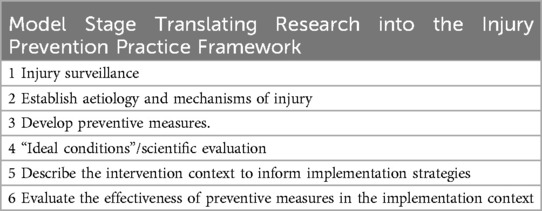
Table 1. Translating research into the injury prevention practice (TRIPP) framework (7).
Future studies based on this proposed protocol will enable researchers to uncover commonalities, disparities, and critical gaps in the current knowledge of cycling-related injury and illness epidemiology within each discipline. This paper outlines the methods to conduct a systematic review that comprehensively analyses and synthesizes the existing literature about cycling-related injuries and illness across all competitive disciplines. While individual studies often concentrate on specific disciplines or specific injuries, this review seeks to collate and critically evaluate injury and illness research across all disciplines, including within para-cycling. Completing such research, will act as a foundation in our understanding of where the gaps lie in knowledge and focus our attention on better understanding and preventing injuries and illnesses in competitive cycling (6).
Aim
To outline a protocol that will enable researchers to identify the prevalence, and incidence of injuries across each of the competitive cycling disciplines which include, track cycling, mountain biking, road cycling, time trial, cyclocross, gravel cycling, BMX freestyle, BMX racing, e-sport, para-cycling and artistic cycling.
Objectives
1. To assess the epidemiology of injury across all cycling disciplines.
2. To assess the epidemiology of illness across all cycling disciplines.
3. To identify the differences in definitions and reporting methods of injuries and illnesses across all the cycling disciplines.
Methods
Study design
Systematic reviews based on the proposed protocol will follow a systematic review study design. The Preferred Reporting Items for Systematic Reviews and Meta-analyses (PRISMA) guidelines will be followed through each stage of this systematic review (8). Additionally, the PERSiST (implementing Prisma in Exercise, Rehabilitation, Sports Medicine, and SporTs science) document will be used as a guidance tool in developing this protocol and outcomes of focus (Appendix 2) (9).
Study registration
The protocol for this systematic review has been registered on the PROSPERO international prospective register for systematic reviews with registration number CRD42024502703.
Ethics and dissemination
Ethical approval is not required for systematic review studies that follow this protocol. The intention is to disseminate the findings through a peer-reviewed journal and present them at conferences as well as meetings with key stakeholders in the results, including cyclists and cycling associations.
Criteria for inclusion of studies
Study design
This systematic review protocol includes any study design with the primary focus on injuries and/or illness in competitive cycling disciplines (observational studies, cohort studies, epidemiological studies).
Sport context
Cycling is an umbrella term used for many individual disciplines (Table 2). Investigation of all types of injuries and/or illnesses sustained during training and/or competition among competitive athletes across all disciplines will be included in this review. All the different cycling disciplines are included in (Table 2). To enable the identification of the most frequently occurring injuries and therein derive injury prevention priorities, studies which report only on a specific type of injury (e.g., stress fractures, concussion, external iliac endo fibrosis), illness (gastrointestinal, respiratory) or body part (e.g., head injuries) will be excluded. Studies in recreational cycling (i.e., not competition-based) will also be excluded
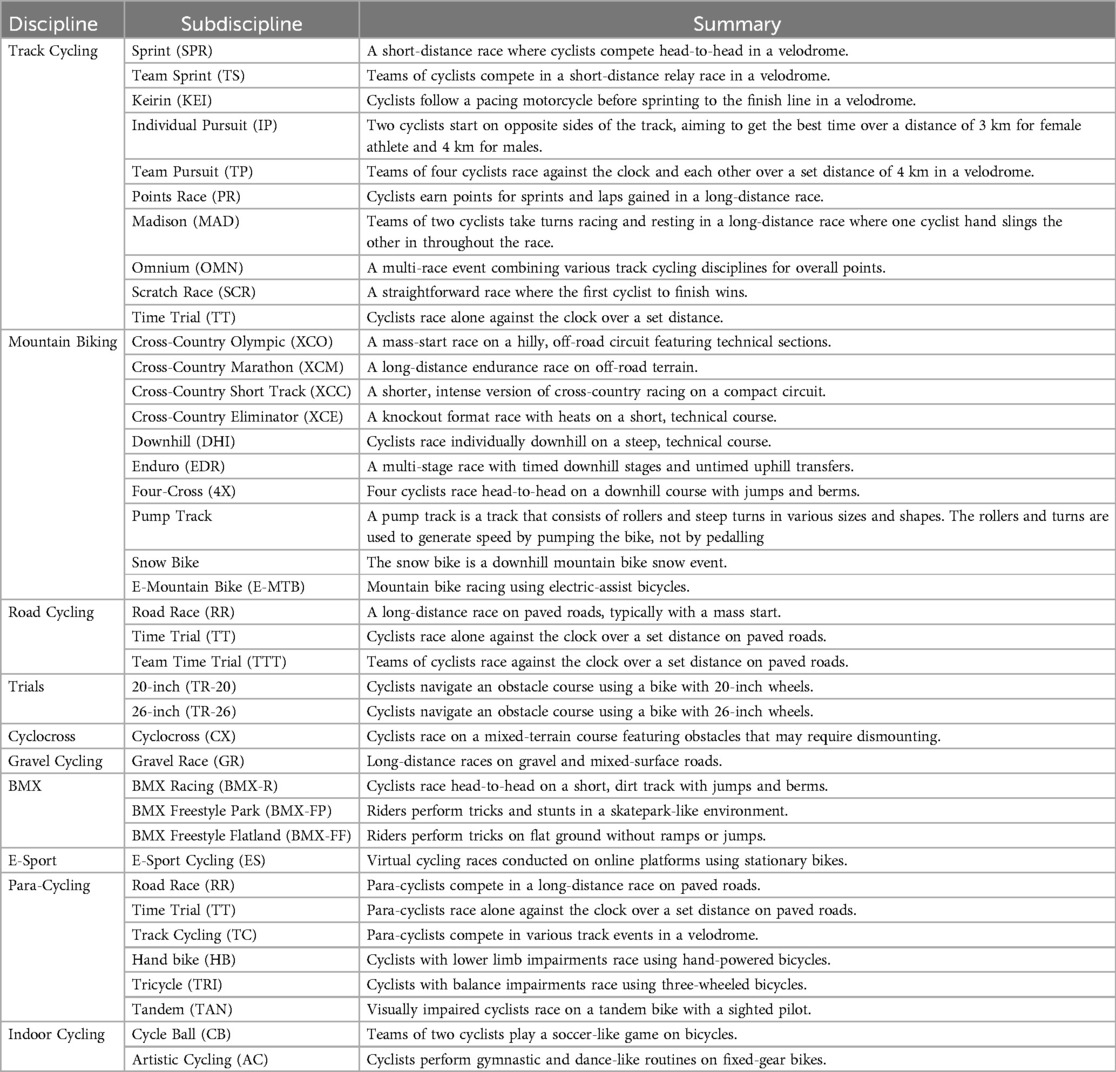
Table 2. Description and list of competitive cycling disciplines to be reviewed.
Participants
Study inclusion criteria will be framed according to PICO:
• Population (P)- Competitive cyclists. Competitive cyclists are those who are partaking in competition at any level. To partake in any competitive event these cyclists will hold a UCI competition licence. Therefore, all athletes included will hold a UCI racing licence affiliated with their National Governing Body (NGB).
○ As this study focused on competitive cyclists, we divided this population into three different levels modified from Heron et al. (10)
1. An amateur is a cyclist, described as one who practices cycling for non-economic reasons and participates in official domestic competitions.
2. An elite cyclist is defined as a cyclist who competes at the national/international level but does not receive a regular salary or income for their involvement in the sport.
3. A Professional Cyclist is defined as a cyclist who competes at the national/international level and receives a regular salary or income for their involvement in the sport.
• The intervention (I) will be classed as injury and/or illness or exposure to injury and or illness. This may be in one event, one month, one competitive season or one year.
• Comparator (C)- Not applicable
• Outcome (O)—The outcome of interest in the studies will be injury/illness type and exposure rate.
Search methods for identification of studies
A computerised, systematic literature search will be conducted in electronic databases MEDLINE and Embase (both via Ovid), Scopus and Cochrane Library. In line with recommendations for systematic reviews (11) on measurement properties, a hand search of the reference lists of included studies and relevant reviews for additional sources will be conducted. A grey literature search in Google Scholar will also be performed following the database searches.
Search strategy
The presented search strategy was reviewed and approved by a medical librarian at Queens University Belfast. The search strategies will be based on keywords broken down into those related to cycling and those related to injury and illness (Table 3). Results obtained from the searches will be downloaded in RIS format.

Table 3. Keywords used in search strategy.
Using Boolean operators (AND, OR), we will combine Cycling and Injury/Illness keywords. For example: (“Competitive cycling” OR “Road cycling”). Using the term “AND” we will combine cycling keywords and injury/illness keywords. Example (“Sports injuries” OR “ Musculoskeletal injuries” AND “Elite Cycling” OR “Competitive cycling”).
Study selection process
References exported from each database will be imported onto the AI systematic review software “Rayyan” (Cambridge, Massachusetts, USA), where duplicates will be removed and made available for screening. Independent screening by two reviewers will be undertaken in a two-step process: title/abstract screening, followed by full-text review. The reference lists of included articles will be searched to identify any other potentially relevant articles. In addition, citation tracking will also be used to identify potentially eligible studies. Reviewers will apply the predefined inclusion and exclusion criteria to determine study eligibility. A third reviewer will be consulted to resolve disagreements amongst these reviewers and to facilitate consensus. Once study consensus is reached, references will be transferred to the Mendeley reference manager for write-up.
Data extraction
Systematic extraction of relevant data elements including the following information listed in (Appendix 1). Double verification of extracted data will be completed by the second reviewer to ensure accuracy and completeness. Extracted data will be inputted into a proposed build Microsoft Excel sheet, with all raw data being published within the appendix of the study.
Methodological quality assessment
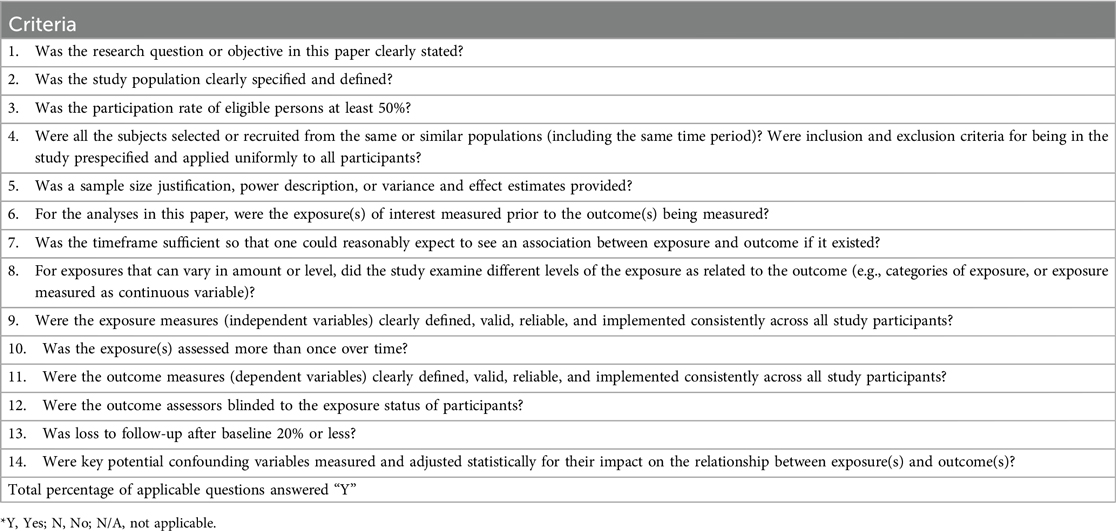
Studies will be independently assessed by two reviewers using the National Institute of Health Quality Assessment Tool for Observational Cohort and Cross-Sectional Studies to determine study quality (12) (Appendix 2). The proportion of questions labelled “yes” will be calculated with the higher score indicating a lower risk of bias.
Synthesis of results
Collation of findings from included studies will be done using a narrative approach to present a coherent summary of the evidence. A Tabular/charted presentation of the extracted data will be included where possible. The variables of injuries mainly will be main injury/illness types and definitions, event category, level of participation, diagnostic categories (ie. Medical professionals or self-reported etc), in competition/out of competition and time lost. Statistical methods such as a meta-analysis to combine data if studies are homogenous and comparable. Two systematic reviews have been completed in cycling injury epidemiology, one focused on road cycling (2) and the other on MTB (3). Both reviews were unable to complete any statistical analysis between studies due to the lack of homogeneity between studies. The determination for such an analysis will be at the discretion of the authors, with appropriate statistical input, contingent upon their assessment of discernible dissimilarities among study subpopulations (such as international, elite, and amateur cohorts), exposure types (per 1000hrs, 100rides,100 riders), and reported outcome metrics. This decision-making process aligns with the guidelines advocated by Higgins and Green and Borenstein et al. (13, 14). As per the IOC consensus statement extension for the reporting of injuries and illness in cycling. Meta-analysis of injury and illness rates between disciplines will present rates per 365 athlete days which will allow for comparison of injury and illness rates between cycling disciplines (4).
Discussion
Injury and illness epidemiology has been identified as a topic of focus for the UCI within their recently published Agenda 2030 (5). This manuscript outlines a protocol to conduct a systematic review of injuries and illness across the different cycling disciplines. The aim of carrying out such research is to present the injury and illness types seen in cycling, their known prevalence, incidences, locations, and burden of injury and illness across the sport of cycling. This systematic review protocol differs from others in injury and illness epidemiology as it will present data from a range of different competitive cycling disciplines. As outlined within the methods and in the IOC consensus statement extension studies with methodological homogeneity will be included within a meta-analysis in which injury rates will be presented per 365 athlete days to allow for comparison between disciplines. In line with the growth of the sport and ensuring that the health and safety of athletes are optimised, the findings of this review will focus on the direction of further high-quality prospective injury and illness studies. From this review, we will aim to gain an understanding of the breadth of injuries and illness across the sport. This will enable researchers to focus future research on areas of most need and align with the 2030 UCI agenda aims to “promote and support research in cycling epidemiology and medicine, especially for the benefit of lesser-known disciplines” (5).
Studies have shown that cyclists are not immune to injury or illness (2, 15–19). The range of injuries and illnesses that do occur is vast, however, the reporting of injuries varies significantly with a significant lack of homogeneity between studies and disciplines (2, 4). Injury and Illness surveillance studies in other sports are far more advanced and have seen the development of specific warm-up routines to reduce injury risk such as FIFA 11 (20) in soccer, and Gaelic Athletic Association (GAA) 15 (21) in Gaelic games. Injury and illness surveillance has also been the mainstay in providing evidence that underpins the rule changes to tackle height and reduce head injury risk in professional (22) and amateur (23) rugby. Such examples in other sports highlight the importance of injury surveillance in cycling for medical professionals within teams to adopt the TRIPP model and inform practices that reduce overall injuries and illnesses amongst cyclists. Furthermore, such data on competitive cycling would support the UCI in achieving their agenda 2030 objectives 2(a) “reducing accident risk” and 2 (e) “Implementing independent regulatory medical monitoring”. This review protocol aims to aid research transparency, helping reduce publication bias, preventing selective publication and selective reporting of results. Subsequently, the outcome of this review will provide researchers and sports medicine practitioners with the first step in understanding the current injury and illness surveillance evidence across all cycling disciplines. It will highlight disciplines which lack injury and illness surveillance research in addition to directing the focus for further injury surveillance research amongst the sport.
Author contributions
TF: Writing – original draft, Writing – review & editing. NH: Writing – original draft, Writing – review & editing.
Funding
The author(s) declare financial support was received for the research, authorship, and/or publication of this article. TF is funded by the Department for Education (DfE). No other funding was received for this study.
Conflict of interest
The authors declare that the research was conducted in the absence of any commercial or financial relationships that could be construed as a potential conflict of interest.
Publisher's note
All claims expressed in this article are solely those of the authors and do not necessarily represent those of their affiliated organizations, or those of the publisher, the editors and the reviewers. Any product that may be evaluated in this article, or claim that may be made by its manufacturer, is not guaranteed or endorsed by the publisher.
References
1. UCI. Spectacular TV and Digital Audiences for 2023 UCI Cycling World Championships in Glasgow and Across Scotland (2023). Available online at: https://www.uci.org/pressrelease/spectacular-tv-and-digital-audiences-for-2023-uci-cycling-world/3KSV2mdsYiRRoPBupy1tDT (cited December 8, 2023).
2. Rooney D, Sarriegui I, Heron N. ‘As easy as riding a bike’: a systematic review of injuries and illness in road cycling. BMJ Open Sport Exerc Med. (2020) 6(1):e000840. doi: 10.1136/bmjsem-2020-000840
3. Buchholtz K, Lambert M, Corten L, Burgess TL. Incidence of injuries, illness and related risk factors in cross-country marathon mountain biking events: a systematic search and review. Sports Med Open. (2021) 7(1):68. doi: 10.1186/s40798-021-00357-z
4. Clarsen B, Pluim BM, Moreno-Pérez V, Bigard X, Blauwet C, Del Coso J, et al. Methods for epidemiological studies in competitive cycling: an extension of the IOC consensus statement on methods for recording and reporting of epidemiological data on injury and illness in sport 2020. Br J Sports Med. (2021) 55(22):1262–9. doi: 10.1136/bjsports-2020-103906
5. Union Cycliste Internationale. Agenda 2030 (2023). Available online at: https://assets.ctfassets.net/761l7gh5x5an/6RrOHtU0QlyN80MDJ7vJm3/cf54c913960a66a71baaac379ef12b88/2022_UCI_AGENDA2030_web_EN.pdf (cited December 8, 2023).
6. van Mechelen W, Hlobil H, Kemper HCG. Incidence, severity, aetiology and prevention of sports injuries. Sports Med. (1992) 14(2):82–99. doi: 10.2165/00007256-199214020-00002
7. Finch C. A new framework for research leading to sports injury prevention. J Sci Med Sport. (2006) 9(1–2):3–9. doi: 10.1016/j.jsams.2006.02.009
8. Page MJ, McKenzie JE, Bossuyt PM, Boutron I, Hoffmann TC, Mulrow CD, et al. The PRISMA 2020 statement: an updated guideline for reporting systematic reviews. BMJ. (2021) 372:n71. doi: 10.1136/bmj.n71
9. Ardern CL, Büttner F, Andrade R, Weir A, Ashe MC, Holden S, et al. Implementing the 27 PRISMA 2020 statement items for systematic reviews in the sport and exercise medicine, musculoskeletal rehabilitation and sports science fields: the PERSiST (implementing prisma in exercise, rehabilitation, sport medicine and SporTs science) guidance. Br J Sports Med. (2022) 56(4):175–95. doi: 10.1136/bjsports-2021-103987
10. Heron N, Sarriegui I, Jones N, Nolan R. International consensus statement on injury and illness reporting in professional road cycling. Phys Sportsmed. (2021) 49(2):130–6. doi: 10.1080/00913847.2020.1830692
11. Hopewell S, Clarke M, Lefebvre C, Scherer R. Handsearching versus electronic searching to identify reports of randomized trials. In: Hopewell S, editor. Cochrane Database of Systematic Reviews. Chichester, UK: John Wiley & Sons, Ltd (2002).
12. National Institute of Health. National Institute of Health Quality Assessment Tool for Observational Cohort and Cross-Sectional Studies (2017). Available online at: https://www.nhlbi.nih.gov/health-topics/study-quality-assessment-tools (cited March 28, 2024).
14. Borenstein M, Hedges LV, Higgins JPT, Rothstein HR. Introduction to Meta-Analysis. Wiley (2009).
15. Willick SE, Ehn M, Teramoto M, Klatt JWB, Finnoff JT, Saad K, et al. The national interscholastic cycling association mountain biking injury surveillance system: 40,000 student-athlete-years of data. Curr Sports Med Rep. (2021) 20(6):291–7. doi: 10.1249/JSR.0000000000000850
16. Kim PTW, Jangra D, Ritchie AH, Lower ME, Kasic S, Brown DR, et al. Mountain billing injuries requiring trauma center admission: a 10-year regional trauma system experience. J Trauma Injury Infection Crit Care. (2006) 60(2):312–8. doi: 10.1097/01.ta.0000202714.31780.5f
17. Ehn M, Teramoto M, Cushman DM, Saad K, Willick S. The national interscholastic cycling association (nica) mountain biking injury surveillance system (iss): analysis of 66,588 student athlete-years of injury data. Int J Environ Res Public Health. (2021) 18(11).34072534
18. Bigdon SF, Hecht V, Fairhurst PG, Deml MC, Exadaktylos AK, Albers CE. Injuries in alpine summer sports - types, frequency and prevention: a systematic review. BMC Sports Sci Med Rehabil. (2022) 14(1):79. doi: 10.1186/s13102-022-00468-4
19. Braybrook PJ, Tohira H, Birnie T, Brink D, Finn J, Buzzacott P. Types and anatomical locations of injuries among mountain bikers and hikers: a systematic review. PLoS One. (2023) 18(8):e0285614. doi: 10.1371/journal.pone.0285614
20. Magoshi H, Hoshiba T, Tohyama M, Hirose N, Fukubayashi T. Effect of the FIFA 11+ injury prevention program in collegiate female football players over three consecutive seasons. Scand J Med Sci Sports. (2023) 33(8):1494–508. doi: 10.1111/sms.14379
21. Schlingermann BE, Lodge CA, Gissane C, Rankin PM. Effects of the gaelic athletic association 15 on lower extremity injury incidence and neuromuscular functional outcomes in collegiate gaelic games. J Strength Cond Res. (2018) 32(7):1993–2001. doi: 10.1519/JSC.0000000000002108
22. Tucker R, Raftery M, Kemp S, Brown J, Fuller G, Hester B, et al. Risk factors for head injury events in professional rugby union: a video analysis of 464 head injury events to inform proposed injury prevention strategies. Br J Sports Med. (2017) 51(15):1152–7. doi: 10.1136/bjsports-2017-097895
23. van Tonder R, Hendricks S, Starling L, Surmon S, Viviers P, Kraak W, et al. Tackling the tackle 1: a descriptive analysis of 14,679 tackles and risk factors for high tackles in a community-level male amateur rugby union competition during a lowered tackle height law variation trial. J Sci Med Sport. (2024) 27(1):57–62. doi: 10.1016/j.jsams.2023.10.011
Appendix 1: Data Extraction Sheet.

Appendix 2: National Institute of Health Quality Assessment Tool for Observational Cohort and Cross-Sectional Studies to determine study quality.
Keywords: sport, participation, elite athletes, injury, illness, cycling, systematic reviews, protocol
Citation: Fallon T and Heron N (2024) A systematic review protocol of injuries and illness across all the competitive cycling disciplines, including track cycling, mountain biking, road cycling, time trial, cyclocross, gravel cycling, BMX freestyle, BMX racing, e-sport, para-cycling and artistic cycling. Front. Sports Act. Living 6:1385832. doi: 10.3389/fspor.2024.1385832
Received: 13 February 2024; Accepted: 10 October 2024;
Published: 25 October 2024.
Edited by:
Alejandra Polanco, Université Gustave Eiffel, FranceReviewed by:
Howard Hurst, University of Central Lancashire, United KingdomSergio M. Navarro, Mayo Clinic, United States
Copyright: © 2024 Fallon and Heron. This is an open-access article distributed under the terms of the Creative Commons Attribution License (CC BY). The use, distribution or reproduction in other forums is permitted, provided the original author(s) and the copyright owner(s) are credited and that the original publication in this journal is cited, in accordance with accepted academic practice. No use, distribution or reproduction is permitted which does not comply with these terms.
*Correspondence: Thomas Fallon, dGZhbGxvbjAyQHF1Yi5hYy51aw==
†ORCID:
Neil Heron
orcid.org/0000-0002-4123-9806