 Paula Teresa Morales-Campo
 Salvador Pérez-Muñoz
 Sergio López-García
 Pelayo Díez-Fernández
 Alberto Rodríguez-Cayetano*
- Faculty of Education, Pontifical University of Salamanca, Salamanca, Spain
In the last decade, the subject of Physical Education has undergone significant transformations, exploring new teaching alternatives for students to acquire interest and enthusiasm for sport. The main objective of this descriptive study is to bring Touchtennis to schools as an innovative and alternative racket sport, which has attracted interest in the sports field. In terms of methodology, an intervention proposal is presented, designed for the subject of Physical Education, through a methodological sequence, in order to get to know the basic contents of the sport and to improve the physical, psychological, social and emotional components of the student. To date, Touchtennis lacks scientific evidence to support its effects. Consequently, a pedagogical proposal is presented in order to open up a promising field for future research, which could reveal its potential in the educational and sporting sphere. It is therefore essential that, on the basis of this research, empirical tests are carried out to analyse the effect of this sport.
1 Introduction
Within the current educational context, the subject of Physical Education must incorporate high quality programmes in order to acquire significant learning and encourage the regular practice of physical activity, emphasising the importance of the health and physical well-being of students (1, 2). In fact, there are many studies that have shown that the practice of exercise or physical activity leads to an improvement in students’ academic performance, which reaffirms that the subject of Physical Education should be a fundamental pillar in people's education (3–6).
From this perspective, it is relevant to highlight the role of teachers in teaching spaces, as they must motivate schoolchildren to practice sport by employing different methodologies and attractive and innovative activities that allow for greater commitment and dedication to practice (7–9). In this line, different educational models oriented towards constructivism have emerged significantly, leaving conventional teaching behind (10). These avant-garde approaches are incorporated into the contemporary educational framework to improve the quality of the teaching process and increase motivation towards the subject, with the teacher being the guide and facilitator of the learning process and the student being the protagonist of his or her own learning (11).
In this sense, the teacher must opt to use more innovative methodologies and practices for teaching content and acquiring competences (12, 13), with the aim of increasing the interest and enthusiasm of the student towards the subject. In relation to new practices, Spanish educational legislation has undergone several adaptations in curricular elements, highlighting the incorporation of alternative sports as content within the subject of Physical Education (14).
While it is true that alternative sports or games are understood as those attractive and novel recreational practices that favour the complete and integral development of students (15, 16) and provide improvements in motor skills (17). It is also stated that they experience numerous advantages, as they increase motivation and enjoyment towards the subject, create bonds of friendship (18), acquire positive values and behaviours (19), develop an inclusive and equal understanding (20), foster cooperation and decision-making, and provide alternative and different practices to the traditional ones (21). In this way, it can be inferred that these types of sports, which are totally recent and innovative, represent a new vision within the Physical Education community, due to their wide variety of characteristics, multiple benefits and the facilities they provide when adapted to different contexts (22).
In this context, racket sports are progressively appearing in teaching plans (23) as an educational potential that not only provides a great motor richness (24), but also improves the perceptive, affective and social components of the schoolchild (25, 26). In fact, Varea (27) stated that, through practice, they improve observation skills, foster understanding and decision-making at a personal and group level, promote education in values and strengthen relationships between peers, creating a positive climate that encourages continuous learning.
Thanks to their great popularity in recent years, they are currently positioned as a relevant and alternative teaching content in education (28). In this regard, Castellar et al. (29), highlighted them as a pedagogical option for their development in the subject of Physical Education. However, the school situation reveals that not all racket sports are implemented by specialist teachers, due to a lack of theoretical/practical knowledge about the sport itself, or the practice of racket sports that are better known or easier to adapt to the teaching environment (30). In this sense, it is recommended that teachers be trained in this sport modality, as its implementation can benefit and improve the quality of teaching (31). Furthermore, Quintas et al. (32) stress that it is necessary for teachers to be trained in new disciplines and emerging trends to enrich teaching programmes and incorporate more varied and up-to-date experiences.
However, in order to teach these sports at school, it is essential to apply the game-based methodology (33). In fact, Wilson (34) has promoted this methodology, given that it provides multiple benefits for the overall learning of schoolchildren. In particular, his philosophy is not based on teaching basic and directed strokes as was the case with traditional teachings (35), but seeks to foster technical and tactical learning through a structured and well-organised gradual progress, in order to perform game-based performances that provide greater efficiency (36). Therefore, the game becomes a valuable tool for the teacher due to its great capacity to promote a more dynamic and motivating environment (37).
In addition to the above, Villamizar (38) indicated that teaching through play is a methodology that is based on the active participation of the student through exploration and discovery, linked to fun and interest in practice. In fact, Carrillo-Ojeda et al. (39) found that learning and play are closely related. Thus, play-based teaching is an essential methodology, as its application demonstrates an improvement in physical, cognitive, social and emotional aspects, facilitating an integral development in the student.
Another pedagogical model used in current teaching is the comprehensive model or Teaching Games For Understanding (TGFU) (40–42). Specifically, this methodology is based on the comprehensive teaching of the game through real situations, where the player learns to make decisions generating more effective results (43). In this way, tactical awareness is a determining factor (44), since knowing only the learning of technique is not enough to be effective in the game (45). Therefore, the TGFU focuses on constructivist learning that favours cognitive aspects through the teaching of game tactics in particular combined (46, 47).
Therefore, the main objective of this research work is to provide the educational community with a pedagogical intervention proposal based on a racket sport, called Touchtennis, in order to inculcate this sport in educational centres in a novel and transformative way, using the game as an educational resource.
2 Pedagogical framework
Over time, the educational field has undergone several adaptations in the curricular elements, highlighting the incorporation of alternative or emerging sports as teaching content within the area of Physical Education (14, 18).
From the Spanish legislative point of view, Royal Decree (48), specifically cites softball, pallados, ultimate and pickleball, as sports considered as alternative, as examples of sports that could be implemented in the classroom. Similarly, there are several Autonomous Regional Decrees that set out this need, such as the Decree of the Region of Murcia (49) and the Decree of the Principality of Asturias (50), among others.
In addition to the above, the Order of the Autonomous Community of Aragon (51), refers to the following alternative sports: touchball, indiaka, dodgeball, kin-ball, colphol and korfball. All of them are characterised as alternative or emerging.
In this respect, the Decree of Castilla y León (52), refers to alternative sports or games from the third year of Primary Education onwards. For its teaching, it is necessary to apply pedagogical methodologies adapted to the contents and the particular needs of each group, allowing a competent and quality development during the student's learning process (53). In this sense, León-Díaz et al. (12) and Sierra-Díaz et al. (54) pointed out that the methodological strategies that are implemented must be adapted to the particularities of each environment, that is, they must be adapted to the characteristics of the student, the materials and facilities available and especially to the curricular elements of the educational law. In addition, they stated that these methodologies should encourage motivation with the aim of creating adherence to sports practice and improving motor behaviour and its development, creating active and healthier lifestyles.
In this perspective, the Touchtennis modality has recently arrived in Spain with its first circuit organised by the Royal Tennis Federation (55). However, no evidence of its implementation in Spanish schools has been found. For this reason, it is interesting that it is integrated into new groups of practitioners, in order to get to know a new and attractive discipline. Moreover, Touchtennis has interesting aspects, as it is easy to learn and can be applied quickly and economically. Therefore, this sport can be an effective resource to introduce in the educational environment (56).
3 Learning environment
Touchtennis is a split-court racket sport, which maintains the essence of conventional tennis in a shortened version. This sport makes it unique, due to its striking adaptability and accessibility at an early age, making it a suitable choice for inclusion in the educational environment.
Specifically, it is a sport that is played individually or in pairs, positioned on both sides of the court and divided by a net. The main objective of the game is to win points through a rally, in which the aim is to force the opponent to make a mistake or to hit a winning shot. However, it has similarities to conventional tennis in that it focuses on a game of precision, strategy and control, rather than speed and intensity. In this sense, thanks to its particularities, it facilitates its practice being accessible to all ages regardless of the characteristics of each individual. Moreover, thanks to the modifications in the dimensions of the court, it allows the sport to be more dynamic and entertaining. In fact, a court can be installed on the vast majority of indoor and outdoor surfaces. However, one of the practical barriers that the sport can have in educational settings is the cost and accessibility of sports equipment. However, Touchtennis equipment is easily adaptable to different types of racquets and cheaper balls. As for the court, it can be played informally by adapting the court with tape or by converting it into a Pickleball court. In this way, it is a sport that can be easily adapted in schools.
For these reasons, it is characterised as an innovative and inclusive racket sport, as it encourages motivation and enjoyment towards the practice of physical activity, making it a favourable option to incorporate in education and specifically in Physical Education classes.
3.1 Playing field
The Touchtennis court is divided into two halves of 6 m, a reduced version of the tennis court. The official dimensions are 12 m × 5 m for singles and 12 m × 6 m for doubles, with a net height between the two halves of no less than 0.80 m. However, variations in the dimensions of the court of up to 1 m are accepted, with the aim of offering greater variety and accessibility.
3.2 Equipment
In terms of equipment, a ball with a uniform surface made of a foam material with a diameter of 8 cm is required, which facilitates hitting, reduces the speed and intensity on the court and minimises the impact on the player's joints.
On the other hand, the 21-inch racquet with a strung weight of 195 g and a head size of 85 inches, is characterised by its light and reduced size, favouring its handling, movement and technique of the sport.
3.3 Participants
Touchtennis is an inclusive discipline, so it is designed to be participatory and accessible to all those who wish to practice a new form of racket. In addition, it is an emerging discipline that seeks an initiation to the practice of a sport regardless of skill level, whether beginners or experienced players. In this way, the practice of Touchtennis facilitates the introduction of conventional tennis, but with a more motivating and attractive factor for the participant.
However, this initiative can be used in different centres, thanks to its flexibility and adaptability in any particular context or situation. It can also be adjusted to any type of age, space and material, as long as there are modifications according to the real need and context, due to the multitude of options it presents.
3.4 Touchtennis rules
The rules of Touchtennis are internationally regulated by Touchtennis Pro Limited (57) and integrated in the Royal Spanish Tennis Federation (56). For your enquiry, they are detailed on the official Touchtennis website (58).
3.5 Pedagogical format
In the following, a Touchtennis methodological sequence is proposed for the purpose of presenting and introducing a new alternative racket sport in Physical Education classes.
For this purpose, based on the methodological sequence provided by Sánchez-Alcaraz et al. (59), a game-based methodology has been applied, integrating a global strategy for teaching sport. However, another suitable methodology that could be used would be the comprehensive model or TGFU for understanding the internal logic of import.
Specifically, the proposal is designed through a structural and gradual sequence with different global practice situations. First of all, it is recommended to start with playful activities to familiarise with the sport and its materials. Subsequently, the teaching of basic strokes will be essential to learn the technique from a general approach. Next, training in basic tactics is proposed in accordance with the internal logic of the sport, followed by playing tasks that reproduce real game situations based on technical-tactical skills and, as a final product, a Touchtennis competition is proposed, in order to associate the contents learned during the methodological sequence.
Consequently, it aims to increase motor engagement time and promote participation and cooperation among all students, acquiring an active role in their learning (Figure 1 and Table 1).
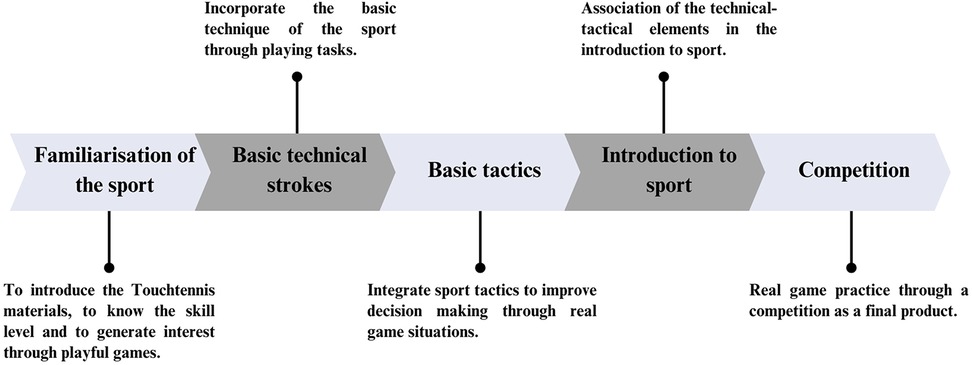
Figure 1. Diagram of the methodological sequence for the teaching of Touchtennis.
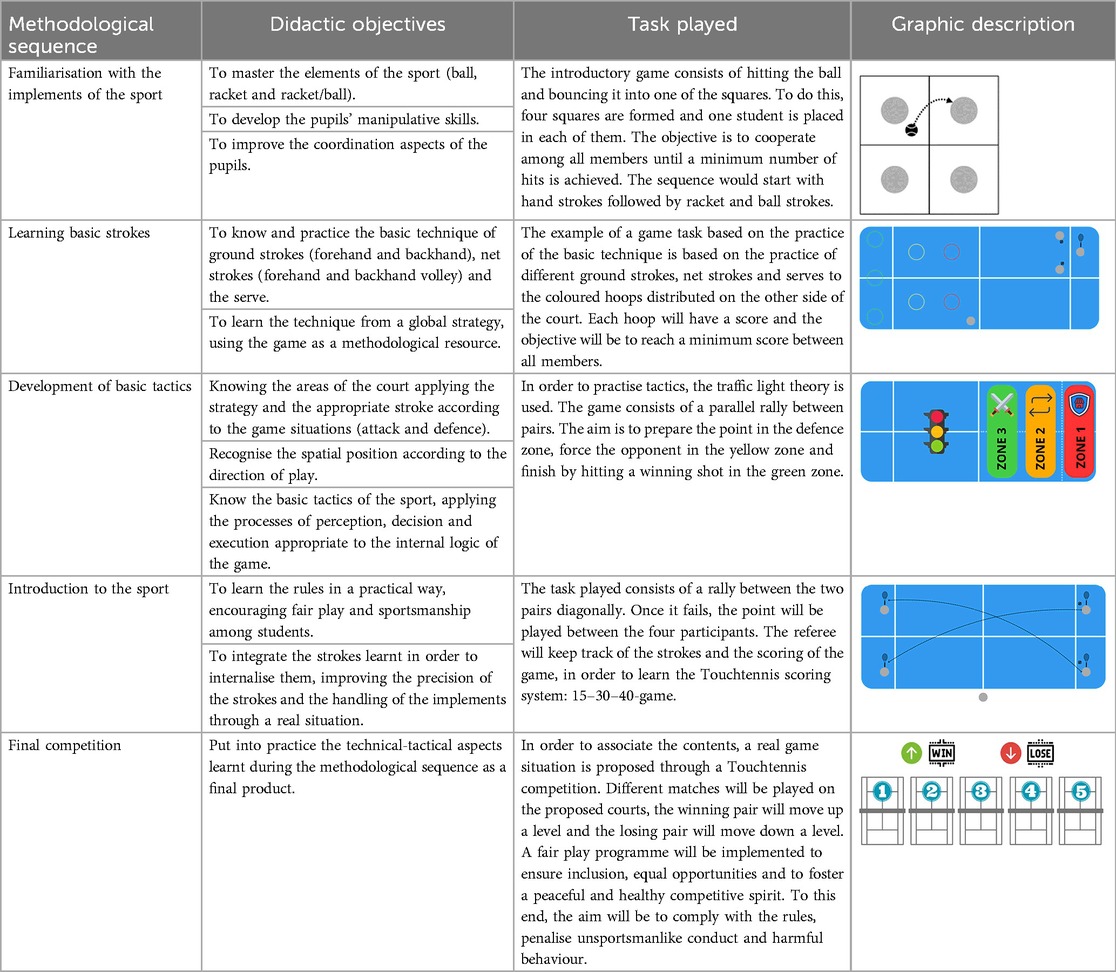
Table 1. Intervention proposal based on Touchtennis’ methodological sequence.
4 Results
Through the intervention proposal, it is intended that the schoolchildren acquire basic knowledge about Touchtennis through active, playful and meaningful learning based on the game as an educational resource. Likewise, with its dissemination, the aim is to get to know a new racket sport that encourages active participation through the application of different strategies and motor experiences during sport practice, with the aim of creating enriching experiences in the student's learning process. In addition, one of the main characteristics is that the basic technical-tactical aspects of this sport are similar to the best known racket sports, such as tennis and paddle tennis.
In a specific way, Touchtennis offers new motor proposals for sport initiation that stand out for being inclusive, providing a universal language among its practitioners. As a result, this alternative sport provides significant motor experiences, acquiring a high didactic potential and a high pedagogical quality to the educational system.
Finally, in terms of evaluation, the aim is to gather information on the student's teaching-learning process, assessing their progress and evolution in order to analyse and make a judgement on the student's performance. To this end, the procedural, conceptual and attitudinal components are evaluated, through different procedures and varied and adapted instruments, in order to know to what extent the expected results are achieved.
5 Discussion
The main objective of this research work was to provide the educational community with a proposal for a pedagogical intervention based on a racket sport, called Touchtennis, with the aim of inculcating these sports in educational centres in a novel and transformative way using play as an educational resource.
In relation to racket sports, Herrero et al. (23) stated that badminton and alternative sports are the most demanded by teachers in Physical Education classes. In fact, the results of Ruiz-Malagón et al. (60) showed that racket sports are appropriate for increasing motivation and decreasing anxiety in Physical Education classes. In this regard, Pradas and Castellar (61) revealed that they are considered as a key, beneficial and highly recommended content due to their multiple pedagogical facilities and possibilities.
However, Lara-Bocanegra and Galán-López (62) pointed out that it is essential that racket sports training begins in higher education, with the intention that future teachers practice and obtain extensive knowledge to implement them in their programmes.
As a result of the above, evidence supports the argument that students at any educational stage, acquire an increase in motivation and interest when including new or alternative sports, as they propose a closer and more interesting experience, away from other more recurrent proposals where the same sports disciplines are usually taught (63, 64). However, situations and strategies should be created that promote participation, increase enjoyment and interest in the subject (65) and prove to be decisive for the development of physical, cognitive, social and psychological skills (66–68).
At present, the scientific base includes a scarce amount of research related to alternative sports (69). For this reason, Pérez-Pueyo and Hortigüela (70) expressed the need to apply pedagogical interventions to discover their true contributions and move away from current trends that simply value them as different from the standard.
Moreover, these sports emerge to address the current problem of stereotypes and achieve a more egalitarian component in the subject of Physical Education (71). In fact, Hernández et al. (14) added that such sports promote integration and sportsmanship. In the same perspective, Aznar (72) underlined the importance of racket sports in terms of coeducation, equity and interculturality.
In this sense, research by Van Acker et al. (73) showed that the female gender maintained the same prominence as the male gender, and even had greater participation during practice. Therefore, implementing these sports in the educational community can have a positive impact (74) and, consequently, resolve one of the most widespread concerns in the educational context (75).
Therefore, supporting this idea, Robles and Robles (21) indicated that these sports generate greater enjoyment, unlike more traditional and habitual sports in Physical Education sessions. Likewise, the studies by Jaquete and Ramírez (76) showed that during the practice of alternative sports, more empathy and cooperation was generated among students.
In reference to the above, the findings of Menescardi and Villarrasa-Sapiña (77) showed an increase in intrinsic motivation after having practised different alternative sports in Physical Education sessions. For these reasons, its implementation is necessary as content to be taught in Physical Education classes, in addition to continuing to expand new knowledge about its benefits (19).
Specifically, the study carried out by González-Cutre and Sicilia (78) pointed out the importance of implementing novel strategies in order to obtain positive effects on adherence to physical activity. These results are in line with the research obtained by Kalajas-Tilga et al. (79), as they identified the enjoyment factor as essential and, consequently, the increase of intrinsic motivation of the schoolchildren towards the subject.
For these reasons, Touchtennis is a striking and optimal modality for incorporation into teaching programmes, which means that teachers should seek new pedagogical alternatives (17) by applying avant-garde strategies and using new experiences such as alternative sports, in order to generate improvements in motor commitment (80) and increase motivation towards the subject (20, 81).
6 Conclusion
Physical Education has undergone remarkable advances in its pedagogical process resulting in a high impact on education. This change has included a growing trend in the inclusion of alternative sports in its programmes, as a reflection of a need that offers new and more enriching experiences for the student. Among them, Touchtennis stands out as a sport of initiation to racket sports supported by the Royal Spanish Tennis Federation and being an unknown sport in the field of education and sport. In this sense, its impact can be attractive in the field of Physical Education, as it offers multiple advantages, including its simple learning, adaptability in the reduced and accessible material for educational centres and its enjoyment after practice as it does not require a high level of motor involvement. For these reasons, its learning introduces a new alternative sport, providing a wide variety of content in educational programmes.
The main limitation of the study is the lack of empirical data to support the pedagogical proposal. In this sense, the present study aims to create a basis for future lines of research that, through the practical application of the pedagogical proposal, will support empirical evidence and sustain a theoretical framework specific to sport. In this regard, further research is intended to analyze, firstly, the motor behavior and the impact on the physical condition of the student, through the measurement of heart rate or physical tests adapted to the sport. Secondly, the psychological and social aspects such as, for example, the level of motivation and interest caused by Touchtennis as a sport in educational programs and, finally, to analyze the didactic methodology used for an ideal development of the methodological sequence. In addition to the above, its application on a large scale at various educational levels is required, avoiding a biased sample, to verify possible differences and support the benefits of incorporating a new sporting experience in teaching programs.
For this reason, the aim is to bring an innovative practice based on a racket sport through the development of a pedagogical proposal, so that the student has the basic knowledge of an alternative sport that breaks with conventional practices and that begins to be carried out from an early age. It also promotes teamwork, mutual support, values such as fair play, sportsmanship and respect for diversity.
In short, there is a need to expand racket sports that are not very common in the educational itinerary, so that new practice options are known that enrich the sporting experience of the schoolchildren.
Data availability statement
The original contributions presented in the study are included in the article/Supplementary Material, further inquiries can be directed to the corresponding author.
Author contributions
PM-C: Writing – original draft, Writing – review & editing. SP-M: Writing – original draft. SL-G: Writing – original draft. PD-F: Writing – original draft. AR-C: Writing – original draft, Writing – review & editing.
Funding
The author(s) declare that no financial support was received for the research, authorship, and/or publication of this article.
Conflict of interest
The authors declare that the research was conducted in the absence of any commercial or financial relationships that could be construed as a potential conflict of interest.
Generative AI statement
The authors declare that no Generative AI was used in the creation of this manuscript.
Publisher's note
All claims expressed in this article are solely those of the authors and do not necessarily represent those of their affiliated organizations, or those of the publisher, the editors and the reviewers. Any product that may be evaluated in this article, or claim that may be made by its manufacturer, is not guaranteed or endorsed by the publisher.
References
1. García C, Merino A. Motor, play and special needs in primary education. ESHPA. (2020) 4(3):340–8. doi: 10.5281/zenodo.4118258
2. García-Vallejo A, Sánchez-Alcaraz B, Hellín-Martínez M, Alfonso-Asencio M. Influencia de un programa de recreos activos en la condición física de estudiantes de Educación Primaria. Retos. (2023) 48:222–8. doi: 10.47197/retos.v48.96099
3. Ávila FJ, Méndez JC, Silva JM, Gómez OÁ. Actividad física y su relación con el rendimiento académico. RIDE. (2021) 12(23):1–19. doi: 10.23913/ride.v12i23.1030
4. Berrios B, Latorre PÁ, Salas J, Pantoja A. Effect of physical activity and fitness on executive functions and academic performance in children of elementary school. A systematic review. Cult Cienc Deporte. (2022) 17(51):85–103. doi: 10.12800/ccd.v17i51.1699
5. Chacón-Cuberos R, Zurita-Ortega F, Ramírez-Granizo I, Castro-Sánchez M. Actividad física y rendimiento académico en la infancia y la preadolescencia: una revisión sistemática. Apunts Educ Fis Deportes. (2020) 36(139):1–9. doi: 10.5672/apunts.2014-0983.es.(2020/1).139.01
6. Rodríguez-Torres AF, Bohórquez NE, Aimara JC, Cusme-Torres AC, García-Gaibor JA. El impacto de la actividad física en el rendimiento académico en estudiantes de secundaria. Dom Cien. (2022) 8(2):642–61. doi: 10.15332/tg.mae.2017.00395
7. Aznar-Ballesta A, Vernetta M. Influence of the satisfaction and importance of physical education on sports dropout in secondary school. Espiral. (2023) 16(32):18–28. doi: 10.25115/ecp.v16i32.8604
8. Jáuregui JC, Chávez PE, Menacho I, Ramírez LL, Romero EJ. El liderazgo directivo y desempeño docente en la educación básica regular. Horizontes. (2022) 6(23):648–58. doi: 10.33996/revistahorizontes.v6i23.365
9. Rojo-Ramos J, González-Becerra MJ, Gómez-Paniagua S, Adsuar JC. Satisfaction with physical activity among students in the last cycle of primary education in extremadura. Int J Environ Res Public Health. (2022) 19(11):1–9. doi: 10.3390/ijerph19116702
10. Pérez-Pueyo Á, Hortigüela-Alcalá D, Fernández-Río J. Evaluación formativa y modelos pedagógicos: estilo actitudinal, aprendizaje cooperativo. Modelo comprensivo y educación deportiva. Rev Esp Educ Fís Deportes. (2020) 428:47–66. doi: 10.55166/reefd.vi428.881
11. Llerandi V, Barrios YD. La motivación y el aprendizaje en la clase de educación física: reflexiones prácticas. Rev Conrado. (2022) 18(84):30–9.
12. León-Díaz Ó, Arija-Mediavilla A, Martínez-Muñoz LF, Santos-Pastor ML. Las metodologías activas en Educación Física. Una aproximación al estado actual desde la percepción de los docentes en la Comunidad de Madrid. Retos. (2020) 38:587–94. doi: 10.47197/retos.v38i38.77671
13. Nielsen A, Romance AR, Chinchilla JL. Los ambientes de aprendizaje como metodología activa promotora de la actividad física en Educación Infantil: un estudio de caso. Retos. (2020) 37:498–504. doi: 10.47197/retos.v37i37.71026
14. Hernández V, Barranca JM, Gámez L, González VA, Aguilar M, Espada MC, et al. Análisis del Pinfuvote como nuevo deporte alternativo para el área de Educación Física. Retos. (2023) 48:178–89. doi: 10.47197/retos.v48.97006
15. Moreno-Díaz MI, Tapia-Serrano MA, Vaquero-Solís M, Cano-Cañada E, Sánchez-Miguel PA. El deporte colectivo en educación física. Unidad didáctica del COLPBOL. Rev Esp Educ Fís Deportes. (2021) 432:101–9. doi: 10.55166/reefd.vi432.971
16. Moya-Mata I, Ruiz-Sanchis L, Martín-Ruiz J, Ros-Ros C. Physical activity represented in physical education textbooks for elementary education. Movimiento. (2019) 25:1–13. doi: 10.22456/1982-8918.89296
17. López RE, Sánchez FJ, Sánchez D, Sánchez FJ, González LI. Un nuevo deporte alternativo: El brokenball. EmásF. (2020) 62:8–26.
18. González-Coto VA, Gámez-Calvo L, Hernández-Beltrán V, Gamonales JM. Ringol: deporte alternativo e inclusivo en el ámbito educativo. VIREF. (2022a) 11(4):119–31.
19. González-Coto VA, Hernández-Beltrán V, García-Espino N, Gamonales JM. Twincon: deporte coeducativo e inclusivo. Logía Educ Fís Deportes. (2022b) 3(1):28–39. doi: 10.46642/efd.v27i295.3465
20. Hernández-Beltrán V, Gámez-Calvo L, Gamonales JM. Propuesta de Unidad Didáctica para la Educación Física: “El circo en la escuela como herramienta de inclusión”. EmásF. (2022) 13(74):98–123. doi: 10.33776/remo.vi18.5369
21. Robles A, Robles J. La participación en las clases de educación física la ESO y Bachillerato: Un estudio sobre un deporte tradicional (Balonmano) y un deporte alternativo (Tchoukball). Retos. (2021) 39:78–83. doi: 10.47197/retos.v0i39.78129
22. Teva R, Sánchez M. Compendium de deportes alternativos para dinamizar eventos y actividades lúdico-deportivas. Editorial Universidad de Sevilla (2018).
23. Herrero R, Pradas F, Rapún M, Peñarrubia C, Castellar C. Análisis de la situación de los deportes de raqueta y pala en educación física en la etapa de educación secundaria en Murcia. Rev Esp Educ Fís Deportes. (2018) 420:59–74. doi: 10.55166/reefd.vi420.633
24. Mateo JL, Castro RM, Lara LR. El mini-tenis, una alternativa para la masificación del tenis en el contexto escolar ecuatoriano. Rev Cient Espec Cienc Cult Fís Deporte. (2023) 20(57):159–79.
25. Cachón-Zagalaz J, Sánchez-Zafra M, Sanabrias-Moreno D, Lara-Sánchez A. El pádel como deporte escolar. Inclusión en las clases de Educación Primaria. Padel Sci J. (2023) 1(2):191–214. doi: 10.17398/2952-2218.1.215
27. Varea J. Guía docente para la enseñanza del tenis en la Educación Física. Spain: Marpadal Interactive Media S.L (2014).
28. Sánchez-Alcaraz BJ, Sánchez-Pay A, Courel-Ibañez J. Introducción a los deportes de raqueta alternativos. Trances. (2018) 10(3):267–80.
29. Castellar C, Pradas F, Quintas A, Rapún M. Tratamiento de las disciplinas de raqueta y pala en la educación física. Rev Int Deportes Colectivos. (2016) 28:51–61.
30. Cabello D, Carazo A. Consideraciones didácticas de la iniciación a los deportes de raqueta.Un ejemplo en bádminton. Rev Esp Educ Fís Deportes. (2001) 3(8):6–14.
31. Hoffmann D, Brixius K. Racket sports teaching implementations in physical education – a status quo analysis of German primary schools. J Phys Educ Sport. (2018) 18(2):867–73. doi: 10.7752/jpes.2018.02128
32. Quintas HA, Pradas FO, Gallego TC, Castellar OC. Attitudes towards table tennis as scholar content in primary school teachers. Rev Int Deportes Colectivos. (2017) 32:42–54.
33. Pradas FF. Fundamentos técnicos de los deportes de raqueta y pala. XVI cursos de verano de la Universidad de Granada en Ceuta (2004); Ceuta. Universidad de Granada; Ciudad Autonoma de Ceuta; Instituto de Estudios Ceutíes.
34. Wilson D. La metodología de entrenamiento basada en el juego - una investigación de principios y práctica. ITF Coach Sport Sci Rev. (2009) 49:29–32. doi: 10.52383/itfcoaching.v17i49.642
35. Elderton W. Tenis progresivo: Desarrollo de 5 a 7 años de edad. ITF Coach Sport Sci Rev. (2009) 16(47):5–6.
36. Miranda M. Cómo utilizar el mini-tenis de forma eficaz. ITF Coach Sport Sci Rev. (2002) 10(26):11–3.
37. Pradas F, Castellar C. El tratamiento didáctico del tenis de mesa como contenido en educación física. ADAL. (2016) 33:32–8.
38. Villamizar MÁ. Metodologías activas a través del juego y el interés de los niños y niñas de 5 a 6 años en Preescolar. Rev Edu. (2020) 45(2):1–9. doi: 10.15517/revedu.v45i1.42861
39. Carrillo-Ojeda MJ, Garcia-Herrera DG, Ávila-Mediavilla CM, Erazo-Álvarez JC. El juego como motivación en el proceso de enseñanza aprendizaje del niño. Rev Arbitr Interdiscip Koinonía. (2020) 5(1):430–48. doi: 10.35381/r.k.v5i1.791
40. Bunker D, Thorpe R. A model for the teaching of games in the secondary school. B Phys Educ. (1982) 10:9–16.
41. Cocca A, Carbajal-Baca JE, Hernández-Cruz G, Cocca M. Does A multiple-sport intervention based on the TGfU pedagogical model for physical education increase physical fitness in primary school children? Int J Environ Res Public Health. (2020) 17(15):5532. doi: 10.3390/ijerph17155532
42. Metzler M. Instructional Models in Physical Education. Scottsdale: Holcomb Hathaway Publishing (2011).
43. Morgan K, Kingston K, Sproule J. Effects of different teaching styles on the teacher behaviours that influence motivational climate and pupils’ motivation in physical education. Eur Phy Educ Rev. (2005) 11(3):257–85. doi: 10.1177/1356336/05056651
44. Bailey L, Almond L. Creating change: by creating games? In: Spackman L, editor. Teaching Games for Understanding. Cheltenham, England: The College of St. Paul and St. Mary (1983). p. 56–9.
45. Hopper T, Kruisselbrink D. Teaching games for understanding: what does it look like and how does it influence student skill acquisition and game performance? J Teach Phys Educ. (2001) 12:2–29.
46. Dyson B, Griffin LL, Hastie P. Sport education, tactical games, and cooperative learning: theoretical and pedagogical considerations. Quest. (2004) 56(2):226–40. doi: 10.1080/00336297.2004.10491823
47. Harvey S, Jarrett K. A review of the game-centred approaches to teaching and coaching literature since 2006. Phys Educ Sport Pedagogy. (2014) 19(3):278–300. doi: 10.1080/17408989.2012.754005
48. Ministerio de Educación y Formación Profesional de España. Real Decreto 157/2022, de 1 de marzo, por el que se establecen la ordenación y las enseñanzas mínimas de la Educación Primaria.
49. Consejo de Gobierno de la Región de Murcia, España. DECRETO 209/2022, de 17 de noviembre, por el que se establece la ordenación y el currículo de la Educación Primaria en la Comunidad Autónoma de la Región de Murcia.
50. Gobierno del Principado de Asturias, España. DECRETO 57/2022, de 5 de agosto, por el que se regula la ordenación y se establece el currículo de la Educación Primaria en el Principado de Asturias.
51. Gobierno de Aragón, España. Orden ECD/1112/2022, de 18 de julio, por la que se aprueban el currículo y las características de la evaluación de la Educación Primaria y se autoriza su aplicación en los centros docentes de la Comunidad Autónoma de Aragón.
52. Conserjería de Educación de la Comunidad de Castilla y León, España. DECRETO 38/2022, de 29 de septiembre, por el que se establece la ordenación y el currículo de la educación primaria en la Comunidad de Castilla y León.
53. Blázquez D. Métodos de enseñanza en educación física. Enfoques innovadores para la enseñanza de competencias. Spain: INDE (2016).
54. Sierra-Díaz MJ, González-Víllora S, Pastor-Vicedo JC, López-Sánchez GF. Can we motivate students to practice physical activities and sports through models-based practice? A systematic review and meta-analysis of psychosocial factors related to physical education. Front Psychol. (2019) 10:1–24. doi: 10.3389/fpsyg.2019.02115
55. Real Federación Española de Tenis. [Internet]. Barcelona: España. Departamento de comunicación. [updated 2021a; cited 2024]. Available online at: https://www.rfet.es/es/newsletter/UEQ0Y1lobzhySjltOW50ekwwN0M2QT09Ojq7MjmzwoW7oNgTpvyi35hy.html
56. Real Federación Española de Tenis. [Internet]. Barcelona: España. Departamento de comunicación. [updated 2021b; cited 2024]. Available online at: https://www.rfet.es/es/noticia/el-tenis-se-abre-a-nuevas-oportunidades-con-el-emergente-touchtennis
57. Touchtennis Pro Limited. [Internet]. England. [updated 2005; cited 2024]. Available online at: https://find-and-update.company-information.service.gov.uk/company/05409288
58. Touchtennis. [Internet]. [updated 2023; cited 2024]. Available online at: https://www.touchtennis.es/
59. Sánchez-Álcaraz BJ, Aznar R, Cañas J, Courel J, Gómez-Marmol A, Hernández-Díaz S, et al. Deportes de raqueta y pala claves para su enseñanza. Spain: Pila Teleña (2016).
60. Ruiz-Malagon EJ, Delgado-García G, López-Luján E, Zurita-Ortega F, Soto-Hermoso VM. Benefits of an intervention programme with racket sports in primary school students. Racket sports in elementary school students. Int J Racket Sports Sci. (2020) 2(2):9–17. doi: 10.30827/DIGIBUG.65347
61. Pradas F, Castellar R. Los deportes de raqueta y pala en Educación Física en Primaria. In: Lara A, Espejo N, Ocaña M, Cachón J, editors. La formación integral a través del deporte, I Congreso Internacional en Investigación y Didáctica de la Educación Física. Jaén: A. D. Andalucía (2016). p. 36–47.
62. Lara-Bocanegra A, Galán-López P. Deportes de raqueta y E.S.O.: ¿Por qué no? En Educar para transformar: innovación pedagógica, calidad y TIC en contextos formativos. Dykinson (2022).
63. Cabello D, Torres G. Fundamentos de los deportes de raqueta y pala. In: Villaverde C, editor. XVI cursos de verano de la Universidad de Granada en Ceuta. Granada: Instituto de Estudios Ceutíes (2004). p. 5–12.
64. Herrero R, Albarracín A. La optativa de 2° de Bachillerato. Una propuesta innovadora. Rev Comun Intercol. (2007) 2:44–50.
65. Serena A, González MH, Pérez C, Gómez AM. Análisis de las variables relacionadas con el interés por la Educación Física en el alumnado de educación secundaria: ¿cómo fomentarlo? Retos. (2022) 46:378–85. doi: 10.47197/retos.v46.92585
66. Martínez-Heredia N, Santaella-Rodríguez E, Rodríguez-García AM. Beneficios de la actividad física para la promoción de un envejecimiento activo en personas mayores. Revisión bibliográfica. Retos. (2021) 39:829–34. doi: 10.47197/retos.v0i39.74537
67. Posso RJ, Barba LC, León XP, Ortiz NA, Manangón RM, Marcillo JC. Educación Física significativa: propuesta para la contextualización de contenidos curriculares. PODIUM. (2020) 15(2):371–81. doi: 10.56200/mried.v2i5.5985
68. Tikac G, Unal A, Altug F. Regular exercise improves the levels of self-efficacy, self-esteem and body awareness of young adults. J Sports Med Phys Fit. (2022) 62(1):157–61. doi: 10.23736/S0022-4707.21.12143-7
69. Caldevilla P, Zapatero JA. Los deportes alternativos como contenidos para la Educación Física en Educación Secundaria. Retos. (2022) 46:1004–14. doi: 10.47197/retos.v46.94422
70. Pérez-Pueyo ÁP, Hortigüela D. ¿Y si toda la innovación no es positiva en Educación Física? Reflexiones y consideraciones prácticas. Retos. (2020) 37:579–87. doi: 10.47197/retos.v37i37.74176
71. Gubby L. Can korfball facilitate mixed-PE in the UK? The perspectives of junior korfball players. Sport Educ Soc. (2018) 24(9):994–1005. doi: 10.1080/13573322.2018.1519506
72. Aznar R. Los deportes de raqueta. Modalidades lúdico-deportivas con diferentes implementos. Barcelona: Inde (2004).
73. Van Acker R, da Costa FC, De Bourdeaudhuij I, Cardon G, Haerens L. Sex equity and physical activity levels in coeducational physical education: exploring the potential of modified game forms. Phys Educ Sport Pedag. (2010) 15(2):159–73. doi: 10.1080/17408980902877609
74. Berdejo D. Mini-tenis: Unidad Didáctica para primer ciclo de Educación Secundaria. Trances. (2011) 3(1):73–87.
75. Piedra J, García-Pérez R, Fernández-García E, Rebollo MA. Brecha de género en educación física: actitudes del profesorado hacia la igualdad. Rev Int Med Cienc Act Fis Deporte. (2014) 14(53):1–21.
76. Jaquete C, Ramírez E. Datchball y Colpbol como recursos para promover la inteligencia interpersonal. Experiencia didáctica aplicada con chicas y chicos de Educación Secundaria. Retos. (2021) 42:470–7. doi: 10.47197/retos.v42i0.86991
77. Menescardi C, Villarrasa-Sapiña I. Alternative sports and their influence on the students’ motivation: an experience in secondary education. Hum Rev. (2022) 11(4):1–9. doi: 10.37467/revhuman.v11.3844
78. González-Cutre D, Sicilia Á. The importance of novelty satisfaction for multiple positive outcomes in physical education. Eur Phys Educ Rev. (2019) 25(3):859–75. doi: 10.1177/1356336X18783980
79. Kalajas-Tilga H, Koka A, Hein V, Tilga H, Raudsepp L. Motivational processes in physical education and objectively measured physical activity among adolescents. J Sport Health Sci. (2020) 9(5):462–71. doi: 10.1016/j.jshs.2019.06.001
80. Cóndor MG, Cóndor JR, Paz S, Romero MF, Barba LC. Desarrollo de la motricidad: una aplicación del modelo de aprendizaje microcurricular activo. PODIUM. (2021) 16(3):934–46. doi: 10.37811/cl_rcm.v7i1.5180
Keywords: racquet sport, didactic intervention, alternative sport, Touchtennis, physical activity
Citation: Morales-Campo PT, Pérez-Muñoz S, López-García S, Díez-Fernández P and Rodríguez-Cayetano A (2025) New alternative proposal in physical education: Touchtennis as a racket sport in schools. Front. Sports Act. Living 7:1545994. doi: 10.3389/fspor.2025.1545994
Received: 16 December 2024; Accepted: 17 February 2025;
Published: 3 March 2025.
Edited by:
Bernardino Javier Sánchez-Alcaraz Martínez, University of Murcia, SpainReviewed by:
Santiago Guijarro-Romero, Autonomous University of Madrid, SpainValentina Stefanica, Polytechnic University of Bucharest, Romania
Copyright: © 2025 Morales-Campo, Pérez-Muñoz, López-García, Díez-Fernández and Rodríguez-Cayetano. This is an open-access article distributed under the terms of the Creative Commons Attribution License (CC BY). The use, distribution or reproduction in other forums is permitted, provided the original author(s) and the copyright owner(s) are credited and that the original publication in this journal is cited, in accordance with accepted academic practice. No use, distribution or reproduction is permitted which does not comply with these terms.
*Correspondence: Alberto Rodríguez-Cayetano, YXJvZHJpZ3VlemNhQHVwc2EuZXM=