ER
elvira romano
Council for Agricultural Research and Agricultural Economy Analysis | CREA
Rome, Italy
694
Total downloads
7,708
Total views and downloads
Submit your idea
Select the journal/section where you want your idea to be submitted:
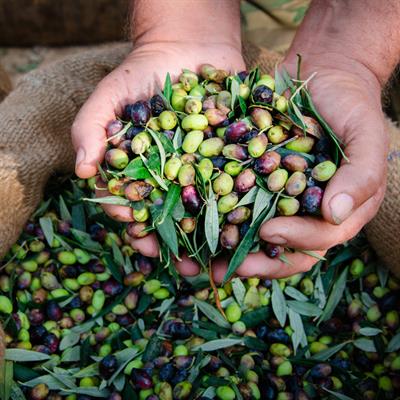
The olive supply chain is integral to the cultivation, processing, distribution, and consumption of olives, particularly in Mediterranean regions, which are responsible for 98% of global olive oil production. As a functional food, olive oil is scientifically recognized for enhancing physiological functions and reducing risks associated with diet-related diseases. The European Commission, backed by EFSA, has approved health claims regarding the polyphenol content of olive oil, emphasizing its value not just in oil but also in various by-products, including leaves, branches, shells, seeds, pomace, and mill wastewater. Despite their potential, the utilization of these by-products remains limited, offering a fertile ground for innovative approaches to product development, eco-sustainable disposal, and economic growth.
This Research Topic aims to explore and develop practices that enhance the sustainability and efficiency of the olive oil industry. It primarily seeks to investigate bioactive compounds in olive matrices and by-products, refine processes for their recovery, and foster environmentally sustainable waste disposal methods. Furthermore, the topic set forth to add value to olive mill waste for cosmetic and pharmaceutical applications, improve sustainable pest management in olive cultivation, and optimize irrigation and water management practices to bolster production efficiency.
To gather further insights into the olive supply chain, this Research Topic confines itself to exploring sustainable practices and methodologies. We welcome articles addressing, but not limited to, the following themes:
• Study of bioactive compounds and their biological properties in olive matrices and by-products from the olive oil industry
• Processes for the recovery of bioactive compounds from oil industry by-products and the production of nutrient-rich food and feedstuffs
• Processes that promote environmentally sustainable disposal of waste from the oil industry
• Procedures for value addition to olive mill waste for cosmetic and pharmaceutical purposes
• Sustainable pest management in olive production, including integrated pest management
• Irrigation and water management in olive production to optimize yield
We welcome submissions in various article formats, including Original Research, Review, Case Study, or Opinion articles, to contribute to this comprehensive exploration of sustainability within the olive oil industry.
This Research Topic accepts the following article types, unless otherwise specified in the Research Topic description:
Articles that are accepted for publication by our external editors following rigorous peer review incur a publishing fee charged to Authors, institutions, or funders.
Keywords: Olea europaea L., biophenols, olive matrices, carbon footprint, olive oil, olive, supply chain, cultivation, production, bioactive compounds, sustainable, by-products, waste, management, industry
Important note: All contributions to this Research Topic must be within the scope of the section and journal to which they are submitted, as defined in their mission statements. Frontiers reserves the right to guide an out-of-scope manuscript to a more suitable section or journal at any stage of peer review.
Council for Agricultural Research and Agricultural Economy Analysis | CREA
Rome, Italy
Research Centre for Food and Nutrition, Council for Agricultural Research and Economics
Rome, Italy
Institute for Membrane Technology, National Research Council (CNR)
Rende, Italy

Manuscripts can be submitted to this Research Topic via the main journal or any other participating journal.
Submit your idea
Select the journal/section where you want your idea to be submitted: