SR
sudha raj
Syracuse University
Syracuse, United States
2,369
Total views and downloads
Submit your idea
Select the journal/section where you want your idea to be submitted:
The Lancet Commission report 2019 identified all forms of malnutrition as the primary contributor to poor health globally and that the health effects of global climate change would exacerbate these effects. The Commission identified this confluence of malnutrition (undernutrition and overnutrition) and climate change as the “Global Syndemic” noting that the complexity of their interactions has far reaching health consequences for all global populations. Climate change threatens and is in turn threatened by global food production causing food price hikes, short-term disruptions in crop growing and long-term changes in regional food production. These factors play a crucial role in determining population food security and consequently nutritional status. Given the dire nature of the Syndemic, its impact on unsustainable food production and its potential for long-lasting intergenerational negative health effects, the Commission has urged all stakeholders in the food and public health spaces to explore new ways to reorient human food and living systems to achieve better planetary and human health. To this end several initiatives are underway to create healthy, resourceful, ecologically-friendly foodscapes in urban and rural settings. One such initiative that is of great academic interest is the role of wild edible plants in the human diet.
Wild edible foods that are native to indigenous and traditional foodways are derived from the local environments and have not only supported food security in their native environments but have also enhanced the health of their populations in addition to conserving the cultural, economic and environmental sustainability of the local food systems. Over time, socio-cultural and political changes have resulted in a dietary shift in these environments favoring the consumption of highly processed foods in place of such wild edibles.
As the scientific community is beginning to recognize the value and contributions of traditional ecological knowledge towards sustainability, restoration of natural resources, local food systems, and biodiversity, we invite research contributions that demonstrate:
• Wild edible foods are critical for the conservation of biodiversity and revitalization of ecological spaces in cultural landscapes where they have evolved.
• Wild edible foods can contribute to food and nutrition security by strengthening food system resilience rejuvenating peoples’ food sovereignty.
• The place- and culture- specific context of wild food nutrition and foraging practice invites community-scale engagement for understanding and promoting effective and sustainable expansion of wild food inclusion in local diets.
• Wild edibles are considered nutritionally valuable as sources of critical micronutrients and phytochemicals that play a crucial role in prevention, treatment and sustainable management of chronic diseases. Improving our knowledge and understanding of the nutrition profiles of such foods within the context of global diets and lifestyle patterns that are impacted by social determinants of health can further enhance education efforts to include them as part of population dietary plans.
• There are many research traditions on wild edible plants (WEPs), such as phytochemistry and ethnobotany, and meta-research, integrating these and other relevant research fields. We invite researchers from all fields to submit articles to promote a research-based holistic understanding of how Wild Edibles at the Nexus of Human and Planetary Health can impact disease outcomes.
• Research is also welcome on old plants, including but not limited to amaranth, fonio, cowpea, taro and kernza, which have traditional validation on their side and could hold the potential as sustainable food sources in the face of drought and/or climate change.
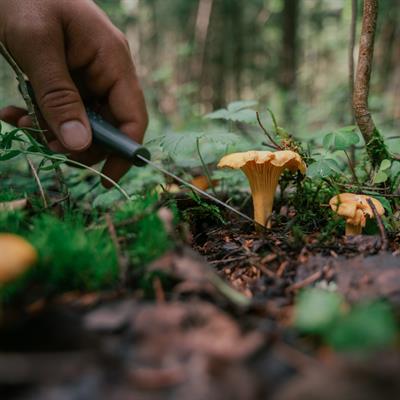
This Research Topic accepts the following article types, unless otherwise specified in the Research Topic description:
Articles that are accepted for publication by our external editors following rigorous peer review incur a publishing fee charged to Authors, institutions, or funders.
Keywords: Wild Edible Plants, nutrition, health, biodiversity, climate change, pollution, alimurgic plants, underutilized plants, sustainable food production, food security
Important note: All contributions to this Research Topic must be within the scope of the section and journal to which they are submitted, as defined in their mission statements. Frontiers reserves the right to guide an out-of-scope manuscript to a more suitable section or journal at any stage of peer review.
Syracuse University
Syracuse, United States
Syracuse University
Syracuse, United States
Birla Institute of Technology and Science
Pilani, India
University of Helsinki
Helsinki, Finland
Madda Walabu University
Bale Robe, Ethiopia

Manuscripts can be submitted to this Research Topic via the main journal or any other participating journal.
Submit your idea
Select the journal/section where you want your idea to be submitted: