NC
nikolaos chalmpes
Cornell University
Ithaca, United States
589
Total views and downloads
Submit your idea
You will be redirected to our submission process.
Manuscript Submission Deadline 15 March 2026
This Research Topic is currently accepting articles
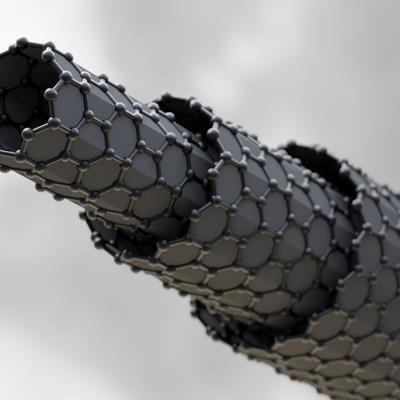
Carbon-based materials have emerged as a cornerstone in the development of next-generation electrochemical energy storage and conversion technologies. The versatility of carbon has given applications to a wide range of carbon nanostructures including porous carbons, MOF-derived carbons, graphene, carbon nanotubes (CNTs) and heteroatom-doped carbons each offering unique properties tailored for specific electrochemical energy storage and conversion. Their widespread appeal lies in the abundance and low cost of precursor materials, scalable and well-established fabrication and functionalization techniques, and exceptional physicochemical properties—including high specific surface areas, tunable electrical conductivities, and tunable surface chemistry.
In this scope, the research in this domain has rapidly evolved, with significant attention directed toward engineering carbon materials with tailored structures, compositions, and functionalities. From traditional forms to low-dimensional architectures and hybrid systems, carbon-based electrodes continue to demonstrate remarkable versatility and performance in any energy storage technology from conventional lithium-ion batteries to more advanced electrochemical systems such as lithium–carbon dioxide batteries and beyond-lithium systems. Recent advances in in-situ and operando characterization methods have also deepened the mechanistic understanding of material behavior, enabling the rational design of more efficient and robust energy systems.
A particularly exciting frontier is the development of single-atom catalysts (SACs), where isolated metal atoms are anchored on carbon-based substrates to serve as highly active and selective catalytic sites. In this case, nanocarbons possess appropriate sites for the SAC anchoring (for example C-N sites) and subsequently offer maximal exposure of those sites, something critical for efficient electrocatalysis. These systems not only push the limits of electrocatalysis—especially in reactions like CO₂ reduction and evolution reactions—but also offer model platforms for probing structure–activity relationships at the atomic scale.
This Research Topic aims to showcase cutting-edge research on carbon-based materials and their applications in electrochemical energy technologies. We invite contributions on the following aspects:
- novel material synthesis
- advanced characterization techniques
- mechanistic insights
- system-level integration, with particular interest in innovations that bridge fundamental science with practical implementation.
This Research Topic accepts the following article types, unless otherwise specified in the Research Topic description:
Articles that are accepted for publication by our external editors following rigorous peer review incur a publishing fee charged to Authors, institutions, or funders.
Keywords: carbon nanostructures, energy storage, novel material synthesis, system-level integration, single-atom catalysts
Important note: All contributions to this Research Topic must be within the scope of the section and journal to which they are submitted, as defined in their mission statements. Frontiers reserves the right to guide an out-of-scope manuscript to a more suitable section or journal at any stage of peer review.
Manuscripts can be submitted to this Research Topic via the main journal or any other participating journal.
Submit your idea
You will be redirected to our submission process.
