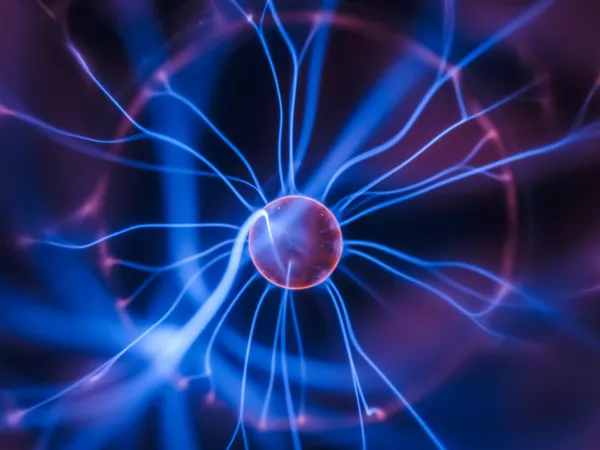
Non-thermal plasmas are characterized by non-equilibrium energy distributions that enable the generation of reactive species at near room temperature and pressure. This makes them attractive for applications ranging from nanoparticle synthesis and surface modification to pollutant removal and waste treatment. Over the past decade, improvements in plasma diagnostics and computational tools have enhanced insight into discharge behavior, species dynamics, and plasma–material interactions. Despite these advances, significant gaps remain in correlating plasma characteristics with material properties, reaction selectivity, and process efficiency.
As interest grows in sustainable manufacturing and environmental technologies, there is increasing demand for plasma systems that are energy-efficient, controllable, and compatible with industrial-scale operation. Addressing these challenges requires coordinated research that integrates plasma physics, chemistry, and reactor engineering. This Research Topic provides a platform for presenting such interdisciplinary advances.
Non-thermal plasma systems offer special capabilities for driving chemical reactions, synthesing nanomaterials, and enabling advanced environmental and industrial processes under ambient operating conditions. However, the complexity of plasma-driven chemistry and the strong coupling between plasma properties, material responses, and reactor design continue to limit process control, reproducibility, and large-scale implementation. This Research Topic aims to address these challenges by gathering high-quality contributions that advance both fundamental understanding and applied development of non-thermal plasma technologies.
The objective is to highlight recent progress in plasma-assisted nanoparticle synthesis, environmental remediation, plasma diagnostics, and industrial processing, with a focus on linking plasma parameters to reaction mechanisms and functional outcomes. Contributions that combine experimental studies with diagnostics, modeling, or process optimization are particularly encouraged. By bringing together researchers from plasma physics, materials science, and chemical engineering, this Research Topic seeks to identify emerging directions and practical solutions for advancing non-thermal plasma technologies toward reliable and scalable applications.
We welcome contributions addressing, but not limited to, the following themes:
-Non-thermal and atmospheric pressure plasma systems -Plasma-assisted N2 fixation and CO2 reduction -Plasma-assisted nanoparticle and nanomaterial synthesis -Plasma-based environmental remediation for air and water treatment -Plasma diagnostics, including optical, electrical, and laser-based techniques -Plasma chemistry, kinetics, and reaction mechanisms -Plasma–surface and plasma–liquid interactions -Reactor design, process control, and scale-up -Energy efficiency and optimization of plasma processes -Industrial plasma applications and technology transfer
Article types and fees
This Research Topic accepts the following article types, unless otherwise specified in the Research Topic description:
Brief Research Report
Editorial
FAIR² Data
FAIR² DATA Direct Submission
General Commentary
Mini Review
Original Research
Perspective
Review
Articles that are accepted for publication by our external editors following rigorous peer review incur a publishing fee charged to Authors, institutions, or funders.
Article types
This Research Topic accepts the following article types, unless otherwise specified in the Research Topic description:
Important note: All contributions to this Research Topic must be within the scope of the section and journal to which they are submitted, as defined in their mission statements. Frontiers reserves the right to guide an out-of-scope manuscript to a more suitable section or journal at any stage of peer review.