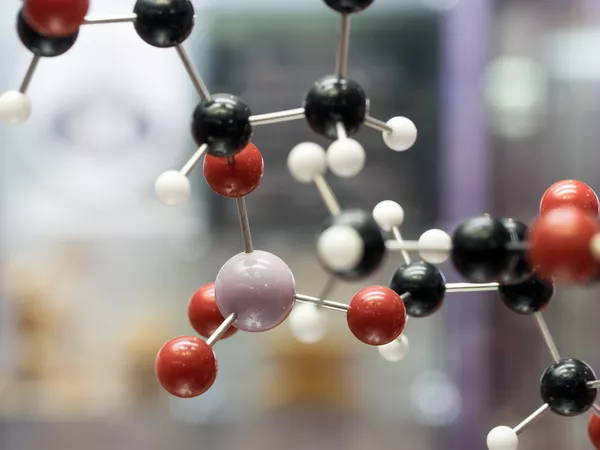
Porous Metal-Organic Frameworks (MOFs) materials are built by assembly of different metal ions/clusters (inorganic nodes) and bridging functional organic ligands (linkers) via coordination bonds. They can often be successfully synthesized by various design strategies, such as one-pot direct synthesis, post-synthetic modification and ion exchange strategy, etc. Compared with the traditional inorganic materials (oxides and zeolites), porous MOF materials have tuneable structures and topologies, unsaturated coordinated open metal sites as well as special host-guest interactions, therefore, they have been exploited as new-types of functional porous materials and utilized successfully in gas adsorption/separation, magnetism, drug delivery and so on, especially for sensing environmental pollutants as well as catalyzing different organic/inorganic reactions.
This Research Topic aims to present the recent progress about porous Metal-Organic (MOF) materials in different fields. Currently, synthesis it is still a great challenge for targeted preparations of different porous MOF materials. It is thus expected to exploit some new design strategies in this Research Topic for the facile synthesis of MOFs. In addition, due to new further requirements and specific applications, we welcome all work describing the development of new kinds of porous MOF materials for sensing different environmental pollutants (such as heavy metal ions, small organic molecules, and dyes, etc.) and catalyzing various organic/inorganic reactions (including C-C coupling reactions, hydrogenation, and electrocatalysis, etc.). Finally, it is hoped that some new insights may be given in this Research Topic for the future applications of porous MOF materials.
Themed to be addressed may include, but are not limited to:
• Porous Metal-Organic Framework (MOFs): The perspective. • New design strategies of different porous MOF materials. • Synthesis of porous MOF materials with novel structures and topologies. • Porous MOF materials for sensing environmental pollutants. • Porous MOF materials for catalyzing different organic reactions. • Theoretical studies the structures-properties relationship of MOF materials.
Important note: All contributions to this Research Topic must be within the scope of the section and journal to which they are submitted, as defined in their mission statements. Frontiers reserves the right to guide an out-of-scope manuscript to a more suitable section or journal at any stage of peer review.