 Vanessa Santos Moura1
 Marta Regina Verruma-Bernardi2
 Josiane Rodrigues2
 Mariângela Cristofani-Yaly1
 Fernando Alves de Azevedo1*
 Marinês Bastianel1
- 1Centro de Citricultura Sylvio Moreira, Instituto Agronômico, Cordeirópolis, Brazil
- 2Centro de Ciências Agrárias, Universidade Federal de São Carlos, Araras, Brazil
The selection of new mandarin varieties to enhance fruit supply and address phytosanitary challenges is a significant issue in table citrus farming. In Brazil, the primary harvest season for commercial varieties spans from May to August, leaving a gap in the availability of mandarins during the off-season, which typically coincides with the hottest months of the year. Furthermore, diseases such as Alternaria Brown Spot (ABS) and HLB have reduced planted areas due to the complexities of management and increased production costs. This study evaluated three new mandarin hybrids based on tolerance for ABS, their physicochemical properties and acceptance. Although citrus researchers’ experts of mandarins conducted the sensory characterization, the methodology reflects sensory descriptions grounded in consumer perception. Providing detailed data for each mandarin hybrid is crucial, as the varieties exhibit distinct characteristics that influence overall evaluations and help align each hybrid with consumer expectations. The results demonstrate that, despite variations in acceptance among evaluators for one or more attributes ranking from “slightly liked” to “liked a lot,” all hybrids were generally well received. Such studies are vital for guiding the selection of new mandarin varieties in genetic improvement programs.
1 Introduction
According to the USDA (2024), global mandarin production is estimated at 38.2 million tons, with a notable increase driven by favorable weather conditions in China and Turkey. In 2022, Brazil ranked among the top five producers, with a planted area of 56,000 ha and a production of 1,086,616 tons. The Southeast region is the heart of Brazil’s mandarin production, accounting for 60.6% of the national output, producing approximately 659,000 tons across more than 27,500 ha. The state of São Paulo stands out as the leading producer, contributing 34% of the national production, making it the primary mandarin-producing hub in the country (IBGE, 2024).
The demand for new mandarin varieties has been driving the fruit sector, particularly for cultivars that meet consumer preferences. Beyond expanding the diversity and availability of mandarins, selecting disease-tolerant varieties is crucial for maintaining orchards under diverse conditions. Currently, diseases such as Greening (HLB = Huanglongbing) and Alternaria Brown Spot (ABS) significantly impact commercial citrus orchards in Brazil (Bastianel et al., 2023). ABS, caused by the fungus Alternaria alternata, has been present in Brazil since 2001 (Goes et al., 2001). The disease is highly contagious, reducing the planted area as the main varieties (Murcott and Ponkan mandarins) are highly susceptible. Controlling the fungus requires over 30 applications of fungicides, as it causes spots on young fruits and tissues, leading to early fruit drop and reduced yields in subsequent harvests (Azevedo et al., 2010; Bastianel et al., 2023). In Brazil, breeding programs seek new varieties with good organoleptic characteristics, which mature at different times of the year, allowing an extension of the harvest period and, in addition, tolerant to the main endemic diseases in the country.
Mandarins are primarily consumed fresh and favored by consumers for their vibrant color, pleasant aroma, and ease of peeling and segmenting. The mandarin group includes species such as C. reticulata, C. x deliciosa, and C. x unshiu, as well as hybrids such as tangors and tangelos, which have these characteristics. According to Belo et al. (2018), citrus fruit quality is paramount for fresh consumption and industrial processing, where internal and external characteristics play a critical role in determining marketability. Internal traits such as yield, pH, titratable acidity, soluble solids, and vitamin C content, along with external characteristics like shape, size, and color, are crucial. Countries like Spain, Italy, Israel, South Africa, the United States (California), Uruguay, and Argentina are recognized as leaders in producing fruits with superior physicochemical qualities, including attractive peel color, seedlessness, and a balanced sweetness-acidity ratio (Goldenberg et al., 2017; Neves et al., 2018).
Any deviation from the optimal ripening stage can negatively impact mandarins’ sensory qualities and marketability. Early harvesting results in undesirable physical-chemical quality, while late harvesting results in altered flavor and reduced shelf life, making the fruits prone to physiological disorders during post-harvest handling (Singh et al., 2023).
Physicochemical quality and consumer perception are essential for assessing the commercial potential of a new variety in the fresh fruit market (Pacheco et al., 2023; Micaroni et al., 2023; Szpadzik et al., 2024). In this study, we conducted physicochemical and sensory analyses to characterize three new mandarin hybrids. These hybrids were pre-selected for producing fruits with an appealing appearance suitable for fresh consumption and their tolerance to Alternaria Brown Spot, even in orchards with high levels of the fungus since the orchard is located in a region endemic to the disease with a high incidence of symptoms and no chemical control.
2 Materials and methods
2.1 Plant material
The hybrids analyzed in this study are part of a progeny resulting from the directed crossing of the Clementina IAC 175 (Citrus x clementina) and Murcott tangor IAC 221 (C. reticulata x C x sinensis) varieties, comprising approximately 300 individuals. Three plants of each genotype, grafted onto Rangpur lime (Citrus limonia), were established in a completely randomized design at the Silvio Moreira Citrus Center (Cordeirópolis, SP) for initial plant and fruit characterization. Three mandarin hybrids, designated as T1-16, T3-109, and T3-110 (Figure 1), were pre-selected in the field for their favorable characteristics, including fruit size, pulp and peel color, ease of peeling, pleasant flavor, and tolerance to Alternaria Brown Spot. The orchard has highly susceptible plants in an area endemic to the disease. The absence of symptoms in these hybrids was observed for nine consecutive years, even though they were close to highly symptomatic plants.
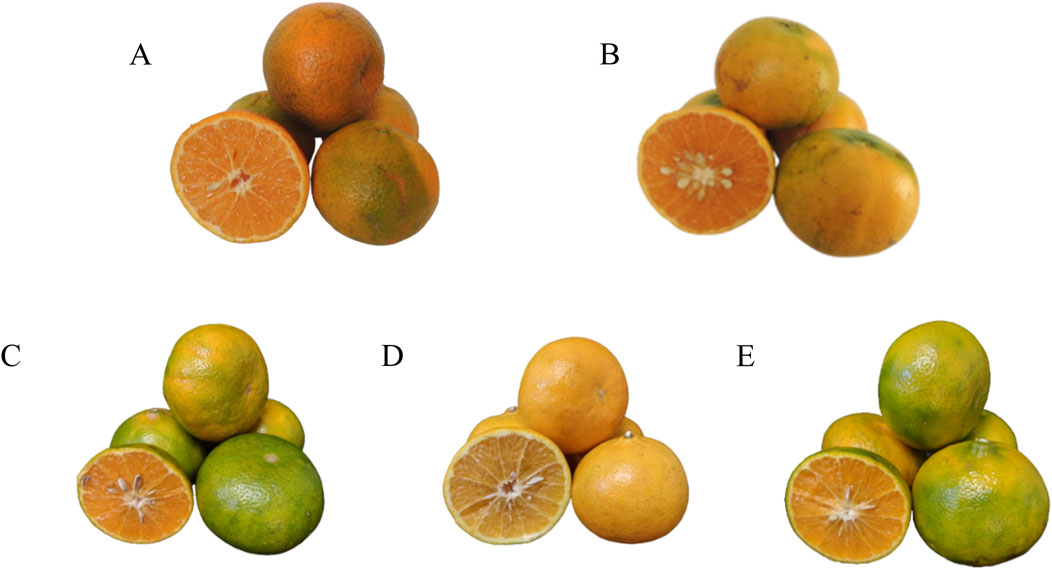
Figure 1. Fruits of: (A) Clementina IAC 175 (female parental), (B) Murcott tangor (male parental), and your hybrids T1-16 (C), T3-109 (D), and T3-110 (E).
Sixty fruits (20 from each plant) of each of the hybrids T1-16, T3-109, and T3-110 were manually harvested during their respective ripening periods in August, September, and October 2023 at the “Sylvio Moreira” Citrus Center of the Agronomic Institute (IAC) in Cordeirópolis, SP. After harvesting, the fruits were promptly transported to the Post-Harvest Laboratory. They were then selected for uniformity in color, size, and absence of visible physical damage or lesions. The fruits were washed with neutral detergent and disinfected with 0.1% sodium hypochlorite for 2 min. Subsequent analyses were performed at the Quality Laboratory of the Citriculture Center.
2.2 Physical-chemical analysis
The fruits of hybrids T1-16, T3-109, and T3-110 were manually harvested in the experimental areas of the “Sylvio Moreira” Citrus Center/IAC (CCSM/IAC), Cordeirópolis, Sao Paulo State, Brazil, during their ripening period, respectively in the months of August, September and October 2023. The fruits were immediately transported to the Post-Harvest laboratory (CCSM/IAC) and selected for uniform color and size, with no apparent physical damage or lesions. They were then cleaned with neutral detergent and superficially disinfected with 0.1% sodium hypochlorite for 2 min. The fruits were separated in triplicate, containing five fruits per replicate, totaling 15 per hybrid.
The fresh mass of the fruits was measured using a semi-analytical digital scale. The height (H) to width (W) ratio was determined with a digital caliper, and juice yield (JY) was assessed as follows: the total fruit mass was recorded in kilograms on an analytical scale; the fruits were then processed in an extractor OIC (Organização Internacional Centenário) model OTTO to collect the juice. The juice yield percentage was calculated using the % juice yield = (MS/MF) × 100, where MS is the juice mass and MF is the fruit mass.
Total titratable acidity (TTA), obtained by titration with a standardized solution of 0.3125 N of NaOH, using phenolphthalein as an indicator, with estimates based on volume, and results were expressed as % (g of citric acid per 100 mL of the sample). Total soluble solids (TSS) content was measured by direct reading using a digital refractometer RFM 330 (Bellingham Stanley Ltd.), with results expressed in °Brix. and ratio calculated with the relationship soluble solids/acidity. Peel color was assessed using a digital colorimeter (Minolta CM-600d, Japan). Three readings were taken at different positions on the equatorial region of each fruit. The color was analyzed using the CIELAB color space, represented by three dimensions: L* (luminosity), a* (red content), and b* (yellow content). The Hue angle (°h) was calculated using the tan−1 (b*/a*) formula.
2.3 Sensory analysis
Sensory analysis was performed 1 day after harvest, and the fruits were kept refrigerated until analysis. The Research Ethics Committee approved the study (CAAE no. 74260923.1.0000.5504). A sample of each hybrid fruit, duly coded, was served to each evaluator in individual booths using white light at room temperature.
The acceptance test of specific attributes was carried out by 12 citrus researchers, experts in commercial quality analysis of mandarins. The evaluators were served an intact fruit for tasting in individualized environments. The evaluators responded about the possible acceptance was used to assess the following attributes: A–Peel Color; B–Size; C–Peel Texture; D–Firmness; E–Ease of Peeling; F–Consistency; G–Aroma; H–Flavor; I–Fiber Content; and J–Number of Seeds, using a 9-point hedonic scale. The evaluators were asked to provide their demographic information, including gender and age group. Evaluators were asked to select their individual preference for each sample: Definitely would buy, Probably would buy, Maybe would buy, maybe would not buy, Probably wouldn´t buy, and Definitely wouldn´t buy. The results with this reduced number of evaluators may not fully predict consumers’ impressions; however, in this study, due to the limitation of the number of fruits selected, it was decided to verify the acceptance of experts with the specific taxes and associated physical-chemical characteristics.
2.4 Statistical analysis
The data were first analyzed using analysis of variance (ANOVA), followed by Tukey’s test at a 5% significance level. Additionally, Principal Component Analysis (PCA) was applied to the sensory analysis data of the three mandarin hybrids. PCA components were derived as linear combinations of the sensory attributes and extracted in decreasing order of their contribution to the total data variation. Attributes with loadings greater than 0.60 were identified for each retained component. Biplots of each variety, with 95% confidence ellipses, were constructed to evaluate their behavior relative to the principal components. Finally, a Biplot integrating the varieties with each physicochemical variable and sensory attribute was created to examine their correlation structure. All statistical analyses were performed using R software (R Core Team, 2024).
3 Results and discussion
The average values for the physicochemical characteristics of hybrids T1-16, T3-109, and T3-110 are summarized in Table 1. The hybrid T3-109 demonstrated a mass of 231.5 g, approximately 50% greater than that of hybrids T1-16 and T3-110, resulting in an A/L ratio exceeding 0.94. This indicates that T3-109 produces fruit with a significantly higher mass compared with the values described in the literature for the leading commercial varieties. According to Pio et al. (2005), the Murcott tangor averages 140 g, while the Clementine group averages 117 g (Silva et al., 2009; Pacheco et al., 2017). Additionally, other studies reported the mandarin cultivar IAC2019 Maria with an average mass of 169 g (Veiga et al., 2019) and Fremont IAC543 with 109 g (Pacheco et al., 2019).

Table 1. Physicochemical characteristics of the fruits of the hybrids T1-16, T3-109, and T3-110, 2023 harvest.
The hybrids T1-16, T3-109, and T3-110 all exhibited juice yields (RS) above 35%, with total soluble solids (TSS) and total titratable acidity (TTA) values within the reference ranges described for mandarins by (Pio et al., 2005). The T1-16 and T3-109 hybrids had average TSS/TTA ratios of 11.5 and 10.2, respectively, while the T3-110 hybrid had a ratio of 7.1. According to Sartori et al. (2002), a ratio of 8.8–15.4 is considered ideal for fresh consumption. The TSS/TTA ratio is a critical indicator of quality and flavor (Farag et al., 2020). Proper harvesting at the optimal stage of ripeness is crucial for ensuring fruit palatability, including flavor, aroma, color, consumer acceptability, and shelf life (Singh et al., 2023).
The hue angle measures color variation on a scale from blue (270°) to red (0°), passing through yellow (90°) and green (180°), and is used to describe the surface color of fruits (Konica Minolta, 2008). In this study, the hue values for samples T1-16, T3-109, and T3-110 were 90.2, 86.3, and 88.9, respectively, indicating peel colors ranging from yellow to yellow-green, as shown in Figure 1. Nardello et al. (2018) observed that the Nadorcott mandarin color is usually orange with hue values between 54° and 58°.
In the sensory analysis of the studied varieties, citrus researchers’ experts on mandarins were predominantly male (67%) and aged between 30 and 55 years old.
According to Enneking et al. (2007), purchasing decisions are influenced by the overall quality of the fruit. Not just its flavor to satisfy the consumer. However, some authors suggest that mandarins’ price is an essential factor influencing purchase intention (Campbel et al., 2004; Di Vita et al., 2021). This study found that its importance varied among evaluators. This finding aligns with the results of Gámbaro et al. (2021), who discovered that price was not the most significant attribute for evaluators. They attributed this to the seasonal behavior of mandarins.
The results of the acceptance test for the mandarin hybrids (Table 2) indicate that the attribute J (Number of Seeds) received the lowest score of 4.8, placing it in the “slightly disliked” category for the T3-110 hybrid. This was followed by attribute E (Ease of Peeling), which scored 5.1 and was considered “indifferent” by the evaluators for the T1-16 hybrid. This preference reflects the profile of Brazilian consumers, who are accustomed to consuming fruits with seeds, as seen with the most commonly planted and marketed varieties like Murcott, Ponkan, and other mandarins.
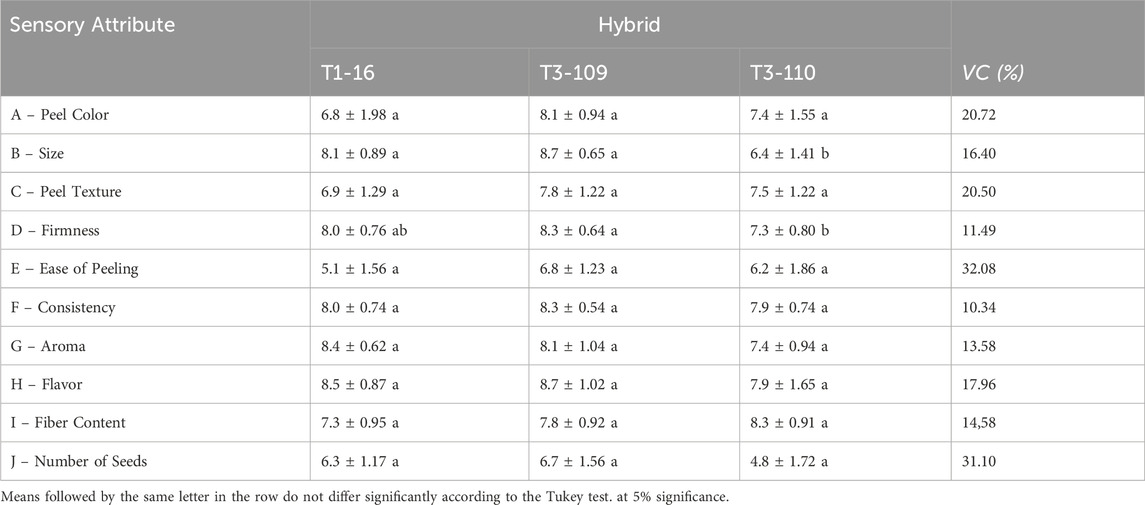
Table 2. Results for acceptance of citrus researchers’ experts of mandarin hybrids T1-16, T3-109, and T3-110.
The attribute J (Number of Seeds) received a score of 6.0 (“slightly liked”) for both the T1-16 and T3-109 hybrids. While at the same time, attribute E received similar scores in the T3-109 and T3-110 hybrids. The T3-109 hybrid was statistically superior to the T3-110 hybrid in attribute D (Firmness), and the T1-16 and T3-109 hybrids scored higher than the T3-110 hybrid for attribute B (Size). Additionally. the T3-109 hybrid had the highest number of attributes with a score of 8.0 (“I liked it a lot”), followed by the T1-16 hybrid. In contrast, the T3-110 hybrid is mainly associated with the 7.0 scale (“I liked it moderately”). Nonetheless, the T3-110 hybrid stood out among the evaluators for attribute I (Fiber Content).
Principal Component Analysis (Table 3) enabled the reduction of sensory attributes while preserving essential information. The first four principal components (PC1, PC2, PC3, and PC4) were selected based on eigenvalues greater than 1, accounting for approximately 74% of the total variability in the sensory attributes evaluated. Specifically, PC1 captured 30.9% of this variation, while PC2, PC3, and PC4 accounted for 18.3%, 14.6%, and 10.2% of the variability, respectively.
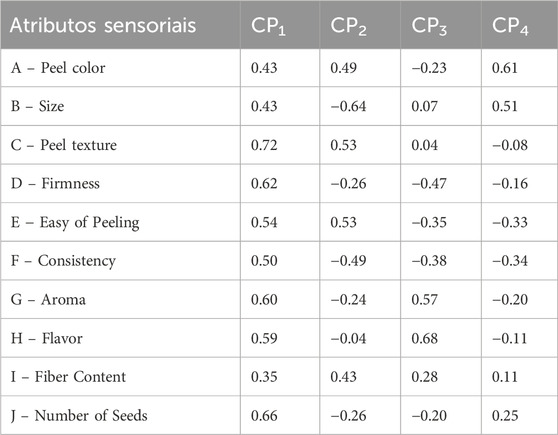
Table 3. Principal Components PC1, PC2, PC3, and PC4 as lineares combinations (eigenvectors) of the sensory attributes.
It was observed that the first principal component (PC1) had loadings equal to or greater than 0.60 for attributes C (Texture), D (Firmness), and J (Number of Seeds). In contrast, attributes B (Size), H (Flavor), and A (Peel Color) were most prominent in PC2, PC3, and PC4, respectively (Table 3).
In the Biplot of the first two principal components (Figure 2A), the hybrid T3-109 showed higher scores for PC1, particularly standing out compared to hybrids T1-16 and T3-110 regarding attributes C (Texture), D (Firmness) and J (Number of Seeds). The superior performance of the T3-109 hybrid for attribute D was also evident in the mean test results (Table 2). Conversely. The T3-110 hybrid had the highest scores for PC2, corresponding to the lowest for attribute B (Size). A finding confirmed by the Tukey procedure (Table 2).
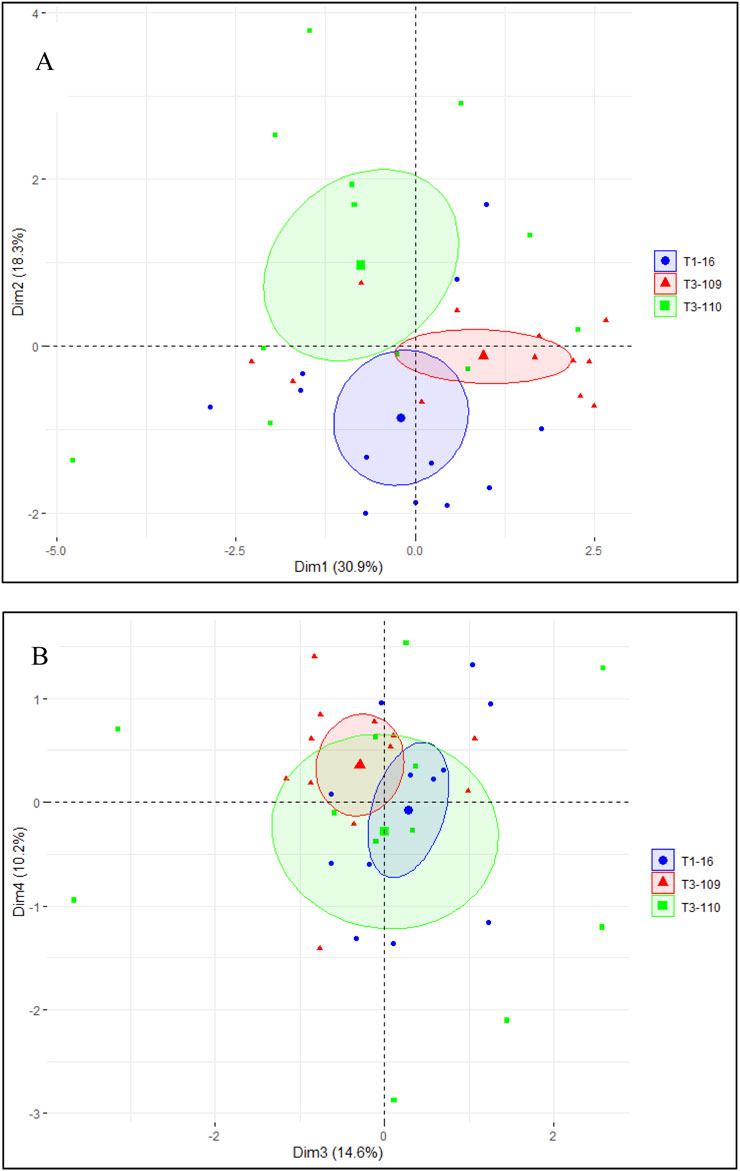
Figure 2. Biplot of the samples for hybrids T1-16. T3-109. and T3-110 with 95% confidence ellipses. (A) PC1 vs. PC2. (B) PC3 vs. PC4.
In the Biplot of the principal components PC3 and PC4 (Figure 2B). there was no significant difference between the mandarin hybrids for these components. This indicates no distinct variations in sensory attributes A (Peel Color) and H (Flavor) among them, as also observed in the Tukey test (Table 1). Generally. attributes E (Ease of Peeling), F (Consistency), G (Aroma), and I (Fiber Content) did not stand out as firmly as others in determining the acceptance of the mandarin hybrids.
Although no differences were observed between hybrids for attribute A (Peel Color) using either the Tukey test or PCA, this attribute received a score of 8 (“I liked it a lot”) only for the T3-109 hybrid. This indicates that peel color is considered an essential characteristic for fruit acceptance—previous studies by Morales et al. (2020). Tarancón et al. (2021) and Micaroni et al. (2023) reported that consumers prefer mandarins with less green and more orange-peel color. This preference explains the higher purchase intention for the T3-109 hybrid than the others. Similarly, although no statistical difference was noted for attribute I (Fiber Content), the T3-110 hybrid had higher scores for this attribute than the others.
For attribute E (Ease of Peeling), scores ranged from 5 (“indifferent”) to 6 (“slightly liked”). Micaroni et al. (2023) suggested that mandarins that are small and difficult to peel may be less acceptable to consumers. This finding contrasts with Gámbaro et al. (2021), who reported that size was less critical in citrus fruit purchase decisions. However, there is a consensus that an ideal mandarin should be easy to peel.
The attribute Number of Seeds (J) received low scores from evaluators; this did not substantially impact purchase intention. Campbell et al. (2004) found that in nine US cities, consumers valued the absence of seeds two to three times more in their purchase decisions than attributes like color, size, price, or imperfections of Satsuma mandarins.
External characteristics (Size, firmness, consistency), aroma, and flavor. Were the highest-rated attributes for all samples (T1-16, T3-109, and T3-110) evaluated? Scores ranged from 7 (“I liked it moderately”) to 8 (“I liked it very much”). This is consistent with findings by Pacheco et al. (2014), who reported that color. Firmness, size, and flavor scored the highest on a nine-point hedonic scale. Baltazari et al. (2019) also noted that fruits treated with aldehyde post-harvest were most appreciated for appearance and flavor, followed by aroma and texture.
The Biplot of physicochemical variables and sensory attributes, along with the hybrids T1-16, T3-109, and T3-110, provides a comprehensive analysis of the results, highlighting which physicochemical attributes and characteristics most effectively discriminate between the samples and their interrelationships (Figure 3). The first two principal components, PC1 and PC2, account for 100% of the variability among the descriptors. PC1 captures 61.7% of the total data variability, while PC2 accounts for 38.3%. In the Biplot, variables are represented as vectors, longer vectors. When projected onto an axis (PC), explain more of the variability in that component.
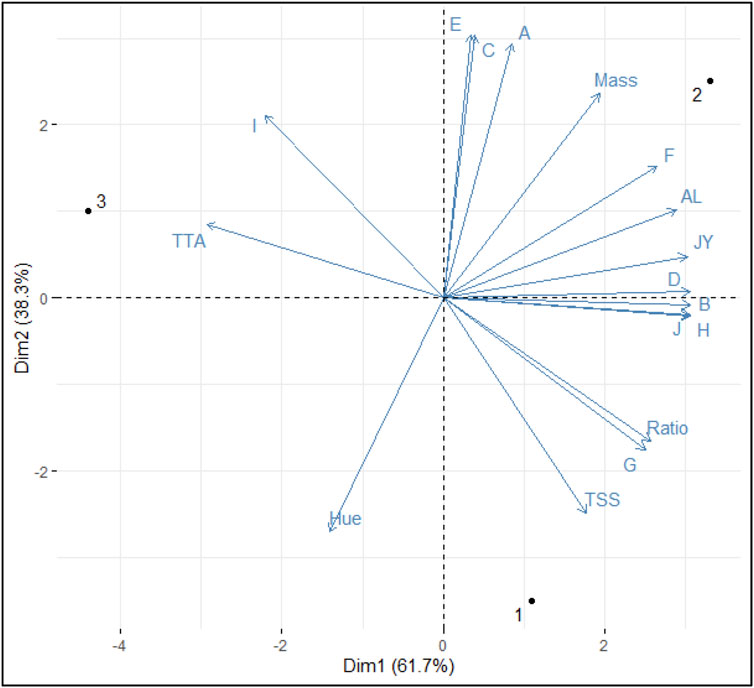
Figure 3. Biplot of the hybrids in conjunction with the physicochemical variables and sensory attributes evaluated. where 1: T1-16; 2: T3-109; and 3: T3-110.
Figure 3 illustrates that for the first Principal Component, the descriptors B (Size), D (Firmness), F (Consistency), G (Aroma), H (Flavor), I (Fiber Content), J (Number of Seeds), A/L, RS, AAT and Ratio show a correlation greater than 0.72 with this component. In contrast, for the second Principal Component, the descriptors A (Peel Color), C (Peel Texture), E (Ease of Peeling), Mass, and °h show a correlation greater than 0.77.
Overall, it can be inferred that the T1-16 variety is correlated with TSS, Ratio, and G (Aroma). The T3-109 variety is correlated with Mass, A/L, Ratio, RS, A (Peel Color) and F (Consistency). The T3-110 variety is associated with AAT and I (Fiber Content). These findings align with the evaluators’ feedback on their preferences for each sample. For the T1-16 hybrid, flavor was the most favored attribute on 50% of the cards, indicating a favorable balance between TSS and AAT. The T3-109 hybrid was most positively noted for its peel color and size. Conversely, in the T3-110 hybrid, AAT was the attribute least appreciated by the evaluators.
According to the attributes analyzed by the evaluators, the hybrids achieved a high acceptance rate, ranging from “would buy” for the T3-109 hybrid to “would probably buy” for the T1-16 and T3-110 hybrids. Although the T3-110 hybrid had a lower ratio, this did not negatively impact the overall quality and acceptance parameters of the sample among the evaluators. Gámbaro et al. (2021) emphasize that understanding sensory attributes is crucial for producers, as it helps them grasp and potentially influence the consumer’s decision-making process.
Descriptive analysis and identifying variables that affect the overall assessment are crucial for aligning each mandarin hybrid with consumer expectations. This approach provides specific data for each hybrid, acknowledging their distinct characteristics. Furthermore, it is an important tool to direct our tangerine breeding program to select varieties aligned with consumer acceptance of the fruit. Despite variations in acceptance among evaluators for one or more attributes classified from “liked a little” to “liked a lot”, all hybrids were well received. This acceptance, combined with the tolerance of these new genotypes to Alternaria brown spot, a disease that has limited the planting of varieties commonly sold in Brazil, opens up excellent prospects for the sustainability of citriculture. The search for varieties tolerant to biotic stresses has been a common factor among breeding programs seeking increasingly sustainable citrus farming with reduced use of pesticides and less environmental impact.
Data availability statement
The raw data supporting the conclusions of this article will be made available by the authors, without undue reservation.
Ethics statement
The studies involving humans were approved by Marta Verruma-Bernardi, São Carlos Federal University. UFSCar Research Ethics Committee (CAAE no. 74260923.1.0000.5504). The studies were conducted in accordance with the local legislation and institutional requirements. The participants provided their written informed consent to participate in this study.
Author contributions
VM: Validation, Methodology, Data curation, Investigation, Formal Analysis, Visualization, Conceptualization, Writing–original draft, Project administration, Writing–review and editing. MV-B: Data curation, Writing–original draft, Methodology, Investigation, Formal Analysis. JR: Data curation, Formal Analysis, Methodology, Software, Writing–original draft. MC: Conceptualization, Data curation, Formal Analysis, Funding acquisition, Investigation, Methodology, Writing–original draft. FdA: Conceptualization, Data curation, Formal Analysis, Methodology, Supervision, Validation, Writing–original draft, Writing–review and editing. MB: Conceptualization, Data curation, Funding acquisition, Investigation, Methodology, Project administration, Resources, Supervision, Validation, Writing–original draft, Writing–review and editing.
Funding
The author(s) declare financial support was received for the research, authorship, and/or publication of this article. This research was partially funded by the research projects: Fapesp n° 2014/50880-0, n° 2017/24564-1, n° 2020/07045-3, and CNPq n° 465440/2014-2.
Conflict of interest
The authors declare that the research was conducted in the absence of any commercial or financial relationships that could be construed as a potential conflict of interest.
Generative AI statement
The author(s) declare that no Generative AI was used in the creation of this manuscript.
Publisher’s note
All claims expressed in this article are solely those of the authors and do not necessarily represent those of their affiliated organizations, or those of the publisher, the editors and the reviewers. Any product that may be evaluated in this article, or claim that may be made by its manufacturer, is not guaranteed or endorsed by the publisher.
References
Azevedo, F. A., Polydoro, D. A., Bastianel, M., Kupper, K. C., Stuart, R. M., Costa, F. P., et al. (2010). Resposta de diferentes genótipos de tangerinas e seus híbridos à inoculação in vitro e in vivo de Alternaria alternata. Rev. Bras. Frutic. 32 (3), 944–951. doi:10.1590/S0100-29452010005000085
Baltazari, A., Mtui, H. D., Mwatawala, M. W., Chove, L. M., Msogoya, T., Samwel, J., et al. (2019). Effects of storage conditions. storage duration and post-harvest treatments on nutritional and sensory quality of orange (Citrus sinensis (L) Osbeck) fruits. Int. J. Fruit. Sci. 20 (4), 737–749. doi:10.1080/15538362.2019.1673278
Bastianel, M., Martinelli, R., Devite, F. T., Cristofani-Yaly, M., Ferreira, R. d.V., Stuchi, E. S., et al. (2023). Reaction of mandarins to the Alternaria Brown spot and huanglongbing: identification of potential varieties for these diseases to be managed in the field. Horticulturae 9 (6), 641. doi:10.3390/horticulturae9060641
Belo, A. P. M., Morgado, C. M. A., Souza, E. R. B., Ogata, T., Pereira, C. C. O., and Cunha, J. L. C. (2018). Comparative and organic analysis and characterization of varieties of tangerines. Sci. Hortic. 240 (20), 102–108. doi:10.1016/j.scienta.2018.06.001
Campbell, B. L., Nelson, R. G., Ebel, R. C., Dozier, W. A., Adrian, J. L., and Hockema, B. R. (2004). Fruit quality characteristics that affect consumer preferences for satsuma mandarins. Hort. Sci. 39 (7), 1664–1669. doi:10.21273/HORTSCI.39.7.1664
Di Vita, G., Vecchio, R., Borrello, M., Zanchini, R., Maesano, G., Gulisano, G., et al. (2021). Oh my darling clementine: heterogeneous preferences for sustainable citrus fruits. Renew. Agric. Food Syst. 36 (6), 557–568. doi:10.1017/S174217052100017X
Enneking, U., Neumann, C., and Henneberg, S. (2007). How important intrinsic and extrinsic product attributes affect purchase decision. Food Qual. Prefer. 18 (1), 133–138. doi:10.1016/j.foodqual.2005.09.008
Farag, M. A., Abib, B., Ayad, L., and Khattab, A. R. (2020). Sweet and bitter oranges: an updated comparative review of their bioactives, nutrition, food quality, therapeutic merits and biowaste valorization practices. Food Chem. 331, 127306. doi:10.1016/j.foodchem.2020.127306
Gámbaro, A., Roascio, A., Hodos, N., Migues, I., Lado, J., Heinzen, H., et al. (2021). The impact of sensory attributes of mandarins on consumer perception and preferences. J. Agric. Food Res. 6, 100196. doi:10.1016/j.jafr.2021.100196
Goes, A., Montes de Oca, A. G., and Reis, R. F. (2001). Ocurrencia de la mancha de Alternaria em mandarina “Dancy” em el estado de Rio de Janeiro. Fitopatol. Bras. 26 (11), 386–396.
Goldenberg, L., Yaniv, Y., Porat, R., and Carmi, N. (2017). Mandarin fruit quality: a review. J. Sci. Food Agric. 98 (1), 18–26. doi:10.1002/jsfa.8495
IBGE (2024). Brazilian Institute of geography and statistics - IBGE. World agricultural production. Available at: https://sidra.ibge.gov.br/tabela/5457#resultado (Accessed on February 15, 2024).
Konica Minolta (2008). Precise color communication, 68. Available at: https://www.konicaminolta.eu/eu-en/navigation/featured-business-areas/measuring-instruments/learning-centre/colour-measurement/precise-colour-communication (Accessed on July 15, 2024).
Micaroni, I. R., Medeiros, S. D. S., Schinor, E. H., Verruma-Bernardi, M. R., Devite, F. T., Gonçales, T. L., et al. (2023). Evaluation of the physicochemical and sensory characteristics of ripening mandarins. Food Sci. Technol. 43, e16823. doi:10.5327/fst.16823
Morales, J., Tárrega, A., Salvador, A., Navarro, P., and Besada, C. (2020). Impact of ethylene degreening treatment on sensory properties and con sumer response to citrus fruits. Food Res. Int. 127, 108641. doi:10.1016/j.foodres.2019.108641
Nardello, I. C., Cantillano, R. F. F., Seifert, M., Mello-Farias, P. C., Malgarim, M. B., and De Oliveira, R. P. (2018). Postharvest quality during refrigerated storage of ‘Nadorcott’ Mandarin. J. Exp. Agric. Int. 19 (5), 1–10. doi:10.9734/JEAI/2017/38520
Neves, C. G., Amaral, D. O. J., Paula, M. F. B., Nascimento, L. S., Constantino, G., Passos, O. S., et al. (2018). Characterization of tropical Mandarin collection: implications for breeding related to fruit quality. J. Sci. Hortic. 239, 289–299. doi:10.1016/j.scienta.2018.05.022
Pacheco, C. A., Azevedo, F. A., Verruma-Bernardi, M. R., Barros, V. N. P., and Cristofani-Yaly, M. (2017). Fremont – IAC 543: Mandarin with potential for the brazilian market. Rev. Bras. Frutic. 39 (Spe), e436. doi:10.1590/0100-29452017436
Pacheco, C. A., Schinor, E. H., Azevedo, F. A., Bastianel, M., and Cristofani-Yaly, M. (2014). Caracterização de frutos do tangor TMxLP 290 para mercado de fruta fresca. Rev. Bras. Frutic. 36 (4), 805–812. doi:10.1590/0100-2945-219/13
Pacheco, C. A., Shimizu, G. D., Basseto, T., Costa, D. A., Neves, C. S. V. J., and Azevedo, F. A. (2019). Fremont IAC 543: uma alternativa para a produção de tangerinas. Rev. Ciênc. Agrár. - SCAP 42 (4), 1032–1039. doi:10.19084/rca.15330
Pacheco, C. D. A., Azevedo, F. A. D., Silva, D. J. D., Shimizu, G. D., and Conceição, P. M. D. (2023). Postharvest longevity of Fremont IAC 543 Mandarin. Rev. Bras. Frutic. 45. e-801. doi:10.1590/0100-29452023801
Pio, R. M., Figueiredo, J. O., Stuchi, E. S., and Cardoso, S. A. B. (2005). Variedades copas. In: Eds. D. J. R. Mattos, J. D. Negri, R. M. Pio, and J. J. R. Pompeu; Campinas: IAC e Fundag. 37–60.
R Core Team (2024). R: a language and environment for statistical computing. Vienna. Austria: R Foundation for Statistical Computing. Available at: www.R-project.org/ (Accessed on July 25, 2024).
Sartori, I. A., Koller, O. C., Schwarz, S. F., Bender, R. J., and Schäfer, G. (2002). Maturação de frutos de seis cultivares de laranjas-doces na depressão central do Rio Grande do Sul. Rev. Bras. Frutic 24 (2), 364–369. doi:10.1590/S0100-29452002000200018
Silva, S. R., Oliveira, J. C., Stuchi, E. S., and Reiff, E. T. (2009). Qualidade e maturação de tangerinas e seus híbridos em São Paulo. Rev. Bras. Frutic. 31 (4), 977–986. doi:10.1590/S0100-29452009000400010
Singh, N., Sharma, R. M., Dubey, A. K., Awasthi, O. P., Porat, R., Saha, S., et al. (2023). Harvesting maturity assessment of newly developed citrus hybrids (Citrus maxima Merr. × Citrus sinensis (L.) Osbeck) for optimum juice quality. Plants 12 (23), 3978. doi:10.3390/plants12233978
Szpadzik, E., Molska-Kawulok, K., Krupa, T., and Przybyłko, S. (2024). Physico-Chemical analysis of the fruits and consumer preferences of new apple (Malus × domestica Borkh) hybrids bred in Poland. Agriculture 14 (1), 1. doi:10.3390/agriculture14010001
Tarancón, P., Giménez-Sanchis, A., Aleza, P., and Besada, C. (2021). Selection of new lateseason Mandarin cultivars based on sensory changes and consumer acceptance after fruit cold storage. Agronomy 11 (1), 116. doi:10.3390/agronomy11010116
Usda, U. S. (2024). Department of agriculture – citrus: world markets and trade. Available at: https://apps.fas.usda.gov/psdonline/circulars/citrus.pdf(Accessed on July 25, 2024).
Keywords: citrus breeding, HLB, sensory analyses, citrus reticulata, citrus
Citation: Moura VS, Verruma-Bernardi MR, Rodrigues J, Cristofani-Yaly M, de Azevedo FA and Bastianel M (2025) Evaluation of pre-selected mandarin hybrids based on tolerance to alternaria brow spot, physicochemical characteristics and acceptability. Front. Food Sci. Technol. 5:1507538. doi: 10.3389/frfst.2025.1507538
Received: 11 October 2024; Accepted: 17 February 2025;
Published: 19 March 2025.
Edited by:
Fernando Perez Rodriguez, University of Cordoba, SpainReviewed by:
Adriana Guerreiro, University of Algarve, PortugalCustódia Maria Luís Gago, University of Algarve, Portugal
Copyright © 2025 Moura, Verruma-Bernardi, Rodrigues, Cristofani-Yaly, de Azevedo and Bastianel. This is an open-access article distributed under the terms of the Creative Commons Attribution License (CC BY). The use, distribution or reproduction in other forums is permitted, provided the original author(s) and the copyright owner(s) are credited and that the original publication in this journal is cited, in accordance with accepted academic practice. No use, distribution or reproduction is permitted which does not comply with these terms.
*Correspondence: Fernando Alves de Azevedo, ZmVybmFuZG9AY2NzbS5icg==