 Robin D. Taylor
 Jamie Taylor
 Michael Ashford
 Rosie Collins
- 1School of Health and Human Performance, Faculty of Science and Health, Dublin City University, Dublin Ireland
- 2Grey Matters Performance Ltd., Stratford upon Avon, England
- 3Insight SFI Centre for Data Analytics, Dublin City University, Dublin Ireland
- 4Moray House School of Education and Sport, The University of Edinburgh, Edinburgh, Scotland
Utilizing cognitive psychology as a foundation, this paper offers a deeper consideration of contemporary theoretical influences on coaching pedagogy. Countering recent dichotomies suggested between pedagogic approaches, we reintroduce key findings from the cognitive tradition and their implications for practice which coaches may find useful. Using cognitive load, novice and expert differences, desirable difficulty, and fidelity, we suggest that the lines drawn between different “pedagogies” may not be as sharp as suggested. Instead, we suggest that coaches avoid defining themselves as being aligned to a specific pedagogical or paradigmatic stance. We conclude by advocating for research informed practice, absent of strict theoretical boundaries and instead, considering contemporary pedagogy as drawing on the needs of the context, the experience of the coach and the best available evidence.
Introduction
Across all levels of sport, the role of the coach is to support athletes to acquire, develop and enhance sporting (and non-sporting) attributes, skills and understanding (1). Consequently, to meet a range of participant performance and development needs [cf. (2)], coaches must develop a breadth of pedagogic understanding across instruction methods and learning design (3). Coaches, therefore, require a strong knowledge, understanding and application of sport pedagogy to shape their environment appropriately [cf. (4)]. Acknowledging the complexity of coaching practice, Nash and Collins (5) identified three bodies of knowledge necessary for coaches to be effective in their practice: sport specific, the ‘ologies and pedagogical knowledge, with pedagogy being defined as “any conscious activity by one person designed to enhance learning in another” [p. 3 (6)].
Despite this necessity and the practical need, pedagogy has tended to be marginalized across research and coach education [cf. (1, 7, 8)]. Indeed, pedagogic research in coaching has tended to be conducted from foundations of behaviorist (1, 9), cognitivist (10), constructivist (1, 9), critical realist (11) and ecological (12) perspectives. In some cases, these theoretical foundations have driven practical implications based on epistemological alignment. Thus, there is a need for coaches, practitioners and researchers alike (in their pursuit of enhanced coaching practice) to navigate the differences between theoretical stances in order to progress towards practical utility for coaches (1).
Exemplifying this, recent literature has seen a significant growth of skill acquisition as a pedagogical domain of study. Concurrently, differences in theoretical foundations have led to a domain specific dichotomy between pedagogical tools deriving from Information Processing (IP), such as contextual interference within practice design [cf. (13)], and Ecological Dynamics (ED) and the resultant principles of non-linear pedagogy [cf. (14)]. The question of whether other literature has moved beyond this delineation notwithstanding [cf. (15)], this, perhaps false, dichotomy has spilled into the pedagogic domain.
Recently, a range of papers have discussed the notions of contemporary pedagogy, one that is underpinned by ED and in contrast to a “traditional pedagogy” based on earlier learning theories such as cognitivism, constructivism and pedagogical theories of instruction [e.g., (16–19)]. From this perspective athlete learning, and subsequent pedagogical implications center around the mutuality of the participant and environments, taking into consideration complexity and variability (20). Whilst we acknowledge the utility of nonlinear pedagogical tools in practice [cf. (21)], here we challenge the notion of a “traditional” vs. “contemporary” pedagogy. Our suggestion is that a continued acceptance of a false dichotomy has the potential to unnecessarily divide opinion, and in turn, hinder the practical development of our field. Other false dichotomies have a long history of critique both in education [e.g., (22)] and in the coaching literature (11, 23–26). Thus, the creation of a traditional vs. contemporary divide has led to researchers and subsequently, coaches who characterise pedagogic interventions under a single theoretical paradigm. For example, authors have aligned cognitive theory with the suggestion that all skills are learned through the reproduction of “the correct” technique through coach led prescriptive instructions and corrective feedback, a view which is misleading and inaccurate (2).
Thus, the purpose of this paper is not an attempt to advocate for individual pedagogic stances over others, nor to challenge the utility of any particular perspective. Instead, by highlighting elements of cognitivist learning theories, we aim to challenge their association with, and pejorative use of, the term “traditional” pedagogy [cf. (27)]. In turn, we discuss how we might progress from the notion of “contemporary”, to evidence-informed pedagogy [e.g., (26)]. Consequently, this paper has two aims, firstly, we reintroduce several key concepts from cognitive psychology and, in turn challenge notions of a sharp pedagogic dividing line. Secondly, we outline pedagogic implications to move beyond notions of either/or and instead focus on nuance in application.
Cognitive load theory
One of the most prominent theories emerging from cognitive educational psychology is cognitive load theory (CLT). A core feature of CLT is the emphasis on prior learning as shaping the ability of the participant to engage with coaching (28). In essence, what a participant knows, perceives and understands prior to a learning activity or instruction will directly influence the way they learn (26). Despite this, recent ideas within sports coaching research have moved towards methods which promote discovery learning (29) and learning through experience (30, 31). Unfortunately, this shift has overshadowed a significant body of research exploring the relationship between prior knowledge, the presentation of new knowledge and how learning happens. Sweller (32, 33) introduced the concept of CLT as an explanatory theory, blending the notion of human cognitive architecture and instructional consequences. The theory captures the interaction of long term memory and working memory, defining learning as a “change in long-term memory” [p. 39 (34)].
In contrast to the lay use of the term, Sweller (34) suggested that a participants' long-term memory is formed of neural representations [cf. (35)], permitting adequate solutions to problems perceived in our environment (36). These neural representations develop incrementally and are largely obtained by observing, reading and imitating other forms of knowledge (34). Subsequently, the acquisition of knowledge and understanding can be seen as almost entirely inherited from others' long-term memories. When participants are presented with novel information and new ways of thinking/behaving, a load is placed on working memory, which is limited in terms of capacity and duration (37). As guidance, an adult can hold seven new pieces of information, but only process meaning from four, highlighting its limitations (38).
From a coaching perspective, it is essential to consider how learning design and coaching approach can impact the different forms of cognitive load; intrinsic and extraneous (34). Intrinsic load is that which is imposed by the movement to be learned, or the information needed to achieve goals. Extraneous load refers to unnecessary load that is extraneous to learning goals, most often the result of a coach's approach, or their learning design. Both intrinsic and extraneous load are managed by working memory resources. Those resources devoted to what is relevant to learning are considered germane (38). Hence, germane resources are not imposed by learning tasks, but refer to the cognitive resources devoted to developing representations as an adaptation from the working to the long-term memory (39). Combined, these equate to a participant's overall cognitive load (40).
Desirable difficulty
Cognitive psychology has historically and repeatedly emphasized that effortless learning is ineffective (41). A reduction in extraneous cognitive load does not suggest that the participant experience should be easy or effortless (42). Instead, slowing down, perturbing and challenging performance has the potential to generate, long-term learning (43). One of the most robust constructs emanating from cognitive psychology is the notion of desirable difficulty, defined as the introduction of manageable challenges into the learning environment (43, 44). In motor learning this is referred to as contextual interference. Magill (45) suggested higher contextual interference in practice leads to enhanced motor learning when tested through later retention or transfer. However, key to the effective use of desirable difficulty is consideration of the desirability of any challenge built into practice. Such difficulty must be manageable with the aim of what Bjork [p. 199 (42)] referred to as creating “meaningful rather than misleading” experiences for the participant. In essence, coherent with CLT, if the participant lacks the knowledge or skills to respond to the challenge, difficulties are no longer desirable (44). Therefore, successfully introducing difficulty into the learning environment requires constant monitoring of participant competence and progress (43).
Expertise/novice differences
This notion of what is desirably difficult is based on the needs and stage of the participant. In understanding the needs of participants, a range of key theories, such as Fitts and Posner's (46) stages of learning, or Gentile's (47) two stage model of development, have attempted to explain the progression from novice to expert within skill acquisition and execution. Motorically, the novice stage is characterized by inconsistent and often clunky performances, leading to much smoother and more controlled performances at expert stage. Pertinently, however, progression is the common feature of these theories. Indeed, becoming expert is a deliberate process of learning, not something which happens to us. Eccles (48) summarizes this when referring to the nature/nurture debate in the development of expertise, identifying that the contribution of expertise development of domain specific abilities achieved through interventions such as deliberate practice (49) outweighs that of a genetic basis for the same abilities. Therefore, to better understand how to develop expertise, researchers have attempted to identify the behavioral characteristics demonstrated by experts, confirming these comparisons with novice counterparts. For example, Chase and Simon's (50) research identified that expert chess players' recognition of patterns of offensive and defensive positions and the anticipation of future possibilities, significantly exceeded that of novices. Fundamentally, experts' long-term memory allowed for higher performance than novices, having been developed over time.
Expanding this, across multiple performance domains, research has attempted to identify features which typify expertise. These include features such as speed with which decisions are made, in that experts may be slower at first to solve a problem when compared to novices but will be quicker overall (51), or that experts will typically take more information, or deeper meaning, from cues (5). However, this does not always lead to the best performance outcome, as experts are more negatively impacted than lesser skilled performers when faced with incongruent information (40). Finally, storage of information whereby experts are able to recall information with more ease than their non-expert counterparts, perhaps due to the hierarchical structure of information storage (52).
Fidelity
The final area for consideration is the notion of fidelity of practice. Highlighting the complementarity of theoretical positions, fidelity has roots in behaviorism [e.g., (53)] and has subsequently been emphasized by ED in the form of representative practice design [e.g., (54)]. In addition, fidelity of practice has been a consistent focus for cognitive scholars and coaching literature. For example, whilst not explicitly linked with cognitive theory, practice fidelity was emphasized in the work of the English Football Association's Director of Coaching Allen Wade, who suggested that “all coaching should begin with some form of realistic competitive situation” and that lower levels of fidelity should only be used when “working for a clear understanding of ideas” [p. 186 (55)]. Building on this perspective, pedagogic literature began to advocate for the use of games-based approaches in coaching. For example, Teaching Games for Understanding (56) and Game Sense (57) were grounded in features of cognitivist thinking (58). Whilst it would be an oversimplification to suggest that these approaches only advocated for high physical fidelity, a key feature has been that “individual performance must be contextualized in the game” [p. 491 (59)]. In essence, there has been a consistent advocacy for game form practice for a number of decades (60)1.
This pedagogic emphasis has been mirrored by the cognitive literature in motor learning with the specificity of practice being consistently emphasized (61). Theories in this area suggest that learning is enhanced under conditions of practice that mirror those required by the task to be learned (62), that: “the amount of transfer obtained between situations is a function of the perceived similarity” [p. 39 (63)]. Secondly, greater perceived similarity between training and performance task triggers the retrieval of mental representation, leading to increased likelihood of transfer (64). This suggests that it may not be just maximizing physical fidelity that is important for learning (65). For this reason, other “types” of fidelity have been suggested such as psychological and conceptual, the former referring to the extent to which “the training environment prompts the essential underlying psychological processes relevant to key performance characteristics” [p. 76 (66)]. In addition, similar to the notion of “exaggeration” in games-based coaching [e.g. (67),], it has been recommended that “conditions being imposed on games emphasize a particular technique” [p. 188 (55)], bearing a strong procedural resemblance to the manipulation of constraints in practice. This emphasis on the manipulation of “types” of fidelity has continued with a recent conceptual problem-solving emphasis (68). A consistent research finding being that learning is supported by the provision of the minimum necessary level of fidelity, based on participant needs, to reduce extraneous cognitive load (69). More recent literature continues to grapple with the nuance of these ideas. For example, findings that suggest that situation-specific contextual information and anxiety have a significant effect on perceptual-motor skill (40). The consequent recommendation being the need for coaches to develop practice conditions that take account of different types of fidelity to optimize learning.
Implications for practice
Building from these concepts and to further challenge sharp dichotomies, here we outline evidence-informed implications. Thus, illustrative of meaning, we suggest three general pedagogic implications;
i) The necessity for valid assessment of prior knowledge and ability (39)
ii) A consideration of pedagogic methods designed to maximize the resources devoted to what needs to be learned, rather than extraneous factors (34)
iii) Tracking learning over time (70)
In this sense, learning is not always seen as resulting from engagement, but instead a process that can and should be planned for and orchestrated by the coach. For example, the “extended challenge based framework for practice design in sport” (71) suggests the need to create meaningful difficulties that are specific to the demands of competition to maximize transfer. The design of meaningful difficulties will require the coach to understand the prior knowledge and ability of participants, relative to the focus of the session. This will aid in identifying what the requirements are for the participants (72). Once this is identified, there is a need to consider the “content” to be learned [the sport specific demands, (72)], the level of participant and the desired learning experience. With difficulty in practice conditions being a function of the relationship between the “nominal” task difficulty (i.e., the constant amount of task difficulty regardless of the performer or performance) and “functional” task difficulty (i.e., how challenging the task is relative to the performer's skill and the performance), practice should change as the participant's level of skill changes (73). These desired difficulties will also be shaped by a coach's approach and learning design, both of which should aim to manipulate intrinsic load appropriately (34). Learning design should consider the extent and type of fidelity that the participants might desirably be exposed to. It may be the case that the coach should emphasize different types of fidelity (physical, psychological, conceptual) for different learning outcomes (66, 69). It would also suggest that tasks should be designed without extensive rules or constraints that might impose significant extraneous load. Furthermore, Table 1. highlights some important cognitive load effects relevant to coaching when considering the design of appropriate practices with any given group.
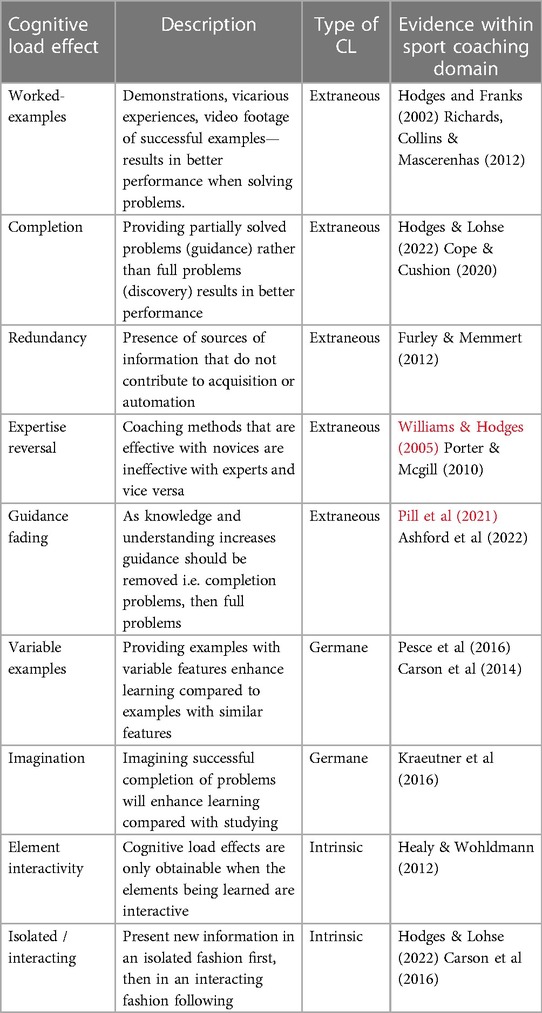
Table 1. Cognitive load effects, evidence and practical implications in sports coaching (adapted from Sweller, 2010).
Similarly, a coach's approach to practice should also be based on desirable learner experience. Here, more direct approaches may be appropriate for the early stages of learning, or when learning design promotes a significant intrinsic load, a more direct approach is likely appropriate [e.g., instruction, (26)]. Later, as the target knowledge or skill is developed, less guidance is likely more appropriate (74, 75). For example, novices may benefit more from more isolated practices to facilitate “getting the idea of the movement” [p. 334 (76)], alongside more instruction (77), allowing for early opportunities for error correction and movement exploration, before progressing to more variable practice (76). With practice variability potentially overloading until the participant grasps the basic dynamics of the task and can replicate an initial motor pattern (78). Intermediate participants may benefit from a more random schedule of practice, encouraging the participant to retrieve and organize the required actions on each task (79) or the consideration of worked examples [e.g., two vs. one, (77)]. Finally, participants with a higher level of expertise may benefit from greater contextual interference, and pedagogic strategies such as problem solving and guided-discovery (77). Note, however, that this does not necessarily refer to the overall level of the participant, it instead refers to their ability in the target skill. Crucially, managing the level of task difficulty and desired difficulty has a significant impact on participant motivation (80).
Conclusion
In concluding, our aim throughout this paper has been to offer a perspective on the issue of “contemporary” practice in sport pedagogy and to gently challenge conceptions of practice that seem to associate cognitive theories with a very particular form of learning design that may be “traditional” in some settings. For us as practitioners and pragmatic researchers, we are interested in the value of knowledge for practice and the difference it makes (81). For this reason, we need to remain open to a range of different perspectives, understanding where theories “best fit”. None of this is to suggest that the pedagogies underpinned by the ED perspective offer nothing new, especially given the emphasis on self-organization as the most appropriate means of development (16). Nor is it to say that the constraints led approach or nonlinear pedagogy do not offer value for coaches. They have and will continue to make a significant impact on coaching.
Furthermore, whilst this perspective article highlights constructs developed through cognitive psychology, we by no means suggest that they present answers to all the pedagogic problems we face. Our aim is to progress beyond oversimplifications such as notions of a “contemporary pedagogy”. This is especially important with the growth of alternative representational theories beyond those of the cognitive tradition [e.g., Active Inference, (35, 82)]. As these stances evolve our understanding of human functioning, it will be important to recognize the contribution of previous theory to practice. We should of course discard concepts that do not stand up to scrutiny, but wholesale pedagogic revolution is unlikely. As such, we urge practitioners to avoid defining themselves based on a single theory or methodology. If it is really a question of picking a particular approach, in the absence of overwhelming evidence, this would seem to present the coaches with an impossible choice. One that requires an ideological, rather than evidence-informed perspective. Therefore, rather than an attachment to a specific paradigm, what is “contemporary” pedagogy should be what works for those we are coaching, based on the needs of the context and the best available evidence; the very essence of evidence-informed practice (83).
Data availability statement
The original contributions presented in the study are included in the article/Supplementary Material, further inquiries can be directed to the corresponding author/s.
Author contributions
RT and JT contributed to the conception of the paper and led the writing, review and revisions process. MA and RC wrote sections of the paper. All authors contributed to the article and approved the submitted version.
Conflict of interest
Authors JT, MA and RC were employed by Grey Matters Performance Ltd. The remaining author declare that the research was conducted in the absence of any commercial or financial relationships that could be construed as a potential conflict of interest.
Publisher's note
All claims expressed in this article are solely those of the authors and do not necessarily represent those of their affiliated organizations, or those of the publisher, the editors and the reviewers. Any product that may be evaluated in this article, or claim that may be made by its manufacturer, is not guaranteed or endorsed by the publisher.
Footnote
1We refer the interested reader to the excellent summary in Pill (2020)
References
1. Roberts S, Potrac P. Behaviourism, constructivism and sports coaching pedagogy: a conversational narrative in the facilitation of player learning. Int Sport Coach J. (2014) 1:180–7. doi: 10.1123/iscj.2014-0097
2. Collins D, Bailey R, Ford PA, MacNamara Á, Toms M, Pearce G. Three worlds: new directions in participant development in sport and physical activity. Sport Educ Soc. (2012) 17(2):225–43. doi: 10.1080/13573322.2011.607951
3. Jones RL. How can educational concepts inform sports coaching? In: Jones RL, editor. The sports coach as educator. London: Routledge (2006). p. 3–13.
4. Kirk D, Macdonald D, O’Sullivan M. Handbook of physical education. London: Routledge (2006). Available at: https://sk.sagepub.com/reference/hdbk_physed.
5. Nash C, Collins D. Tacit knowledge in expert coaching: science or art? Quest. (2006) 58(4):465–77. doi: 10.1080/00336297.2006.10491894
6. Watkins C, Mortimore P. Pedagogy: what do we know? In: Mortimore P, editor. Understanding pedagogy and its impact on learning. London: Paul Chapman (1999). p. 1–19.
7. Cassidy TG, Jones RL, Potrac P. Understanding sports coaching: The pedagogical, social and cultural foundations of coaching practice. London: Routledge (2015). Available at: https://www.routledge.com/Understanding-Sports-Coaching-The-Pedagogical-Social-and-Cultural-Foundations/Cassidy-Jones-Potrac/p/book/9780415857475.
8. Cushion CJ, Nelson L, Armour KM, Jones RL, Sandford R, O’Callaghan C. Coach learning and development: a review of literature. Leeds: Sports Coach UK (2010).
9. Morgan K, Sproule J. Pedagogy for coaches. In: Jones RL, Kingston K, editors. An introduction to sports coaching. London: Routledge (2013). p. 15–30.
10. Jones RL, Thomas GLI, Nunes RL, Filho IATV. The importance of history, language, change and challenge: what vygotsky can teach sports coaches. Mot J Phys Educ. (2018) 24(2):1–17. doi: 10.1590/S1980-6574201800020008
11. North J. A critical realist approach to theorising coaching practice. In: Potrac P, Gilbert WD, Dennison J, editors. The routledge handbook of sports coaching. London: Routledge (2013). p. 133–44.
12. Vaughan J, Mallett CJ, Potrac P, López-Felip MA, Davids K. Football, culture, skill development and sport coaching: extending ecological approaches in athlete development using the skilled intentionality framework. Front Psychol. (2021) 12:1–13. Available at: https://www.frontiersin.org/articles/10.3389/fpsyg.2021.635420. doi: 10.3389/fpsyg.2021.635420
13. Williams AM, Hodges NJ. Skill acquisition in sport: research, theory and practice. New York: Routledge (2005).
14. Chow JY. Nonlinear learning underpinning pedagogy: evidence, challenges, and implications. Quest. (2013) 65(4):469–84. doi: 10.1080/00336297.2013.807746
15. Clark A. Predicting peace: the end of the representation wars. In: Metzinger TK, Windt JM, editors. Open MIND. Frankfurt am Main: MIND Group (2015). p. 1–7. Available at: https://doi.org/10.15502/9783958570979.
16. Renshaw I, Davids K, O’Sullivan M. Learning and performing: what can theory offer high performance sports practitioners? Braz J Mot Behav. (2022) 16(2):162–78. doi: 10.20338/bjmb.v16i2.280
17. Woods CT, McKeown I, Rothwell M, Araújo D, Robertson S, Davids K. Sport practitioners as sport ecology designers: how ecological dynamics has progressively changed perceptions of skill “acquisition” in the sporting habitat. Front Psychol. (2020) 11:1–15. doi: 10.3389/fpsyg.2020.00654
18. Myszka S, Yearby T, Davids K. Being water: how key ideas from the practice of Bruce lee align with contemporary theorizing in movement skill acquisition. Sport Educ Soc. (2023) 0(0):1–17. doi: 10.1080/13573322.2022.2160701
19. Davids K, Button C, Bennett S. Dynamics of skill acquisition: a constraints-led approach. London: Human Kinetics (2008).
20. Pinder RA, Davids K, Renshaw I, Araújo D. Manipulating informational constraints shapes movement reorganization in interceptive actions. Atten Percept Psychophys. (2011) 73(4):1242–54. doi: 10.3758/s13414-011-0102-1
21. Ashford M, Abraham A, Poolton J. What cognitive mechanism, when, where, and why? Exploring the decision making of university and professional rugby union players during competitive matches. Front Psychol. (2021) 12:1–25. Available at: https://www.frontiersin.org/articles/10.3389/fpsyg.2021.609127. doi: 10.3389/fpsyg.2021.609127
23. Mallett CJ. Modelling the complexity of the coaching process: a commentary. Int J Sports Sci Coach. (2007) 2(4):419–21. doi: 10.1260/174795407783359768
24. Muir B. Coach learning and development in the performance domain: an embedded, relational and emergent intervention strategy. Leeds: Leeds Beckett University (2018).
25. Allen JB, Muir B. Coaching high performance athletes. In: Resende R, Gomes AR, editors. Coaching for human development and performance in sports. Switzerland: Springer Nature (2020). p. 169–98.
26. Cope E, Cushion CJ. A move towards reconceptualising direct instruction in sport coaching pedagogy. Impact Chartered Coll Teach. (2020). Available at: https://my.chartered.college/impact_article/a-move-towards-reconceptualising-direct-instruction-in-sport-coaching-pedagogy/.
27. Collins D, Taylor J, Ashford M, Collins L. It depends coaching—the most fundamental, simple and complex principle or a mere copout? Sports Coach Rev. (2022) 0(0):1–21. doi: 10.1080/21640629.2022.2154189
28. Kirschner PA, Hendrick C. How learning happens: seminal works in educational psychology. London: Routledge (2020).
29. Pill S. Using appreciative inquiry to explore Australian football coaches’ experience with game sense coaching. Sport Educ Soc. (2015) 20(6):799–818. doi: 10.1080/13573322.2013.831343
30. Button C, Siefert L, Chow JY, Araújo D, David K. Dynamics of skill acquisition: an ecological dynamics approach. 2nd ed. Champaign, Illinois: Human Kinetics Publishers (2020).
31. Seifert L, Araújo D, Komar J, Davids K. Understanding constraints on sport performance from the complexity sciences paradigm: an ecological dynamics framework. Hum Mov Sci. (2017) 56:178–80. doi: 10.1016/j.humov.2017.05.001
32. Sweller J. Control mechanisms in problem solving. Mem Cognit. (1983) 11(1):32–40. doi: 10.3758/BF03197659
33. Sweller J. Cognitive load during problem solving: effects on learning. Cogn Sci. (1988) 12:257–85. doi: 10.1207/s15516709cog1202_4
34. Sweller J. Cognitive load theory: recent theoretical advances. In: Plass JL, Moreno R, Brünken R, editors. Cognitive load theory. New York, NY, US: Cambridge University Press (2010). p. 29–47.
35. Harris DJ, Arthur T, Broadbent DP, Wilson MR, Vine SJ, Runswick OR. An active inference account of skilled anticipation in sport: using computational models to formalise theory and generate new hypotheses. Sports Med. (2022) 52(9):2023–38. doi: 10.1007/s40279-022-01689-w
36. Ericsson KA, Kintsch W. Long-term working memory. Psychol Rev. (1995) 102(2):211–45. doi: 10.1037/0033-295X.102.2.211
37. Furley P, Wood G. Working memory, attentional control, and expertise in sports: a review of current literature and directions for future research. J Appl Res Mem Cogn. (2016) 5:415–25. doi: 10.1016/j.jarmac.2016.05.001
38. Sweller J, Ayres P, Kalyuga S. Cognitive load theory. New York, NY: Springer (2011). Available at: https://doi.org/10.1007/978-1-4419-8126-4_5.
39. Russell S, Kelly VG, Halson SL, Jenkins DG. Cognitive load in sport. In: Salmon PM, McLean S, Dallat C, Mansfield N, Solomon C, Hulme A, editors. Human factors and ergonomics in sport: applications and future directions. Boca Raton: CRC Press (2020). p. 181–200.
40. Runswick OR, Roca A, Williams AM, McRobert AP, North JS. Why do bad balls get wickets? The role of congruent and incongruent information in anticipation. J Sports Sci. (2018) 37(5):537–43. doi: 10.1080/02640414.2018.1514165
41. Baddeley AD, Longman DJA. The influence of length and frequency of training session on the rate of learning to type. Ergonomics. (1978) 21(8):627–35. doi: 10.1080/00140137808931764
42. Bjork RA. Memory and metamemory considerations in the training of human beings. In: Metcalfe J, Shimamura A, editors. Metacognition: knowing about knowing. Cambridge, MA, US: The MIT Press (1994). p. 185–205.
43. Rutherford S. Using desirable difficulty concepts to enhance durable learning in design education. Art Des Commun High Educ. (2020 Apr 1) 19(1):65–79. doi: 10.1386/adch_00014_1
44. Bjork E, Bjork RA. Making things hard on yourself, but in a good way: creating desirable difficulties to enhance learning. In: Gernsbacher M, Pew R, Hough L, Pomerantz J, editors. Psychology and the real world: essays illustrating fundamental contributions to society. New York, NY: Worth Publishers (2011). p. 56–64.
45. Magill RA. Motor learning and control: concepts and applications. 9th ed New York: McGraw-Hill (2011).
47. Gentile AM. A working model of skill acquisition with application to teaching. Quest. (1972) 17(1):3–23. doi: 10.1080/00336297.1972.10519717
48. Eccles DW. Expertise in sport. In: Tenenbaum G, Eklund RC, editors. Handbook of sport psychology. Hoboken, NJ: John Wiley & Sons, Ltd (2020). p. 465–86. Available at: https://onlinelibrary.wiley.com/doi/abs/10.1002/9781119568124.ch22.
49. Ericsson KA, Krampe RT, Tesch-Römer C. The role of deliberate practice in the acquisition of expert performance. Psychol Rev. (1993) 100:363–406. doi: 10.1037/0033-295X.100.3.363
50. Chase WG, Simon HA. Perception in chess. Cognit Psychol. (1973) 4(1):55–81. doi: 10.1016/0010-0285(73)90004-2
51. Marshall PD. Solving accounting problems: differences between accounting experts and novices. J Educ Bus. (2002) 77(6):325–8. doi: 10.1080/08832320209599683
52. Jeon HA, Friederici AD. What does “being an expert” mean to the brain? Functional specificity and connectivity in expertise. Cereb Cortex N Y N 1991. (2017) 27(12):5603–15. doi: 10.1093/cercor/bhw329
53. Woodworth RS, Thorndike EL. The influence of improvement in one mental function upon the efficiency of other functions. (I). Psychol Rev. (1901) 8:247–61. doi: 10.1037/h0074898
54. Travassos B, Duarte R, Vilar L, Davids K, Araújo D. Practice task design in team sports: representativeness enhanced by increasing opportunities for action. J Sports Sci. (2012) 30(13):1447–54. doi: 10.1080/02640414.2012.712716
56. Bunker D, Thorpe R. A model for the teaching of games in secondary schools. Bull Phsyical Educ. (1982) 18(1):5–8.
58. Harvey S, Pill S, Almond L. Old wine in new bottles: a response to claims that teaching games for understanding was not developed as a theoretically based pedagogical framework. Phys Educ Sport Pedagogy. (2018) 23:166–80. doi: 10.1080/17408989.2017.1359526
59. Gréhaigne JF, Godbout P. Tactical knowledge in team sports from a constructivist and cognitivist perspective: quest. Quest. (1995) 47(4):490–505. doi: 10.1080/00336297.1995.10484171
61. Healy AF, Wohldmann EL, Sutton EM, Bourne LE Jr. Specificity effects in training and transfer of speeded responses. J Exp Psychol Learn Mem Cogn. (2006) 32:534–46. doi: 10.1037/0278-7393.32.3.534
62. Thomson DM, Tulving E. Associative encoding and retrieval: weak and strong cues. J Exp Psychol. (1970) 86:255–62. doi: 10.1037/h0029997
63. Bjork RA, Druckman D. In the mind’s eye: enhancing human performance. Washington, DC: National Academy Press (1991).
64. Gick ML, Holyoak KJ. The cognitive basis of knowledge transfer. In: Cormier SM, Hagman JD, editors. Transfer of learning: contemporary research and applications. San diego, CA, US: Academic Press (1987). p. 9–46. (The educational technology series).
65. Salas E, Bowers CA, Rhodenizer L. It is not how much you have but how you use it: toward a rational use of simulation to support aviation training. Int J Aviat Psychol. (1998) 8(3):197–208. doi: 10.1207/s15327108ijap0803_2
66. Kozlowski SW, DeShon RP. A psychological fidelity approach to simulation-based training: theory, research and principles. In: Schiflett SG, Elliott LR, Salas E, Coovert MD, editors. Scaled worlds: development, validation, and applications. London: Routledge (2004). p. 75–99.
67. Werner P, Thorpe R, Bunker D. Teaching games for understanding: rvolution of a model. J Phys Educ Recreat Dance. (1996) 67(1):28–33. doi: 10.1080/07303084.1996.10607176
68. Price A, Beckey A, Collins D. Developing a love for playing games: a clarification of why digital video games approach is not gamification. Phys Educ Sport Pedagogy. (2022) 0(0):1–15. doi: 10.1080/17408989.2022.2125946
69. van Gog T, Ericsson KA, Rikers RMJP, Paas F. Instructional design for advanced learners: establishing connections between the theoretical frameworks of cognitive load and deliberate practice. Educ Technol Res Dev. (2005) 53(3):73–81. doi: 10.1007/BF02504799
70. Fuster J, Caparrós T, Capdevila L. Evaluation of cognitive load in team sports: literature review. PeerJ. (2021) 9:e12045. doi: 10.7717/peerj.12045
71. Hodges NJ, Lohse KR. An extended challenge-based framework for practice design in sports coaching: journal of sports sciences. Soc Behav Sci. (2022) 40:754–68. doi: 10.1080/02640414.2021.2015917
72. Abraham A, Saiz SLJ, McKeown S, Morgan G, Muir B, North J, et al. Planning your coaching: a focus on youth participant development. In: Nash C, editors. Practical sports coaching. Abingdon: Routledge (2015). p. 16–53.
73. Porter JM, Magill RA. Systematically increasing contextual interference is beneficial for learning sport skills. J Sports Sci. (2010) 28(12):1277–85. doi: 10.1080/02640414.2010.502946
74. Pill S, SueSee B, Rankin J, Hewitt M. The spectrum of spor coaching styles. London: Routledge (2021).
75. Rosenshine B. Principles of instruction: research-based strategies that all teachers should know. Am Educ. (2012) 36(1):12.
76. Boyce BA, Coker CA, Bunker LK. Implications for variability of practice from pedagogy and motor learning perspectives: finding a common ground. Quest. (2006) 58(3):330–43. doi: 10.1080/00336297.2006.10491886
77. Kalyuga S, Chandler P, Tuovinen J, Sweller J. When problem solving is superior to studying worked examples. J Educ Psychol. (2001) 93(3):579–88. doi: 10.1037/0022-0663.93.3.579
78. Rose DJ, Christina RW. A multilevel approach to the study of motor control and learning. San Francisco: Pearson/Benjamin Cummings (2006).
79. Schmidt RA, Bjork RA. New conceptualizations of practice: common principles in three paradigms suggest new concepts for training. Psychol Sci. (1992) 3(4):207–17. doi: 10.1111/j.1467-9280.1992.tb00029.x
80. Zepeda CD, Martin RS, Butler AC. Motivational strategies to engage learners in desirable difficulties. J Appl Res Mem Cogn. (2020) 9(4):468–74. doi: 10.1016/j.jarmac.2020.08.007
81. Giacobbi PR Jr., Poczwardowski A, Hager P. A pragmatic research philosophy for applied sport psychology. Sport Psychol. (2005) 19:18–31. doi: 10.1123/tsp.19.1.18
82. Linson A, Clark A, Ramamoorthy S, Friston K. The active inference approach to ecological perception: general information dynamics for natural and artificial embodied cognition. Front Robot AI. (2018) 5:1–22. Available at: https://www.frontiersin.org/articles/10.3389/frobt.2018.00021. doi: 10.3389/frobt.2018.00021
Keywords: coaching, cognitive load, desirable difficulty, expertise, fidelity, pedagogy, professional judgement and decision-making
Citation: Taylor RD, Taylor J, Ashford M and Collins R (2023) Contemporary pedagogy? The use of theory in practice: An evidence-informed perspective. Front. Sports Act. Living 5:1113564. doi: 10.3389/fspor.2023.1113564
Received: 1 December 2022; Accepted: 3 March 2023;
Published: 21 March 2023.
Edited by:
Stephen Harvey, Ohio University, United StatesReviewed by:
Justine Allen, University of Stirling, United Kingdom© 2023 Taylor, Taylor, Ashford and Collins. This is an open-access article distributed under the terms of the Creative Commons Attribution License (CC BY). The use, distribution or reproduction in other forums is permitted, provided the original author(s) and the copyright owner(s) are credited and that the original publication in this journal is cited, in accordance with accepted academic practice. No use, distribution or reproduction is permitted which does not comply with these terms.
*Correspondence: Robin D. Taylor Um9iaW4udGF5bG9yQGRjdS5pZQ==
Specialty Section: This article was submitted to Sports Coaching: Performance and Development, a section of the journal Frontiers in Sports and Active Living