Frontiers | Science news

Science news post list

341 news posts in Earth and beyond

Climate action

11 Jan 2016

Dire predictions and global updates at AGU 2015

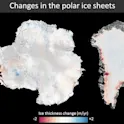
Dire predictions and global updates dominated the course of two AGU 2015 press conferences on December 15 and 16. While the last year has seen increasing tension develop between Republican members of the US Congress and the NASA Earth Sciences Program over budget cuts, conferences on the polar ice sheets pulled no punches in laying out the effects of climate change in these areas. The first of these conferences was the presentation of the year’s Arctic Report Card, a now-annual event at the AGU Fall Meeting.   Arctic Record Card 2015 Tuesday, 15 December Rick Spinrad, National Oceanic and Atmospheric Administration (NOAA) Chief Scientist, Washington, D.C., U.S.A. Martin Jeffries, Arctic Science Advisor and Program Officer for Arctic and Global Prediction, U.S. Office of Naval Research, Arlington, Virginia, U.S.A. Jacqueline A. Richter-Menge, Research Civil Engineer, U.S. Army Corps of Engineers’ Cold Regions Research and Engineering Laboratory, Hanover, New Hampshire, U.S.A. Kit M. Kovacs, Biodiversity Research Program Leader, Norwegian Polar Institute, Tromsø, Norway The Arctic is warming at an alarming rate – twice as fast as lower latitudes, according to a broad consensus in the scientific consensus of that community. In the words of Rick Spinrad, “we know this is due to climate […]
Climate action

18 Dec 2015

News from #AGU15: Heat stress in dense populations and impacts of the 2015-16 El Niño

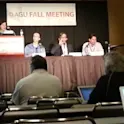
Gearóid Ó Faoleán, Journal Manager of Frontiers in Earth Science, is representing Frontiers at the AGU Fall Meeting in San Francisco, the world’s largest earth and space science meeting. Here, in the 1st of a series of posts, he reports on some of the exciting press conferences he attended at the conference.  The impacts of heat stress on densely populated regions in the 21st century  Monday, 14 December 2015 Ethan Coffel, PhD candidate, Center for Climate Systems Research, Columbia University, New York, New York, U.S.A Radley Horton, Associate Research Scientist, Center for Climate Systems Research, Columbia University, New York, New York, U.S.A. Noah Diffenbaugh, Associate Professor, Stanford University, and Senior Fellow, Woods Institute for the Environment, Stanford, California, U.S.A. The participants spoke of global exposure to heat stress for this coming century and the effects it will have on our health and, linking to that, economic performance; as well as global infrastructure. Ethan Coffel first gave an overview of his research on global wet-bulb temperature, a combined measure of temperature and humidity. It was noted that while recent global heatwaves, in this context, were in the range of 29-31 °C, human tolerance is estimated to be 35 °C maximum. Thus, a global temperature rise could have serious repercussions for humankind. Dr Radley Horton […]

Climate action

14 Dec 2015

VIDEO: Capturing CO2 in hopes of saving the planet

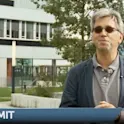
By Jessica Mitchell Save the planet. This is just the motivation that ultimately drives the research of Professor Berend Smit, who says that through his research “in the long term, we may actually save the planet.” Berend Smit is currently Professor of Chemical Engineering and Chemistry at the University of California, Berkeley and EPFL in Sion, Switzerland. He is also Director of the Energy Centre and Chair of Molecular Simulation at the EPFL in Lausanne, Switzerland, as well as Field Chief Editor of Frontiers in Energy Research. A computational quest for novel nanopore materials Smit leads a team of researchers who use computational methods to screen novel nanoporous materials, known as metal organic frameworks, for their suitability for various energy-related applications- including capturing CO2 from flue gases and storing methane. These materials are the ideal playgrounds for chemist; by varying the basic chemical constituents we can make millions of different materials, each with its own specific properties. But, as Smit comments, “experimentally, however, because of practical limitations we can only synthesize a small fraction of them.” By adopting computational techniques, Smit and his team are able to explore the properties of these novel nanoporous materials in silico and assess their […]

Climate action

30 Nov 2015

‘New Frontiers in Climate Change Adaptation & Mitigation’ launched

by Nina Rothe The Frontiers Research Topic on “The Pathway to Solutions: New Frontiers in Climate Change Adaptation & Mitigation” has just launched. The 2015 Paris Climate Conference (#COP21), is poised to lead a shift in focus in climate change research from an emphasis on the scientific test of the role of human activity, already consolidated into strong evidence, to a focus on solutions to prepare society to adapt and mitigate the consequences of a warming planet, where knowledge is urgently needed. Frontiers will support this shift by collecting the latest research on climate adaptation and mitigation across multiple scientific disciplines to be published in a unique Research Topic. Business leaders are putting increasing pressure on governments to act and to achieve a legally binding and universal agreement on climate. As the biggest side event at COP21, France, in partnership with United Nations Environment Programme (UNEP) and the European Commission’s Climate Action network, are hosting the Sustainable Innovation Forum (SIF15), convening cross-sector participants from business, government, finance, UN, NGO and civil society to bolster innovation and further accelerate international sustainable development. To provide policy makers, industry, and business leaders with the latest scientific findings, we are calling for submissions covering all […]

Environment

21 Oct 2015

The world’s finest wilderness lies beneath the waves

Frontiers Science Hero: Carlos M. Duarte from Frontiers on Vimeo. Prof. Carlos M. Duarte became interested in Marine biology because of his love for oceans. “The beauty of the ocean ecosystem and the sense of freedom of this immense landscape when you are in the open ocean are special because of how small we feel when we are out there,” he said. Prof. Carlos Duarte is Tarek Ahmed Juffali Research Chair in Red Sea Ecology with the Red Sea Research Center at King Abdullah University of Science and Technology. He was formerly Director of the Oceans Institute at The University of Western Australia (2011-2015) and Research Professor with the Spanish National Research Council (CSIC, 1999-2015) at the Mediterranean Institute for Advanced Studies (IMEDEA) in Mallorca, Spain. He is also the Field Chief Editor of Frontiers in Marine Science. Another element which fascinates Duarte about the oceans is how little we know about them. Even scientists who have spent their lives researching them have barely begun to understand our oceans’ secrets. “Yet at the same time others are trying to find oceans in this distant planets with the hope that we will be able to use those oceans to sprawl out […]

Sustainability

08 Oct 2015

Smart physics models for designing new glass compositions

Frontiers Science Hero: John Mauro from Frontiers on Vimeo. Frontiers Science Hero, John Mauro is Frontiers’ Chief Editor of Glass Science. He is also Senior Research Manager in Glass Research at industrial glass company Corning Inc. in Corning, NY, USA. A Fellow of the American Ceramic Society, Mauro is also the co-inventor of several new glass compositions. “If it’s glass, I’m interested,” says Mauro, in an interview with Frontiers where he shares how his passion for glass initially started. “I first fell in love with glass when I was 6 years old,” he says. Better understanding the structure and the properties of matter, makes it possible to produce glass with better characteristics for industrial applications. “Glass is well known as one of the most difficult problems in condensed matter physics,” he says. As part of his job, John Mauro builds new glass models, together with colleagues, to understand the material’s behaviour. These models can, in turn, be used to efficiently design new glass compositions. But John Mauro is not only interested in the scientific aspect of the material. He also loves the artistic side of glass applications. In this interview, he tells us about Corning’s work with artists to help him “learn […]

Sustainability

22 Sep 2015

A new perspective on the deep sea world

Frontiers Science Here: Jon Copley – A new perspective on the deep sea world from Frontiers on Vimeo. Jon Copley is the first British person to dive further down than 5 km deep in the ocean.  He is one of Frontiers’ Science Heroes.  As a marine biologist, he dives and explores life in the depth of the oceans, across the world. Specifically, he studies colonies of animals in island-like habitats on the ocean floor, near hydrothermal vents.  His goal is to investigate the distribution, dispersal and evolution of these species. He is a bit like a 19th century discoverer. “That’s an analogy I often like to use because these deep-sea vents are island-like colonies of marine life on the ocean floor,” he said. “It’s like going to a new continent.” Ultimately, learning from deep-sea species can lead to applications though potential new treatements from marine microbes and new design for wings and fan blades inspired from whales flippers, among others. Copley currently works at the University of Southampton, in the UK, as an associate Professor of Marine Ecology. He also is the principal investigator of the Chemosynthetic Environments Research Team. In a Skype interview, he shares his passion for discovering […]

Sustainability

17 Sep 2015

Preservation of the Ozone Layer: Years later and so much more to do

by Ben Stockton​, Journal Operations Assistant ​In an interview with a former student, the late Frank Sherwood Rowland recalled the moment when, after returning home from the lab, his wife asked him how his work was going. He replied, “The work is going well, but it looks like the end of the world”. The frivolity of the prophesy in the early 1970s of Rowland, a former atmospheric chemist at the University of California, Irvine, is clear. Naturally it didn’t come to fruition, but there was the element of truth behind it. The research with his colleague Mario Molina (pictured below) created a new field of science and sparked major international intervention. Signing of the Montreal Protocol It is considered the most successful international agreement in history – by Kofi Annan, nonetheless. The signing of the Montreal Protocol on this day—September 16, 1987— showcased a worldwide unity of science, government and industry, the holy trinity of environmental lobbying. It instilled change that would transcend a generation of signatories. As if like a pebble dropped into calm waters, the surface has only just been disturbed. After almost 20 years, the benefits of that lie in the wake this agreement will continue to ripple outwards […]

Sustainability

09 Jun 2015

Healthy Oceans, Healthy Planet -World Oceans Day with Paul Rose

  By Nina Rothe Former Vice President of the Royal Geographical Society and Chair of the Expeditions and Fieldwork Division, polar expert Paul Rose is currently Expedition Leader for the National Geographic Pristine Seas Expeditions. He was the Base Commander of Rothera Research Station , Antarctica, for the British Antarctic Survey for 10 years and was awarded HM The Queen’s Polar Medal. For his work with NASA and the Mars Lander project on Mt Erebus, Antarctica, (which he climbed, of course!) he received the US Polar Medal. And he has a mountain named after himself in Antarctica. Happy World Oceans Day, Paul! When you think about the sea, what’s the first image, smell and sound that comes to your mind? Freedom, simplicity, adventure, promise! What has been the most important achievement in terms of ocean conservation in the past year and what do you consider the 3 most pressing problem(s) facing the world’s oceans right now? Raising the level of awareness to the extent that this is now a genuine sweet-spot for ocean conservation is a real success. For the first time in history, people understand that human activities directly affect the ocean’s health. The there most rousing problems are: overfishing, […]

Sustainability

18 Feb 2015

Staff Pick: Scientists’ perspectives on global ocean research priorities

This is Nina Rothe, Journal Manager at Frontiers. Nina’s from Berlin and has a PhD in marine biology from the University of Southampton. We’ve invited her to highlight her personal favorite paper from Frontiers. Read the paper (OA): http://fron.tiers.in/go/eMyoEc Rudd MA (2014) Scientists’ perspectives on global ocean research priorities Frontiers in Marine Science 1:36 … Nina writes: “In this paper, Dr Murray Rudd, from the University of York Environment Department, presents a survey that asked 2,197 scientists from 94 countries, who ranged in background from marine geologists to anthropologists, to state what research was needed most urgently to help sustain global ocean health. Among the most pressing issues, declines in ocean productivity, increases in ocean acidification, and the cumulative effects of multiple stressors on ocean health ranked in the top five ocean research priorities by oceanographers and marine ecologists from around the globe. Social scientists thought that better communication between scientists, policy-makers and the public was the most important research priority.”