
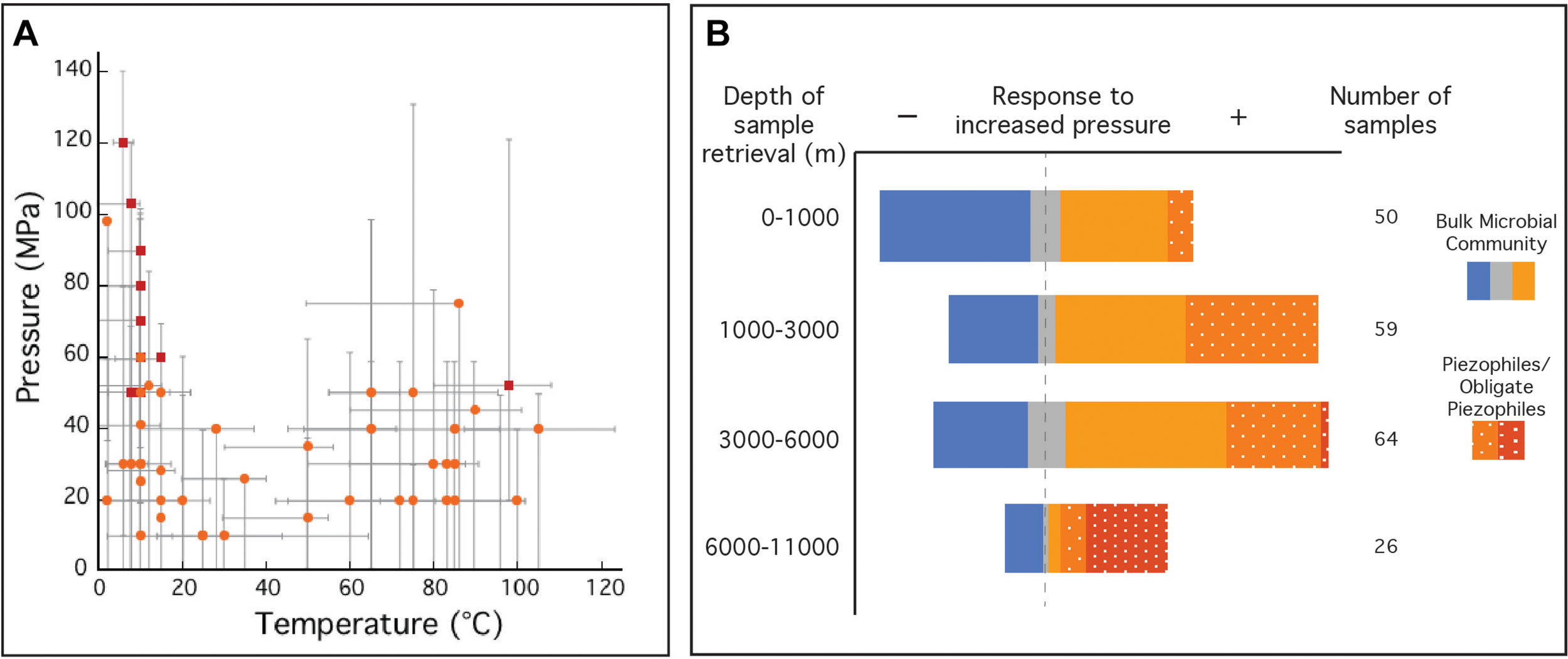
reconstructions, and highlight CO2 fluxes from continental rift settings post-Pangea. The volcanic flux of CO2 has been successfully reconstructed by direct study of CO2 flux through lakes and adjacent soils (Hughes et al., 2019), an important and often overlooked CO2 valve linking lithosphere, atmosphere, and hydrosphere. From perspectives rooted deeper in the tectonic system, the important roles that serpentinites play in the carbon cycle are evaluated in two senses: (1) serpentinite as a carbon vector to the deep mantle (Merdith et al., 2019), and (2) serpentine mud volcanoes as sites of carbon mobilization through organic acid release (Eickenbusch et al., 2019), in a Mariana Trench case study.The physical properties of carbonaceous melt migration and chemical exchange are experimentally examined as reduced metallic melts (Dong et al, 2019) and oxidized carbonate melts (Sanloup et al., 2019note corrigendum). Regarding carbon-bearing metallic melts in the mid-mantle, Dong et al. (2019) apply experimental data to predict immobility of metallic carbon, meaning deep Fe-C melts will remain isolated. experimentally determine the viscosity of Fe-carbonate melt (FeCO3) in the mid-to lower-mantle, and find that such melts are polymerized and highly viscous, not readily reacting in the lower mantle. Both studies show deep carbon to be immobile and unreactive, under the very specific conditions of their experimental designs.Linking geological and biological aspects of carbon cycling reveal emerging challenges. The drawdown of atmospheric carbon into rock reservoirs is examined through the lens of Urey reactions and the efficiency of carbon deposition in the continental crust reservoir (Kellogg et al., 2019); the authors argue that carbon stored in Earth's continental crust could have been extracted either from the early atmosphere or from the mantle (over a longer period of time)--or both. Kellogg et al. (2019) challenge the community to prioritize better constraints on the concentration of carbon in the atmosphere and continental crust over geologic time. Their work also addresses the recovery (relaxation time) of Earth's climate to volcanicallyforced climate change, using the Paleocene-Eocene thermal maximum as a case study; the calculated relaxation time is ~50,000 yrs. This timeframe is certainly of modern concern, given anthropogenic injections of carbon into the atmosphere.Shales are known to be large carbon sinks in low pressure settings. Basu et al. (2019) ask whether shales can retain significant carbon during low pressure-temperature and high pressure-temperature processes during the subduction of Earth's crust. In a custom-built high vacuum line, they incrementally heat shale samples from 200 to 1400°C in the presence of O2 gas and record the carbon and nitrogen abundances, δ 13 C values, and the atomic C/N ratios for the gas at each stage of heating. Basu et al. (2019) propose that carbon silicate minerals, biomineralized and/or occluded, can be efficiently retained as a refractory phase and transferred into Earth's mantle through subduction.The important role of serpentinization is emphasized in this context also: Barbier et al. (2020) offer a detailed review of hydrogen, methane, and hydrocarbon formation through experimental serpentinization, informed by network analysis. The relevance of the frequently invoked Fischer-Tropsch-type (FTT) reactions to produce methane from the abiotic reduction of oxidized carbon by H2 is questioned. Barbier et al. (2020) follow the forms and movement of carbon through the near ubiquitous, extensive serpentinization process, operating beneath most past and present seabeds.Carbon cycling mediated by the deep biosphere is tracked also, in terms of function, detection, and novel findings. The Deep Mine Microbial Observatory in South Dakota, USA, described by Osburn et al. (2019), is a stable portal to the continental deep subsurface, with a rich, initial database on which future studies can pivot. In the marine realm, Cario et al. (2019) offer a perspective on the state of the science exploring the deep biosphere beneath the seabed. Aspects of the growth and resilience of subseafloor crustal biofilms are documented (Ramirez et al., 2019), and methods enabling new discernment of virus abundance in the subseafloor sedimentary blanket are shared (Pan et al., 2019). A new serpentinite-influenced organism, Petrocella atlantisensis, cultured from Atlantis Massif oceanic core complex rocks sampled during IODP Expedition 357 is described, observed at controlled hydrostatic pressure (Quemeneur et al., 2019).The findings reported in Deep Carbon Science underscore the need for multidisciplinary commitment to open questions related to Earth's carbon cycle. It is clear that the processes driven by, and driving, plate tectonics buffer the carbon fluxes on which life has been dependent for billions of years (e.g., fluctuations in atmosphere-ocean geochemistry). Important work includes methodical application of current techniques, but much work requires new ways of thinking: multifaceted investigations that connect the deep and shallow biospheres, and/or describe links between the whole biosphere and points of contact with geosphere have the potential to transform our thinking. The breadth of disciplines and scientific approaches collated in Deep Carbon Science provides exciting insight into a future where the traditional boundaries of classic disciplines become blurred. This, we argue, is the only way to reveal the true nature and extent of carbon cycle phenomena that are both vast and diminutive, slow yet fast, known but inaccessible, and everywhere all at once.

19 Authors
- SM
Shaunna M. Morrison
Earth and Planets Laboratory, Carnegie Institution for Science, United States
- JB
Joy Buongiorno
Earth and Planets Laboratory, Carnegie Institution for Science, United States
- RT
Robert T. Downs
Department of Geosciences, The University of Arizona, United States
- AE
Ahmed Eleish
Department of Earth and Environmental Sciences, Tetherless World Constellation, Rensselaer Polytechnic Institute, United States
- PF
Peter Fox
Department of Earth and Environmental Sciences, Tetherless World Constellation, Rensselaer Polytechnic Institute, United States
- DG
Donato Giovannelli
Department of Biology, University of Naples Federico II, Italy
- JJ
Joshua J. Golden
Department of Geosciences, The University of Arizona, United States
- DR
Daniel R. Hummer
School of Earth Systems and Sustainability, Southern Illinois University, Carbondale, United States
- GH
Grethe Hystad
Department of Mathematics, Statistics and Computer Science, Purdue University Northwest, United States
- LH
Louise H. Kellogg
Department of Earth and Planetary Sciences, University of California, United States
- OK
Oliver Kreylos
Department of Earth and Planetary Sciences, University of California, United States
- SV
Sergey V. Krivovichev
Kola Science Centre of the Russian Academy of Sciences, Russia
- CL
Chao Liu
Earth and Planets Laboratory, Carnegie Institution for Science, United States
- AM
Andrew Merdith
EarthByte Group, School of Geosciences, The University of Sydney, Australia
- AP
Anirudh Prabhu
Department of Earth and Environmental Sciences, Tetherless World Constellation, Rensselaer Polytechnic Institute, United States
- JR
Jolyon Ralph
Mindat.org, United Kingdom
- SE
Simone E. Runyon
Department of Geology and Geophysics, University of Wyoming, United States
- SZ
Sabin Zahirovic
EarthByte Group, School of Geosciences, The University of Sydney, Australia
- RM
Robert M. Hazen
Earth and Planets Laboratory, Carnegie Institution for Science, United States

9 Authors
- EC
Ery C. Hughes
School of Earth Sciences, University of Bristol, United Kingdom
- AM
Agnes Mazot
Wairakei Research Centre, GNS Science, New Zealand
- GK
Geoff Kilgour
Wairakei Research Centre, GNS Science, New Zealand
- CA
Cameron Asher
Wairakei Research Centre, GNS Science, New Zealand
- MM
Marco Michelini
Wairakei Research Centre, GNS Science, New Zealand
- KB
Karen Britten
Wairakei Research Centre, GNS Science, New Zealand
- LC
Lauriane Chardot
Wairakei Research Centre, GNS Science, New Zealand
- YF
Yves Feisel
Wairakei Research Centre, GNS Science, New Zealand
- CW
Cynthia Werner
Private Contractor, New Zealand


13 Authors
- PE
Philip Eickenbusch
Institute of Biogeochemistry and Pollutant Dynamics, ETH Zürich, Switzerland
- KT
Ken Takai
SUGAR Program, Institute for Extra-Cutting-Edge Science and Technology Avant-Garde Research (X-star), Japan Agency for Marine-Earth Science Technology, Japan
- OS
Olivier Sissman
IFP Energies Nouvelles, France
- SS
Shino Suzuki
Geomicrobiology Research Group, Kochi Institute for Core Sample Research, Japan Agency for Marine-Earth Science and Technology, Japan
- CM
Catriona Menzies
Ocean and Earth Science, National Oceanography Centre, University of Southampton, United Kingdom
- SS
Sanae Sakai
SUGAR Program, Institute for Extra-Cutting-Edge Science and Technology Avant-Garde Research (X-star), Japan Agency for Marine-Earth Science Technology, Japan
- PS
Pierre Sansjofre
Laboratoire Géosciences Océan UMR 6538, Université de Bretagne Occidentale, France
- ET
Eiji Tasumi
SUGAR Program, Institute for Extra-Cutting-Edge Science and Technology Avant-Garde Research (X-star), Japan Agency for Marine-Earth Science Technology, Japan
- SM
Stefano M. Bernasconi
Geological Institute, ETH Zürich, Switzerland
- CG
Clemens Glombitza
Institute of Biogeochemistry and Pollutant Dynamics, ETH Zürich, Switzerland
- BB
Bo Barker Jørgensen
Department of Bioscience, Center for Geomicrobiology, Aarhus University, Denmark
- YM
Yuki Morono
Geomicrobiology Research Group, Kochi Institute for Core Sample Research, Japan Agency for Marine-Earth Science and Technology, Japan
- MA
Mark Alexander Lever
Institute of Biogeochemistry and Pollutant Dynamics, ETH Zürich, Switzerland
8 Authors
- CS
Chrystèle Sanloup
Muséum National d'Histoire Naturelle, UMR CNRS 7590, IRD, Institut de Minéralogie, de Physique des Matériaux et de Cosmochimie, IMPMC, Sorbonne Université, France
- JM
Jessica M. Hudspeth
Institut des Sciences de la Terre de Paris, Sorbonne Université, CNRS, France
- VA
Veronika Afonina
SUPA, Centre for Science at Extreme Conditions and School of Physics and Astronomy, University of Edinburgh, United Kingdom
- BC
Benjamin Cochain
Institut des Sciences de la Terre de Paris, Sorbonne Université, CNRS, France
- ZK
Zuzana Konôpková
DESY Photon Science, Germany
- GL
Gérald Lelong
Muséum National d'Histoire Naturelle, UMR CNRS 7590, IRD, Institut de Minéralogie, de Physique des Matériaux et de Cosmochimie, IMPMC, Sorbonne Université, France
- LC
Laurent Cormier
Muséum National d'Histoire Naturelle, UMR CNRS 7590, IRD, Institut de Minéralogie, de Physique des Matériaux et de Cosmochimie, IMPMC, Sorbonne Université, France
- CC
Chiara Cavallari
European Synchrotron Radiation Facility, ESRF, France
3,622 views
4 citations
8 Authors
- CS
Chrystèle Sanloup
Muséum National d'Histoire Naturelle, UMR CNRS 7590, IRD, Institut de Minéralogie, de Physique des Matériaux et de Cosmochimie, IMPMC, Sorbonne Université, France
- JM
Jessica M. Hudspeth
Institut des Sciences de la Terre de Paris, Sorbonne Université, CNRS, France
- VA
Veronika Afonina
SUPA, Centre for Science at Extreme Conditions and School of Physics and Astronomy, University of Edinburgh, United Kingdom
- BC
Benjamin Cochain
Institut des Sciences de la Terre de Paris, Sorbonne Université, CNRS, France
- ZK
Zuzana Konôpková
DESY Photon Science, Germany
- GL
Gérald Lelong
Muséum National d'Histoire Naturelle, UMR CNRS 7590, IRD, Institut de Minéralogie, de Physique des Matériaux et de Cosmochimie, IMPMC, Sorbonne Université, France
- LC
Laurent Cormier
Muséum National d'Histoire Naturelle, UMR CNRS 7590, IRD, Institut de Minéralogie, de Physique des Matériaux et de Cosmochimie, IMPMC, Sorbonne Université, France
- CC
Chiara Cavallari
European Synchrotron Radiation Facility, ESRF, France
1,602 views
1 citations