
Frontiers updates
23 Jan 2026
Frontiers Science House: did you miss it? Fresh stories from Davos – end of week wrap
Read more about the individual stories from the Frontiers Science House.
Frontiers updates
23 Jan 2026
Read more about the individual stories from the Frontiers Science House.
Frontiers news
15 Oct 2025
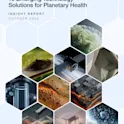
The World Economic Forum and leading open science publisher Frontiers today launched the inaugural 10 Emerging Technology Solutions for Planetary Health report, a landmark publication spotlighting ten breakthrough innovations that could accelerate global efforts to tackle climate change, restore ecosystems, and build long-term resilience. These technologies offer scalable, science-based solutions to help society operate within planetary boundaries and foster a more sustainable relationship with Earth's systems.
Frontiers news
24 Jun 2025
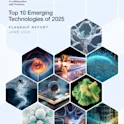
Cutting-edge technologies addressing climate, healthcare, and digital authenticity are spotlighted in the report co-published by the World Economic Forum and Frontiers. Pooling the expertise of hundreds of leading scientists from around the world, the report identifies early-stage technologies with the potential to become fully developed and adopted within the next five years.

Young Minds
04 Jun 2025
Today's breakthroughs – from interactive smart surfaces to genetically engineered animal organs – that are emerging from laboratories now will be day-to-day realities for tomorrow’s adults and leaders. In this new collection, the next generation takes a driver’s seat in understanding and communicating the technologies that will transform our world.
Neuroscience
25 Mar 2025
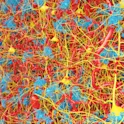
A new model of brain metabolism – the most complex ever generated –shows how altering key chemicals could restore aged cells to their youthful activity and resilience.

Featured news
02 Oct 2024
Researchers conducted a term-long experiment that showed that allowing college students to use their phones for just one minute could result in less phone use during class and higher test scores

Frontiers news
25 Jun 2024
The World Economic Forum, in association with Frontiers, new Top 10 Emerging Technologies of 2024, released today (25 June), shows that among technologies emerging globally, reconfigurable intelligent surfaces and High-Altitude Platform Systems have the potential to connect billions worldwide who currently have no internet access.

Young Minds
14 Dec 2023
Frontiers for Young Minds has published the first articles in a new collection in collaboration with CERN, one of the world’s largest centers for scientific research. The collection, entitled 'SPARK-ing big questions: what is the future of health technology?', addresses key questions on how ground-breaking health technologies and science can improve human health for future generations.

Featured news
08 Jun 2023
Watch Mirjam Eckert, chief publishing officer at Frontiers, introduce the publisher and demystify its machine learning tool. With thanks to the Gottlieb Duttweiler Institute. Photo credit: Frontiers Human compatible Artificial Intelligence (AI) could empower us all. But public trust in good science will be key. At Frontiers, we apply AI to help build that trust. Our Artificial Intelligence Review Assistant (AIRA) verifies that scientific knowledge is accurately and honestly presented even before our people decide whether to review, endorse, or publish the research paper that contains it. AIRA reads every research manuscript we receive and makes up to 20 checks a second. These checks cover, among other things, language quality, the integrity of figures and images, plagiarism, and conflicts of interest. The results give editors and reviewers another perspective as they decide whether to put a research paper through our rigorous and transparent peer review. We face global, existential threats, from health emergencies to climate change. We can manage and reverse these threats, for healthy lives on a healthy planet – with political will, global collaboration, and scientific breakthrough at a scale not yet seen. On all those counts, success will depend on the widespread sharing of the latest […]

Earth science
04 Apr 2023
By Deborah Pirchner, Frontiers science writer Image: Shutterstock.com Monitoring emissions from volcanoes – particularly sulfur dioxide (SO2) using specialized cameras – is important for hazard forecasting. Gathering long-term time series datasets is critical because volcanoes can exhibit significant changes in activity over time. Now, researchers have developed a cheap and low-power SO2 camera suited for long-term measuring. The tool could have significant implications for millions of people worldwide who live close to active volcanoes, they say. Gas emissions are the manifestation of activity occurring beneath the surface of a volcano. Measuring them lets researchers see what can’t be seen from the surface. This knowledge is vital for hazard monitoring and the prediction of future eruptions. Since the mid-2000s, ultraviolet SO2 cameras have become important tools to measure emissions. The measurement campaigns, however, must be accompanied by a user, making SO2 cameras unsuitable for acquiring long-term datasets. Building and operating this type of camera can cost upwards of $20,000, resulting in very few cameras being installed permanently. To get better long-term monitoring data, an international team of researchers has developed an SO2 camera to continually measure emission rates from volcanoes. They have now published an article about the camera design and two […]

Robotics and AI
17 May 2022
Image: Shutterstock.com Online Seminar Series 25th May – 22nd June 2022 This seminar series is presented by field chief editor of the Frontiers in Virtual Reality journal, Prof Mel Slater and members of the GuestXR European Project. By now we are likely to have come across horror stories from ‘the metaverse‘ about how easy it is to encounter abuse, racism, misogyny, and have an overall unpleasant experience. On the other hand, social virtual environments have been studied for many years and there is evidence about how people behave in virtual meetings. GuestXR is carrying out research towards how to make immersive virtual meetings realize the goals of the participants. Normally virtual meetings have a purpose, even if that is entertainment, and GuestXR has the ambitious aim of intervening in such meetings to make them fit for their purpose. In this seminar series, partners from the GuestXR project will speak about their early work on these issues, covering a review of virtual meetings (‘collaborative virtual environments’), the utility of agent based models for social modeling, what we can learn from the neuroscience of interpersonal interaction, the role of deep learning for virtual humans, and reflections on the ethical aspects. Scheduled seminars TitleSpeakerDateTimeRegisterThe Affordances and Problems of Meeting in Virtual RealityMel […]

Featured news
25 Oct 2021
By Conn Hastings, Science writer A person’s leg wrapped in bandage (not the smart bandage from this research). Image: Nutnaree Saingwongwattana/Shutterstock.com Maintaining optimal moisture levels could be key in allowing chronic wounds to heal. However, clinicians currently have no way to check moisture levels without removing a bandage, potentially disrupting the healing process. A new study presents a smart bandage that can measure and wirelessly transmit wound moisture data in real time. The technology could be a useful tool in treating chronic wounds. How can doctors make sure a dressed wound is healing without taking off the bandage? This is a conundrum, because removing a bandage can disrupt the healing process. Technology presented in a new study in open-access journal Frontiers in Physics could help. This new ‘smart bandage’ contains a sensor that can very sensitively measure wound moisture levels and then transmit the data to a nearby smartphone, without requiring doctors to remove the bandage. In the future, by changing the geometry and materials in the bandage, the researchers may be able to fine tune it to suit different types of wounds. The technology could help doctors to monitor wounds more easily and successfully. Chronic wounds can be a […]

Featured news
21 Apr 2021
By Colm Gorey, Frontiers science writer Image: wavebreakmedia/Shutterstock.com Researchers in Japan have developed a virtual reality platform that mimics the sensation of walking by stimulating their feet, all while sitting motionlessly. During testing, participants experiencing a digital world through a first-person perspective found it enhanced the simulation of walking. However, those who saw themselves from a third-person perspective felt it impaired the sensation of movement. Despite virtual reality (VR) technology being more affordable than ever, developers have yet to achieve a sense of full immersion in a digital world. Among the greatest challenges is making the user feel as if they are walking. Now, researchers from the Toyohashi University of Technology and The University of Tokyo in Japan have published a paper to the journal Frontiers in Virtual Reality describing a custom-built platform that aims to replicate the sensation of walking in VR, all while sitting motionlessly in a chair. “Walking is a fundamental and fun activity for human in everyday life. Therefore, it is very worthy to provide a high-quality walking experience in a VR space,” says Yusuke Matsuda. Matsuda is a project assistant professor at the Department of Computer Science and Engineering at the Toyohashi University of […]

Frontiers news
19 Feb 2021
We thought it would be helpful to share some tips, tricks, and guidance with you about the looming threat of phishing attacks.

Featured news
01 Jul 2020
In an industry first, we are delighted to announce our Artificial Intelligence Review Assistant (AIRA) platform is available to support editors, reviewers and authors evaluate the quality of manuscripts and help meet global demand for high-quality, objective peer-review in publishing.
Get the latest research updates, subscribe to our newsletter