PL
pawan l. kulwal
Mahatma Phule Krishi Vidyapeeth
Rahuri, India
739
Total views and downloads
Submit your idea
Select the journal/section where you want your idea to be submitted:
Manuscript Submission Deadline 12 March 2026
This Research Topic is currently accepting articles.
The field of plant breeding constantly seeks innovative methods to enhance resilience against biotic and abiotic stresses such as drought, salinity, diseases, and pests. These stressors pose significant challenges to crop productivity and food security globally. Traditional stress detection techniques are not only time-consuming and often destructive, but they can also be affected by variable environmental conditions. Recently, advancements in hyperspectral and multispectral imaging have emerged as promising tools for breeders. These spectral imaging technologies enable the early detection of stress signatures, often before any visible symptoms appear. By facilitating the identification of stress-tolerant genotypes and offering precise real-time monitoring, spectral imaging stands as a pivotal advancement in plant breeding.
This Research Topic aims to enhance the application of spectral imaging in breeding programs to address plant resilience challenges. The primary objective is to harness non-invasive spectral imaging technologies to rapidly and accurately detect stress in crops, thereby accelerating the development of stress-resistant varieties. Critical goals include developing unique spectral signatures for different stressors, improving remote sensing tools for large-scale monitoring, and integrating spectral data with genomic frameworks for precision breeding. By standardizing spectral data protocols and creating robust models to correlate spectral with physiological traits, breeders can significantly boost climate-smart crop development.
To gather further insights into integrating spectral imaging with plant breeding, we welcome articles addressing, but not limited to, the following themes:
• Integration of spectral imaging with phenomic and genomic tools
• Non-destructive techniques for diagnosing biotic and abiotic stresses
• Development and use of hyperspectral and multispectral platforms for stress screening
• Identification and application of stress-responsive spectral markers
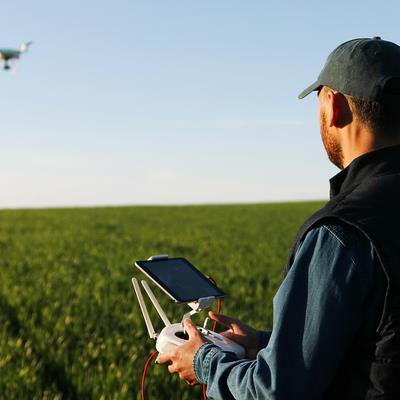
• Leveraging remote sensing technologies like UAVs and satellites for large-scale crop monitoring
• Incorporation of spectral phenotypic indices into breeding pipelines
• User-friendly pipelines for analyzing spectral data effectively
By exploring these themes, this collection will significantly contribute to the development of robust, stress-resilient cultivars, providing critical insights and methodologies that support sustainable agricultural practices.
This Research Topic accepts the following article types, unless otherwise specified in the Research Topic description:
Articles that are accepted for publication by our external editors following rigorous peer review incur a publishing fee charged to Authors, institutions, or funders.
Keywords: spectral imaging, plant breeding, non-invasive stress detection, stress resilience, biotic and abiotic stress, precision agriculture, remote sensing, climate-smart crops
Important note: All contributions to this Research Topic must be within the scope of the section and journal to which they are submitted, as defined in their mission statements. Frontiers reserves the right to guide an out-of-scope manuscript to a more suitable section or journal at any stage of peer review.
Manuscripts can be submitted to this Research Topic via the main journal or any other participating journal.
Submit your idea
Select the journal/section where you want your idea to be submitted:
