YA
yasuhiro arii
Mukogawa Women's University
Nishinomiya, Japan
266
Total views and downloads
Submit your idea
You will be redirected to our submission process.
Manuscript Summary Submission Deadline 15 March 2026 | Manuscript Submission Deadline 3 July 2026
This Research Topic is currently accepting articles.
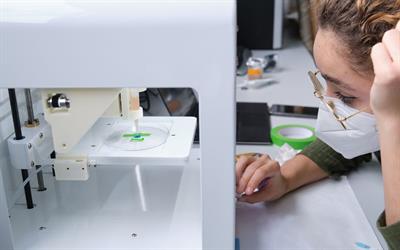
Background: The intersection of food technology and additive manufacturing, particularly in 3D food printing, presents a profound potential to transform food design, customization, and nutrition delivery. Through precise rheological modulation of food materials, 3D printing can fabricate intricate geometries and tailored textures, addressing diverse dietary needs, including dysphagia and personalized nutrition. Despite notable advancements, persistent challenges include optimizing feedstock formulations for enhanced printability, achieving precise textural and sensory attributes, and ensuring sustained nutritional integrity.
Goal: This Research Topic aims to critically examine recent advancements in food 3D printing, with a primary focus on the synergistic interplay between food rheology and textural modulation to optimize printability and consumer acceptability. This collection seeks to elicit contributions exploring novel feedstock formulations, additive manufacturing techniques, and processing conditions to optimize the physicochemical properties of printed foods. Submissions are particularly encouraged that investigate the strategic application of food hydrocolloids, starches, proteins, and plant-based materials to enhance the structural fidelity and nutritional profiles of printed constructs.
Scope and Information for Authors: We invite submissions of Original Research Articles, Review Articles, and Case Studies addressing, but not limited to, the following critical themes:
- Modulation of food rheology for optimized textural attributes and printability.
- Discovery and characterization of novel food-grade materials with enhanced printability.
- Strategies for augmenting the nutritional and sensory profiles of printable food matrices.
- Innovations in 3D printing technologies and methodologies pertinent to food applications.
- Translational case studies highlighting successful applications in clinical nutrition or specific dietary requirements.
- Post-printing stability of flavor and nutritional integrity in novel food formulations.
Contributors are expected to present robust empirical data substantiating the practical impact of their innovations, clearly articulating their potential applications within the food industry.
This Research Topic accepts the following article types, unless otherwise specified in the Research Topic description:
Articles that are accepted for publication by our external editors following rigorous peer review incur a publishing fee charged to Authors, institutions, or funders.
Keywords: 3D food printing, food rheology, texture engineering, printable feedstocks, personalized nutrition, hydrocolloids, food additive manufacturing, dysphagia, plant-based materials
Important note: All contributions to this Research Topic must be within the scope of the section and journal to which they are submitted, as defined in their mission statements. Frontiers reserves the right to guide an out-of-scope manuscript to a more suitable section or journal at any stage of peer review.
Manuscripts can be submitted to this Research Topic via the main journal or any other participating journal.
Submit your idea
You will be redirected to our submission process.
