GB
guido belli
University of eCampus
Novedrate, Italy
475
Total views and downloads
Submit your idea
You will be redirected to our submission process.
Manuscript Summary Submission Deadline 29 April 2026 | Manuscript Submission Deadline 17 August 2026
This Research Topic is currently accepting articles.
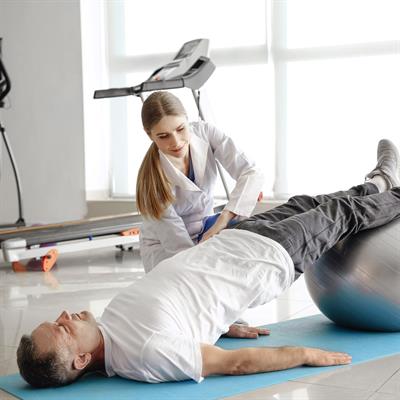
Instability training has become an integral aspect of exercise science, particularly within sports performance enhancement and rehabilitation settings over the past quarter-century. Initially introduced to support the development of functional capacity and core stability, the practice commonly employs unstable surfaces or conditions to challenge the neuromuscular system. While a substantial body of research has explored the mechanisms and potential advantages of instability training, controversy persists regarding its efficacy and limitations. Debate continues over the optimal protocols, mechanisms of adaptation, and its true impact on outcomes such as injury prevention, neuromuscular performance, and health promotion across a wide variety of populations.
Recent studies have investigated both the beneficial and adverse consequences of instability training for groups ranging from high-performance athletes to sedentary individuals, and from younger adults to the elderly and those recovering from injury. Findings suggest that while instability training can enhance certain neuromuscular responses, balance, and proprioception, uncertainties remain with respect to translating these acute benefits into long-term functional gains or measurable improvements in sport and daily activities. Research has also highlighted the complexity of dose-response relationships, the impact of tool-specific choices (such as unstable surfaces versus other forms of instability), and the role of movement context and training environment in mediating outcomes.
This Research Topic aims to deepen scientific understanding by systematically examining both the short- and long-term effects of instability training on neuromuscular performance and rehabilitation strategies across different populations. By clarifying how instability influences the conditioning process, identifying acute and chronic adaptations, and disentangling methodology effects, this collection will provide valuable guidance to practitioners and researchers. The overarching goal is to synthesize evidence, fill knowledge gaps, and help define standardized protocols for the use of instability training in health, sport, and therapeutic contexts.
To gather further insights on the scope and impact of instability training, we welcome articles addressing, but not limited to, the following themes:
o Neuromuscular responses to instability in exercise and rehabilitation
o Acute versus chronic adaptations to instability training
o Methodological variations: free weights, machines, unilateral and bilateral exercises, movement context
o Age- and population-specific impacts: youth, elderly, sedentary, athletes, injured individuals
o The integration of instability training within broader conditioning or rehabilitation programs
o Comparative analysis of unstable surface tools and training approaches
o Health promotion and the role of instability in injury prevention
This Research Topic accepts the following article types, unless otherwise specified in the Research Topic description:
Articles that are accepted for publication by our external editors following rigorous peer review incur a publishing fee charged to Authors, institutions, or funders.
Keywords: Instability training, unstable surfaces, functional training, injury prevention, performance
Important note: All contributions to this Research Topic must be within the scope of the section and journal to which they are submitted, as defined in their mission statements. Frontiers reserves the right to guide an out-of-scope manuscript to a more suitable section or journal at any stage of peer review.
Manuscripts can be submitted to this Research Topic via the main journal or any other participating journal.
Submit your idea
You will be redirected to our submission process.
