 Weiwei Wang1
 Kim Dung Nguyen2Hai Dang Le3
 Chunguang Zhao4Mike T. Carson5
 Xiaoyan Yang6
 Hsiao-chun Hung1*
- 1Department of Archaeology and Natural History, The Australian National University, Canberra, ACT, Australia
- 2Vietnam Association of Archaeology, Hanoi, Vietnam
- 3Institute of Archaeology, Vietnam Academy of Social Science, Hanoi, Vietnam
- 4Department of Archaeology, Wuhan University, Wuhan, China
- 5Micronesian Area Research Center, University of Guam, Mangilao, Guam, GU, United States
- 6Key Laboratory of Western China’s Environmental Systems (Ministry of Education), College of Earth and Environmental Sciences, Lanzhou University, Lanzhou, China
Research has generally outlined that the Neolithic East Asian farmers expanded into Southeast Asia, leading to substantial social and cultural transformations. However, the associated archaeobotanical evidence until now has been insufficient to clarify the exact timing, dispersal route, and farming package of the emergence of agriculture in Mainland Southeast Asia. To clarify these issues, the micro-plant remains of phytolith and starch from three Neolithic sites in Ha Long Bay were extracted and analyzed. This study validates the earliest evidence of co-cropping in northern Vietnam, involving the cultivation of rice together with foxtail millet at 4000 years BP or slightly earlier. Moreover, the results indicate that at least two patterns of subsistence strategy were practiced simultaneously during the initial farming phase in the region. The Trang Kenh people, a regional variant of the Phung Nguyen cultural group often have been seen as the first farmers in northern Vietnam, and they mainly practiced a cereal-based subsistence strategy with more vital cultural characteristics of southern China origin. Meanwhile, the Ha Long people, mainly composed of indigenous hunter-gatherer descendants, continued to utilize a wide range of their preferred plant resources such as taros, yams, and acorns, while they absorbed and incorporated new elements such as millet and rice into their food system. This study provides solid information to understand the diverse economic systems among different cultural groups in Vietnam.
Introduction
Several studies based on archaeology, linguistics, and genetics have suggested that farming groups with rice and/or millet domestication originated from central China and expanded into Mainland Southeast Asia through southern China, admixing with or replacing the indigenous hunter-gatherers around 4000 years BP (Before Present) (e.g., Bellwood, 2005; Zhang and Hung, 2010; Higham et al., 2011; Lipson et al., 2018; McColl et al., 2018; Matsumura et al., 2019; Yang et al., 2020). The arrival of rice and millet agriculture and their domesticators led to significant social, cultural, and economic transformations in Mainland Southeast Asia, including technological advancement, demographic expansion, and cultural complexity.
Recent archaeobotanical studies have confirmed that both rice and millet agriculture occurred in southern China at about 5000-4800 cal. years BP. For instance, phytoliths from rice (Oryza sativa) and broomcorn millet (Panicum miliaceum) were discovered from the Tanshishan cultural layer (ca. 5000-4500 cal. years BP) at Baitoushan in coastal Fujian (Dai et al., 2021). Gancaoling in the Pearl River Delta of Guangdong documented the co-cultivation of rice and foxtail millet (Setaria italica) around 4800-4600 cal. years BP (Deng et al., 2022a). In the inland terrain of southwest China, rice and millet mixed cropping emerged in Guijiabao in southern Sichuan about 5000 cal. years BP (Zhao and Chen, 2011; Huan et al., 2022). The earliest crop package comprising foxtail millet, broomcorn millet, and soybean began around 4650 cal. years BP in Baiyangcun in northwestern Yunnan (Dal Martello et al., 2018; Dal Martello, 2022). Until now, the southernmost Neolithic site with evidence of rice-millet cultivation in Yunnan was from Shifodong, where rice and foxtail millet were retrieved from a context dated to ca. 3400-3100 years BP (Zhao, 2010; Dal Martello, 2022) (Figure 1).
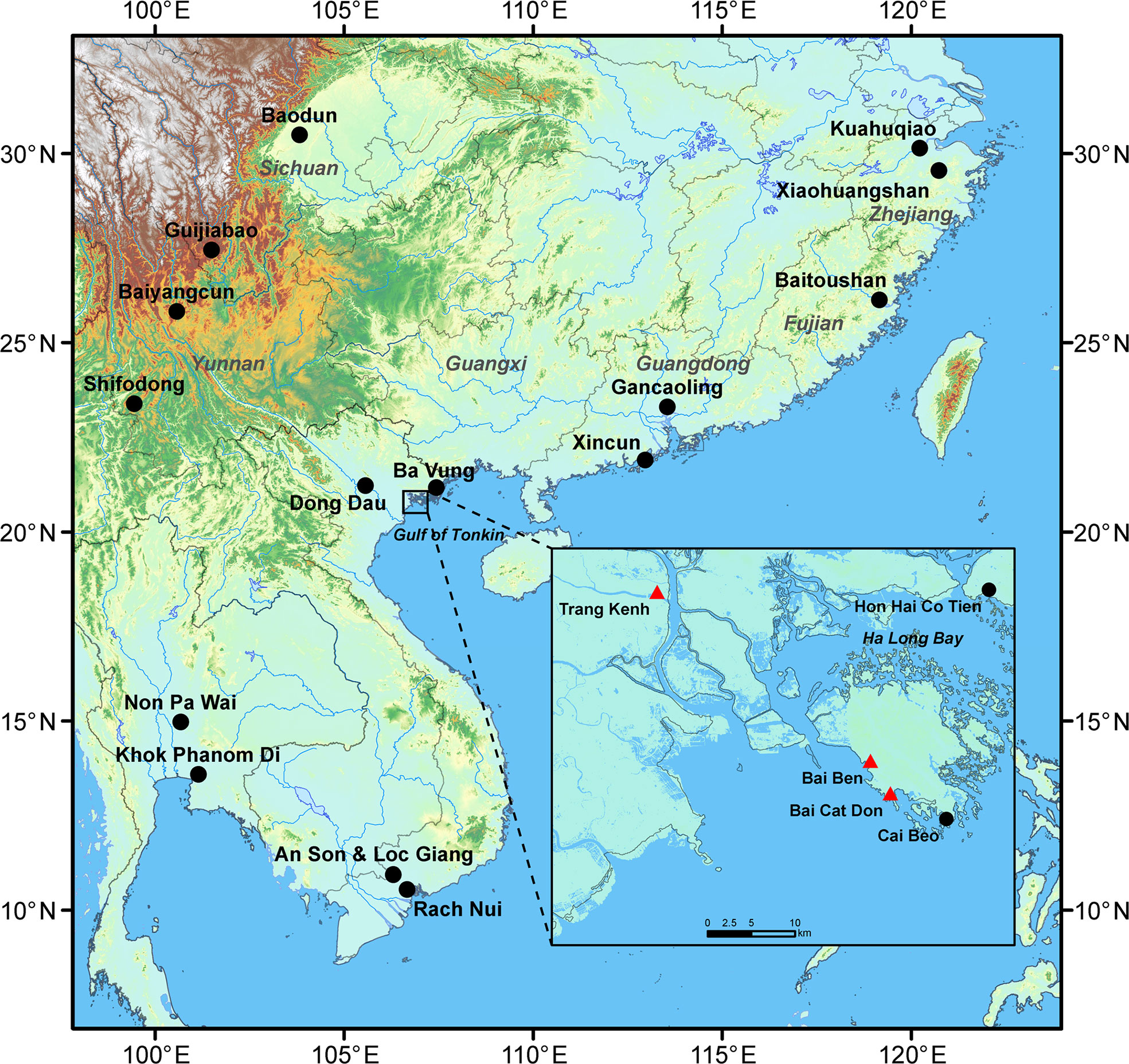
Figure 1 Locations of the three major studied sites (shown in red triangles) and other major sites mentioned in the text (shown in black dots).
In Mainland Southeast Asia, evidence related to rice comes from a few Phung Nguyen sites in northern Vietnam (Nguyen, 1998) and much farther south in the Mekong Delta region, such as at An Son and Loc Giang, dating back to 4200-3150 cal. years BP (Bellwood et al., 2011; Barron et al., 2017). Additional early rice remains were recovered from the Neolithic coastal site of Khok Phanom Di in Thailand, dated 4000-3500 cal. years BP (Thompson, 1996; Higham and Thosarat, 2005; Higham et al., 2011). So far, the earliest evidence of foxtail millet has been from Non Pa Wai in the Khao Wong Prachan Valley, where a single foxtail millet grain was dated to 4470-4200 cal. years BP, but rice was dated no earlier than 3000 BP at this same site (Weber et al., 2010). Before this study, Rach Nui (3500-3300 cal. years BP) in coastal southern Vietnam was the only known site with rice and foxtail millet, both from the same cultural layer. However, these crops were more likely acquired through trade or exchange from other farming societies (Castillo et al., 2018) (Figure 1 and Table 1).
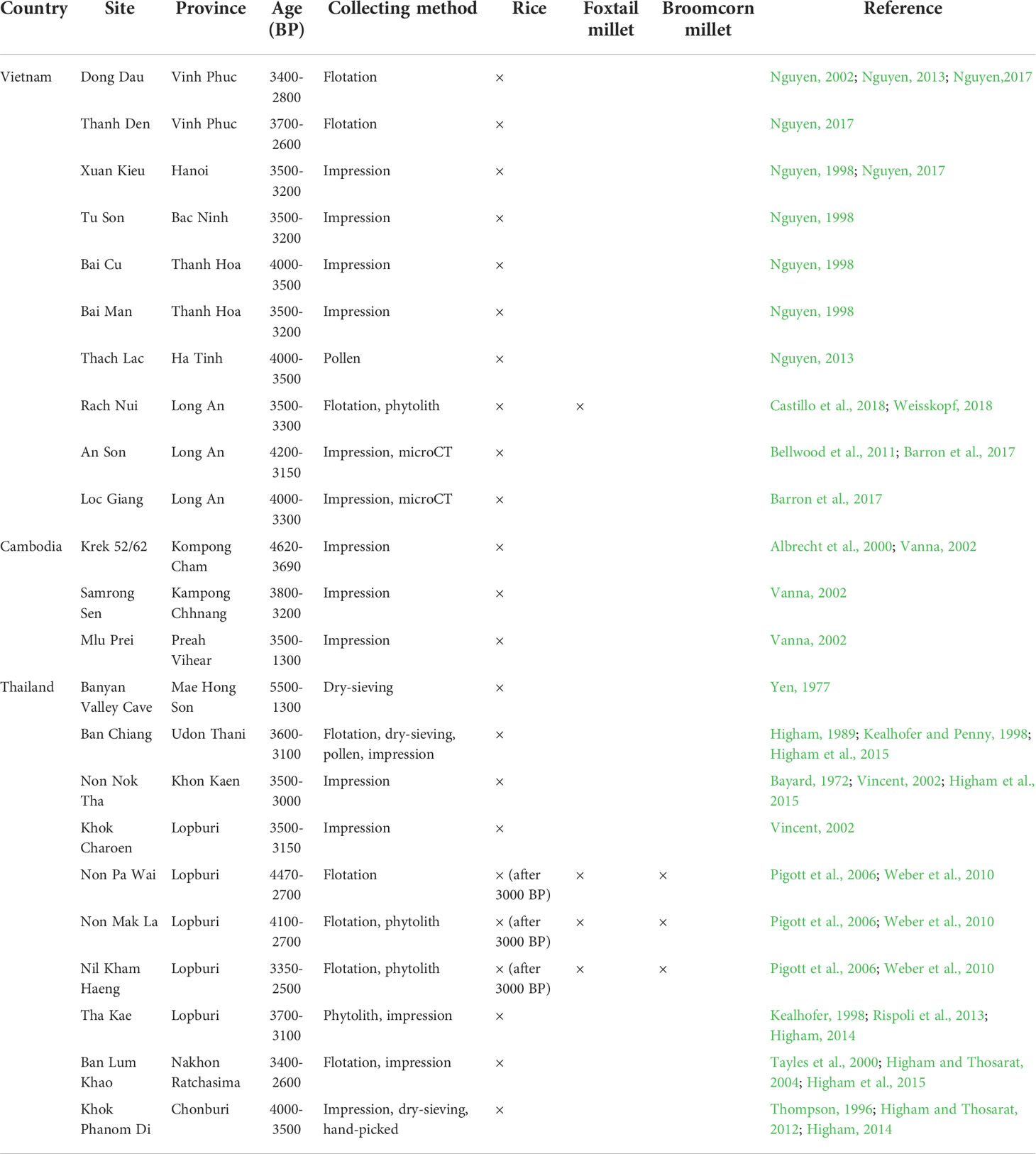
Table 1 Major sites with evidence of rice and millets (mark as ×) in Mainland Southeast Asia during the Neolithic period.
Overall, uncertainty has surrounded whether rice and millet domesticates had appeared in Mainland Southeast Asia simultaneously in the first place. The archaeobotanical work has been insufficient to reconstruct the initial dispersal of the timing, route(s), and the combination of crops for early farming into Mainland Southeast Asia. Presumably, the spread of Neolithic farmers and their farming cultures from southern China to Mainland Southeast Asia occurred rapidly and through both inland river systems and coastal roads (Higham, 2017; Higham, 2019; Guedes et al., 2020; Deng et al., 2022a; Deng et al., 2022b). The northeastern regions of Mainland Southeast Asia, neighboring both inland and coastal southern China, must have been the first accommodation for the early farmers from the north. Therefore, the Red River floodplain and coastal areas around the Gulf of Tonkin are crucial for understanding the dispersal of early rice and millet and their domesticators into Mainland Southeast Asia.
In northern Vietnam, despite some sporadic reports of pottery impressions from rice husks, or a few carbonized rice (Nguyen, 1998; Nguyen, 2013; Nguyen, 2017), the systematic archaeobotanical work to authenticate the evidence of agriculture in this region has been somewhat limited. In this regard, two of the most representative Neolithic groups, Trang Kenh and Ha Long, both coexisted around 4000 cal. years BP in the northeastern coast of Vietnam, and therefore they are ideal for investigating the emergence of rice and millet cultivation in Mainland Southeast Asia. This study investigates micro-plant remains (phytolith and starch) extracted from stone tools excavated from three sites belonging to these two cultural groups in northeastern Vietnam. The new data obtained from this study are incorporated with previously collected data from the Cai Beo site on Cat Bat Island (Wang et al., 2022). All four sites discussed in this study were excavated when the floatation method for collecting macro-plant remains was not yet applied in Vietnam.
Site description
About 4000 years ago, two cultural groups, Ha Long and Trang Kenh, coexisted around the Gulf of Tonkin. The Ha Long group (ca. 4500-3000 cal. years BP) was a developed maritime-oriented society, supported mainly by fishing and hunting, augmented by perhaps a small amount of farming (Nguyen, 2019). Many archaeologists have suggested that a deep root of the Ha Long group can be traced back to the earlier Cai Beo group in the same region, which had developed from the Late Pleistocene Hoabinhian-Bacsonian tradition (Nguyen et al., 2004; Nguyen, 2009). Overlaping in time with the Ha Long group, the Trang Kenh group (ca. 4000-3200 cal. years BP) contains strong characteristics of the Neolithic Phung Nguyen (ca. 4100-3200 cal. years BP), often regarded as the most thriving early farming society in northern Vietnam that likely could be traced back to a southern China origin (Figure 2).
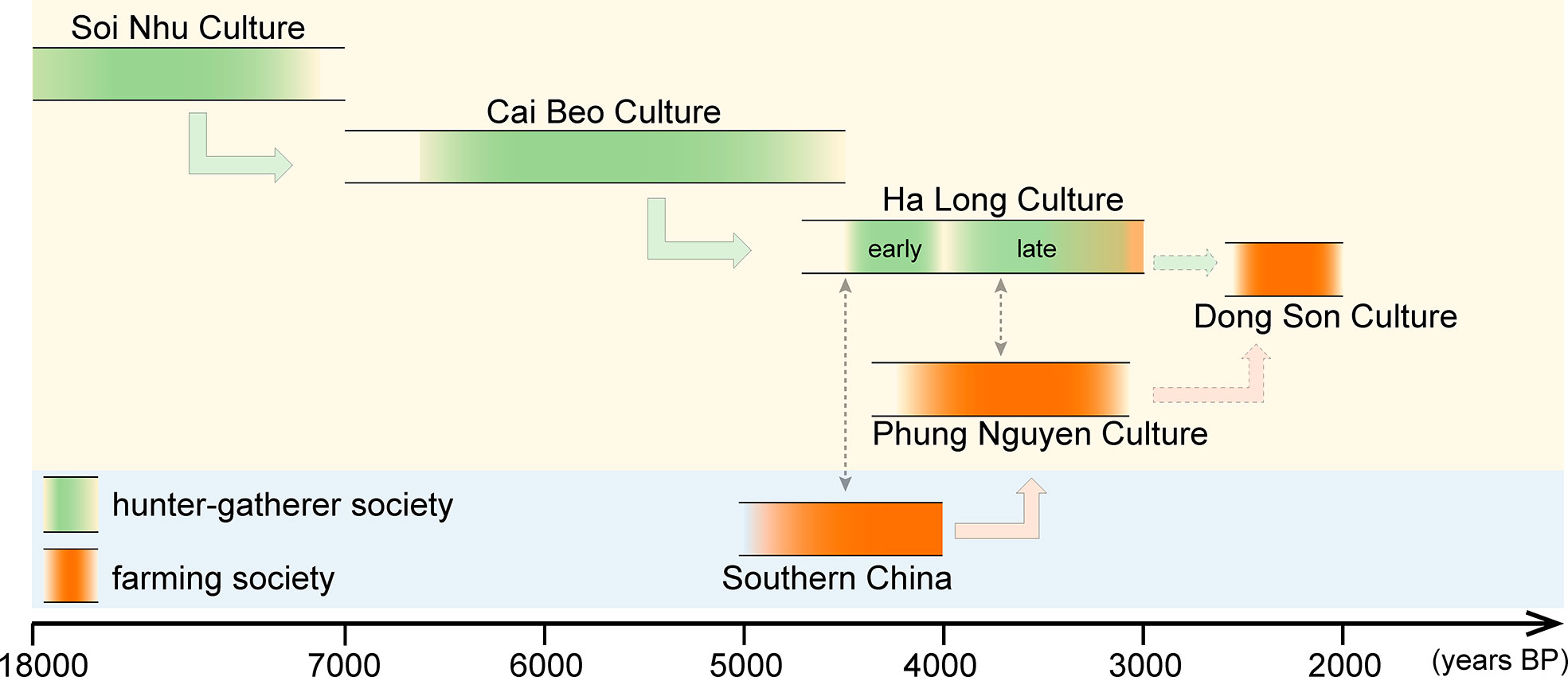
Figure 2 Archaeological chronology and cultural sequence in Ha Long Bay, noting relations with southern China (interactions between two cultural groups: shown in black dotted-line arrows).
While the Trang Kenh group concentrated in the Red River Delta in Hai Phong Municipality, the Ha Long group ranged through the coastal areas and nearby islands of the Ha Long Bay. These two groups, defined by the Vietnamese archaeologists, show differences in many ways, such as their artifact assemblages, burial practices, and other cultural aspects. For example, most of the human burials of the Ha Long group are in the flexed position, the typical practice of hunter-gatherers in Vietnam since the Hoabinhian cultural phase more than 10,000 years ago (Higham, 2013; Hung et al., 2017; Matsumura et al., 2019). Some Ha Long burials contain goods such as typical shouldered axes/adzes, pebble pointed tools, grinding stone "Ha Long Mark", bracelets with D/rectangular section and pottery. In contrast, the burial position of the Trang Kenh group is extended, like the cemeteries in early farming societies in southern China and Phung Nguyen sites. Moreover, these burials often contain grave goods such as pottery vessels, lithic tools, and shell or jade ornaments.
To collect the ancient micro-plant remains, this study analyses 20 stone tools excavated from two Ha Long cultural sites, Bai Ben and Bai Cat Don, and the representative Trang Kenh cultural group site, the Trang Kenh site itself.
Bai Ben site
Bai Ben site (N20°46’44”, E106°58’20”) is located in a present-day fishing port surrounded by limestone mountains on the west side of Cat Ba Island (Nguyen and Clarkson, 2013) (Figure 1). The site covers an area of 5000 m2 distributed along the main road of the island and the western seashore. An area of 142.5 m2 was excavated over two seasons in 1999 and 2001 (Pham, 2003). Excavations at Bai Ben consistently have uncovered a single cultural layer of about 80 cm in thickness. In addition, the site has yielded tens of thousands of drill points, cores, and flakes, suggesting it was a workshop specializing in drill point manufacture (Nguyen and Clarkson, 2013).
Six 14C dates obtained from mollusc shells and plant fragments in Bai Ben suggest an occupation at 4100-3100 cal. years BP (Nguyen and Tran, 2009; Nguyen and Clarkson, 2013) (Figure 3 and Table 2). Bai Ben has yielded ground shouldered and stepped or rectangular axes/adzes, sandstone saw blades, chert ground/flaked pointed tools, grinding stones, stone hammers, anvils, a stone spearhead, and a small number of ornaments including slate and nephrite beads and bracelet fragments (Nguyen and Clarkson, 2013). In addition, earthenware vessels and fragments with rectangular everted rims, curved rims with outer roofs, stamped, incised with “S” shape, and short parallel line motifs, present the typical pottery characteristics of the Ha Long group.
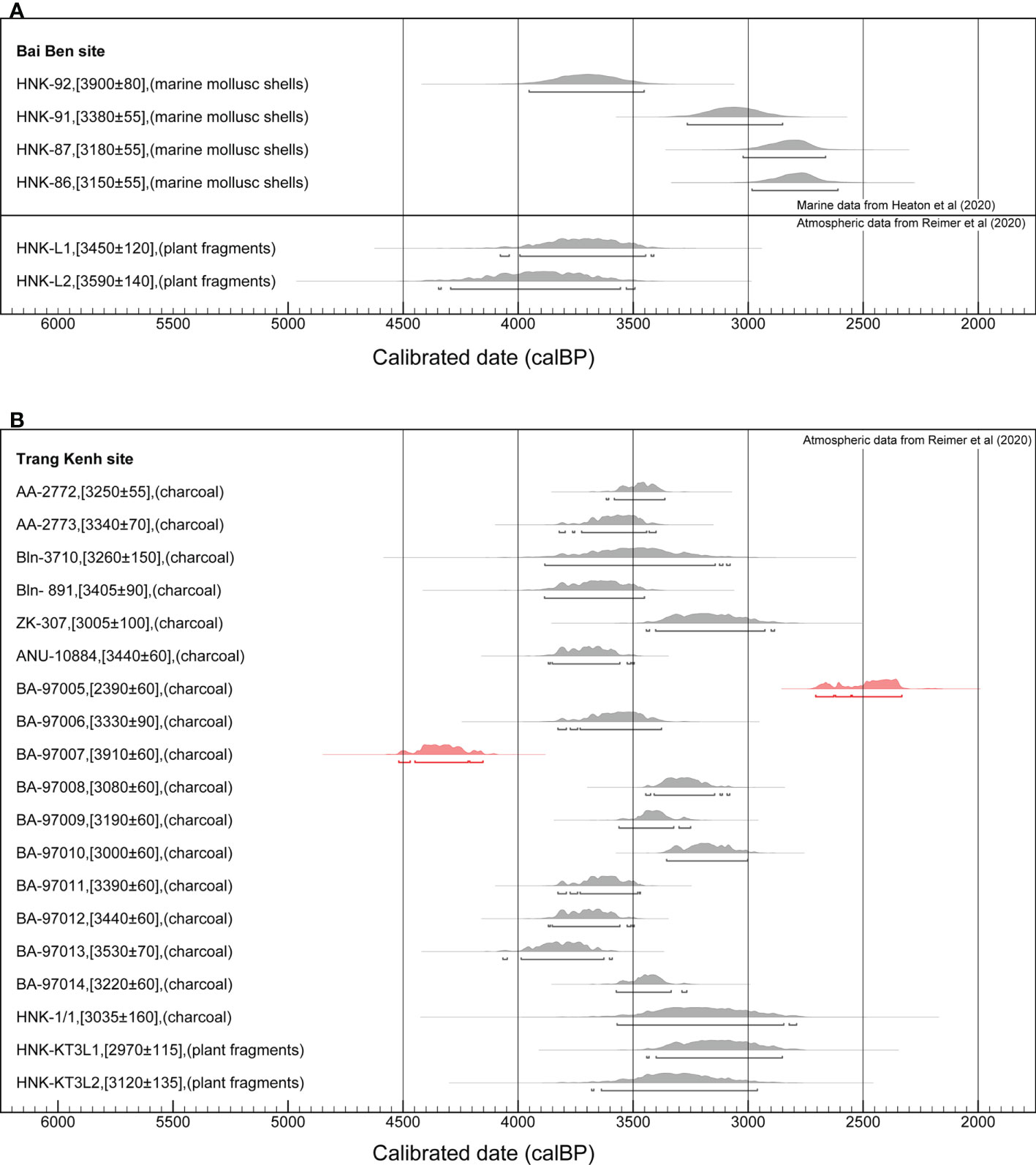
Figure 3 Radiocarbon dates form Bai Ben (A) and Trang Kenh (B). All dates were calibrated with OxCal v4.4.2 (Ramsey, 2009) and presented at 2σ probability, using details as reported in Table 2.
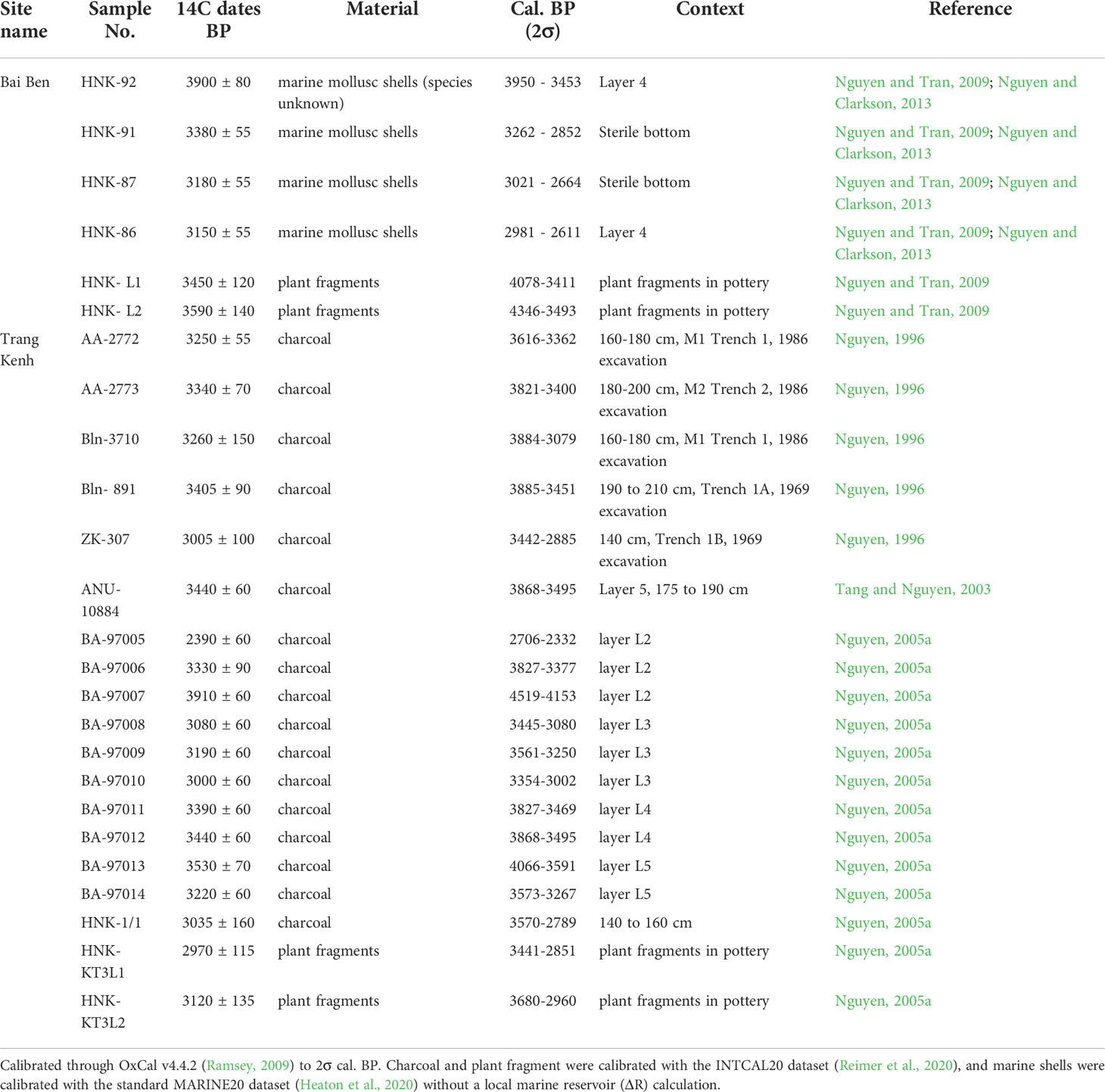
Table 2 Radiocarbon dates from Bai Ben and Trang Kenh.
Vietnamese archaeologists generally regard Bai Ben as a late Ha Long cultural site. However, much evidence from the site has reflected the cultural interactions between Ha Long and other groups, such as Phung Nguyen in the Red (Hong), Da, Lo, and Day River, Hoa Loc in northwestern Thanh Hoa Province, and some contemporary workshop sites like Trang Kenh in Hai Phong (Nguyen, 2001; Pham, 2003). Five stone tools from Bai Ben are analyzed during this study (Figures 4A–E and Table 3).
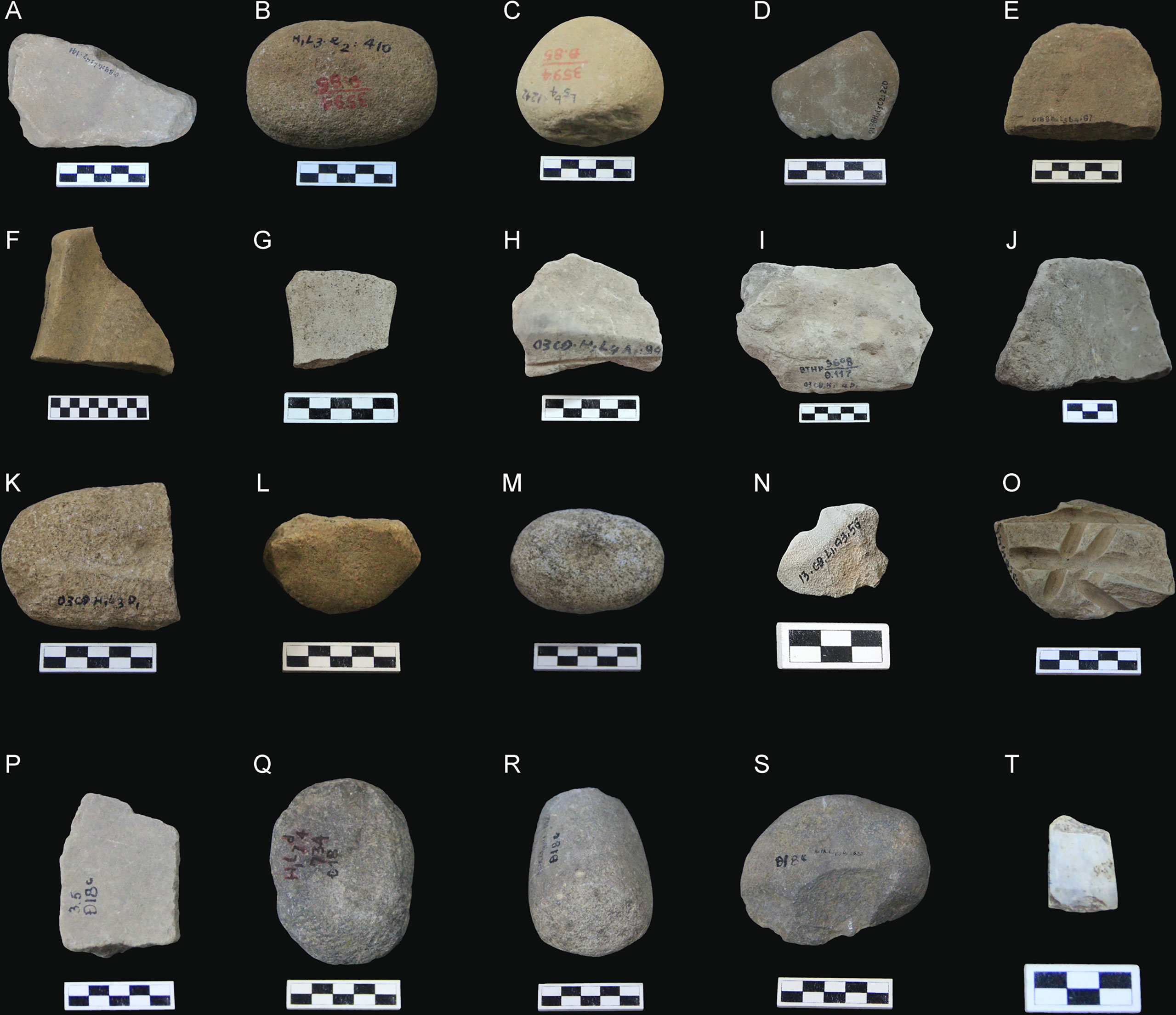
Figure 4 Stone tools from Bai Ben (A–E), Bai Cat Don (F–O), and Trang Kenh (P–T) for this study; (A, F–K, P) Grinding stone, (B, C, L, Q, R) Muller/Pounder, (D, O) Grinding stone tools “Ha Long Mark”, (E) Short axe, (M) Pitted pebble, (N) Shouldered axe fragment, (S) Chopper, (T) Adze.
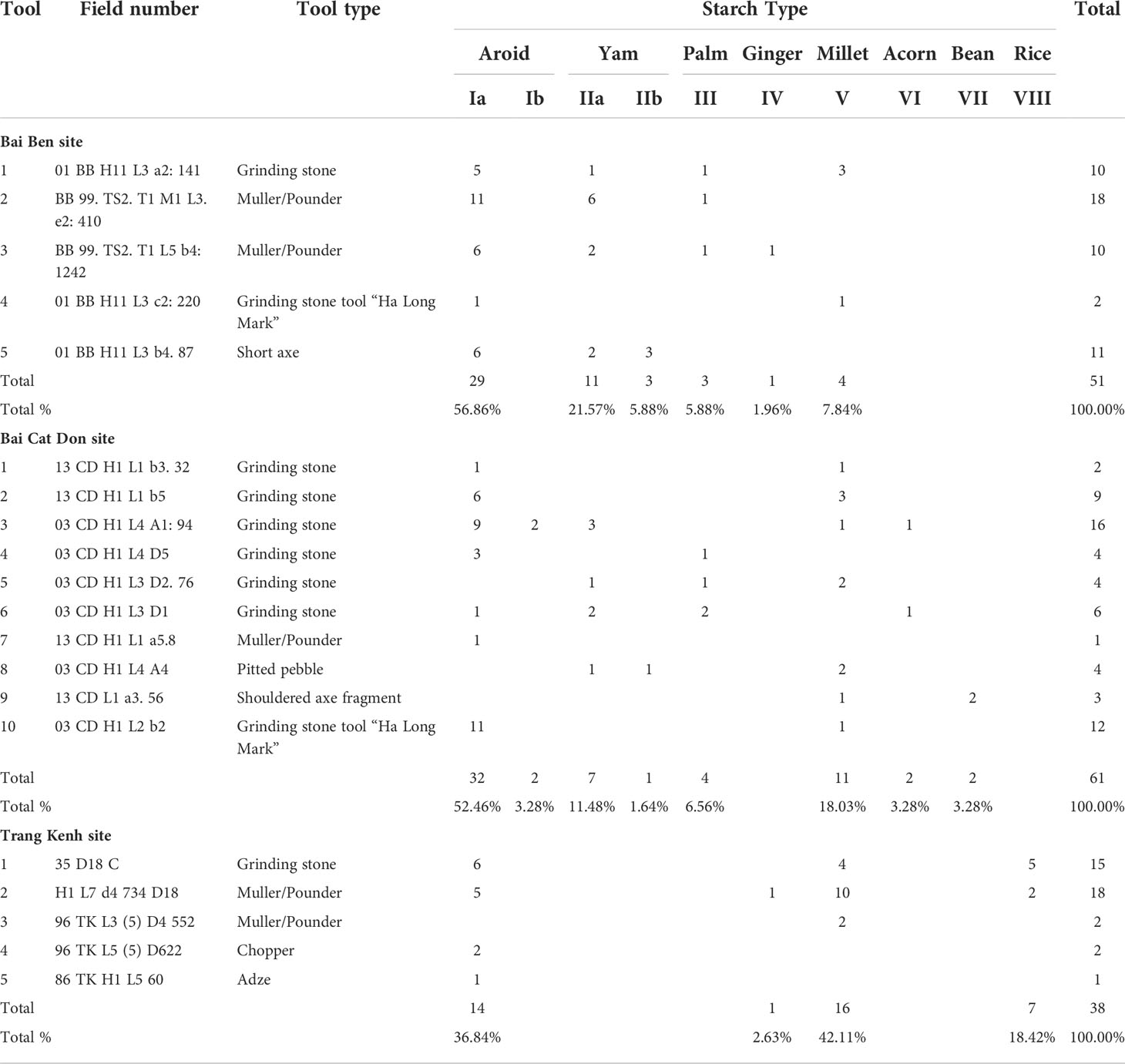
Table 3 Identification of starch grains recovered from the studied sites.
Bai Cat Don site
Bai Cat Don site (N20°44’43.40”, E106°59’33.74”) is a residential site located in the southwestern corner of Cat Ba Island in Ha Long Bay, about 4 km from Bai Ben (Bui, 2016) (Figure 1). Two excavations in 2002 and 2013 uncovered a total 78 m2 (Nguyen et al., 2005; Bui, 2016). The cultural layer of Bai Cat Don is about 80-100 cm. Like Bai Ben, Bai Cat Don is regarded as a late Ha Long site. The typical characteristics of the stone artifacts are grinding stones with multiple grooves often named as the “Ha Long Mark”, small shouldered axe/adzes, and pebble pointed tools. The pottery artifacts are broken pieces of containers and cooking utensils such as pots, low-bottomed bowls, standard bowls, and others. Similar to Bai Ben pottery, they are spongy because of shell fragments that were mixed into the clay matrix. In addition, some potsherds with reddish-brown color, decorated with incised curves combined with seashell imprinted edges, are typical in Hoa Loc cultural sites from Thanh Hoa Province (Bui, 2016).
So far, no radiocarbon dates are available from the Bai Cat Don site. During this study, we intended to carbon-14 date samples from Bai Ben and Bai Cat Don, but no dateable materials were available in the curation storage. Still, the similar stone tools and ceramic wares in both the manufacturing materials and stylistic output indicate a context equivalent with Bai Ben and belonging to the late Ha Long cultural phase (Bui, 2016).
This archaeobotanical study includes ten stone tools collected from 2003 and 2013 excavations at Bai Cat Don. They are six grinding stones, one muller/pounder, one pitted stone, a one-shouldered axe, and one “Ha Long Mark” artifact (Figures 4F–O and Table 3).
Trang Kenh site
Trang Kenh site (N20°57’10”, E106°45’10’’) is located near the estuary of the Bach Dang River in Hai Phong City (Figure 1). It was discovered in 1968 and excavated five times, opening a total of 380.5 m2 (Nguyen, 2005a). The cultural layer of the site is between 1.8 m and 2.1 m thick, with abundant stone artifacts, pottery, mollusk shells, animal bones, and teeth. More than 19 14C dates were obtained from the Trang Kenh site (Nguyen, 1996; Tang and Nguyen, 2003; Nguyen, 2005a), and they produce results generally in the range of 4000-3000 cal. years BP (Figure 3 and Table 2).
Many nephrite gouges and adzes were found at Trang Kenh. The most remarkable findings here were the thousands of pieces of debris and debitage from the manufacture of nephrite (jade) ornaments such as bracelets, small rings, and beads, and the associated crafting tools such as saws, chisels, and jasper drills (Figure 5). Trang Kenh is the largest nephrite workshop site known so far in Southeast Asia. It was a specialized manufacturing settlement for making ornaments for exchange with other communities of the Phung Nguyen and Dong Dau groups in the Red River Valley.
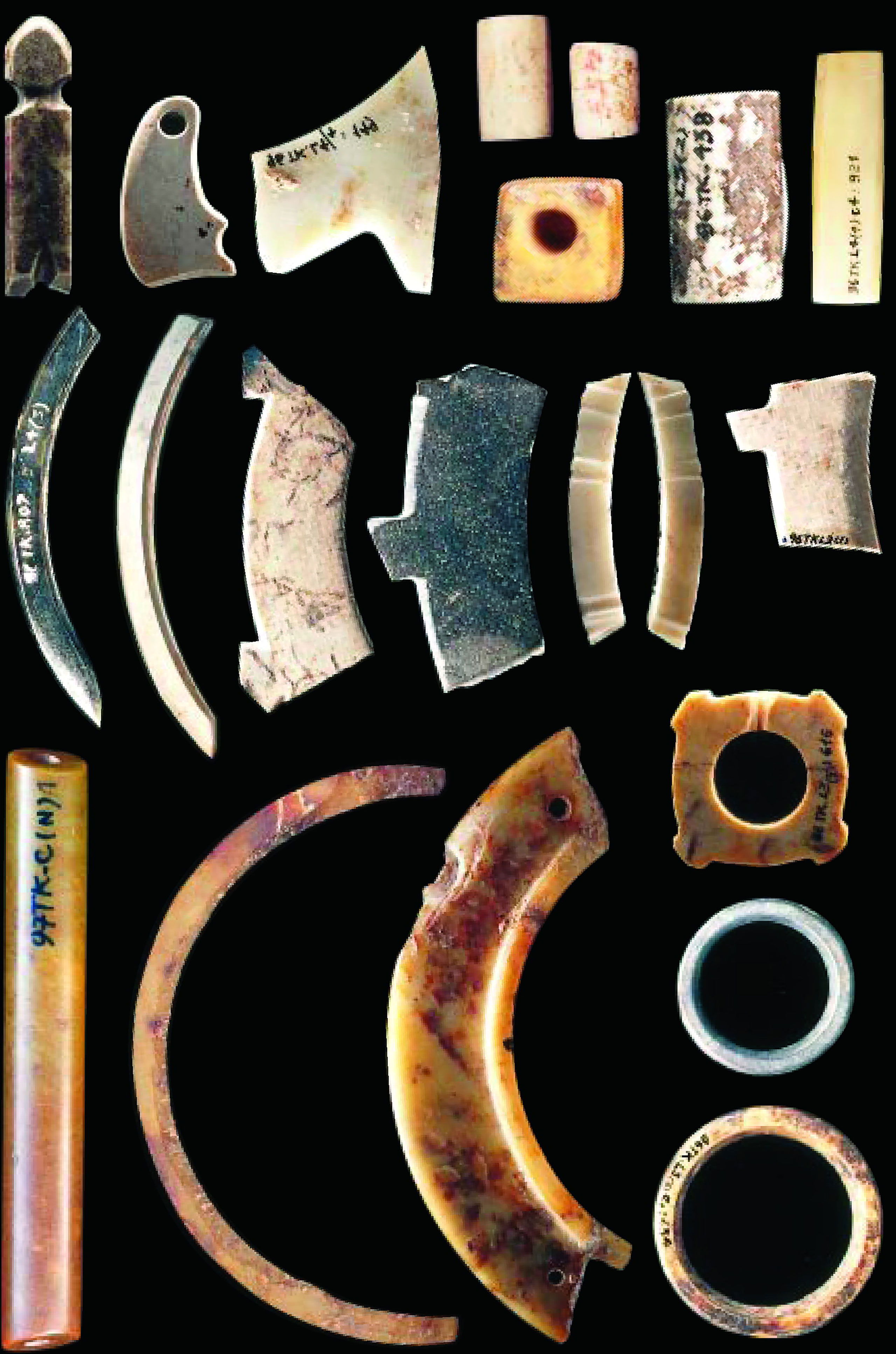
Figure 5 Jade ornaments excavated from the Trang Kenh jade workshop.
Burial features frequently contained finished jade ornaments (Nguyen, 1996). Three burials were reported in the 1969-1970 excavation, where one deceased was in an extended, supine position with the head pointing to the north, overlaying a pavement of pebbles in the bottom, and one grave included an offering of a trapezoidal adze (Hoang et al., 2005). In addition, many small pits were discovered on habitation living surfaces, and some showed traces of probable post holes related to the ancient house structures (Tang and Nguyen, 2003). Five stone tools from Trang Kenh were included in this study (Figures 4P–T and Table 3).
Materials and methods: Micro-plant extraction and identification
All the stone tools analyzed in this study had been excavated by Kim Dung Nguyen and colleagues, and the objects have been stored in the Hai Phong Museum and Institute of Archaeology (VASS), Hanoi. As the major goal was to understand their staple food, grinding stone tools were preferred for this study, but other types of lithic tools were tested to investigate their functions. Sediments adhering to the stone tools and dust from the storerooms were collected as comparative samples to exclude the possibility of modern contamination.
The sediments and dust on each tool’s surface first were rinsed with distilled water and then cleaned in an ultrasonic bath with distilled water for five minutes to recover the residues. Next, the ultrasound mixtures were transferred into test tubes and processed to recover the micro plant remains, including starches and phytoliths, in the laboratory at the Department of Archaeology and Natural History, the Australian National University.
The extraction process of starches and phytoliths followed the procedures of previous studies (Lu et al., 2002; Yang et al., 2013; Pearsall, 2016; Deng et al., 2017; Wang et al., 2022). First, solutions of 6% H2O2 and 10% HCl were used separately to remove the organic matter and carbonate. Second, the starch grains were isolated with LST (lithium heteropolytungstate) heavy liquid (density 1.9 g/cm3), then mounted on a slide in a solution of 10% glycerine and 90% distilled water, and then next sealed with nail polish. Third, the residues were rinsed three times with distilled water, and then the phytoliths were separated with heavy liquid (density 2.35 g/cm3). After these steps, the samples were rinsed twice with distilled water and then once more with 30% ethyl alcohol. At this point, the phytoliths were mounted on the slide with Canada Balsam. All observed starch grains and phytoliths on each slide (100%) were counted, measured, and recorded under the optical microscope (Machine model: Olympus BX-51) at 400× magnification.
The identification of ancient starches was based on the modern reference collections from Vietnam (collected by the authors of this study), the database (http://cmsgd.igsnrr.ac.cn/) built by the Institute of Geographic Sciences and Natural Resources Research (IGSNRR) that contains more than 200 species of plants, particularly the rich morphological data of cereal crops and their wild relatives (Yang et al., 2018), and other related published studies from tropical and subtropical areas of Asia and the Pacific (Fullagar et al., 2006; Lentfer, 2009; Yang et al., 2013; Yao, 2016; Li, 2020). However, the observed phytoliths were very few and could not be classified taxonomically into any species. No starch was recovered from comparative samples that were collected for excluding possible modern contamination.
Results
Bai Ben site
A total of 56 starch grains were recovered from the Bai Ben lithic tools (N=5), of which five starch grains could not be classified due to the lack of identifiable features. More than half of the other 51 starch grains were identified as edible Aroids (Table 3). They usually were round or sub-round in shape with multiple flat facets and centric hilum (Figures 6, Group 1A, B; 7A, B) (Table 4). The facet starch grains appear widely in many plants with underground organs, so they are difficult to identify into species, especially when the number of recovered starches is small. However, integrated with the former large findings of these types of starches from the Cai Beo site (Wang et al., 2022), we can conclude that the inhabitants in Bai Ben inherited the tradition of extensive utilization of edible Aroids (Colocasia spp.; Alocasia spp.).
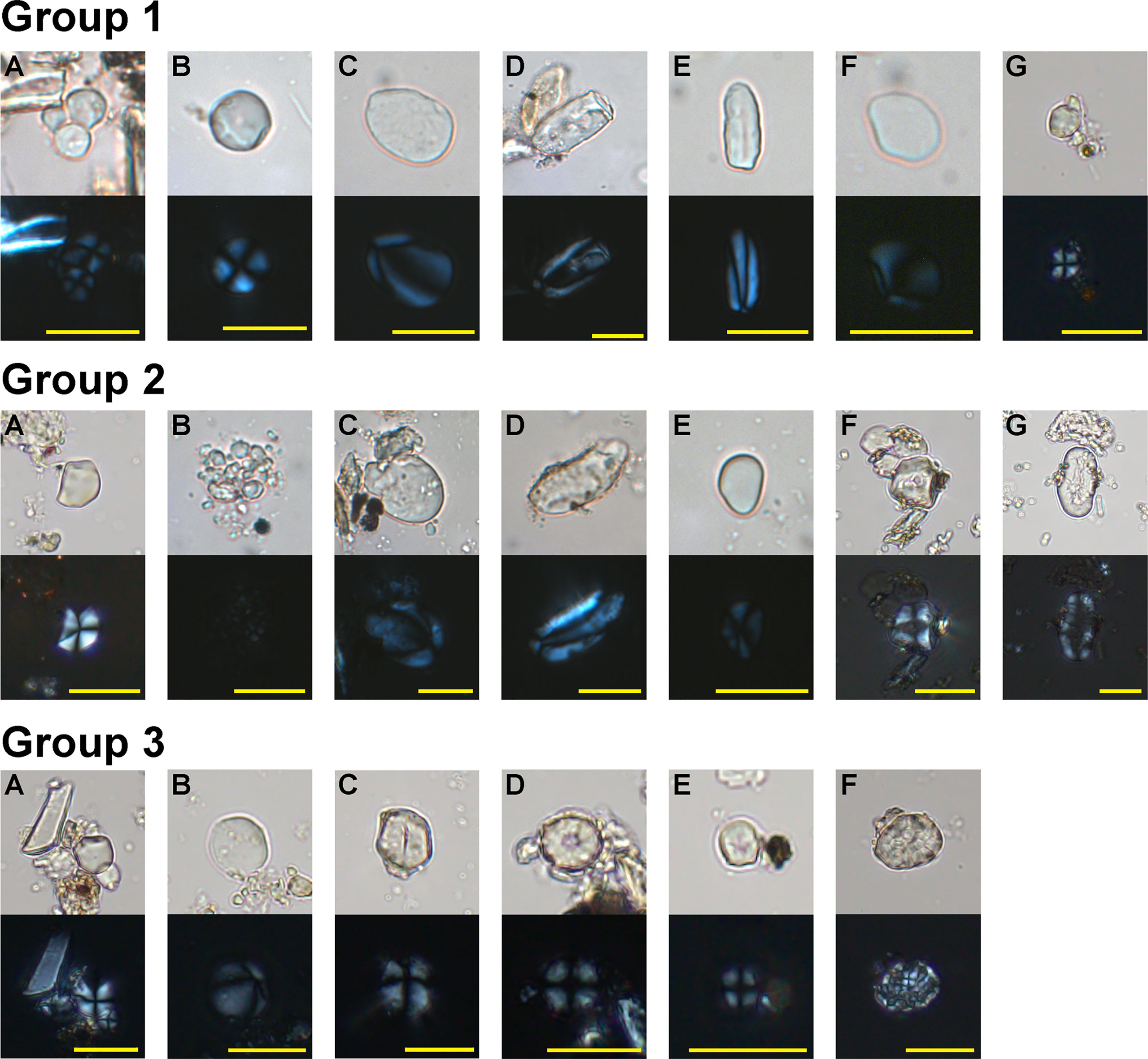
Figure 6 Ancient starches recovered from residues on the stone tools (under polarized and brightfield light). Group 1 from Bai Ben site: (A, B) Type Ia, Colocasia spp./Alocasia spp., (C) Type IIa, Dioscorea alata, (D) Type IIb, Dioscorea spp., (E) Type III, Arenga sp., (F) Type IV, Zingiber sp., (G) Type V, Setaria italica,; Group 2 from Bai Cat Don site: (A) Type Ia, Colocasia spp./Alocasia spp., (B) Type Ib, Colocasia esculenta, (C) Type IIa, Dioscorea alata, (D) Type III, Arenga sp., (E) Type V, Setaria italica, (F) Type VI, Quercus sp., (G) Type VII, Vigna sp.; Group 3 from Trang Kenh site: (A) Type Ia, Colocasia spp./Alocasia spp., (B) Type IV, Zingiber sp., (C–E) Type V, Setaria italica, (F) Type VIII, Oryza sativa. Scale bar = 20μm.
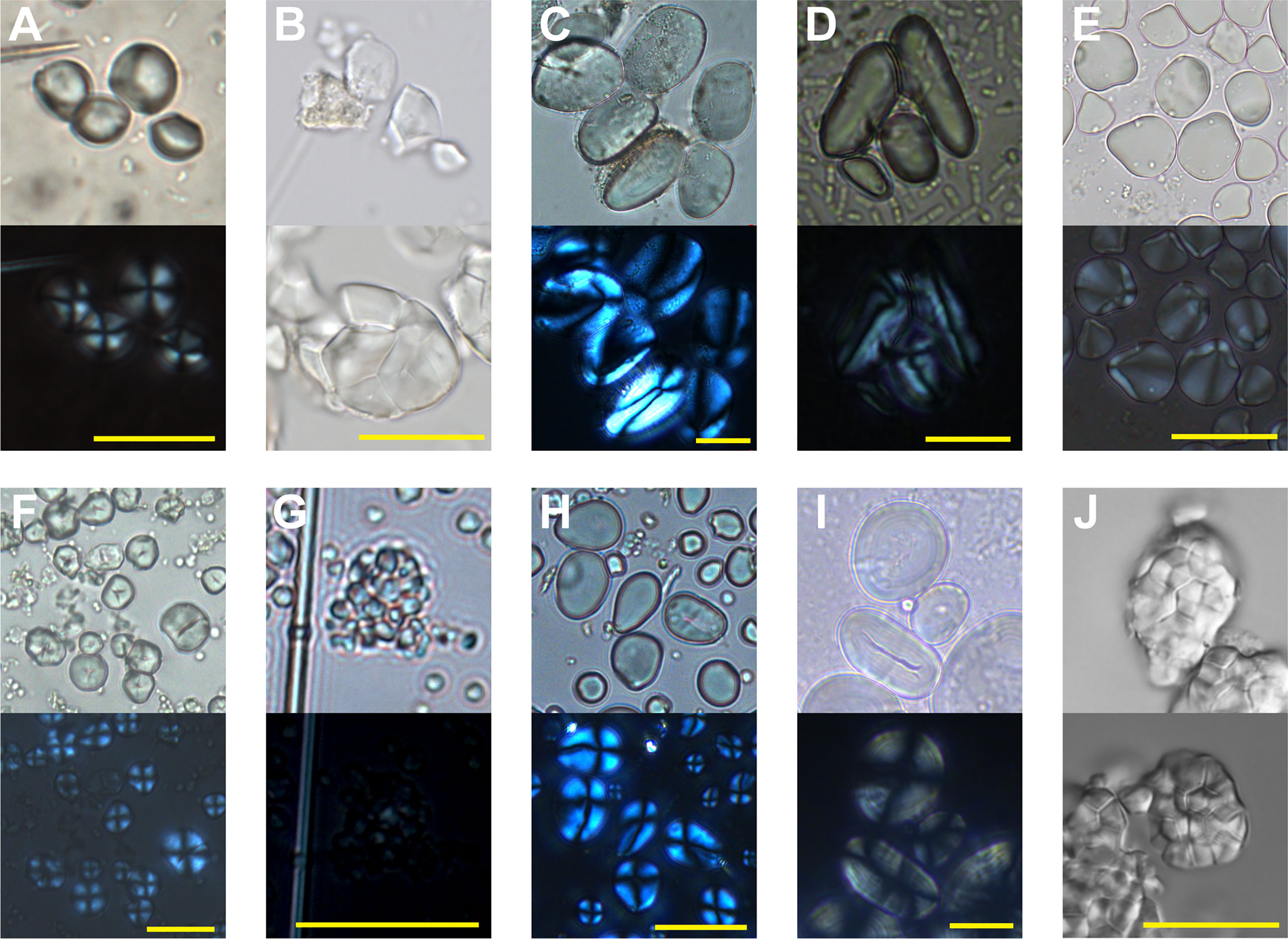
Figure 7 Modern starch references relevant to this study (under polarized and brightfield light). (A) Colocasia konishii, (B) Alocasia macrorrhizos, (C) Dioscorea esculenta, (D) Arenga pinnata, (E) Zingiber officinale, (F) Setaria italica, (G) Colocasia esculenta, (H) Quercus francheti, (I) Vigna umbellata, (J) Oryza sativa subsp. japonica. Scale bar = 20μm.
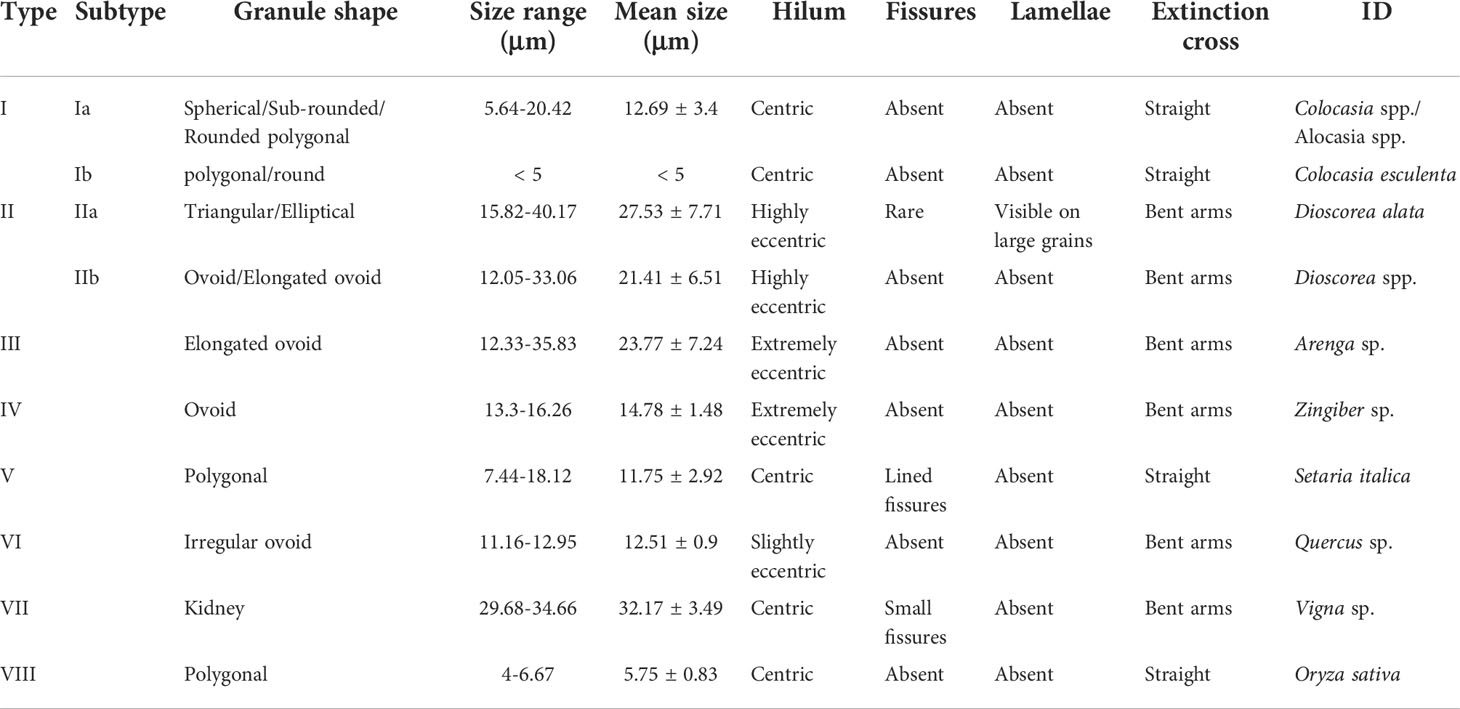
Table 4 Morphology of starch grains from the studied sites.
Fourteen starch grains with oval or long oval shapes, highly eccentric hilum, and curved cross-arms shared similar morphological features with Dioscorea. Apart from three starch grains lacking the relative references to identify them into species, the other 11 starch grains, ranging from 12.05 to 38.48 μm in size, best matched with the features of the greater yam (Dioscorea alata) (Figures 6, Group 1C, D; 7C). Three starch grains from the palm (Arecaceae) were recovered; they were narrow, elongated ovoid in shape with extreme eccentric hilum, resembling those from Arenga sp. (Figures 6, Group 1E; 7D). One starch grain, 10.3 μm in length and 13.3 μm in width, ovoid in shape, was from ginger (Zingiber sp.) (Figures 6, Group 1F; 7E).
Four starch grains with polygonal shapes exhibited characteristics of millets; they were classified into foxtail millets for more comparable morphological features (Figures 6, Group 1G; 7F).
Bai Cat Don site
Among the 74 starch grains recovered from the stone tools (N=10) of Bai Cat Don, 61 starches could be categorized into six groups, and the remaining 13 starch grains were unidentified. The starches from Aroids accounted for 56% of the total findings (Table 3). This result is consistent with our recent study from the Cai Beo site, where the edible Aroids accounted for half of the total findings (Wang et al., 2022). Thirty-two faceted round or sub-ground starch grains were from corms of Colocasia or Alocasia (Figures 6, Group 2A; 7A, B).
Compared to our modern references, two clusters of compound grains with the most lengths smaller than 5 μm and faint cross arms under polarized light were identified as taro (Colocasia esculenta) (Figures 6, Group 2B; 7G). Eight ovoid starch grains with eccentric hilum were from Dioscorea, among which six were the best match with Dioscorea alata (Figures 6, Group 2C; 7C). Four starch grains with elongated ovoid shapes were identified as Arenga sp. (Figures 6, Group 2D; 7D).
Starch grains from acorns were rare, represented in merely two granules, 12.95 μm and 11.16 μm in size, and they shared the typical physical features with Quercus sp. (Figures 6, Group 2E; 7H).
Eleven starch grains with polygonal or spherical shape and centric hilum, ranging from 9.17 to 18.12 μm in size, sometimes with linear fissures, exhibited the distinctive features of foxtail millet (Setaria italica) (Figures 6, Group 2F; 7F).
Two starch grains, 29.68 μm and 34.66 μm in length with an ovoid shape and small linear fissures in the hilum part, came from Vigna sp. (Figures 6, Group 2G; 7I), found on the shouldered axe in Bai Cat Don.
Trang Kenh site
In the Trang Kenh site, 38 starch grains were recovered from lithic tools (N=5), among which the cereal crops seemed quite crucial as more than half of the total starch grains were identified as millets and rice (Table 3). On the other hand, except for 14 starch grains from edible Aroids (Colocasia spp.; Alocasia spp.) (Figures 6, Group 3A; 7A, B), no starch was found from yams, acorns, or palms at Trang Kenh, reflecting a different plant consumption mode apart from the other two sites mentioned above.
One starch grain from Ginger (Zingiber sp.) is 16.26 μm in size with a nearly round shape, extremely eccentric, and protruding hilum (Figures 6, Group 3B; 7E).
Sixteen starch grains with polygonal shapes fall into sizes between 9.09 μm and 16.52 μm; their morphologies were most comparable with foxtail millet (S. italica) after being compared with modern millets and their wild relatives (Figures 6, Group 3C; 7F) (Yang et al., 2012). Some parts of them showed damaged features after grinding, such as rough surface, hollowed hilum, widened and weakened extinction cross (Figures 6, Group 3D, E).
Notably, two groups of compound starch grains that shared the typical features of rice (Oryza sativa) (Figures 6, Group 3F; 7J) were discovered on one grinding stone and one muller, reflecting the combination of use as a toolset for processing cereals. The individual starch grains of rice are difficult to identify due to their small sizes and lack of unique attributes. However, when they occur in agglomerations, their unique morphological characteristics with a flat surface, tightly grown together, and clearly defined margin between particles confidently could distinguish rice from other plants (Yao, 2016; Li et al., 2019).
Discussion
Through this micro-botanical study, two modes of subsistence strategy were revealed in ancient Ha Long Bay, corresponding with the different cultural backgrounds in the mainland and offshore areas separately attributed to Ha Long and Trang Kenh cultural assemblages.
A wide range of plant resources was exploited by Bai Ben and Bai Cat Don residents on Cat Ba Island, including taros, yams, acorns, palm, ginger, and beans, as well as foxtail millet, suggesting that the site’s occupants relied heavily on wild plants or horticulture while using limited amounts of rice and millet products. They may have practiced cropping on a small scale or managed exchange activities with neighboring farming groups, as some archaeologists suspected previously (Nguyen, 2009; Nguyen, 2019). The type of plant remains found in Trang Kenh differed from the other two Ha Long cultural sites mentioned above, revealing a food production mode characterized by rice and foxtail millet.
Indigenous hunter-gatherers and their tropical plants
The underground storage organs (U.S.O.s) from several species of edible aroids (Colocasia spp.; Alocasia spp.) and yams (Dioscorea spp.) were crucial food resources for inhabitants in Ha Long Bay, which could trace back to Cai Beo culture phase about 7000-5000 years BP (Wang et al., 2022). This study confirms that the U.S.O.s remained significant until the late Ha Long phase 3000 years ago. The long-settled hunter-gatherers at Ha Long Bay were highly likely equipped with knowledge of managing and processing U.S.O.s and developed their vegeculture coexisting with cereal agriculture.
The cultural use of aroids and yams extends deep into the local traditions of Southeast Asia and the Pacific regions, and aroids are regarded as fundamental in supporting the development of pre-farming societies (Barker, 2005; Barton and Paz, 2007). Even today, taro (C. esculenta) and greater yam (D. alata) are cultivated as food crops, while wild yams and Alocasia are used as famine foods throughout Southeast Asia (Matthews, 2010; Rugchati and Thanacharoenchanaphas, 2010; Rashmi et al., 2018; Saranraj et al., 2019). Additionally, other kinds of U.S.O.s, such as Zingiber sp., traditionally have been exploited or managed by local residents for thousands of years.
The starches from the pith of Arenga sp. in Bai Cat Don and Bai Ben indicate the continued exploitation or management of palms by the Neolithic inhabitants on Cat Ba Island. Palms were ubiquitous in southern China and Southeast Asia Neolithic sites that have shown their distinctive phytolith and starch morphologies (Yang et al., 2013; Deng et al., 2020; Zhang et al., 2021). In our previous study, starch grains and phytoliths from Palmae were recovered from Cai Beo (Wang et al., 2022). The representative research at Xincun (ca. 5300 through 4420 cal. years BP) on the Guangdong coast confirmed that sago-type palms (Caryota spp.; Arenga sp.) were an important food plant before rice in southern China (Yang et al., 2013). However, few species in the genus Arenga have been recognized as domesticated from the wild (Pillai et al., 2020). Sugar palm (Arenga pinnata) is one of several species of palms culturally crucial to the ethnic groups of Southeast Asia (Sujarwo and Keim, 2021). In Vietnam, sugar palm is grown on the highlands in the central or northern part and utilized for many purposes, especially for making a unique wine from its sap, sometimes called “the Wine of the God” (Dang and Hoang, 2012; Nguyen et al., 2014).
The exploitation of tree nuts, such as Quercus, Canarium, and Castanopsis was common practice throughout Southeast Asia and southern China from late Pleistocene to late Holocene, supported by pollen, macro-botanical findings, and starch grain analysis (Nguyen, 2008; Nguyen, 2014; Yang et al., 2017; Deng et al., 2019; Li, 2020). Rich Fagaceae were identified in Cai Beo (Wang et al., 2022). However, only two starches from Quercus were recovered in Bai Cat Don, indicating the possible reduced exploitation of acorns in Ha Long Bay after 4500-4000 years BP.
Acorn is a time-consuming, high-cost, and low-return economic resource that would have entered into the diet only when people are forced to expand their diet breadth (Tushingham and Bettinger, 2013). Therefore, the utilization of acorns may have lost prominence when more edible cereal crops were added to hunter-gatherer diets during the early Ha Long cultural phase around 4500 years BP, as observed in this study. The same shift is reported in the Pearl River Delta of coastal southern China, where acorns were consumed in large quantities from 6000 through 4500 years BP, but then decreased after the arrival of rice agriculture (Li, 2020). Moreover, the remarkable decline of arboreal pollen and increases in Poaceae pollen were recorded at around 4300 to 3300 cal. years BP in the Pearl River Delta (Ma et al., 2020).
Farmers brought the new plants and new recipes
Millets usually have been absent in the early farming sites in Mainland Southeast Asia (Figure 8). In the past decade, the ancient starch grain analysis based on detailed comparative morphological studies on modern millets and their wild relatives has been applied effectively to reconstruct the origins and domestication process of millets in northern China (Yang et al., 2012). A high ubiquity of starch granules from foxtail millets in studied sites showed the superiority of ancient starch grain analysis to recover millet agriculture. This study captures the evidence of foxtail millet in northern Vietnam, revealing an early introduction of foxtail millet highly likely accompanied by rice.
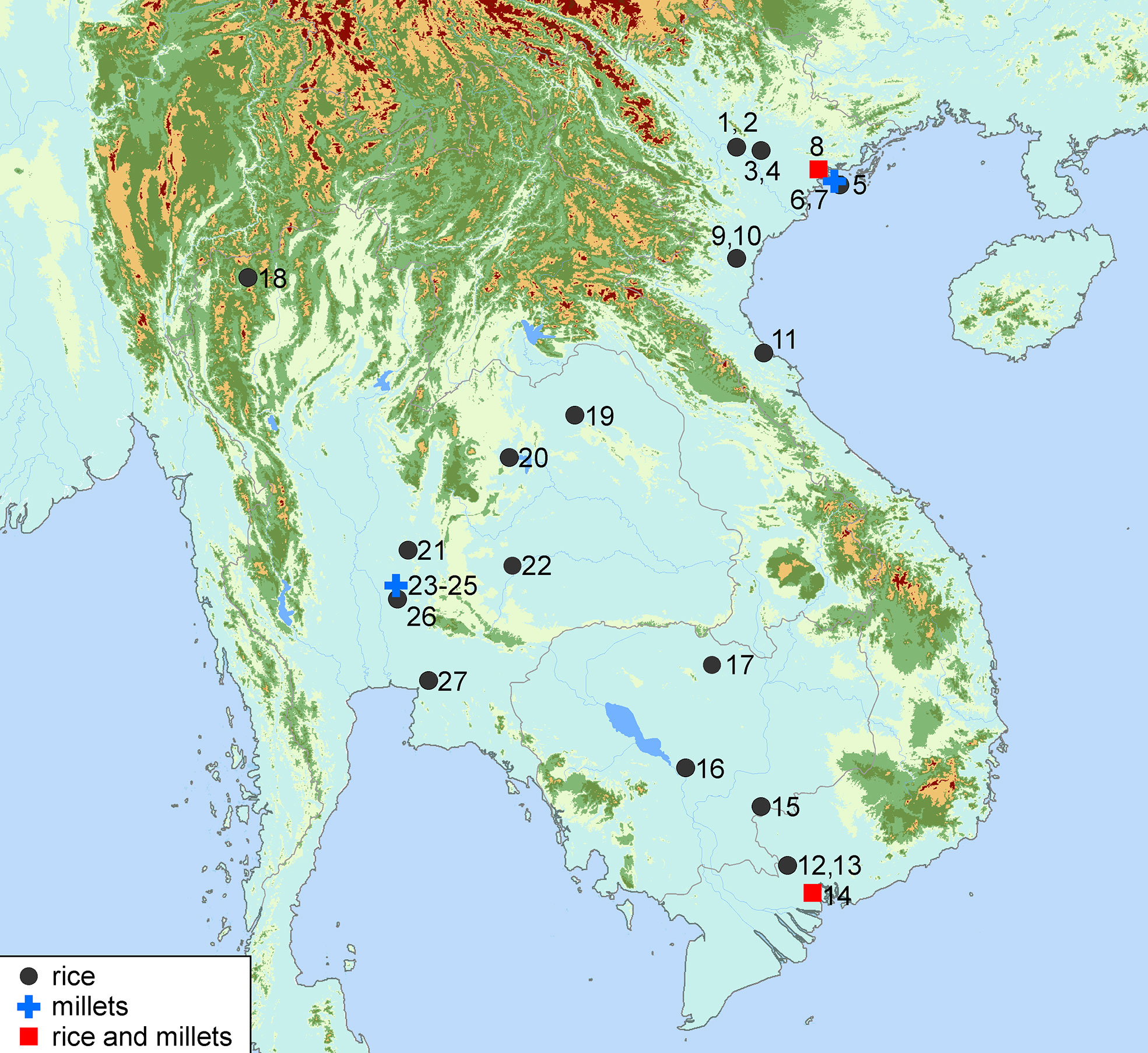
Figure 8 Major sites with the evidence of rice and millets in Mainland Southeast Asia during the Neolithic period. 1. Dong Dau, 2. Thanh Den, 3. Xuan Kieu, 4. Tu Son, 5, Trang Kenh, 6. Bai Ben, 7. Bai Cat Don, 8. Cai Beo, 9. Bai Cu, 10. Bai Man, 11. Thach Lac, 12. An Son, 13. Loc Giang, 14. Rach Nui, 15. Krek 52/62, 16. Samrong Sen, 17. Mlu Prei, 18. Banyan Valley cave, 19. Ban Chiang, 20. Non Nok Tha, 21. Khok Charoen, 22. Ban Lum Khao, 23-25. Non Pa Wai, Non Mak La, Ni Kham Haeng (labeled as millet sites, because no rice was found in the Neolithic period of these three sites), 26. Tha Kae, 27. Khok Phanom Di (see details in Table 1).
Foxtail millet (S. italica) has been found at all three study sites, and Trang Kenh has yielded both foxtail millet and rice, showing the earliest multi-cropping in Mainland Southeast Asia. During this time, with the sea level falling near the present level around 4000 years BP, flatlands with fresh water supply appeared in the upper streams of the coastal basins in northern Vietnam (Ma et al., 2020), providing suitable natural conditions for initial irrigation and agricultural production. As a result, human settlement emerged along the natural levees of the Red River Delta (Funabiki et al., 2012), and the Phung Nguyen group began to develop into a flourishing farming society.
No clear evidence of broomcorn millet has yet been found in northeastern Vietnam; a similar multi-cropping pattern and lacking broomcorn millet have been reported on the Guangdong coast. Broomcorn millet has been discovered more frequently in southwest China and central Thailand (Weber et al., 2010; Dal Martello, 2022) (Figure 8). Apparently one problem was due to the limited archaeobotanical work undertaken in northern Vietnam, also noting the limited numbers of samples analyzed in this study. Additionally, according to a modern experiment on the carbonized process of millets, broomcorn millet shows a lower probability of carbonization than seen in foxtail millet in archaeological contexts as its carbonization temperature range is smaller than foxtail millet (Wang and Lu, 2020). Currently, we cannot totally exclude the possibility that the Neolithic farmers in northern Vietnam once may have cultivated a certain amount of broomcorn millet, yet this issue needs further research.
As mentioned, individual starch grains from rice are small and not easy to identify, but the confidence is much higher when they are found in sheets or clusters. The starch grains from rice were documented successfully in many sites dating from 9000 to 7000 cal. years BP in China’s Huai River and Yangtze River region (Yang and Jiang, 2010; Yao et al., 2016; Li et al., 2019; Yang et al., 2021). The numbers of rice starches acquired from Trang Kenh were less than foxtail millet, but this finding does not necessarily indicate that foxtail millet was more important than rice for the ancient Trang Kenh villagers. A dry-grinding simulation experimental study (Li et al., 2020) showed that only a few rice starch grains tend to survive, but foxtail millet could be preserved better under the same dry-grinding conditions. The different preservation bias carbonized cereals may lead to the overrepresentation of rice in Mainland Southeast Asia; carbonized rice seems to be preserved better than carbonized millet (Castillo, 2019). Further study is needed in collaboration with diverse archaeobotanical methods to refine interpretations of these findings.
The presence of starch grains from Vigna sp. at Bai Cat Don suggests the region-wide behavior of exploiting beans in Neolithic southern China and Mainland Southeast Asia. For instance, rice bean (Vigna umbellata) and azuki bean (Vigna angularis) are locally essential legumes that have been domesticated in Southeast and East Asia (Isemura et al., 2011). The macro-remains of Vigna spp. were recorded from Baiyangcun and Baodun in southwest China, dating to 5000-4000 cal. years BP (Guedes et al., 2013; Dal Martello et al., 2018), and starches from Kuahuqiao, Xiaohuangshan in the lower Yangtze River basin were dated to 9000-7000 cal. years BP (Yang and Jiang, 2010; Yao et al., 2016). In northern Vietnam, before this study, beans were reported in the Phung Nguyen cultural layer of the Dong Dau site (Nguyen, 2013).
Although the bean starch from Bai Cat Don is too little to determine species, two possibilities are proposed with the newest genetic and archaeobotanical study. First, they were collected locally, noting that the wild progenitors of Vigna umbellata have been found in the most extraordinary genetic diversity in Mainland Southeast Asia (Isemura et al., 2011; Castillo et al., 2016). The other possibility is that they may have arrived in northern Vietnam with the spread of agriculturalists, noting that a genetic study discovered azuki bean in mountainous north Vietnam has been most closely related to specimens in the middle Yangtze River basin and had been cultivated in isolation for a long time (Xu et al., 2008; Leipe et al., 2022).
Spatial-tempo transition of subsistence patterns along with cultural transformation
The plant consumption history from 7000 through 3000 years BP in Ha Long Bay could be reconstructed by integrating our previous findings (Wang et al., 2022) and the new information from this study. For the earlier stage, no dramatic difference was noticed in the use of plant species and quantities from the Cai Beo cultural phase (ca. 7000-4500 cal. years BP) to the Early Ha Long cultural phase (ca. 4500-4000 cal. years BP), indicating the cultural continuity of plant utilization mode; the Cai Beo residents on the Cat Bat Island relied heavily on aroids, yams, and acorns (Figure 9). However, as early as 4500-4000 cal. years BP, the appearance of rice phytoliths in the Ha Long phase at the Cai Beo site, implies the first farming expansion into Ha Long Bay (Wang et al., 2022). Furthermore, ancient DNA analysis of the Hon Hai Co Tien human remains of the Ha Long phase has indicated an initial gene admixture of East Asians with the Hoabinhian hunter-gatherers at 4381-3926 cal. years BP (McColl et al., 2018).
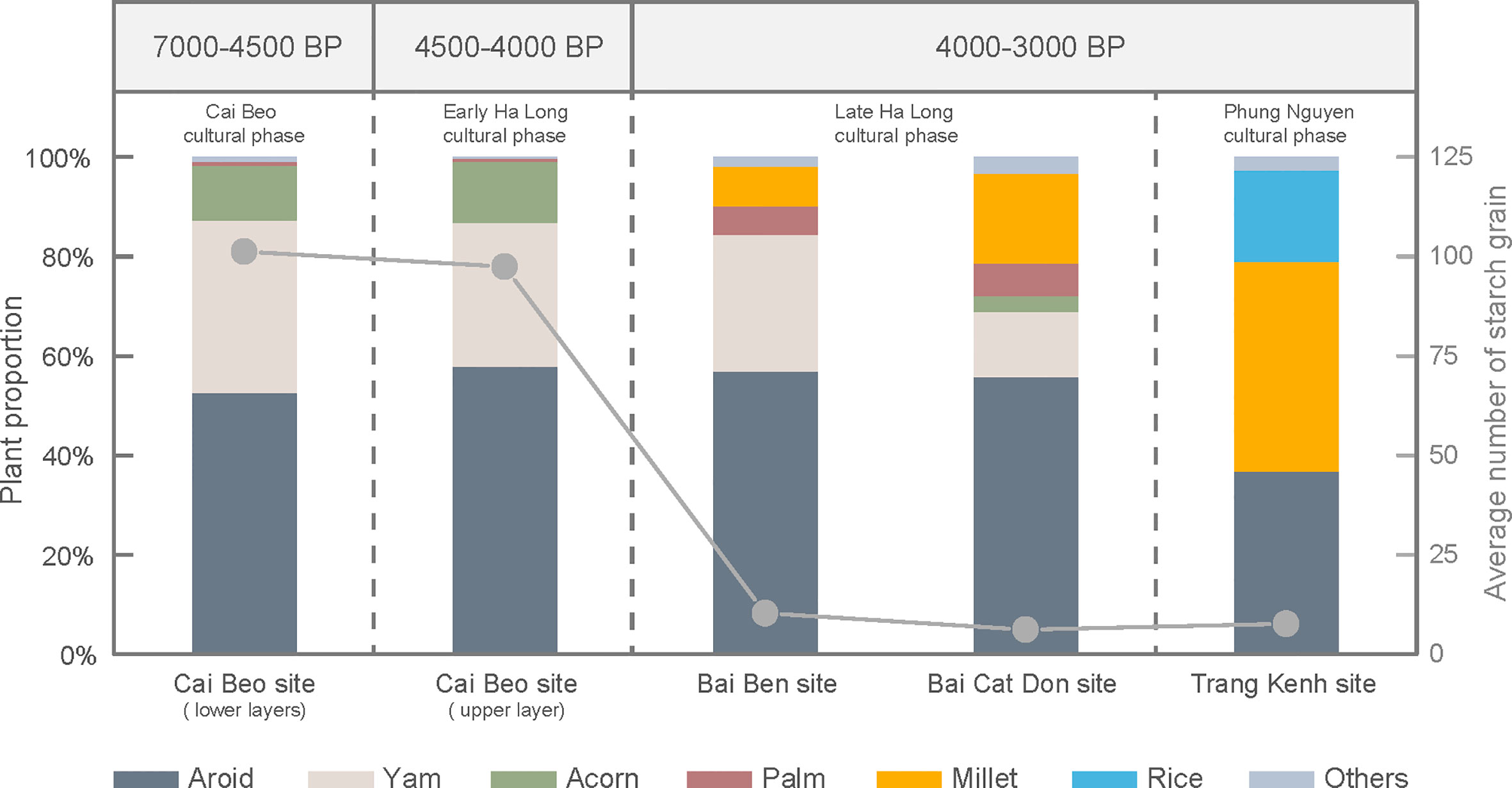
Figure 9 The proportions of different plants recovered from the four studied sites (multicolor histogram correlate to the left coordinate axis), and the average number of starch grains recovered (gray dots and solid line correlate to the right coordinate axis). The average number of starch grains found on each stone tool from the Cai Beo and Early Ha Long phases was 100, but the number dropped in the Late Ha Long and Phung Nguyen phases to below 10 grains on each tool. Clearly, the numbers of rice and millet increased through time.
As presented in this study, the transition of subsistence strategies became more apparent in the Late Ha Long culture around 4000 years BP. The average starch grains recovered on stone tools from Bai Ben and Bai Cat Don experienced a sharp decrease compared with the preceding phases in the Cai Beo site (Figure 9). The number of grinding stone tools from this period gradually declined, representing another cultural indicator of a possible subsistence transition. Although the diversity of utilized plant species became less (Wang et al., 2022), the persistent group (the late Ha Long group) on Cat Ba Island continued to exploit the same plant resources, particularly involving extensive consumption of aroids and yams. The diverse ecosystems and landscapes on Cat Ba Island support high species biodiversity (Van et al., 2010), providing the advantage of rich territorial animal and plant resources from inland areas, while continuing to accommodate the ancient Ha Long people living on their traditional lifestyles of mixed hunting, fishing, and gathering economies (Nguyen, 2019; Nguyen, 2020).
In a broader context in prehistoric southern China and Southeast Asia, hunting and gathering often continued as essential subsistence activities even after the arrival of animal and plant domesticates (Castillo et al., 2018; Li, 2020; Deng et al., 2022a), and the expansion of early farmers did not lead to the total extinction of the long-established hunter-gatherers in Southeast Asia (Higham et al., 2011). For example, even after several hundred years of the introduction of agriculture in the Mekong Delta region, hunting and foraging remained dominant at Rach Nui (Castillo et al., 2018), and this pattern contrasted in cultural materials with contemporary highly developed agriculture communities.
Given that the majority of Ha Long cultural inhabitants were descendants of indigenous hunter-gatherers and exhibited distinct cultural contexts with other farming groups in northern Vietnam, the foxtail millets discovered in Bai Ben and Bai Cat Don were perhaps acquired through exchanges or trades. As mentioned, from an archaeological perspective, the Ha Long group appears to have sustained contacts and exchanges with other groups, such as Phung Nguyen, Ha Giang, Mai Pha (Lang Son), Hoa Loc, and offshore islands along the South China Sea coast (Ha, 2005; Nguyen, 2005b; Nguyen, 2019). However, another possibility is that the people of Bai Ben and Bai Cat Don practiced a specific scale of millet farming on their own, as a stone knife-like fragment, typically used for crop harvesting, has been found at Ba Vung (Chen, 2007), one of the Ha Long cultural sites. This possibility can be explored through further research.
At Trang Kenh, which represented a typical Neolithic farming site with extensively worked jade remains, the discovered plant resources showed that people relied on cereal-based farming (Figure 9). This subsistence pattern coincided with a cultural background of agricultural communities that depended heavily on cultivated crops, which contrasts with hunter-gatherers that explored a broad range of wild plant resources. The limited discovered amount of rice and foxtail millet from Trang Kenh may have been due to stone artifacts from this site mainly related to nephrite ornaments manufacturing. The stone tools associated with daily life were far fewer. More findings undoubtedly will be recovered in the residential areas in future work.
Conclusion
The archaeobotanical studies from three Neolithic sites in Ha Long Bay reveal that rice and millets already existed in northern Vietnam around 4000 years BP. Based on the comparison of cultural assemblage and chronology in the study and neighboring regions, the multi-cropping likely can be traced back to 4500- 4000 years BP in the northern part of Mainland Southeast Asia. The coastline along the South China Sea probably contributed a role in expediting the early cultural interaction and rapid movement of farming groups into northern Vietnam. However, the cultural contacts with southwest China through inland routes are apparent as well, which could be exemplified by the discoveries of Yazhang jade blades and other identical pottery and lithic tools of southwest China characteristics from the Phung Nguyen cultural sites (Hoa, 1996). Thus, the cultural landscapes of northern Vietnam at 4000 years BP are diverse and complex.
Based on this study, we can reconstruct two plant-based subsistence patterns, which coexisted in northeastern Vietnam from 4000 through 3000 years ago, and two different cultural groups practiced them, perhaps with their own cultural and biological backgrounds (Lipson et al., 2018; McColl et al., 2018; Matsumura et al., 2019; Matsumura et al., 2021). Nevertheless, many questions remain unclear. Further research is needed in collaboration with a refined chronology, and macro-plant remains, in order to disclose more fully comprehensive information about plant-based subsistence strategies correlated with early Neolithic settlements in northern Vietnam.
Data availability statement
The original contributions presented in the study are included in the article/supplementary material. Further inquiries can be directed to the corresponding author.
Author contributions
H-CH, WW, and KN conceived and designed the study. KN and HL provided the archaeological samples. H-CH, WW, KN, HL, and CZ collected the study samples. WW completed sample identification and data analysis. XY assisted with the starch identification. WW and H-CH wrote the manuscript. MTC edited the manuscript. All authors contributed to the article and approved the submitted version.
Funding
This study was funded in part by the Australian Research Council (Grant Number: DP190101839), the National Natural Science Foundation of China (Grant No. 41930323), and the Chinese Scholarship Council (Grant Number: E94962376).
Acknowledgments
We appreciate Director Dr. Doi Nguyen (Institute of Archaeology, Vietnam Academy of Social Science, Hanoi) and Deputy Director Mr. Do Xuan Trung (Hai Phong Museum) for their support of this study.
Conflict of interest
The authors declare that the research was conducted in the absence of any commercial or financial relationships that could be construed as a potential conflict of interest.
Publisher’s note
All claims expressed in this article are solely those of the authors and do not necessarily represent those of their affiliated organizations, or those of the publisher, the editors and the reviewers. Any product that may be evaluated in this article, or claim that may be made by its manufacturer, is not guaranteed or endorsed by the publisher.
References
Albrecht, G., Haidle, M. N., Sivleng, C., Hong, H. L., Sophady, H., Than, H., et al. (2000). Circular earthwork Krek 52/62: Recent research on the prehistory of Cambodia. Asian Perspect. 39 (1), 19–45. doi: 10.1353/asi.2000.0002
Barker, G. (2005). The archaeology of foraging and farming at Niah Cave, Sarawak. Asian Perspect. 44 (1), 90–106. doi: 10.1353/asi.2005.0004
Barron, A., Turner, M., Beeching, L., Bellwood, P., Piper, P., Grono, E., et al. (2017). MicroCT reveals domesticated rice (Oryza sativa) within pottery sherds from early Neolithic sites, (4150-3265 cal BP) in Southeast Asia. Sci. Rep. 7 (1), 7410. doi: 10.1038/s41598-017-04338-9
Barton, H., Paz, V. (2007). “Subterranean diets in the tropical rainforests of Sarawak, Malaysia,” in Rethinking Agriculture: Archaeological and Ethnoarchaeological Perspectives, 1st ed. Eds. Denham, T. P., Iriarte, J., Vrydaghs, L. (Walnut Creek: Left Coast Press), 50–77.
Bayard, D. T. (1972). Non Nok Tha: The 1968 Excavation, Procedure, Stratigraphy and Summary of the Evidence (Dunedin: University of Otago).
Bellwood, P., Oxenham, M., Hoang, B. C., Dzung, N. K., Willis, A., Sarjeant, C., et al. (2011). An son and the Neolithic of southern Vietnam. Asian Perspect. 50 (1), 144–175. doi: 10.1353/asi.2011.0007
Bui, T. T. P. (2016). Bai Cat Don site in the Ha Long-culture system on Cat Ba Island (Hai Phong). Archaeology (3), 32–39. (in Vietnamese).
Castillo, C. C. (2019). Preservation bias: is rice overrepresented in the archaeological record? Archaeol. Anthropol. Sci. 11 (12), 6451–6471. doi: 10.1007/s12520-018-0717-4
Castillo, C. C., Fuller, D. Q., Piper, P. J., Bellwood, P., Oxenham, M. (2018). Hunter-gatherer specialization in the late Neolithic of southern Vietnam-the case of Rach Nui. Quat. Int. 489, 63–79. doi: 10.1016/j.quaint.2016.11.034
Castillo, C. C., Tanaka, K., Sato, Y.-I., Ishikawa, R., Bellina, B., Higham, C., et al. (2016). Archaeogenetic study of prehistoric rice remains from Thailand and India: Evidence of early japonica in South and Southeast Asia. Archaeol. Anthropol. Sci. 8 (3), 523–543. doi: 10.1007/s12520-015-0236-5
Chen, W.-C. (2007). The late Neolithic adaptation of the northeastern coast of Vietnam. Field Archaoelogy Taiwan 11, 1–25. (in Chinese).
Dai, J., Cai, X., Jin, J., Ge, W., Huang, Y., Wu, W., et al. (2021). Earliest arrival of millet in the South China coast dating back to 5,500 years ago. J. Archaeol. Sci. 129, 105356. doi: 10.1016/j.jas.2021.105356
Dal Martello, R. (2022). The origins of multi-cropping agriculture in southwestern China: Archaeobotanical insights from third to first millennium B.C. Yunnan. Asian Archaeol. 6, 65–85. doi: 10.1007/s41826-022-00052-2
Dal Martello, R., Min, R., Stevens, C., Higham, C., Higham, T., Qin, L., et al. (2018). Early agriculture at the crossroads of China and Southeast Asia: Archaeobotanical evidence and radiocarbon dates from Baiyangcun, Yunnan. J. Archaeol. Sci. Rep. 20, 711–721. doi: 10.1016/j.jasrep.2018.06.005
Dang, M. N., Hoang, T. T. (2012). “The production of wine from the sap of sugar palm (Arenga pinnata),” in Proceedings of SPISE 2012. Eds. Valentin, D., Pêcher, C., Nguyen, D. H., Chambers, D., Abdi, H. (Ho Chi Minh: Vietnam National University Ho Chi Minh City Publishing House), 109–113.
Deng, Z., Huang, B., Zhang, Q., Zhang, M. (2022a). First farmers in the South China coast: New evidence from the Gancaoling site of Guangdong Province. Front. Earth Sci. 10. doi: 10.3389/feart.2022.858492
Deng, Z., Hung, H.-C., Carson, M. T., Oktaviana, A. A., Hakim, B., Simanjuntak, T. (2020). Validating earliest rice farming in the Indonesian Archipelago. Sci.Rep. 10 (1), 1–9. doi: 10.1038/s41598-020-67747-3
Deng, Z., Hung, H.-C., Fan, X., Huang, Y., Lu, H. (2017). The ancient dispersal of millets in southern China: New archaeological evidence. Holocene 28 (1), 34–43. doi: 10.1177/0959683617714603
Deng, Z., Kuo, S. C., Carson, M. T., Hung, H.-C. (2022b). Early Austronesians cultivated rice and millet together: tracing Taiwan’s first Neolithic crops. Front. Plant Sci. 13. doi: 10.3389/fpls.2022.962073
Deng, Z., Hung, H.-C., Li, Z., Carson, M. T., Huang, Q., Huang, Y., et al. (2019). Food and ritual resources in hunter-gatherer societies: Canarium nuts in southern China and beyond. Antiquity 93 (372), 1460–1478. doi: 10.15184/aqy.2019.173
Fullagar, R., Field, J., Denham, T., Lentfer, C. (2006). Early and mid Holocene tool-use and processing of taro (Colocasia esculenta), yam (Dioscorea sp.) and other plants at Kuk Swamp in the highlands of Papua New Guinea. J. Archaeol. Sci. 33 (5), 595–614. doi: 10.1016/j.jas.2005.07.020
Funabiki, A., Saito, Y., Phai, V. V., Nguyen, H., Haruyama, S. (2012). Natural levees and human settlement in the Song Hong (Red River) Delta, northern Vietnam. Holocene 22 (6), 637–648. doi: 10.1177/0959683611430847
Guedes, J., Hanson, S., Lertcharnrit, T., Weiss, A. D., Pigott, V. C., Higham, C. F. W., et al. (2020). Three thousand years of farming strategies in central Thailand. Antiquity 94 (376), 966–982. doi: 10.15184/aqy.2020.8
Guedes, J., Jiang, M., He, K., Wu, X., Jiang, Z. (2013). Site of Baodun yields earliest evidence for the spread of rice and foxtail millet agriculture to South-west China. Antiquity 87 (337), 758–771. doi: 10.1017/S0003598X00049449
Ha, V. P. (2005). The spatial and time relation of Ha Long culture. Archaeology 3, 47–50. (in Vietnamese).
Heaton, T. J., Köhler, P., Butzin, M., Bard, E., Reimer, R. W., Austin, W. E. N., et al. (2020). Marine20-the marine radiocarbon age calibration curve (0-55,000 cal BP). Radiocarbon 62 (4), 779–820. doi: 10.1017/rdc.2020.68
Higham, C. F. W. (1989). The Archaeology of Mainland Southeast Asia (Cambridge: Cambridge University Press).
Higham, C. F. W. (2013). Hunter-gatherers in Southeast Asia: From prehistory to the present. Hum. Biol. 85 (1-3), 21–44. doi: 10.3378/027.085.0302
Higham, C. F. W. (2014). Early Mainland Southeast Asia: From First Humans to Angkor (Bangkok: River Books).
Higham, C. F. W. (2017). First farmers in Mainland Southeast Asia. J. Indo-Pacific Archaeol. 41, 13–21. doi: 10.7152/jipa.v41i0.15014
Higham, C. F. W. (2019). “A maritime route brought first farmers to Mainland Southeast Asia,” in Prehistoric Maritime Cultures and Seafaring in East Asia, 1st ed. Eds. Wu, C. M., Rolett, B. V. (Singapore: Springer Nature), 41–52.
Higham, C. F. W., Douka, K., Higham, T. F. (2015). A new chronology for the Bronze Age of northeastern Thailand and its implications for Southeast Asian prehistory. PloS One 10 (9), e0137542. doi: 10.1371/journal.pone.0137542
Higham, C. F. W., Guangmao, X., Qiang, L. (2011). The prehistory of a friction zone: first farmers and hunters-gatherers in Southeast Asia. Antiquity 85 (328), 529–543. doi: 10.1017/S0003598X00067922
Higham, C. F. W., Thosarat, R. (2004). The Origins of the Civilization of Angkor, Volume I: The Excavation of Ban Lum Khao (Bangkok: Fine Arts Department of Thailand).
Higham, C. F. W., Thosarat, R. (2005). Excavation of Khok Phanom Di. volume VII: Summary and Conclusions (London: Society of Antiquaries).
Higham, C. F. W., Thosarat, R. (2012). Early Thailand: From prehistory to Sukhothai (Bangkok: River Books).
Hoa, D. D. (1996). New findings on zhang in the Phung Nguyen culture. South Pacific Stud. 17 (1), 83–101.
Hoang, X. C., Nguyen, T. T., Vo, Q., Pham, L. H. (2005). “The excavation report of Trang Kenh site in 1969-1970,” in Archaeology on the Northeastern Coast, Vietnam, 1st ed. Ed. Nguyen, K. S. (Hanoi: Social Science Publishing House).
Huan, X., Deng, Z., Zhou, Z., Yan, X., Hao, X., Bu, Q., et al. (2022). The emergence of rice and millet farming in the Zang-Yi corridor of Southwest China dates back to 5000 years ago. Front. Earth Sci. 10. doi: 10.3389/feart.2022.874649
Hung, H.-C., Zhang, C., Matsumura, H., Li, Z. (2017). “Neolithic transition in Guangxi: A long development of hunting-gathering society in southern China,” in Bio-anthropological Studies of Early Holocene Hunter-gatherer Sites at Huiyaotian and Liyupo in Guangxi, China, 1st ed. Eds. Matsumura, H., Hung, H.-C., Li, Z., Shinoda, K. (Tokyo: National Museum of Nature and Science), 205–228.
Isemura, T., Tomooka, N., Kaga, A., Vaughan, D. A. (2011). Comparison of the pattern of crop domestication between two Asian beans, azuki bean (Vigna angularis) and rice bean (V. umbellata). Jpn. Agric. Res. Q 45 (1), 23–30. doi: 10.6090/jarq.45.23
Kealhofer, L. (1998). “Evidence for cultural impact on the environment during the Holocene: two phytolith sequences from the Lopburi region, Thailand,” in Proceedings of the Fourth International Conference of the European Association of South-East Asian Archaeologists. Eds. Ciarla, R., Rispoli, F. (Rome: Istituto Italiano per l'Africa e l'Oriente), 9–27.
Kealhofer, L., Penny, D. (1998). A combined pollen and phytolith record for fourteen thousand years of vegetation change in northeastern Thailand. Rev. Palaeobot. Palynol. 103 (1-2), 83–93. doi: 10.1016/s0034-6667(98)00029-3
Leipe, C., Lu, J.-C., Chi, K.-A., Lee, S.-M., Yang, H.-C., Wagner, M., et al. (2022). Evidence for cultivation and selection of azuki (Vigna angularis var. angularis) in prehistoric Taiwan sheds new light on its domestication history. Quat. Int. 623, 83–93. doi: 10.1016/j.quaint.2021.06.032
Lentfer, C. J. (2009). “Building a comparative starch reference collection for Indonesia and its application to palaeoenvironmental and archaeological research,” in Archaeological Science Under A Microscope: Studies in Residue and Ancient DNA Analysis in Honour of Thomas H. Loy. Eds. Haslam, M., Robertson, G., Crowther, A., Nugent, S., Kirkwood, L. (Canberra: ANU E Press), 80–101.
Li, Z. (2020). Plant-related subsistence in the Pearl River Delta, southern China, from 6,000 BP to 3,000 BP (Leicester: University of Leicester).
Li, W., Pagán-Jiménez, J. R., Tsoraki, C., Yao, L., Van Gijn, A. (2020). Influence of grinding on the preservation of starch grains from rice. Archaeometry 62 (1), 157–171. doi: 10.1111/arcm.12510
Lipson, M., Cheronet, O., Mallick, S., Rohland, N., Oxenham, M., Pietrusewsky, M., et al. (2018). Ancient genomes document multiple waves of migration in Southeast Asian prehistory. Science 361 (6397), 92–95. doi: 10.1126/science.aat3188
Li, W., Tsoraki, C., Lan, W., Yang, Y., Zhang, J., van Gijn, A. (2019). New insights into the grinding tools used by the earliest farmers in the central plain of China. Quat. Int. 529, 10–17. doi: 10.1016/j.quaint.2018.10.005
Lu, H., Liu, Z., Wu, N., BernÉ, S., Saito, Y., Liu, B., et al. (2002). Rice domestication and climatic change: phytolith evidence from East China. Boreas 31 (4), 378–385. doi: 10.1111/j.1502-3885.2002.tb01081
Ma, T., Rolett, B. V., Zheng, Z., Zong, Y. (2020). Holocene coastal evolution preceded the expansion of paddy field rice farming. Proc. Natl. Acad. Sci. U. S. A. 117 (39), 24138–24143. doi: 10.1073/pnas.1919217117
Matsumura, H., Hung, H.-C., Higham, C., Zhang, C., Yamagata, M., Nguyen, L. C., et al. (2019). Craniometrics reveal “two layers” of prehistoric human dispersal in eastern Eurasia. Sci. Rep. 9 (1), 1–12. doi: 10.1038/s41598-018-35426-z
Matsumura, H., Xie, G., Nguyen, L. C., Hanihara, T., Li, Z., Nguyen, K. T. K., et al. (2021). Female craniometrics support the 'two-layer model' of human dispersal in eastern Eurasia. Sci. Rep. 11 (1), 20830. doi: 10.1038/s41598-021-00295-6
Matthews, P. J. (2010). “An introduction to the history of taro as a food,” in The Global Diversity of Taro: Ethnobotany and Conservation, 1st ed. Eds. Rao, V. R., Matthews, P. J., Eyzaguirre, P. B., Hunter, D. (Rome: Bioversity International), 6–28.
McColl, H., Racimo, F., Vinner, L., Demeter, F., Gakuhari, T., Moreno-Mayar, J. V., et al. (2018). The prehistoric peopling of Southeast Asia. Science 361 (6397), 88–92. doi: 10.1126/science.aat3628
Nguyen, K. D. (1996). The Trang Kenh jewellery workshop site: An experimental and microwear study. Bull. Indo-Pacific Prehistory Assoc. 14, 161–165. doi: 10.7152/bippa.v14i0.11599
Nguyen, X. H. (1998). “Rice remains from various archaeological sites in North and South Vietnam,” in Southeast Asian Archaeology: Proceedings of the First Conference of the European Association of Southeast Asian Archaeologists. Eds. Klokke, M. J., Bruijn, T. D. (Hull: Centre for South-East Asian Studies), 27–40.
Nguyen, K. D. (2001). New insight from two excavations at the Bai Ben stone workshop site, Cat Ba Island. Archaeology 4, 3–24. (in Vietnamese).
Nguyen, T. M. H. (2002). Plants at Dong Dau archaeological site under pollen and spore analysis. Archaeology 1, 60–67. (in Vietnamese).
Nguyen, K. D. (2005a). “Report on the excavation of Trang Kenh (Hai Phong) in 1996,” in Archaeology on the Northeastern Coast, Vietnam, 1st ed. Ed. Nguyen, K. S. (Hanoi: Social Science Publishing House), 249–273. (in Vietnamese).
Nguyen, K. S. (2005b). Archaeology on the Northeastern Coast, Vietnam (Hanoi: Social Science Publishing House). (in Vietnamese).
Nguyen, V. (2008). Hoabinhian macrobotanical remains from archaeological sites in Vietnam: Indicators of climate changes from the late Pleistocene to the early Holocene. Bull. Indo-Pacific Prehistory Assoc. 28, 80–83.
Nguyen, K. S. (2009). Prehistorical Site Cai Beo on Cat Ba Island (Hanoi: Social Science Publishing House).
Nguyen, T. M. H. (2013). Neolithic vegetation in northern Vietnam: An indication of early agricultural activities. J. Austronesian Stud. 4, 1.
Nguyen, T. M. H. (2014). Holocene Vegetation and Human Activities in Northern Vietnam (Tokyo: University of Tokyo) 1–4.
Nguyen, T. M. H. (2017). Burnt rice from four archaeological sites in northern Vietnam. Vietnam Soc. Sci. 179), 64–77.
Nguyen, K. D. (2019). “The late Neolithic to early Bronze Age on the northeastern coast of Vietnam,” in Prehistoric Maritime Cultures and Seafaring in East Asia, 1st ed. Eds. Wu, C. M., Rolett., B. V. (Singapore: Springer Nature), 141–157.
Nguyen, N. T. (2020). Marine culture of northeast Vietnam: approaching from the theory of culture ecology. Future Hum. image 13, 66–75. doi: 10.29202/fhi/13/7
Nguyen, K. D., Bui, T. P., Bui, V. H. (2005). “Report on the excavation of Bai Cat Don (Cat Ba Island, Hai Phong),” in Archaeology on the Northeastern Coast, Vietnam, 1st ed. Ed. Nguyen, K. S. (Hanoi: Social Science Publishing House), 449–474. (in Vietnamese).
Nguyen, D. T., Clarkson, C. (2013). The organisation of drill production at a Neolithic lithic workshop site of Bai Ben, Cat Ba Island, Vietnam. Bull. Indo-Pacific Prehistory Assoc. 33, 24–39. doi: 10.7152/bippa.v33i0.14508
Nguyen, T. H. T., Dang, M. N., Nguyen, H. D. (2014). The study on Ta Vat wine production from sugar palm (Arenga pinnata) sap. Hue Univ. J. Science: Agric. Rural Dev. 83 (5), 1–4. doi: 10.26459/jard.v83i5.3080
Nguyen, K. S., Minh, H. P., Trung, T. T. (2004). “Northern Vietnam from the Neolithic to the Han period,” in Southeast Asia: From Prehistory to History, 1st ed. Eds. Glover, I., Bellwood, P. (London: Routledge), 177–208.
Nguyen, Q. M., Tran, T. H. (2009). Geoarchaeology of the maritime region in Northeast Vietnam. Bull. Indo-Pacific Prehistory Assoc. 29, 56–60.
Pham, L. H. (2003). Prehistorical ceramics from Bai Ben site: data and comments (based on the second excavation data). Archaeology 2, 16–32. (in Vietnamese).
Pigott, V. C., Mudar, K. M., Agelarakis, A., Kealhofer, L., Weber, S. A., Voelker, J. C. (2006). “A program of analysis of organic remains from prehistoric copper-producing settlements in the Khao Wong Prachan valley, central Thailand: A progress report,” in Uncovering Southeast Asia's Past: Selected Papers From the 10th International Conference of the European Association of Southeast Asian Archaeologists. Eds. Bacus, E. A., Glover, I. C., Pigott, V. C. (Singapore: National University of Singapore Press), 154–167.
Pillai, A. R., Riyas, C., Sabu, K. (2020). A review on the unexplored and underutilized Arenga species in India. Curr. Bot. 11, 226–232. doi: 10.25081/cb.2020.v11.6252
Ramsey, C. B (2009). Bayesian Analysis of radiocarbon dates. Radiocarbon 51 (1), 337–360. doi: 10.1017/s0033822200033865
Rashmi, D. R., Raghu, N., Gopenath, T. S., Palanisamy, P., Bakthavatchalam, P., Karthikeyan, M., et al. (2018). Taro (Colocasia esculenta): An overview. J. Med. Plants Stud. 6 (4), 156–161.
Reimer, P. J., Austin, W. E. N., Bard, E., Bayliss, A., Blackwell, P. G., Bronk Ramsey, C., et al. (2020). The IntCal20 northern hemisphere radiocarbon age calibration curve (0-55 cal kBP). Radiocarbon 62 (4), 725–757. doi: 10.1017/rdc.2020.41
Rispoli, F., Ciarla, R., Pigott, V. C. (2013). Establishing the prehistoric cultural sequence for the Lopburi region, central Thailand. J. World Prehistory 26 (2), 101–171. doi: 10.1007/s10963-013-9064-7
Rugchati, O., Thanacharoenchanaphas, K. (2010). Comparasion in some characteristic of yam tubers starch (Dioscoraceae spp.) from Thailand. Int. J. Environ. Rural Dev. 1 (2), 102–106.
Saranraj, P., Behera, S. S., Ray, R. C. (2019). “Traditional foods from tropical root and tuber crops: innovations and challenges,” in Innovations in Traditional Foods, 1st ed. Ed. Galanakis, C. M. (Cambridge: Woodhead Publishing), 159–191.
Sujarwo, W., Keim, A. P. (2021). “Arenga pinnata (Wurmb) Merr. Arecaceae,” in Ethnobotany of the Mountain Regions of Southeast Asia, 1st ed. Ed. Franco, F. M. (Cham: Springer), 143–153.
Tang, C., Nguyen, K. D. (2003). “Archaeological discovery in Trang Kenh, Hai Phong, Vietnam,” in Southeastern Archaeological Research, 1st ed. Eds. Tang, C., Wu, C. M. (Xiamen: Xiamen University Press), 65–70. (in Chinese).
Tayles, N., Domett, K., Nelsen, K. (2000). Agriculture and dental caries? the case of rice in prehistoric Southeast Asia. World Archaeol. 32 (1), 68–83. doi: 10.1080/004382400409899
Thompson, G. B. (1996). The Excavation of Khok Phanom Di: A Prehistoric Site in Central Thailand, Volume IV, Subsistence and Environment: The Botanical Evidence (The Biological Remains, Part II) (London: Society of Antiquaries of London).
Tushingham, S., Bettinger, R. L. (2013). Why foragers choose acorns before salmon: storage, mobility, and risk in aboriginal California. J. Anthropol. Archaeol. 32 (4), 527–537. doi: 10.1016/j.jaa.2013.09.003
Van, Q. N., Duc, T. T., Van, H. D. (2010). Landscapes and ecosystems of tropical limestone: case study of the Cat Ba Islands, Vietnam. J. Ecol. Environ. 33 (1), 23–36. doi: 10.5141/JEFB.2010.33.1.023
Vanna, L. (2002). Rice remains in the prehistoric pottery tempers of the shell midden site of Samrong Sen: Implications for early rice cultivation in central Cambodia. Aséanie 9 (1), 13–34. doi: 10.3406/asean.2002.1067
Vincent, B. (2002). Ceramic technologies in Bronze Age Thailand. Bull. Indo-Pacific Prehistory Assoc. 6, 72–83.
Wang, C., Lu, H. Y. (2020). The carbonization temperature of common and foxtail millet and its implication in archaeobotany. Southeast Culture (1), 65–74. (in Chinese)
Wang, W. W., Nguyen, K. D., Le, H. D., Zhao, C. G., Carson, M. T., Yang, X. Y., et al. (2022). Before rice and the first rice: Archaeobotanical study in Ha Long Bay, northern Vietnam. Front. Earth Sci 10. doi: 10.3389/feart.2022.881104
Weber, S., Lehman, H., Barela, T., Hawks, S., Harriman, D. (2010). Rice or millets: early farming strategies in prehistoric central Thailand. Archaeol. Anthropol. Sci. 2 (2), 79–88. doi: 10.1007/s12520-010-0030-3
Weisskopf, A. (2018). Elusive wild foods in South East Asian subsistence: modern ethnography and archaeological phytoliths. Quat. Int. 489, 80–90. doi: 10.1016/j.quaint.2016.09.028
Xu, H. X., Jing, T., Tomooka, N., Kaga, A., Isemura, T., Vaughan, D. A. (2008). Genetic diversity of the azuki bean (Vigna angularis (Willd.) Ohwi & Ohashi) gene pool as assessed by SSR markers. Genome 51 (9), 728–738. doi: 10.1139/G08-058
Yang, X., Barton, H. J., Wan, Z., Li, Q., Ma, Z., Li, M., et al. (2013). Sago-type palms were an important plant food prior to rice in southern subtropical China. PloS One 8 (5), e63148. doi: 10.1371/journal.pone.0063148
Yang, M. A., Fan, X., Sun, B., Chen, C., Lang, J., Ko, Y.-C., et al. (2020). Ancient DNA indicates human population shifts and admixture in northern and southern China. Science 369 (6501), 282–288. doi: 10.1126/science.aba0909
Yang, X., Jiang, L. (2010). Starch grain analysis reveals ancient diet at Kuahuqiao site, Zhejiang Province. Chin. Sci. Bull. 55 (12), 1150–1156. doi: 10.1007/s11434-009-0545-0
Yang, X., Wan, Z., Perry, L., Lu, H., Wang, Q., Zhao, C., et al. (2012). Early millet use in northern China. Proc. Natl. Acad. Sci. USA. 109 (10), 3726–3730. doi: 10.1073/pnas.1115430109
Yang, X., Wang, W., Zhuang, Y., Li, Z., Ma, Z., Ma, Y., et al. (2017). New radiocarbon evidence on early rice consumption and farming in South China. The Holocene 27(7), 1045–1051. doi: 10.1177/0959683616678465.
Yang, X., Wu, W., Perry, L., Ma, Z., Bar-Yosef, O., Cohen, D. J., et al. (2018). Critical role of climate change in plant selection and millet domestication in North China. Sci. Rep. 8 (1), 7855. doi: 10.1038/s41598-018-26218-6
Yang, Y., Yao, L., Zhang, D., Liao, J., Kan, X., Zhang, J. (2021). Starch grain analysis of two different types of grinding stones from the Neolithic Shuangdun site (ca. 7.3-6.8 ka BP) in eastern China. Archaeometry 64 (4), 1013–1027. doi: 10.1111/arcm.12749
Yao, L. (2016). Exploration of ancient starch analysis method and practice in Chinese Neolithic relics (Hefei: University of Science and Technology of China).
Yao, L., Yang, Y., Sun, Y., Cui, Q., Zhang, J., Wang, H. (2016). Early Neolithic human exploitation and processing of plant foods in the lower Yangtze River, China. Quat. Int. 426, 56–64. doi: 10.1016/j.quaint.2016.03.009
Yen, D. E. (1977). “Hoabinhian horticulture: the evidence and the questions from northwest Thailand,” in Sunda and Sahaul: Prehistoric Studies in Southeast Asia, Melanesia and Australia. Eds. Allen, J., Golson, J., Jones, R. (London: Academic Press), 567–599.
Zhang, Y., Huang, S., Chen, W., Qin, F., Pu, X., Wei, W., et al. (2021). Early Holocene phytolith records for three shell midden sites, Yongjiang river, Guangxi Province, China. Holocene 31 (1), 95–107. doi: 10.1177/0959683620961483
Zhang, C., Hung, H.-C. (2010). The emergence of agriculture in southern China. Antiquity 84 (323), 11–25. doi: 10.1017/s0003598x00099737
Zhao, Z. (2010). “Report of plant remains at the Shifodong site, Shifodong in Gengma County,” in Gengma Shifodong, 1st ed (Beijing: Cultural Relics Press), 368–373. Yunnan Provincial Institute of Cultural Relics and Archaeology, Institute of Archaeology, Chinese Academy of Social Sciences, Chengdu Municipal Institute of Cultural Relics and Archaeology, Lincang City Bureau of Cultural Relics, Gengma Dai and Wa Ethnicities Autonomous County Bureau of Culture and Sports. (in Chinese).
Keywords: agriculture, phytolith, starch, rice, millet, Ha Long Bay, Vietnam, Southeast Asia
Citation: Wang W, Nguyen KD, Le HD, Zhao C, Carson MT, Yang X and Hung H-c (2022) Rice and millet cultivated in Ha Long Bay of Northern Vietnam 4000 years ago. Front. Plant Sci. 13:976138. doi: 10.3389/fpls.2022.976138
Received: 23 June 2022; Accepted: 10 October 2022;
Published: 02 November 2022.
Edited by:
Jianping Zhang, Key Laboratory of Cenozoic Geology and Environment, (CAS), ChinaCopyright © 2022 Wang, Nguyen, Le, Zhao, Carson, Yang and Hung. This is an open-access article distributed under the terms of the Creative Commons Attribution License (CC BY). The use, distribution or reproduction in other forums is permitted, provided the original author(s) and the copyright owner(s) are credited and that the original publication in this journal is cited, in accordance with accepted academic practice. No use, distribution or reproduction is permitted which does not comply with these terms.
*Correspondence: Hsiao-chun Hung, SHNpYW8tY2h1bi5IdW5nQGFudS5lZHUuYXU=