 Patricia Pacheco-Ruiz
 Sonia Osorio
 José G. Vallarino
- Instituto de Hortofruticultura Subtropical y Mediterránea "La Mayora", Universidad de Málaga-Consejo Superior de Investigaciones Científicas (IHSM-UMA-CSIC), Málaga, Spain
Fruit agriculture is undergoing a profound transformation driven by multi-omics, high-throughput phenotyping, and machine learning–driven bioinformatics. However, we demonstrate that this technological revolution has paradoxically created a ‘valley of death’ where most of genomic discoveries fail to reach farmers’ fields. While we can now identify beneficial alleles in days and edit genomes in weeks, it still takes 10 years and 14,5 million euros to deliver a single improved cultivar to European markets - the same timeline as 30 years ago. This review exposes how data abundance has shifted, not eliminated, the fundamental bottlenecks in fruit crop improvement. We critically assess how these tools reshape genetic and metabolic diversity, emphasizing both their transformative promises and structural limitations. We highlight three persistent gaps: the challenge of integrating heterogeneous multi-omics datasets, the phenotyping bottleneck for complex traits, and the tension between innovation and biodiversity conservation. By framing fruit breeding as a “data-to-decisions” challenge, we outline the systemic changes needed for sustainable, resilient, and high-quality fruit production.
1 Introduction
A rapidly expanding global population, projected to reach nearly 10 billion by 2050 (Ghosh et al., 2024), will drive a 35–56% increase in global food demand, which critically endangers food security (van van Dijk et al., 2021). This demographic pressure is compounded by the increasingly severe impacts of climate change, including unpredictable weather patterns, heat stress, water scarcity, and the proliferation of new pests and diseases (Bhattacharjee et al., 2022). Simultaneously, evolving consumer preferences are placing a greater emphasis on the nutritional quality, flavor, and sustainability of commercial fruits (Dobson and Marangoni, 2023; Harper et al., 2022; Paakki et al., 2022), introducing an additional layer of complexity to the field.
Nowadays, the fruit industry constitutes a massive global enterprise, with its market value surpassing $600 billion in 2023, representing over 50% growth since 2010 (FAOSTAT, 2025). This remarkable growth is attributed to the fact that fruits serve as critical sources of essential micronutrients and a vast array of phytochemicals (such as antioxidants, polyphenols, flavonoids, and phytosterols) that are not found in such diverse abundance in other foods (Marcillo-Parra et al., 2021; Sayago-Ayerdi et al., 2021; Whitehead et al., 2022). These compounds are widely recognized for their protective effects against multiple diseases such as cancer, cardiovascular disorders, diabetes and neurodegenerative conditions (Bazzano et al., 2002; Essa et al., 2023; Farvid et al., 2021; Franco et al., 2023; Zhou et al., 2021). Furthermore, beyond direct consumption, fruits and their industrial by-products are highly valuable raw materials for other industries, including food and beverage production (Anantachoke et al., 2023; Germerdonk et al., 2025), cosmetics (García-González et al., 2025; Osorio et al., 2021; Sharafan et al., 2023) and pharmaceuticals (Hussain et al., 2023; Ong and Nyam, 2022; Zhao et al., 2024), presenting them as sustainable and/or vegan alternatives to conventional products, further increasing their economic and social worth.
However, the remarkable success of modern fruit varieties in achieving high yields and uniform appearance has come at considerable cost (Clement et al., 2010; Fuller and Stevens, 2019; Wang et al., 2023). Intensive selection has narrowed genetic diversity, diluted flavor and nutritional value, and increased vulnerability to pests and climate stress, which now threaten both sustainability and food security (Bhardwaj et al., 2024; Brown and Hodgkin, 2015; Clement et al., 2010). Heavy dependence on pesticides and monocultures further amplifies ecological risks, while consumer dissatisfaction with flavor and quality has fueled demand for local, niche markets (Jacobsen et al., 2013; Klee and Tieman, 2018). These trends expose structural weaknesses in industrial fruit production and highlight an urgent need for a paradigm shift in breeding strategies; one that integrates yield, resilience, and sensory quality within a biodiversity-centered and sustainable framework.
Genetic diversity lies at the foundation of fruit crop improvement, providing the raw material upon which natural and artificial selection act (Swarup et al., 2021). This diversity is indispensable for fruit breeding programs, as it enables the development of better quality and resilient cultivars (Abbas et al., 2023; D’Amelia et al., 2021; Francini et al., 2020). It arises from variations in gene sequences, regulatory elements, copy number, and structural rearrangements, all of which influence gene expression and metabolic profiles (Bosman et al., 2023; Gu et al., 2016; Wang N. et al., 2024). The dynamic relationship between genomic and metabolic diversity is further modulated by genotype-by-environment (GxE) interactions, where environmental factors reconfigure biochemical pathways, resulting in significant phenotypic outcomes (Ali et al., 2021; Espley and Jaakola, 2023; Medda et al., 2022; Muños et al., 2011; Song et al., 2024). Numerous studies have investigated the genetic diversity present in major fruit crops. For example, in persimmon—an important exotic crop—a large-scale evaluation of 242 accessions using morphological and SSR markers revealed substantial genetic variation within the collection, with 28 out of 66 studied traits exhibiting a coefficient of variation (CV) greater than 40% (Li Y. et al., 2023). Conversely, other studies have focused on assessing the loss of genetic diversity in these crops to evaluate the extent of genetic erosion resulting from past breeding strategies. Gil-Ariza and colleagues reported a reduction of around 35% in the genetic diversity of cultivated strawberries due to the domestication process (Gil-Ariza et al., 2009). This observation is consistent with findings by Aharoni and colleagues, who compared the genetic backgrounds of wild strawberry (Fragaria vesca) and cultivated strawberry (Fragaria × ananassa) using cDNA microarray analysis. They identified a loss of expression in a terpene synthase gene responsible for the synthesis of a key aroma compound unique to wild cultivars, highlighting the impact of domestication on genetic and metabolic diversity (Aharoni et al., 2004).
Fruit breeding faces unique biological constraints beyond genetic diversity loss. Long generation times—often spanning 3 (peach) to 15 years (avocado) (van Nocker and Gardiner, 2014)—make QTL validation through backcrossing prohibitively slow and highlight the need for highly accurate genomic prediction methods. The high heterozygosity and outcrossing nature of many fruit crops result in each individual being genetically unique, necessitating genomic models that account for dominance and epistatic effects to improve prediction accuracy (Ferrão et al., 2021; Shen et al., 2022; Zingaretti et al., 2020). Low linkage disequilibrium (LD) in outcrossing populations further reduces the power of GWAS unless extremely high SNP densities are employed, complicating the identification of trait-associated loci (Hu et al., 2025; Nimmakayala et al., 2016). Clonality and vegetative propagation enable repeated evaluation of the same genotype, but these practices introduce complexities in experimental design, particularly for assessing genotype-by-environment (GxE) interactions (Gonçalves et al., 2020). Additionally, the widespread use of grafting in fruit trees introduces rootstock-scion interactions, which involve complex physiological, molecular, and epigenetic mechanisms that must be considered as additional effects in genomic models to accurately predict fruit quality and stress responses (Mauro et al., 2022; Wang et al., 2025). Addressing these biological and methodological challenges is essential for advancing omic-assisted breeding, especially in perennial fruit crops.
Additionally, other nonspecific limitations sum up to the challenge. Plant breeding has evolved from the serendipitous selections of early farmers to systematic hybridization based on Mendelian genetics. Later, it evolved to the molecular breeding strategies of the genomic era, where DNA markers and genetic engineering accelerated the development of elite fruit crops (Ahmadzai et al., 2024; Mansoor and Kim, 2024). Yet, these methods were often applied in isolation, limiting their effectiveness and complicating translation into real-world agricultural contexts. Today, the field has entered the post-genomic era, characterized by high-throughput, multi-omic integration that combines genomics, metabolomics, phenomics and advanced bioinformatics to provide a more holistic view of trait architecture (Adhikari et al., 2023).
On one side, high-throughput sequencing technologies now enable the rapid and cost-effective generation of vast genomic datasets, making comprehensive genomic studies more accessible to researchers worldwide and providing a foundational blueprint for breeding efforts (Shimizu et al., 2020; Tiwari et al., 2022). High-throughput metabolomics have accelerated the screening process of thousands of fruits, allowing the simultaneous analysis of many traits, increasing the statistical power of the analysis, and serving as a critical bridge between the genetic background (genotype) and the observable traits (phenotype) (Campa et al., 2024; Mansoor and Kim, 2024; Singh et al., 2025). Similarly, high-throughput phenotyping has revolutionized the phenotyping process by employing non-invasive technologies that collect data rapidly and precisely (Fu and Jiang, 2022; Angidi et al., 2025). For example, spectral imaging, including Visible and Near-Infrared (Vis-NIR) spectroscopy, can accurately and quickly measure traits such as fruit size, shape, color, and firmness (Zhao et al., 2024). However, the true power of integrating multi-omics and modern phenotyping lies in the ability to interpret the resulting deluge of data and their practical application to real world scenarios. Advanced computational techniques, including supervised and unsupervised machine learning algorithms and Artificial Intelligence (AI) models, are now essential for identifying meaningful patterns, building predictive models, and ultimately enabling the selection of superior cultivars for breeding programs (Ferrão et al., 2023; Gerakari et al., 2025). AI models can analyze integrated genomic and environmental data to predict fruit quality and resilience, helping breeders select the most promising lines for a given climate or market. This capacity to transform complex data into actionable insights forms the foundation of the actual breeding paradigm.
This holistic approach, as demonstrated in recent studies on strawberry fruit (Fragaria × ananassa) for flavor dissection (Fan et al., 2022) and peach fruit (Prunus persica (L.) Batsch) for investigating post-harvest ripening (Sirangelo et al., 2022), allows for a more comprehensive understanding of G×E interactions and their effects on final fruit quality and resilience (Marais et al., 2013; Marsh et al., 2021; Xu et al., 2022). By evaluating elite germplasm and novel breeding lines across diverse environmental conditions, researchers can generate data that more accurately reflects real-world performance, effectively bridging the gap between laboratory discoveries and the multifaceted demands of modern agriculture (Adunola et al., 2024; Chavarría-Perez et al., 2020; Willman et al., 2022).
Yet despite these technological breakthroughs, a critical disconnect persists between laboratory achievements and field implementation—what we term the ‘Agri-Tech Valley of Death.’ Borrowed from pharmaceutical and biotechnology sectors where it describes the gap between basic research and commercial application (Neumann et al., 2018; Smyth et al., 2014), this concept in fruit breeding encompasses the systematic failures that prevent genomic discoveries from translating into cultivars that farmers plant and consumers purchase. Unlike the linear progression from gene discovery to variety release depicted in scientific literature, the reality is a complex landscape of biological uncertainties, regulatory mazes, economic barriers, and phenotypic complexities that can extend the journey from laboratory to orchard by decades—if the journey is completed at all (Alvarez et al., 2021).
During the period from 1972 to 1998 in Dresden-Pillnitz, Germany, an apple breeding program aimed at developing scab-resistant cultivars commenced with approximately 52,000 seeds. However, only three apple cultivars were ultimately released to the market. This limitation was further exemplified in 2004 when scab-resistant cultivars constituted less than 5-6% of the German apple market, highlighting a significant gap between biotechnological advances and their practical commercial application (Kole, 2011). Moreover, there exists a notable deficiency in the quantification of the success rates of modern biotechnological interventions and their tangible implementation in commercial breeding programs. Accurate quantification of these success metrics in fruit crop improvement would be instrumental in elucidating existing barriers and in guiding the development of innovative strategies to address them. This phenomenon is not merely a matter of temporal delay but represents a profound structural challenge in which sophisticated technical solutions, often developed under controlled experimental conditions, fail to translate effectively into the complex biological, social, and economic realities of agricultural systems.
In fruit crop improvement, this valley of death manifests through three interconnected bottlenecks that no amount of data or computational power can bypass. First, the biological-regulatory bottleneck: even precise genetic modifications must navigate years of backcrossing, multi-environment trials, and regulatory frameworks designed for twentieth-century technologies. Second, the socioeconomic bottleneck: the concentration of advanced breeding technologies in well-funded institutions creates a widening gap between those who generate genomic insights and the farmers who need resilient varieties. Third, the ‘last mile’ phenotypic bottleneck: our inability to efficiently measure and predict the complex, emergent traits that determine market success—flavor that persists through cold storage, texture that survives transport, aroma that develops post-harvest. These bottlenecks ensure that while we celebrate sequencing breakthroughs and machine learning models, farmers continue planting decades-old varieties and consumers continue lamenting the loss of fruit quality.
Tropical fruit breeding is one of the areas affected by this valley of death. It is not only limited by the extended juvenile phases, high heterozygosity and inadequate data standardization, but also for the disconnection between institutions and industries. Kholová et al. (2024) discussed these challenges in low-income agricultural systems and reported the rate of adoption of new cultivars in sub-Saharan Africa remain below 35%, reflecting fundamental misalignment between breeding priorities and farmer’s needs (Kholová et al., 2024). To address these systemic challenges, the authors proposed integrated solutions, such as participatory frameworks that build trust through co-creation with end-users and strategic investment rebalanced from supply-side innovation toward addressing the behavioral and contextual barriers that prevent field deployment.
However, even with growing recognition of these social and institutional challenges, similar obstacles persist on the technological front. The promise of integrating multi-omics data for real-world applications remains a tantalizing, yet unfulfilled, prospect. The seamless transition from sophisticated data analysis to tangible solutions is consistently thwarted by persistent and often overlooked challenges. This work provides a holistic synthesis of omics, phenotyping, and computational approaches, with a special emphasis on their integration for fruit crops and their impacts on fruit genetic diversity. We discuss the limitations of past breeding strategies and how the new approaches respond to them, exploring their potential within the field, the current gaps and the future directions of fruit breeding strategies under the current global scenario.
2 From traditional breeding to modern approaches: shaping genomic and metabolomic diversity
Over the last decade, fruit crop improvement has been driven by a complex relationship between empirical breeding and molecular biotechnology. While both methods have shaped fruit genetics, their different approaches have created unique advantages and challenges. The fundamental differences between traditional and modern breeding approaches are illustrated in Figure 1, highlighting the paradigm shift from phenotype-based selection to data-driven design.

Figure 1. Traditional vs. modern breeding strategies for fruit crop improvement. The diagram provides a comparative overview of two distinct breeding paradigms. Traditional breeding involves the selection of parent plants, followed by repeated rounds of systematic hybridization and selection based on visible traits, a process that is time-consuming and often leads to genetic diversity erosion. In contrast, modern breeding employs an integrated pipeline beginning with sample collection and progressing through multi-omics analysis (genomics, transcriptomics, metabolomics, phenomics). Subsequent bioinformatic integration and AI-driven prediction enable the rapid identification and selection of desirable traits, ultimately leading to the commercialization of new cultivars with improved characteristics.
2.1 Traditional breeding foundations: the genomics era
Plant breeding, one of humanity’s oldest agricultural practices, has shaped crops for human benefit from Neolithic selection to modern systematic hybridization (Acquaah, 2015; Bradshaw, 2017). Yet traditional methods proved inefficient (slow progress, phenotype dependence, GxE vulnerability) for fruit crops with long juvenile phases and complex genetics (Branchereau et al., 2023; Khan and Korban, 2022). Selection for commercial traits narrowed diversity, particularly pronounced in major fruit crops, including tomato and strawberry, where prioritizing elite genotypes has significantly curtailed the overall resilience of the germplasm pool (Aharoni et al., 2004; Khoury et al., 2022).
The genomic era, initiated with DNA structure elucidation and advancing through recombinant DNA to large-scale sequencing, provided unprecedented tools for understanding plant characteristics at fundamental levels (Cohen et al., 1973; Liu et al., 2023). This shift from phenotype-driven to genotype-driven design offers opportunities to recover diversity, shorten cycles, and access previously intractable traits (Kumar et al., 2014).
2.2 Marker-assisted selection in fruit crops
MAS is a modern breeding technique that exploits molecular markers (e.g. DNA variants) linked to target agronomic traits within segregating populations, enabling seedling-stage selection of individuals of interest, bypassing years waiting for phenotypic expression (De Mori and Cipriani, 2023). In apple breeding, MAS has successfully helped in the introgression of scab resistance genes within the commercially relevant cultivar “Fuji” (Rasool et al., 2024). This approach is commonly applied in combination with Genome-wide association studies (GWAS), which enable the identification of marker–trait associations directly within diverse germplasm collections, bypassing the need to develop segregating populations and shortening even more the generation times (Bauchet et al., 2017). However, the mapping resolution of GWAS is critically dependent on the extent and pattern of LD within each population, which can vary widely among germplasm panels (Z. Li and Zhou, 2025). The combination of the two techniques has proven to be effective to achieve breeding objectives in many relevant fruit crops, improving the efficiency of the process (Table 1). However, MAS excels for simply inherited traits but struggles with polygenic characteristics like flavor and resilience—exposing gaps between genomic resources and predictive capacity for consumer-relevant traits (Hagenguth et al., 2024; Ru et al., 2015).

Table 1. Overview of marker-assisted selection (MAS) and genomic selection (GS) applications in major fruit crops, showing population parameters (linkage disequilibrium, kinship coefficients) and prediction accuracies.
2.3 Genomic selection: predictive power for complex traits
GS leverages genome-wide SNPs to predict breeding values of unphenotyped individuals, offering radical timeline compression (Bharati et al., 2023; Kostick et al., 2023). This technology is known to offer higher sensitivity while better controlling for linkage disequilibrium (LD), therefore surpassing pedigree-based alternatives (Daetwyler et al., 2012). Applications in strawberry improved firmness and color (Yamamoto et al., 2021) (Table 1), while peach achieved moderate predictions for quality traits (Gogorcena et al., 2020). Yet predictive power depends critically on reference population quality and phenotypic resolution—requirements that fruit crops’ complex structures and profound GxE interactions stretch to limits (Crossa et al., 2017; Pour-Aboughadareh et al., 2022). Additionally, few GS studies in fruit crops systematically report critical parameters such as LD distribution, precise kinship coefficients, or comprehensive cross-validation details (Table 1). This lack of standardized reporting significantly hinders the comparative evaluation of results and compromises the successful transferability of prediction models across diverse breeding populations.
2.4 Genetic transformation and gene editing
Transformation and editing enable direct genome modification, bypassing recombination constraints (Daniel et al., 2023). Transgenic papaya saved Hawaii’s industry (Gonsalves and Ferreira, 2003), while CRISPR achieved 500% lycopene increase through targeted editing (Zsögön et al., 2018). Despite breakthroughs, regulatory frameworks treat single-nucleotide edits like transgenics, creating decade-long approval delays. Long-term ecological consequences remain unresolved, risking genetic bottlenecks if editing focuses disproportionately on elite germplasm (Eckerstorfer et al., 2021; Halford, 2019).
2.5 Rootstock breeding: a specialized avenue for crop improvement
Rootstocks manage tree vigor, confer resistance to soil-borne pests like Phylloxera, and enable adaptation to abiotic stress, making them essential for sustainable fruit production (Gregory et al., 2013; Warschefsky et al., 2016). Specific breeding objectives for these subterranean partners focus on traits like reduced tree size, precocity (early fruiting), increased disease resistance, and enhanced nutrient and water use efficiency (Bowman et al., 2021; Rasool et al., 2020; Vahdati et al., 2021). This specialized avenue allows breeders to decouple and target the enhancement of above- and below-ground traits for improved fruit yield and quality (Ling et al., 2025). The last decade has seen a critical shift in accelerating these breeding cycles through advanced genomic and biotechnological tools. Genomic Selection (GS) is now being deployed to boost the predictive accuracy of complex traits like vigor control and stress tolerance, circumventing the long juvenile periods characteristic of perennial systems (E. J. Warschefsky et al., 2016). Recent quantitative trait loci (QTL) mapping studies have identified key genetic regions for root traits in grapevine and a three-locus model for dwarfing in apple, facilitating the use of Marker-Assisted Selection (MAS) to expedite new variety development (Bassett et al., 2015; Blois et al., 2023; Harrison et al., 2016). CRISPR-Cas enables precise editing of genes underlying rootstock-scion interactions, transforming the development of climate-resilient rootstocks. However, commercial deployment remains constrained by regulatory frameworks and validation timelines (Nishitani et al., 2016).
Despite the extensive publications in fruit rootstock breeding, translation to commercial breeding remains limited. Complex heterozygosity, protracted juvenile phases, and genotype-by-environment dependencies continue to impede the predictive accuracy of genomic models in perennial systems (Warschefsky et al., 2016). The lack of integrative multi-omics databases and the cost of long-term field validation further constrain industrial scalability. Thus, rootstock breeding—though a promising frontier for resilient fruit systems (Gregory et al., 2013)—requires further efforts to realize its full potential.
2.6 Impact on fruit crop biodiversity: a comparison of conventional breeding and modern approaches
Conventional fruit breeding delivered yield and uniformity at severe genetic cost, eroding adaptability and flavor (Luo et al., 2022; Williams and Clair, 1993). Modern tools offer potential reversal: MAS reintroduces beneficial alleles efficiently (Jiménez et al., 2025), while CRISPR enables precise modifications without disrupting genetic identity (Ali, 2024; Bohra et al., 2022). Yet concentration on elite lines and commercial traits risks reinforcing homogenization unless deliberately coupled with biodiversity-centered frameworks utilizing wild relatives and underrepresented germplasm (Marappan et al., 2025; Salgotra and Chauhan, 2023).
3 Integrating high-throughput non-destructive phenotyping for enhanced breeding outcomes: post-genomics era
The molecular revolution has given fruit breeders unprecedented tools to manipulate genomes, but progress continues to be throttled by an old obstacle: phenotyping (Song et al., 2021). While we can identify beneficial alleles in days and edit genomes in weeks, measuring the complex traits that truly matter (flavor, resilience, postharvest quality) remains slow, destructive, and often unreliable. This persistent “phenotyping bottleneck” (Nguyen et al., 2025) continues to stall the translation of genomic potential into cultivars.
Non-destructive high-throughput phenotyping (HTP) platforms are redefining this landscape through imaging, spectroscopy, and sensor-based approaches that allow repeated, real-time monitoring across the life cycle without compromising sample integrity (Anjali et al., 2024; J. Liu et al., 2025). These systems generate continuous, high-dimensional datasets that scale phenotyping efforts and reveal trait dynamics over time (Lou et al., 2015). When coupled with machine learning, they create frameworks for connecting molecular variation to agronomic performance (Solovchenko et al., 2023). Table 1 summarizes the key HTP technologies, their applications, and current limitations.
3.1 Image-based high-throughput phenomics
Image-based technologies have redefined fruit phenotyping by enabling rapid, scalable measurement of morphological, physiological, and biochemical traits (Abebe et al., 2023).
3.1.1 RGB imaging
RGB imaging enables automated assessment of fruit morphological traits including color, shape, and surface defects. Systems like FruitPhenoBox demonstrate throughput of thousands of fruits daily for genome-wide association studies (Kirchgessner et al., 2024). In apple, RGB imaging has been employed in combination to metabolomics to dissect the phenotypical and biochemical complexities of flesh pigmentation (Bouillon et al., 2024), a very complex trait of high commercial interest.
However, RGB captures only visible surface changes without revealing underlying biochemical mechanisms—a limitation addressed by complementary technologies. (See Supplementary Text S1 for technical specifications).
3.1.2 Hyperspectral imaging
Hyperspectral imaging (HSI) captures data across hundreds of spectral bands (400–2500 nm), enabling simultaneous evaluation of morphological and biochemical parameters (Li et al., 2023). This technology assesses internal quality traits (ripeness, sugar content, diseases) before visible symptoms appear, transforming phenotyping from descriptive to predictive (Sarić et al., 2022). In tomato, RGB-based HTP was able to effectively differentiate between the effects of biotic from abiotic stress and resistant/tolerant from susceptible genotypes representing a great tool to apply timely and appropriate actions (Prigigallo et al., 2025).
Current challenges include high costs, data volumes, and model transferability across populations. (Technical details in Supplementary Text S1).
3.1.3 Thermal imaging
Thermal imaging measures infrared radiation to assess physiological status through temperature variations linked to water status, transpiration, and metabolic activity (Vadivambal and Jayas, 2011). In this study (Gonzalez-Dugo et al., 2013), an unmanned aerial vehicle equipped with a thermal imaging camera was employed to enhance and automate irrigation management in a commercial orchard comprising five fruit tree species, demonstrating the significant potential of these technologies for precision agriculture. The technology detects stress responses and internal disorders days before visible symptoms, critical for resilience breeding (Pathmanaban et al., 2022; Wen et al., 2023). However, environmental sensitivity remains a challenge. (See Supplementary Text S1 for protocols).
3.1.4 Fluorescence imaging
Fluorescence imaging quantifies photosynthetic efficiency by measuring chlorophyll re-emission patterns under specific light excitation (Abebe et al., 2023). This reveals plant stress responses and recovery capacity through parameters like Fv/Fm ratios, enabling early selection of stress-tolerant genotypes (Hashim et al., 2020; Momin et al., 2023). (Measurement parameters detailed in Supplementary Text S1.) For example, this technology has been integrated with high-performance liquid chromatography (HPLC) analysis to strawberry fruits to facilitate the screening of anthocyanin-rich genotypes (Yoshioka et al., 2013).
3.1.5 3D modeling and tomography imaging
Three-dimensional reconstruction and tomographic approaches capture volumetric fruit structure through X-ray CT, MRI, or structured light scanning (Wang et al., 2024). These techniques measure internal architecture (seed development, cavities, tissue organization) with remarkable accuracy, valuable for breeding uniform morphology (Lu et al., 2023; Tuomainen et al., 2024). Nondestructive 3D phenotyping has been already applied to fruit with success. In particular, X-ray micro-computed tomography (micro-CT) has been used to automatically quantify fourteen morphological traits in passion fruit, facilitating the analysis of genotype–phenotype relationships aimed at breeding higher-quality cultivars (Lu et al., 2023). (Technical implementations in Supplementary Text S1).
3.2 Spectroscopy-based high-throughput phenomics
Spectroscopy analyzes light-matter interactions to decode metabolic states non-destructively (da Silva Alves et al., 2025), providing biochemical fingerprints complementary to imaging approaches.
3.2.1 Visible-near infrared spectroscopy
Vis-NIR spectroscopy (400–2500 nm) rapidly translates spectral signals into predictions of sugars, acids, water, and specialized metabolites (Fernández-Novales et al., 2019). Strong correlations with destructive measurements offer cost-effective quality assessment (Amoriello et al., 2025; Grabska et al., 2023). For instance, Vis–NIR and portable Vis–NIR spectrophotometers were employed to differentiate apricot cultivars and build multi-cultivar, multi-year models for marketable quality traits using machine learning. This nondestructive approach proved an effective alternative to conventional methods for assessing fruit quality in both field and postharvest conditions (Amoriello et al., 2025). However, calibration models remain crop- and environment-specific, limiting broader application. (Calibration protocols in Supplementary Text S1).
3.2.2 Dual-channel co-spectroscopy
Dual-channel systems merge reflectance and transmittance measurements, providing enhanced depth profiling of internal composition (Liang et al., 2025). This approach improves prediction robustness compared to single-channel systems, particularly for heterogeneous fruits. Recently, it was validated as a cost-effective and accurate method which employed artificial neural networks (ANN) for nondestructive assessment of soluble solids content in the commercial ‘Fuji’ apple cultivar (Liang et al., 2025). However, implementation costs and complexity currently limit widespread adoption. (System configurations detailed in Supplementary Text S1).
3.3 Other emerging non-invasive technologies
3.3.1 Acoustics and vibrometry
Acoustic analysis measures fruit firmness through elastic wave propagation, linking texture to molecular processes like pectin degradation (Contador et al., 2015). QTL identification for firmness-related alleles enables marker-assisted selection, shortening breeding cycles (Di Guardo et al., 2017). Translation across environments remains challenging given the polygenic nature of texture traits. (Technical specifications in Supplementary Text S1).
3.3.2 Robotics and automation
Robotic platforms enable field-scale phenotyping through integration of sensors on mobile systems (Oliveira et al., 2021). UAVs capture orchard-level data rapidly, while ground robots perform detailed plant-specific analysis (Fonteijn et al., 2021; Li et al., 2025). This multi-scale approach accelerates selection while providing temporal dynamics throughout growing seasons (Trybała et al., 2024; Xia et al., 2025). (Platform specifications in Supplementary Text S1).
Table 2 summarizes the key HTP technologies currently available, their measurement principles, applications in fruit breeding, and critical limitations that must be addressed.
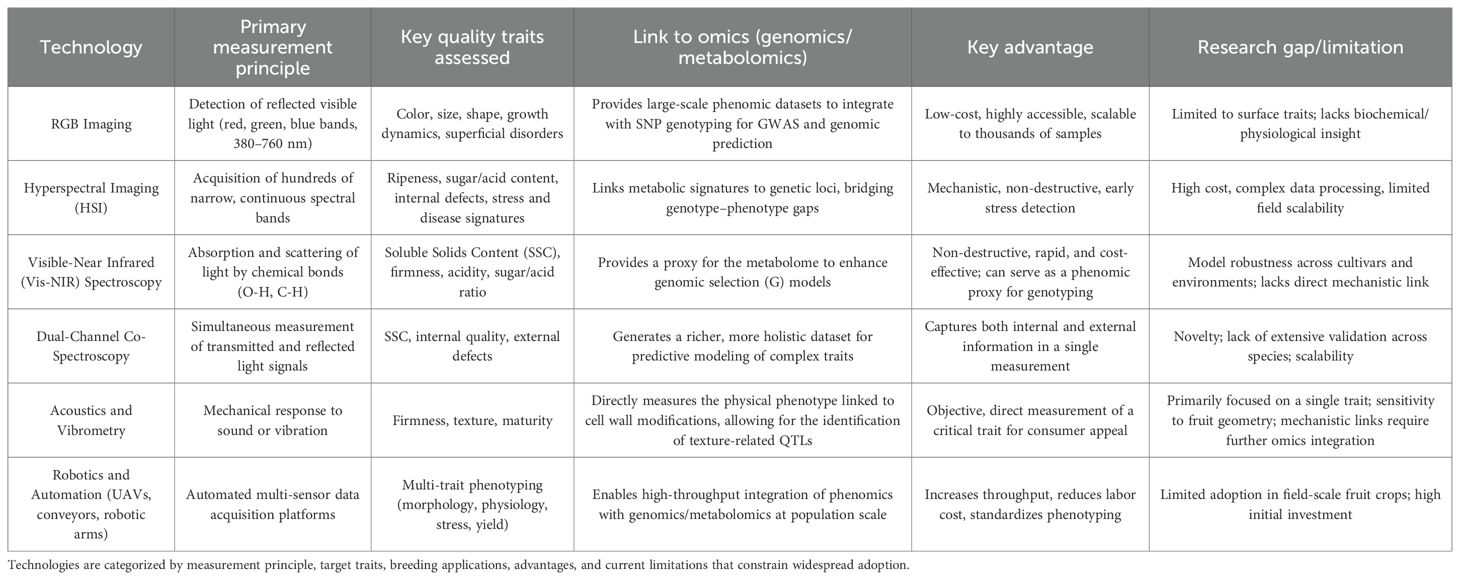
Table 2. Summary of high-throughput phenotyping technologies for fruit breeding.
3.4 Challenges and limitations of high-throughput phenotyping in fruit breeding
Despite transformative potential, HTP faces critical limitations. Equipment costs ($50,000-$250,000 for hyperspectral systems) restrict adoption to well-funded programs (Yang et al., 2020). Inconsistent calibration protocols and environmental variability undermine data comparability across experiments (Kim, 2020). Most critically, the data deluge strains computational infrastructure while machine learning models struggle with transferability across species and environments (M. Zhang et al., 2023). High-throughput phenotyping has revolutionized data collection, yet we now face a paradox: drowning in high-dimensional datasets while lacking frameworks to extract biological meaning. Traditional statistics collapse under non-linear interactions and multi-omics complexity. As explored next, machine learning promises to decode these hidden relationships—though bringing its own limitations of black-box predictions and uncomfortable dependence on data quality.
4 Machine learning algorithms applied to multi-omics integrative approaches in fruit breeding strategies
Multi-omics integration represents fruit breeding’s most pressing challenge and opportunity. The incorporation of omic-based strategies has demonstrated significant potential to advance sustainability, quality, and resilience goals in the near future. In the context of rootstock breeding, a widely used tool for perennial fruit species, transcriptomic approaches combined with Weighted Gene Co-expression Network Analysis (WGCNA) revealed in grapevine that the scion genotype modulates the rootstock’s transcriptomic response to low phosphate conditions (Gautier et al., 2020). Gene modules and potential hub genes associated with phosphate treatment and scion/rootstock genotypes were identified, providing evidence of putative signaling interactions. In another grapevine study, metabolomics identified markers predictive of grafting success as early as 33 days post-grafting, markedly preceding traditional evaluation methods (Loupit et al., 2022). These approaches typically rely on single-omic analyses and basic statistical methods, limiting their capacity to resolve biological complexity. Multi-omics frameworks extract substantially more information. In strawberry, integrating genomic, transcriptomic, and volatile metabolic profiles precisely identified flavor-associated genes and their regulatory elements through GWAS, subsequently validated by transient gene expression analyses (Fan et al., 2022). Similarly, in peach, the combination of genomics, transcriptomics, and metabolomics elucidated a chemical roadmap for fruit aroma by identifying volatiles linked to consumer preference. Notably, the study uncovered a trade-off in which red-fleshed accessions exhibited substantial reductions in key flavor volatiles such as linalool. The NAC transcription factor PpBL was identified as a central regulator within a gene regulatory network (GRN05) controlling both color and volatile profiles, while haplotypes of three tandem PpAAT genes were strongly associated with decreased ester content (Cao et al., 2024). These findings offer valuable insights for fruit breeding programs, deepening our understanding of complex trait regulation and paving the way for their integration into commercial breeding strategies.
Despite progress enabled by multi-omics approaches, traditional statistical methods often fail to capture the non-linear, high-dimensional relationships inherent in genomic, metabolomic, and phenomic datasets, leaving much of the underlying biological variation unexplored. Machine learning (ML) emerges as the bridge, enabling predictive modeling and pattern extraction from biological complexity (van Dijk et al., 2021; Ferrão et al., 2023). Classical correlation methods overlook epistatic interactions and metabolic regulation. ML algorithms (random forests, SVMs, gradient boosting, ANN) accommodate non-linearities and feature interactions, demonstrating superior genomic selection performance (Aasim et al., 2023; Ergün, 2025; Gu et al., 2025; Yeon et al., 2024). These approaches integrate thousands of SNPs with metabolomic and phenotypic data for trait prediction (Fan et al., 2025; Ferrão et al., 2021), though requiring large, annotated datasets scarce in fruit breeding. All these new technologies are already being implemented in combination with omic approaches to elucidate new pathways for sustainable fruit breeding and production (Table 3).

Table 3. Representative multi-omics integration studies in fruit crops.
Deep learning marks a paradigm shift through direct learning from high-dimensional data. CNNs and RNNs excel in image phenotyping and multi-omics integration (Minamikawa et al., 2022; F. Yang et al., 2024). Generative AI opens new frontiers—GANs augment limited datasets while VAEs simulate metabolic landscapes, enabling hypothesis testing before costly trials (Bird et al., 2022; Gomari et al., 2022). Graph neural networks model biological networks, improving predictions while generating mechanistic hypotheses (Han et al., 2024).
Despite predictive power, deep networks remain “black boxes” with limited interpretability. Explainable AI approaches, such as SHAP, integrated gradients and attention mechanisms, identify contributing markers and pathways (Chowdhury et al., 2024; Novielli et al., 2024). Critical challenges persist: data imbalance, limited samples, overfitting, and lack of standardized pipelines complicate reproducibility (Atkins et al., 2025; Zarbakhsh et al., 2025). Solutions require collaborative consortia, open repositories, and hybrid models combining mechanistic biology with data inference.
5 Current research gaps, controversies, and future perspectives of integrative approaches
Multi-omics integration promises to decode complex traits and accelerate breeding, yet persistent gaps limit practical applications beyond proof-of-concept studies (R. Zhang et al., 2022). The challenge has shifted from technical viability to examining whether innovations can deliver without compromising equity, transparency, or genetic diversity.
Integration faces computational hurdles: heterogeneous datasets require complex normalization while batch effects and missing data hinder robust pipelines like mixOmics and MOFA+ (Arancibia-Guerra et al., 2025; Argelaguet et al., 2018). Terabyte-scale datasets create infrastructure paradoxes where algorithm development depends on data difficult to generate and share (Siddique et al., 2025).
Critical gaps persist in causal inference: correlations abound but causal regulators remain elusive (Zingaretti et al., 2020). Models successful for simple traits fail when applied to polygenic, environment-sensitive characteristics. Poor transferability across populations undermines the central justification for omics approaches in diversity utilization (E. Warschefsky et al., 2014). Machine learning compounds interpretability challenges through black-box predictions that reduce breeder confidence.
Logistical barriers limit adoption: sequencing costs, computing infrastructure, and interdisciplinary expertise requirements concentrate capabilities in well-funded consortia, raising equity concerns (Lassoued et al., 2021; Siepel, 2019). Integration with metabolomics remains rudimentary—genomic associations lack biochemical context for flavor, nutrition, and resilience traits exhibiting high plasticity (Gong et al., 2024).
Future success depends less on technological breakthroughs than on frameworks balancing innovation with accessibility, causality with complexity, and commercial demands with conservation. Advances in spatial omics and affordable phenotyping may address technical hurdles, but equally critical are collaborative infrastructures ensuring benefits extend beyond elite programs to diverse traits, crops, and regions. Only by addressing these gaps can integrative omics fulfill promises such as both innovation drivers and diversity safeguards, making this tension the field’s defining challenge.
6 Beyond the data: the new bottlenecks in the agri-tech revolution
The promises of integrative omics and advanced breeding are often presented as linear success stories—gene discovery, genome editing, trait validation, cultivar release. Yet the reality is far more fragmented. The path from “computer to field” and from “field to consumer” is obstructed by bottlenecks that data alone cannot solve. Failures are not due to weak science, but to the biological, regulatory, socioeconomic, and phenotypic barriers that still define agriculture.
The biological-regulatory bottleneck exposes a fundamental paradox in modern breeding. We can now engineer a 500% increase in tomato lycopene content in six months (Zsögön et al., 2018), yet the same tomato may spend more than 10 years and €14,5 million navigating Europe’s regulatory mazes (Smyth et al., 2017)—if it ever reaches market at all. Consider this: CRISPR-edited crops with single nucleotide changes identical to natural mutations require the same regulatory scrutiny as transgenic organisms carrying bacterial genes. The results? While Chinese consumers already eat CRISPR-edited tomatoes enriched with GABA for blood pressure control (Waltz, 2021), European farmers still wait for approval of blight-resistant potatoes that could significantly reduce fungicide use (Namanda et al., 2004). Technology has advanced exponentially; the regulatory framework remains frozen in 1990s logic. These interconnected bottlenecks form a complex landscape that constrains the translation of genomic discoveries into agricultural reality (Figure 2).
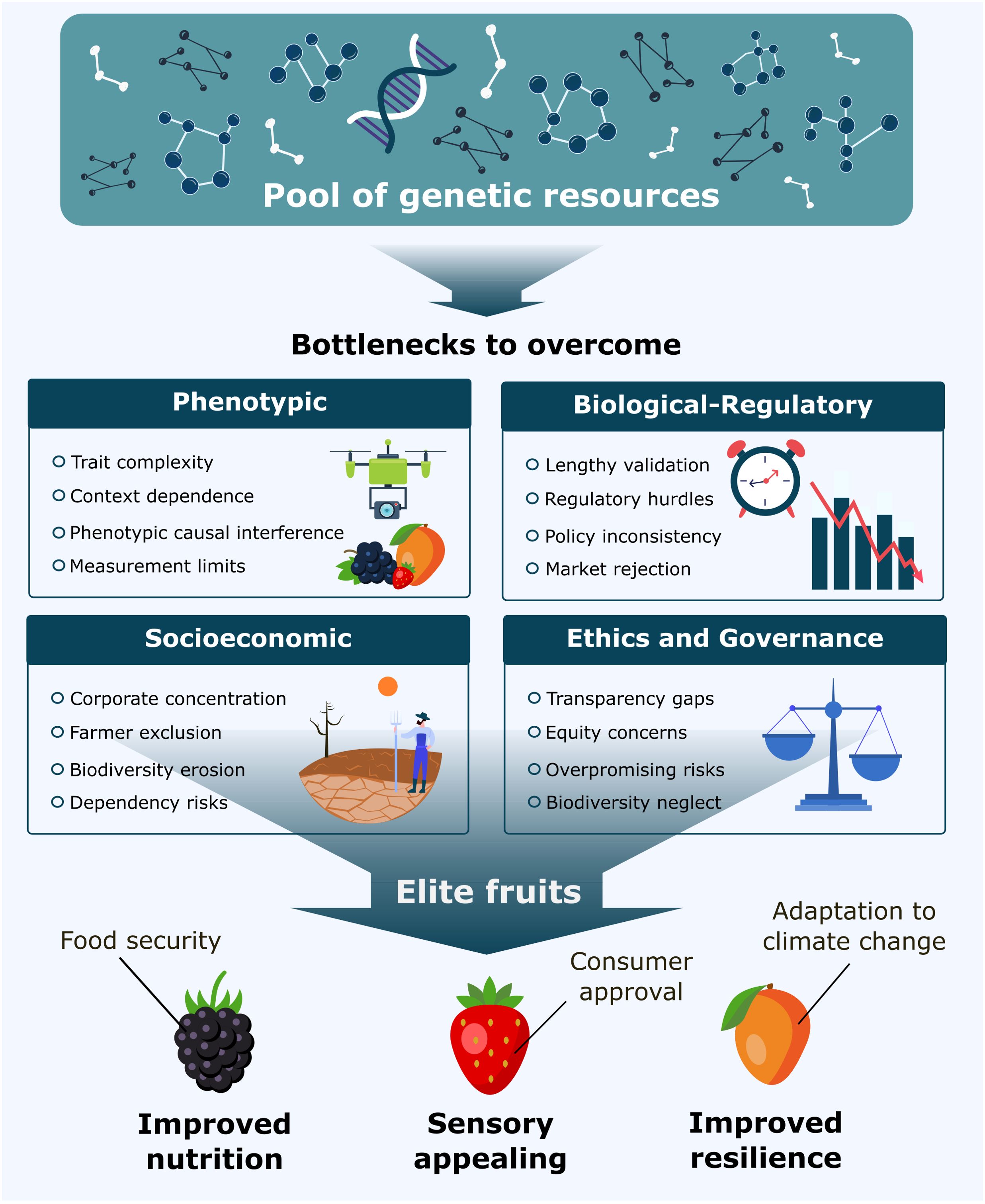
Figure 2. Conceptual framework illustrating key bottlenecks in modern fruit crop improvement. Genetic resources form the foundation for breeding, but their translation into elite fruits is constrained by phenotypic, biological-regulatory, socioeconomic, and governance barriers. Overcoming these challenges is essential to deliver improved nutrition, sensory quality, and resilience, ensuring food security, consumer approval, and adaptation to climate change.
Similarly, the socioeconomic bottleneck reveals an uncomfortable truth: the ‘democratization of data’ narrative is a myth. Four corporations now control 66% of global seed sales (Canfield et al., 2021), up from 29% in 1996 - and every major genomic breeding platform requires partnerships with these same players. A basic HTP phenotyping setup costs 500,000 euros, while the computational infrastructure for genomic selection demands another 200,000 euros annually (Kim, 2020; Yang et al., 2020).
The result is a vicious cycle: only large corporations can afford the technology which they use to develop varieties that further consolidate their market position. Meanwhile, the more than 500 million smallholder farmers who produce 80% of the world’s food in developing countries (Lowder et al., 2021) are not just excluded from the genomic revolution - they’re becoming more dependent on its corporate gatekeepers. Is this technological progress or digital colonialism with a genomic face?
Lastly, the ‘last mile’ phenotypic bottleneck mocks our technological hubris: we’ve identified 40+ QTLs controlling tomato flavor (Yang et al., 2025), sequenced thousands of accessions, and can predict fruit size with 90% accuracy (Wang B. et al., 2024) - yet consumer complaints about tasteless tomatoes have increased exponentially since 2000. Why? Because the traits that matter most - the burst of umami when you bite a tomato, the lingering sweetness of a strawberry, the way a peach’s aroma changes 48 hours post-harvest - involve volatile metabolites so context-dependent that our million-euro phenotyping platforms only capture a small percentage of the variance. The bitter irony: a trained sensory panel of five humans still outperforms our best metabolomic predictions for consumer preference. We’re drowning in data about traits consumers ignore while remaining blind to qualities they value.
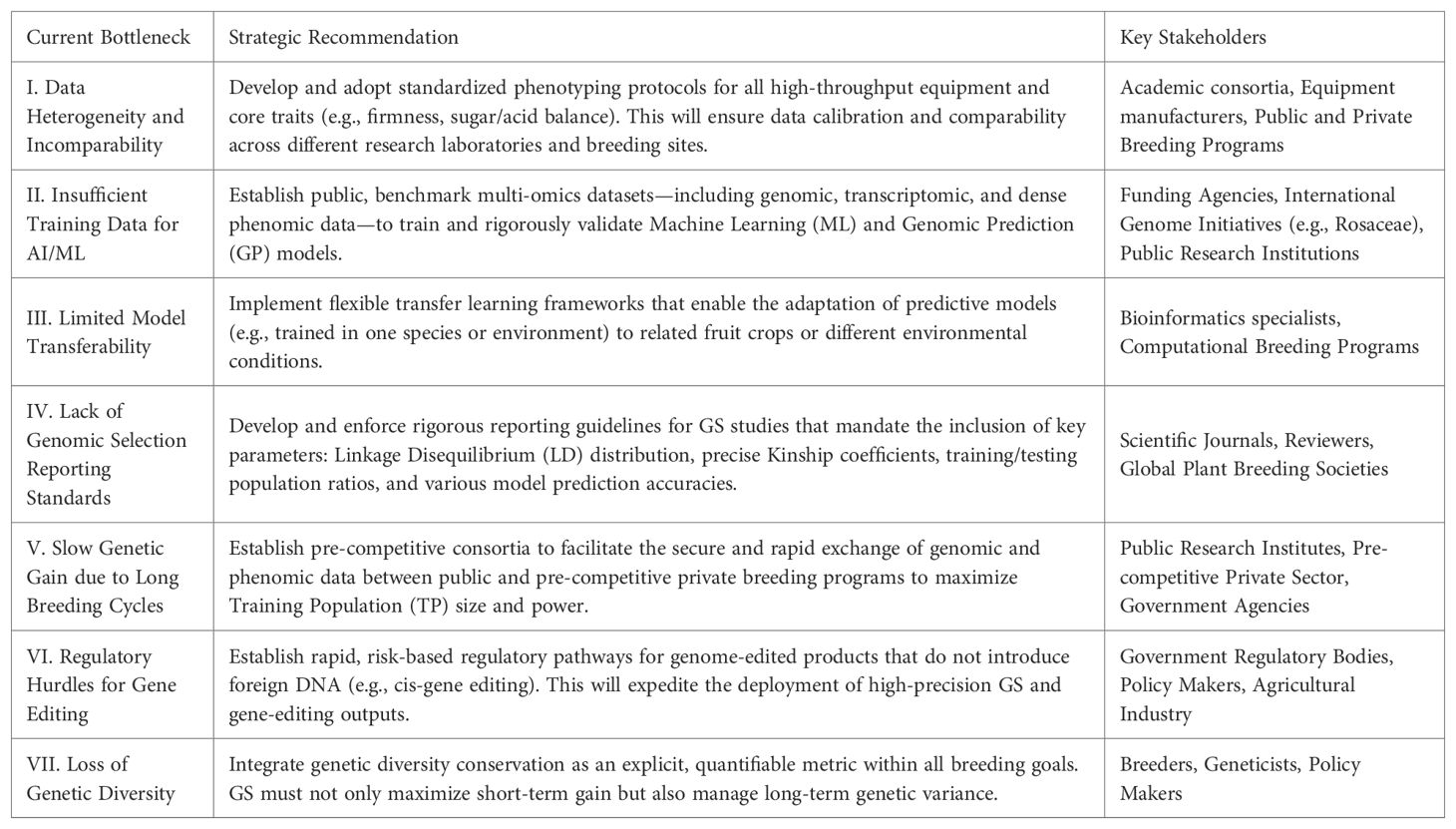
Therefore, as future perspectives, we encourage researchers to conduct studies aimed at identifying and quantifying the factors that contribute to the existing ‘Agri-Tech Valley of Death’ that difficult the effective translation of biotechnological discoveries into industrial applications across different areas of fruit improvement. To this end, future compilations might benefit from PRISMA systematic searches and SWOT frameworks for balanced technology assessment to evaluate the impact of these limitations, uncover novel factors that may negatively influence the transfer of knowledge to industry, and ultimately develop preventive or corrective strategies that help overcome these barriers and achieve sustainable production of high-quality fruits. A series of strategic recommendations for advancing future fruit breeding programs is presented in Box 1. We anticipate that the adoption of these strategies will significantly accelerate the achievement of key sustainability and resilience goals.
Box 1. Strategic recommendations for accelerating fruit breeding programs. Actions target the biological-regulatory, socioeconomic, phenotypic, and governance bottlenecks that prevent genomic discoveries from reaching farmers and consumers.
.
Against this background, we can continue celebrating technological acceleration while ignoring that farmers still plant decades-old varieties and consumers still complain about quality. Or we can acknowledge an uncomfortable truth: the bottleneck was never really about data or technology. It was always about biology’s irreducible complexity, regulation’s necessary caution, and human preferences that no algorithm fully captures. The path forward requires not more data, but more wisdom about which data matters. Not faster computers, but better questions. Not just genomic prediction, but genuine dialogue between breeders, farmers, and consumers. The real paradigm shift won’t come from our machines - it will come from admitting their limitations.
Author contributions
PP-R: Conceptualization, Data curation, Formal analysis, Funding acquisition, Investigation, Methodology, Project administration, Resources, Software, Supervision, Validation, Visualization, Writing – original draft, Writing – review & editing. SO: Conceptualization, Data curation, Formal analysis, Funding acquisition, Investigation, Methodology, Project administration, Resources, Software, Supervision, Validation, Visualization, Writing – original draft, Writing – review & editing. JV: Conceptualization, Data curation, Formal analysis, Funding acquisition, Investigation, Methodology, Project administration, Resources, Software, Supervision, Validation, Visualization, Writing – original draft, Writing – review & editing.
Funding
The author(s) declare that financial support was received for the research and/or publication of this article. This work was supported through funding by the Spanish Ministry of Science and Innovation (grant number PID2021-128527OB-100), Junta de Andalucia (grant number P21-00315) and the European Union’s Horizon 2020 Research and Innovation Programme (BreedingValue project, grant Agreement Number 101000747).
Conflict of interest
The authors declare that the research was conducted in the absence of any commercial or financial relationships that could be construed as a potential conflict of interest.
The author(s) declared that they were an editorial board member of Frontiers, at the time of submission. This had no impact on the peer review process and the final decision.
Generative AI statement
The author(s) declare that no Generative AI was used in the creation of this manuscript.
Any alternative text (alt text) provided alongside figures in this article has been generated by Frontiers with the support of artificial intelligence and reasonable efforts have been made to ensure accuracy, including review by the authors wherever possible. If you identify any issues, please contact us.
Publisher’s note
All claims expressed in this article are solely those of the authors and do not necessarily represent those of their affiliated organizations, or those of the publisher, the editors and the reviewers. Any product that may be evaluated in this article, or claim that may be made by its manufacturer, is not guaranteed or endorsed by the publisher.
Supplementary material
The Supplementary Material for this article can be found online at: https://www.frontiersin.org/articles/10.3389/fpls.2025.1707289/full#supplementary-material
References
Aasim, M., Ali, S. A., Altaf, M. T., Ali, A., Nadeem, M. A., and Baloch, F. S. (2023). Artificial neural network and decision tree facilitated prediction and validation of cytokinin-auxin induced in vitro organogenesis of sorghum (Sorghum bicolor L.). Plant Cell Tissue Organ Culture (PCTOC) 153, 611–624. doi: 10.1007/s11240-023-02498-3
Abbas, F., Zhou, Y., O’Neill Rothenberg, D., Alam, I., Ke, Y., and Wang, H.-C. (2023). Aroma components in horticultural crops: chemical diversity and usage of metabolic engineering for industrial applications. Plants 12, 1748. doi: 10.3390/plants12091748
Abebe, A. M., Kim, Y., Kim, J., Kim, S. L., and Baek, J. (2023). Image-based high-throughput phenotyping in horticultural crops. Plants 12, 1748. doi: 10.3390/plants12102061
Acquaah, G. (2015). “Conventional Plant Breeding Principles and Techniques,” in Advances in Plant Breeding Strategies: Breeding, Biotechnology and Molecular Tools. Eds. Al-Khayri, J. M., Jain, S. M., and Johnson, D. V. (Cham: Springer International Publishing), 115–158. doi: 10.1007/978-3-319-22521-0_5
Adhikari, S., Joshi, A., Chandra, A. K., Bharati, A., Sarkar, S., Dinkar, V., et al. (2023). “SMART Plant Breeding from Pre-genomic to Post-genomic Era for Developing Climate-Resilient Cereals,” in Smart Plant Breeding for Field Crops in Post-genomics Era. Eds. Sharma, D., Singh, S., Sharma, S. K., and Singh, R. (Singapore: Springer Nature), 41–97. doi: 10.1007/978-981-19-8218-7_2
Adunola, P. M., Ferrão, L. F. V., Azevedo, C. F., Nunez, G. H., and Munoz, P. R. (2024). The effect of environmental variables on the genotyping-by-environment interaction in blueberry. Euphytica 220, 113. doi: 10.1007/s10681-024-03364-9
Aharoni, A., Giri, A. P., Verstappen, F. W. A., Bertea, C. M., Sevenier, R., Sun, Z., et al. (2004). Gain and loss of fruit flavor compounds produced by wild and cultivated strawberry species. Plant Cell 16, 3110–3131. doi: 10.1105/tpc.104.023895
Ahmadzai, A. S., Hu, C., Amin, A. K., and Zahed, Z. (2024). Exploring the journey of plant breeding from ancient traditional practices to modern advancements. J. Crop Improvement 38, 688–709. doi: 10.1080/15427528.2024.2391423
Ali, I. (2024). Biotechnology in environmental conservation: genetic tools for biodiversity preservation. Front. Biotechnol. Genet. 1.
Ali, M. M., Yousef, A. F., Li, B., and Chen, F. (2021). Effect of environmental factors on growth and development of fruits. Trop. Plant Biol. 14, 226–238. doi: 10.1007/s12042-021-09291-6
Alvarez, D., Cerda-Bennasser, P., Stowe, E., Ramirez-Torres, F., Capell, T., Dhingra, A., et al. (2021). Fruit crops in the era of genome editing: Closing the regulatory gap. Plant Cell Rep. 40, 915–930. doi: 10.1007/s00299-021-02664-x
Amoriello, T., Ciorba, R., Ruggiero, G., Masciola, F., Scutaru, D., and Ciccoritti, R. (2025). Vis/NIR spectroscopy and vis/NIR hyperspectral imaging for non-destructive monitoring of apricot fruit internal quality with machine learning. Foods 14, 196. doi: 10.3390/foods14020196
An, J.-P., Li, J., Rodrigues-Stuart, K., Dewdney, M. M., Ritenour, M. A., and Wang, Y. (2024). Machine learning-based metabolomics analysis reveals the early biomarkers for Diplodia stem-end rot in grapefruit caused by Lasiodiplodia theobromae. Postharvest Biol. Technol. 212, 112868. doi: 10.1016/j.postharvbio.2024.112868
Anantachoke, N., Duangrat, R., Sutthiphatkul, T., Ochaikul, D., and Mangmool, S. (2023). Kombucha beverages produced from fruits, vegetables, and plants: A review on their pharmacological activities and health benefits. Foods 12, 1818. doi: 10.3390/foods12091818
Angidi, S., Madankar, K., Tehseen, M. M., and Bhatla, A. (2025). Advanced High-Throughput Phenotyping Techniques for Managing Abiotic Stress in Agricultural Crops—A Comprehensive Review. Crops, 5(2), 8. doi: 10.3390/crops5020008
Anjali, Jena, A., Bamola, A., Mishra, S., Jain, I., Pathak, N., et al. (2024). State-of-the-art non-destructive approaches for maturity index determination in fruits and vegetables: Principles, applications, and future directions. Food Production Process. Nutr. 6, 56. doi: 10.1186/s43014-023-00205-5
Arancibia-Guerra, C., Núñez-Lillo, G., Hernández, I., Ponce, E., Kuhn, N., Carrasco-Pancorbo, A., et al. (2025). Harvest maturity modulates the synchronization between exocarp color change and mesocarp softening in avocado cv. Hass: A multiomics perspective. Postharvest Biol. Technol. 230, 113787. doi: 10.1016/j.postharvbio.2025.113787
Argelaguet, R., Velten, B., Arnol, D., Dietrich, S., Zenz, T., Marioni, J. C., et al. (2018). Multi-Omics Factor Analysis—A framework for unsupervised integration of multi-omics data sets. Mol. Syst. Biol. 14, e8124. doi: 10.15252/msb.20178124
Atkins, K., Garzón-Martínez, G. A., Lloyd, A., Doonan, J. H., and Lu, C. (2025). Unlocking the power of AI for phenotyping fruit morphology in Arabidopsis. GigaScience 14, giae123. doi: 10.1093/gigascience/giae123
Bassett, H., Malone, M., Ward, S., Foster, T., Chagné, D., and Bus, V. (2015). MARKER ASSISTED SELECTION IN AN APPLE ROOTSTOCK BREEDING FAMILY. Acta Hortic. 1100, 25–28. doi: 10.17660/ActaHortic.2015.1100.2
Bauchet, G., Grenier, S., Samson, N., Bonnet, J., Grivet, L., and Causse, M. (2017). Use of modern tomato breeding germplasm for deciphering the genetic control of agronomical traits by Genome Wide Association study. Theor. Appl. Genet. 130, 875–889. doi: 10.1007/s00122-017-2857-9
Bazzano, L. A., He, J., Ogden, L. G., Loria, C. M., Vupputuri, S., Myers, L., et al. (2002). Fruit and vegetable intake and risk of cardiovascular disease in US adults: The first National Health and Nutrition Examination Survey Epidemiologic Follow-up Study. Am. J. Clin. Nutr. 76, 93–99. doi: 10.1093/ajcn/76.1.93
Bharati, R., Sen, M. K., Severová, L., Svoboda, R., and Fernández-Cusimamani, E. (2023). Polyploidization and genomic selection integration for grapevine breeding: A perspective. Front. Plant Sci. 14. doi: 10.3389/fpls.2023.1248978
Bhardwaj, R. L., Parashar, A., Parewa, H. P., and Vyas, L. (2024). An alarming decline in the nutritional quality of foods: the biggest challenge for future generations’ Health. Foods 13, 877. doi: 10.3390/foods13060877
Bhattacharjee, P., Warang, O., Das, S., and Das, S. (2022). Impact of climate change on fruit crops- A review. Curr. World Environ. 17, 319–330. doi: 10.12944/CWE.17.2.4
Bird, J. J., Barnes, C. M., Manso, L. J., Ekárt, A., and Faria, D. R. (2022). Fruit quality and defect image classification with conditional GAN data augmentation. Scientia Hortic. 293, 110684. doi: 10.1016/j.scienta.2021.110684
Blois, L., de Miguel, M., Bert, P.-F., Ollat, N., Rubio, B., Voss-Fels, K. P., et al. (2023). Dissecting the genetic architecture of root-related traits in a grafted wild Vitis berlandieri population for grapevine rootstock breeding. Theor. Appl. Genet. 136, 223. doi: 10.1007/s00122-023-04472-1
Bohra, A., Kilian, B., Sivasankar, S., Caccamo, M., Mba, C., McCouch, S. R., et al. (2022). Reap the crop wild relatives for breeding future crops. Trends Biotechnol. 40, 412–431. doi: 10.1016/j.tibtech.2021.08.009
Bosman, R. N., Vervalle, J. A.-M., November, D. L., Burger, P., and Lashbrooke, J. G. (2023). Grapevine genome analysis demonstrates the role of gene copy number variation in the formation of monoterpenes. Front. Plant Sci. 14. doi: 10.3389/fpls.2023.1112214
Bouillon, P., Fanciullino, A.-L., Belin, E., Bréard, D., Boisard, S., Bonnet, B., et al. (2024). Image analysis and polyphenol profiling unveil red-flesh apple phenotype complexity. Plant Methods 20, 71. doi: 10.1186/s13007-024-01196-1
Bowman, K. D., McCollum, G., and Albrecht, U. (2021). SuperSour: A new strategy for breeding superior citrus rootstocks. Front. Plant Sci. 12. doi: 10.3389/fpls.2021.741009
Bradshaw, J. E. (2017). Plant breeding: Past, present and future. Euphytica 213, 60. doi: 10.1007/s10681-016-1815-y
Branchereau, C., Hardner, C., Dirlewanger, E., Wenden, B., Le Dantec, L., Alletru, D., et al. (2023). Genotype-by-environment and QTL-by-environment interactions in sweet cherry (Prunus avium L.) for flowering date. Front. Plant Sci. 14. doi: 10.3389/fpls.2023.1142974
Brown, A. H. D. and Hodgkin, T. (2015). “Indicators of Genetic Diversity, Genetic Erosion, and Genetic Vulnerability for Plant Genetic Resources,” in Genetic Diversity and Erosion in Plants: Indicators and Prevention. Eds. Ahuja, M. R. and Jain, S. M. (Cham: Springer International Publishing), 25–53. doi: 10.1007/978-3-319-25637-5_2
Campa, M., Miranda, S., Licciardello, C., Lashbrooke, J. G., Dalla Costa, L., Guan, Q., et al. (2024). Application of new breeding techniques in fruit trees. Plant Physiol. 194, 1304–1322. doi: 10.1093/plphys/kiad374
Cañas-Gutiérrez, G. P., Sepulveda-Ortega, S., López-Hernández, F., Navas-Arboleda, A. A., and Cortés, A. J. (2022). Inheritance of Yield Components and Morphological Traits in Avocado cv. Hass From “Criollo“ “Elite Trees” via Half-Sib Seedling Rootstocks. Front. Plant Sci. 13. doi: 10.3389/fpls.2022.843099
Canfield, M., Anderson, M. D., and McMichael, P. (2021). UN food systems summit 2021: dismantling democracy and resetting corporate control of food systems. Front. Sustain. Food Syst. 5. doi: 10.3389/fsufs.2021.661552
Cao, X., Su, Y., Zhao, T., Zhang, Y., Cheng, B., Xie, K., et al. (2024). Multi‑omics analysis unravels chemical roadmap and genetic basis for peach fruit aroma improvement. Cell Rep 43, 114623. doi: 10.1016/j.celrep.2024.114623
Chavarría-Perez, L. M., Giordani, W., Dias, K. O. G., Costa, Z. P., Ribeiro, C. A. M., Benedetti, A. R., et al. (2020). Improving yield and fruit quality traits in sweet passion fruit: Evidence for genotype by environment interaction and selection of promising genotypes. PloS One 15, e0232818. doi: 10.1371/journal.pone.0232818
Chowdhury, R., Das, R., Faruk Ananna, F. B., Saha, A., Nawar, S., and Hosen, M. D. H. (2024). “Unveiling predictive factors in apple quality: leveraging LIME, SHAP, and the synergy of machine learning models and artificial neural networks,” in 2024 6th International Conference on Electrical Engineering and Information & Communication Technology (ICEEICT). Dhaka, Bangladesh. p. 1026–1031. doi: 10.1109/ICEEICT62016.2024.10534426
Cirilli, M., Giovannini, D., Ciacciulli, A., Chiozzotto, R., Gattolin, S., Rossini, L., et al. (2018). Integrative genomics approaches validate PpYUC11-like as candidate gene for the stony hard trait in peach (P. persica L. Batsch). BMC Plant Biol. 18, 88. doi: 10.1186/s12870-018-1293-6
Clement, C. R., De Cristo-Araújo, M., Coppens D’Eeckenbrugge, G., Alves Pereira, A., and Picanço-Rodrigues, D. (2010). Origin and domestication of native amazonian crops. Diversity 2, 72–106. doi: 10.3390/d2010072
Cohen, S. N., Chang, A. C. Y., Boyer, H. W., and Helling, R. B. (1973). Construction of biologically functional bacterial plasmids in vitro. Proc. Natl. Acad. Sci. United States America 70, 3240–3244. doi: 10.1073/pnas.70.11.3240
Contador, L., Shinya, P., and Infante, R. (2015). Texture phenotyping in fresh fleshy fruit. Scientia Hortic. 193, 40–46. doi: 10.1016/j.scienta.2015.06.025
Cros, D., Bocs, S., Riou, V., Ortega-Abboud, E., Tisné, S., Argout, X., et al. (2017). Genomic preselection with genotyping-by-sequencing increases performance of commercial oil palm hybrid crosses. BMC Genomics 18, 839. doi: 10.1186/s12864-017-4179-3
Crossa, J., Pérez-Rodríguez, P., Cuevas, J., Montesinos-López, O., Jarquín, D., Campos, G. D. L., et al. (2017). Genomic selection in plant breeding: methods, models, and perspectives. Trends Plant Sci. 22, 961–975. doi: 10.1016/j.tplants.2017.08.011
D’Amelia, V., Docimo, T., Crocoll, C., and Rigano, M. M. (2021). Specialized metabolites and valuable molecules in crop and medicinal plants: the evolution of their use and strategies for their production. Genes 12, 936. doi: 10.3390/genes12060936
Daetwyler, H. D., Swan, A. A., van der Werf, J. H., and Hayes, B. J. (2012). Accuracy of pedigree and genomic predictions of carcass and novel meat quality traits in multi-breed sheep data assessed by cross-validation. Genet. Selection Evol. 44, 33. doi: 10.1186/1297-9686-44-33
Daniel, M. A., Sebastin, R., Yu, J.-K., Soosaimanickam, M. P., and Chung, J. W. (2023). Enhancing horticultural crops through genome editing: applications, benefits, and considerations. Horticulturae 9, 884. doi: 10.3390/horticulturae9080884
da Silva Alves, J., Parente de Carvalho Pires, B., Ferreira dos Santos, L., da Silva Ribeiro, T., Walsh, K. B., Akio Kido, E., et al. (2025). Non-destructive detection of current internal disorders and prediction of future appearance in mango fruit using portable vis-NIR spectroscopy. Horticulturae 11, 759. doi: 10.3390/horticulturae11070759
De Mori, G. and Cipriani, G. (2023). Marker-assisted selection in breeding for fruit trait improvement: A review. Int. J. Mol. Sci. 24, 8984. doi: 10.3390/ijms24108984
Di Guardo, M., Bink, M. C. A. M., Guerra, W., Letschka, T., Lozano, L., Busatto, N., et al. (2017). Deciphering the genetic control of fruit texture in apple by multiple family-based analysis and genome-wide association. J. Exp. Bot. 68, 1451–1466. doi: 10.1093/jxb/erx017
Dobson, S. and Marangoni, A. G. (2023). Methodology and development of a high-protein plant-based cheese alternative. Curr. Res. Food Sci. 7, 100632. doi: 10.1016/j.crfs.2023.100632
Eckerstorfer, M. F., Grabowski, M., Lener, M., Engelhard, M., Simon, S., Dolezel, M., et al. (2021). Biosafety of genome editing applications in plant breeding: considerations for a focused case-specific risk assessment in the EU. BioTech 10, 10. doi: 10.3390/biotech10030010
Ergün, E. (2025). High precision banana variety identification using vision transformer based feature extraction and support vector machine. Sci. Rep. 15, 10366. doi: 10.1038/s41598-025-95466-0
Espley, R. V. and Jaakola, L. (2023). The role of environmental stress in fruit pigmentation. Plant Cell Environ. 46, 3663–3679. doi: 10.1111/pce.14684
Essa, M. M., Bishir, M., Bhat, A., Chidambaram, S. B., Al-Balushi, B., Hamdan, H., et al. (2023). Functional foods and their impact on health. J. Food Sci. Technol. 60, 820–834. doi: 10.1007/s13197-021-05193-3
Fan, Z., Tieman, D. M., Knapp, S. J., Zerbe, P., Famula, R., Barbey, C. R., et al. (2022). A multi-omics framework reveals strawberry flavor genes and their regulatory elements. New Phytol. 236, 1089–1107. doi: 10.1111/nph.18416
Fan, J., Wu, J., Arús, P., Li, Y., Cao, K., and Wang, L. (2025). Integrating whole-genome resequencing and machine learning to refine QTL analysis for fruit quality traits in peach. Horticulture Res. 12, uhaf087. doi: 10.1093/hr/uhaf087
FAOSTAT (2025). Available online at: https://www.fao.org/faostat/en/home (Accessed July 29, 2025).
Farvid, M. S., Barnett, J. B., and Spence, N. D. (2021). Fruit and vegetable consumption and incident breast cancer: A systematic review and meta-analysis of prospective studies. Br. J. Cancer 125, 284–298. doi: 10.1038/s41416-021-01373-2
Fernández-Novales, J., Garde-Cerdán, T., Tardáguila, J., Gutiérrez-Gamboa, G., Pérez-Álvarez, E. P., and Diago, M. P. (2019). Assessment of amino acids and total soluble solids in intact grape berries using contactless Vis and NIR spectroscopy during ripening. Talanta 199, 244–253. doi: 10.1016/j.talanta.2019.02.037
Fernández-Paz, J., Cortés, A. J., Hernández-Varela, C. A., Mejía-de-Tafur, M. S., Rodriguez-Medina, C., and Baligar, V. C. (2021). Rootstock-mediated genetic variance in cadmium uptake by juvenile cacao (Theobroma cacao L.) genotypes, and its effect on growth and physiology. Front. Plant Sci. 12. doi: 10.3389/fpls.2021.777842
Ferrão, L. F. V., Amadeu, R. R., Benevenuto, J., de Bem Oliveira, I., and Munoz, P. R. (2021). Genomic selection in an outcrossing autotetraploid fruit crop: lessons from blueberry breeding. Front. Plant Sci. 12. doi: 10.3389/fpls.2021.676326
Ferrão, L. F. V., Dhakal, R., Dias, R., Tieman, D., Whitaker, V., Gore, M. A., et al. (2023). Machine learning applications to improve flavor and nutritional content of horticultural crops through breeding and genetics. Curr. Opin. Biotechnol. 83, 102968. doi: 10.1016/j.copbio.2023.102968
Fonteijn, H., Afonso, M., Lensink, D., Mooij, M., Faber, N., Vroegop, A., et al. (2021). Automatic phenotyping of tomatoes in production greenhouses using robotics and computer vision: from theory to practice. Agronomy 11, 1599. doi: 10.3390/agronomy11081599
Francini, A., Pintado, M., Manganaris, G. A., and Ferrante, A. (2020). Editorial: bioactive compounds biosynthesis and metabolism in fruit and vegetables. Front. Plant Sci. 11. doi: 10.3389/fpls.2020.00129
Franco, G. A., Interdonato, L., Cordaro, M., Cuzzocrea, S., and Di Paola, R. (2023). Bioactive compounds of the mediterranean diet as nutritional support to fight neurodegenerative disease. Int. J. Mol. Sci. 24, 7318. doi: 10.3390/ijms24087318
Fu, X. and Jiang, D. (2022). “Chapter 16 - High-throughput phenotyping: The latest research tool for sustainable crop production under global climate change scenarios,” in Sustainable Crop Productivity and Quality Under Climate Change. Eds. Liu, F., Li, X., Hogy, P., Jiang, D., Brestic, M., and Liu, B. (Nanjing: Academic Press), 313–381. doi: 10.1016/B978-0-323-85449-8.00003-8
Fuller, D. Q. and Stevens, C. J. (2019). Between domestication and civilization: The role of agriculture and arboriculture in the emergence of the first urban societies. Vegetation History Archaeobotany 28, 263–282. doi: 10.1007/s00334-019-00727-4
García-Abadillo, J., Barba, P., Carvalho, T., Sosa-Zuñiga, V., Lozano, R., Carvalho, H. F., et al. (2024). Dissecting the complex genetic basis of pre- and post-harvest traits in Vitis vinifera L. using genome-wide association studies. Horticulture Res. 11, uhad283. doi: 10.1093/hr/uhad283
García-González, A. G., Rivas-García, P., Escamilla-Alvarado, C., Ramírez-Cabrera, M. A., Paniagua-Vega, D., Galván-Arzola, U., et al. (2025). Fruit and vegetable waste as a raw material for obtaining functional antioxidants and their applications: A review of a sustainable strategy. Biofuels Bioproducts Biorefining 19, 231–249. doi: 10.1002/bbb.2698
Gautier, A T., Cochetel, N., Merlin, I., Hevin, C., Lauvergeat, V., Vivin, P., et al. (2020). Scion genotypes exert long distance control over rootstock transcriptome responses to low phosphate in grafted grapevine. BMC Plant Biol. 20, 367. doi: 10.1186/s12870-020-02578-y
Gerakari, M., Katsileros, A., Kleftogianni, K., Tani, E., Bebeli, P. J., and Papasotiropoulos, V. (2025). Breeding of solanaceous crops using AI: machine learning and deep learning approaches—A critical review. Agronomy 15, 757. doi: 10.3390/agronomy15030757
Germerdonk, T., Bach, A., Marangoni, A. G., Mishra, K., and Rühs, P. A. (2025). Unrefined plant raw materials are key to nutritious food. Nat. Food 6, 657–663. doi: 10.1038/s43016-025-01195-y
Ghosh, A., Kumar, A., and Biswas, G. (2024). “Chapter 1 - Exponential population growth and global food security: Challenges and alternatives,” in Bioremediation of Emerging Contaminants from Soils. Eds. Kumar, P., Srivastav, A. L., Chaudhary, V., van Hullebusch, E. D., and Busquets, R. (Elsevier), 1–20. doi: 10.1016/B978-0-443-13993-2.00001-3
Gil-Ariza, D. J., Amaya, I., López-Aranda, J. M., Sánchez-Sevilla, J. F., Botella, M.Á., and Valpuesta, V. (2009). Impact of plant breeding on the genetic diversity of cultivated strawberry as revealed by expressed sequence tag-derived simple sequence repeat markers. J. Am. Soc. Hortic. Sci. 134, 337–347. doi: 10.21273/JASHS.134.3.337
Gogorcena, Y., Sánchez, G., Moreno-Vázquez, S., Pérez, S., and Ksouri, N. (2020). “Genomic-Based Breeding for Climate-Smart Peach Varieties,” in Genomic Designing of Climate-Smart Fruit Crops. Ed. Kole, C. (Cham: Springer International Publishing), 271–331. doi: 10.1007/978-3-319-97946-5_8
Gomari, D. P., Schweickart, A., Cerchietti, L., Paietta, E., Fernandez, H., Al-Amin, H., et al. (2022). Variational autoencoders learn transferrable representations of metabolomics data. Commun. Biol. 5, 645. doi: 10.1038/s42003-022-03579-3
Gonçalves, E., Carrasquinho, I., and Martins, A. (2020). Measure to evaluate the sensitivity to genotype-by-environment interaction in grapevine clones. Aust. J. Grape Wine Res. 26, 259–270. doi: 10.1111/ajgw.12432
Gong, Z., Zhang, J., Yang, X., Deng, G., Sun, J., Xia, Y., et al. (2024). Transcriptional regulatory networks oscillate seasonal plasticity of fruit metabolism in melon. Horticulturae 10, 993. doi: 10.3390/horticulturae10090993
Gonsalves, D. and Ferreira, S. (2003). Transgenic Papaya: A Case for Managing Risks of Papaya ringspot virus in Hawaii. Plant Health Prog. 4, 17. doi: 10.1094/PHP-2003-1113-03-RV
Gonzalez-Dugo, V., Zarco-Tejada, P., Nicolás, E., Nortes, P. A., Alarcón, J. J., Intrigliolo, D. S., et al. (2013). Using high resolution UAV thermal imagery to assess the variability in the water status of five fruit tree species within a commercial orchard. Precis. Agric. 14, 660–678. doi: 10.1007/s11119-013-9322-9
Grabska, J., Beć, K. B., Ueno, N., and Huck, C. W. (2023). Analyzing the quality parameters of apples by spectroscopy from vis/NIR to NIR region: A comprehensive review. Foods 12, 1946. doi: 10.3390/foods12101946
Gregory, P. J., Atkinson, C. J., Bengough, A. G., Else, M. A., Fernández-Fernández, F., Harrison, R. J., et al. (2013). Contributions of roots and rootstocks to sustainable, intensified crop production. J. Exp. Bot. 64, 1209–1222. doi: 10.1093/jxb/ers385
Gu, Q., Li, T., Hu, Z., Zhu, Y., Shi, J., Zhang, L., et al. (2025). Quantitative analysis of watermelon fruit skin phenotypic traits via image processing and their potential in maturity and quality detection. Comput. Electron. Agric. 230, 109960. doi: 10.1016/j.compag.2025.109960
Gu, C., Wang, L., Wang, W., Zhou, H., Ma, B., Zheng, H., et al. (2016). Copy number variation of a gene cluster encoding endopolygalacturonase mediates flesh texture and stone adhesion in peach. J. Exp. Bot. 67, 1993–2005. doi: 10.1093/jxb/erw021
Hagenguth, J., Kanski, L., Kahle, H., Becker, H. C., and Horneburg, B. (2024). Flavour improvement in early generations of fresh market tomatoes (Solanum lycopersicum L.): II. Response to breeders’ sensory and marker-assisted selection. Plant Breed. 143, 725–738. doi: 10.1111/pbr.13202
Halford, N. G. (2019). Legislation governing genetically modified and genome-edited crops in Europe: The need for change. J. Sci. Food Agric. 99, 8–12. doi: 10.1002/jsfa.9227
Han, J., Li, T., He, Y., and Yang, Z. (2024). Predicting the effect of chemicals on fruit using graph neural networks. Sci. Rep. 14, 8203. doi: 10.1038/s41598-024-58991-y
Harper, A. R., Dobson, R. C. J., Morris, V. K., and Moggré, G.-J. (2022). Fermentation of plant-based dairy alternatives by lactic acid bacteria. Microbial Biotechnol. 15, 1404–1421. doi: 10.1111/1751-7915.14008
Harrison, N., Harrison, R. J., Barber-Perez, N., Cascant-Lopez, E., Cobo-Medina, M., Lipska, M., et al. (2016). A new three-locus model for rootstock-induced dwarfing in apple revealed by genetic mapping of root bark percentage. J. Exp. Bot. 67, 1871–1881. doi: 10.1093/jxb/erw001
Hashim, I. C., Shariff, A. R. M., Bejo, S. K., Muharam, F., Ahmad, K., and Hashim, H. (2020). Application of thermal imaging for plant disease detection. IOP Conf. Series: Earth Environ. Sci. 540, 12052. doi: 10.1088/1755-1315/540/1/012052
Hu, W., Li, F., Li, H., Zhang, L., Cai, R., Lin, Q., et al. (2025). QTL mapping for branch- and leaf-related traits with a high-density SNP genetic map in litchi (Litchi chinensis Sonn.). Hortic. Plant J. 11, 1541–1550. doi: 10.1016/j.hpj.2024.04.005
Hussain, A., Kausar, T., Sehar, S., Sarwar, A., Quddoos, M. Y., Aslam, J., et al. (2023). A review on biochemical constituents of pumpkin and their role as pharma foods; a key strategy to improve health in post COVID 19 period. Food Production Process. Nutr. 5, 22. doi: 10.1186/s43014-023-00138-z
Jacobsen, S.-E., Sørensen, M., Pedersen, S. M., and Weiner, J. (2013). Feeding the world: Genetically modified crops versus agricultural biodiversity. Agron. Sustain. Dev. 33, 651–662. doi: 10.1007/s13593-013-0138-9
Jiménez, N. P., Bjornson, M., Famula, R. A., Pincot, D. D. A., Hardigan, M. A., Madera, M. A., et al. (2025). Loss-of-function mutations in the fruit softening gene POLYGALACTURONASE1 doubled fruit firmness in strawberry. Horticulture Res. 12, uhae315. doi: 10.1093/hr/uhae315
Khan, A. and Korban, S. S. (2022). Breeding and genetics of disease resistance in temperate fruit trees: Challenges and new opportunities. Theor. Appl. Genet. 135, 3961–3985. doi: 10.1007/s00122-022-04093-0
Kholová, J., Urban, M. O., Bavorová, M., Ceccarelli, S., Cosmas, L., Desczka, S., et al. (2024). Promoting new crop cultivars in low-income countries requires a transdisciplinary approach. Nat. Plants 10, 1610–1613. doi: 10.1038/s41477-024-01831-8
Khoury, C. K., Brush, S., Costich, D. E., Curry, H. A., de Haan, S., Engels, J. M. M., et al. (2022). Crop genetic erosion: Understanding and responding to loss of crop diversity. New Phytol. 233, 84–118. doi: 10.1111/nph.17733
Kim, J. Y. (2020). Roadmap to high throughput phenotyping for plant breeding. J. Biosyst. Eng. 45, 43–55. doi: 10.1007/s42853-020-00043-0
Kirchgessner, N., Hodel, M., Studer, B., Patocchi, A., and Broggini, G. A. L. (2024). FruitPhenoBox – a device for rapid and automated fruit phenotyping of small sample sizes. Plant Methods 20, 74. doi: 10.1186/s13007-024-01206-2
Klee, H. J. and Tieman, D. M. (2018). The genetics of fruit flavour preferences. Nat. Rev. Genet. 19, 347–356. doi: 10.1038/s41576-018-0002-5
Kole, C. (Ed.). (2011). Wild Crop Relatives: Genomic and Breeding Resources: Tropical and Subtropical Fruits. Berlin, Heidelberg: Springer. doi: 10.1007/978-3-642-20447-0
Kostick, S. A., Bernardo, R., and Luby, J. J. (2023). Genomewide selection for fruit quality traits in apple: Breeding insights gained from prediction and postdiction. Horticulture Res. 10. doi: 10.1093/hr/uhad088
Kumar, S., Volz, R. K., Chagné, D., and Gardiner, S. (2014). “Breeding for Apple (Malus × domestica Borkh.) Fruit Quality Traits in the Genomics Era,” in Genomics of Plant Genetic Resources: Volume 2. Crop productivity, food security and nutritional quality. Eds. Tuberosa, R., Graner, A., and Frison, E. (Dordrecht: Springer Netherlands), 387–416. doi: 10.1007/978-94-007-7575-6_16
Lassoued, R., Macall, D. M., Smyth, S. J., Phillips, P. W. B., and Hesseln, H. (2021). Data challenges for future plant gene editing: Expert opinion. Transgenic Res. 30, 765–780. doi: 10.1007/s11248-021-00264-9
Li, J., Eltaher, S., Freeman, B., Singh, S., and Ali, G. S. (2024). Comprehensive genetic diversity and genome-wide association studies revealed the genetic basis of avocado fruit quality traits. Front. Plant Sci. 15. doi: 10.3389/fpls.2024.1433436
Li, X., Wei, Z., Peng, F., Liu, J., and Han, G. (2023). Non-destructive prediction and visualization of anthocyanin content in mulberry fruits using hyperspectral imaging. Front. Plant Sci. 14. doi: 10.3389/fpls.2023.1137198
Li, Z., Xu, R., Li, C., Munoz, P., Takeda, F., and Leme, B. (2025). In-field blueberry fruit phenotyping with a MARS-PhenoBot and customized BerryNet. Comput. Electron. Agric. 232, 110057. doi: 10.1016/j.compag.2025.110057
Li, Y., Zhang, P., Chachar, S., Xu, J., Yang, Y., and Guan, C. (2023). A comprehensive evaluation of genetic diversity in persimmon (Diospyros kaki Thunb.) germplasms based on large-scale morphological traits and SSR markers. Scientia Hortic. 313, 111866. doi: 10.1016/j.scienta.2023.111866
Li, Z. and Zhou, X. (2025). Towards improved fine-mapping of candidate causal variants. Nat. Rev. Genet. 26 (12), 847–861. doi: 10.1038/s41576-025-00869-4
Liang, X., Jiang, T., Dai, W., and Xu, S. (2025). Dual-channel co-spectroscopy–based non-destructive detection method for fruit quality and its application to fuji apples. Agronomy 15, 484. doi: 10.3390/agronomy15020484
Ling, J., Yu, W., Yang, L., Zhang, J., Jiang, F., Zhang, M., et al. (2025). Rootstock breeding of stone fruits under modern cultivation regime: current status and perspectives. Plants 14, 1320. doi: 10.3390/plants14091320
Liu, J., Sun, J., Wang, Y., Liu, X., Zhang, Y., and Fu, H. (2025). Non-destructive detection of fruit quality: technologies, applications and prospects. Foods 14, 2137. doi: 10.3390/foods14122137
Liu, T., Zhang, X., Li, K., Yao, Q., Zhong, D., Deng, Q., et al. (2023). Large-scale genome editing in plants: Approaches, applications, and future perspectives. Curr. Opin. Biotechnol. 79, 102875. doi: 10.1016/j.copbio.2022.102875
Lou, L., Liu, Y., Shen, M., Han, J., Corke, F., and Doonan, J. H. (2015). Estimation of branch angle from 3D point cloud of plants. 2015 Int. Conf. 3D Vision, 554–561. doi: 10.1109/3DV.2015.68
Loupit, G., Valls Fonayet, J., Prigent, S., Prodhomme, D., Spilmont, A.-S., Hilbert, G., et al. (2022). Identifying early metabolite markers of successful graft union formation in grapevine. Hort. Res. 9, uhab070. doi: 10.1093/hr/uhab070
Lowder, S. K., Sánchez, M. V., and Bertini, R. (2021). Which farms feed the world and has farmland become more concentrated? World Dev. 142, 105455. doi: 10.1016/j.worlddev.2021.105455
Lu, Y., Wang, R., Hu, T., He, Q., Chen, Z. S., Wang, J., et al. (2023). Nondestructive 3D phenotyping method of passion fruit based on X-ray micro-computed tomography and deep learning. Front. Plant Sci. 13. doi: 10.3389/fpls.2022.1087904
Luo, G., Najafi, J., Correia, P. M. P., Trinh, M. D. L., Chapman, E. A., Østerberg, J. T., et al. (2022). Accelerated domestication of new crops: yield is key. Plant Cell Physiol. 63, 1624–1640. doi: 10.1093/pcp/pcac065
M’hamdi, O., Takács, S., Palotás, G., Ilahy, R., Helyes, L., and Pék, Z. (2024). A comparative analysis of XGBoost and neural network models for predicting some tomato fruit quality traits from environmental and meteorological data. Plants 13, 746. doi: 10.3390/plants13050746
Mansoor, S. and Kim, I.-J. (2024). Classical to modern biotechnology approaches, applications and future prospects in citrus breeding. Plant Biotechnol. Rep. 18, 813–827. doi: 10.1007/s11816-024-00949-7
Marais, D. L. D., Hernandez, K. M., and Juenger, T. E. (2013). Genotype-by-environment interaction and plasticity: exploring genomic responses of plants to the abiotic environment. Annu. Rev. Ecology Evolution Systematics 44, 5–29. doi: 10.1146/annurev-ecolsys-110512-135806
Marappan, K., Sadasivam, S., Natarajan, N., Arumugam, V. A., Lakshmaiah, K., Thangaraj, M., et al. (2025). Underutilized fruit crops as a sustainable approach to enhancing nutritional security and promoting economic growth. Front. Sustain. Food Syst. 9. doi: 10.3389/fsufs.2025.1618112
Marcillo-Parra, V., Anaguano, M., Molina, M., Tupuna-Yerovi, D. S., and Ruales, J. (2021). Characterization and quantification of bioactive compounds and antioxidant activity in three different varieties of mango (Mangifera indica L.) peel from the Ecuadorian region using HPLC-UV/VIS and UPLC-PDA. NFS J. 23, 1–7. doi: 10.1016/j.nfs.2021.02.001
Marsh, J. I., Hu, H., Gill, M., Batley, J., and Edwards, D. (2021). Crop breeding for a changing climate: Integrating phenomics and genomics with bioinformatics. Theor. Appl. Genet. 134, 1677–1690. doi: 10.1007/s00122-021-03820-3
Mauro, R. P., Pérez-Alfocea, F., Cookson, S. J., Ollat, N., and Vitale, A. (2022). Editorial: physiological and molecular aspects of plant rootstock-scion interactions. Front. Plant Sci. 13. doi: 10.3389/fpls.2022.852518
McCord, P., Crump, W. W., Zhang, Z., and Peace, C. (2024). Improving fruit size in sweet cherry via association mapping and genomic prediction. Tree Genet. Genomes 20, 26. doi: 10.1007/s11295-024-01660-y
Medda, S., Fadda, A., and Mulas, M. (2022). Influence of climate change on metabolism and biological characteristics in perennial woody fruit crops in the mediterranean environment. Horticulturae 8, 273. doi: 10.3390/horticulturae8040273
Minamikawa, M. F., Nonaka, K., Hamada, H., Shimizu, T., and Iwata, H. (2022). Dissecting breeders’ Sense via explainable machine learning approach: application to fruit peelability and hardness in citrus. Front. Plant Sci. 13. doi: 10.3389/fpls.2022.832749
Momin, A., Kondo, N., Al Riza, D. F., Ogawa, Y., and Obenland, D. (2023). A methodological review of fluorescence imaging for quality assessment of agricultural products. Agriculture 13, 1433. doi: 10.3390/agriculture13071433
Moriya, S., Kunihisa, M., Okada, K., Shimizu, T., Honda, C., Yamamoto, T., et al. (2017). Allelic composition of MdMYB1 drives red skin color intensity in apple (Malus × domestica Borkh.) and its application to breeding. Euphytica 213, 78. doi: 10.1007/s10681-017-1864-x
Muños, S., Ranc, N., Botton, E., Bérard, A., Rolland, S., Duffé, P., et al. (2011). Increase in tomato locule number is controlled by two single-nucleotide polymorphisms located near WUSCHEL. Plant Physiol. 156, 2244–2254. doi: 10.1104/pp.111.173997
Namanda, S., Olanya, O. M., Adipala, E., Hakiza, J. J., El-Bedewy, R., Baghsari, A. S., et al. (2004). Fungicide application and host-resistance for potato late blight management: Benefits assessment from on-farm studies in S.W. Uganda. Crop Prot. 23, 1075–1083. doi: 10.1016/j.cropro.2004.03.011
Neumann, D., Borisenko, A. V., Coddington, J. A., Häuser, C. L., Butler, C. R., Casino, A., et al. (2018). Global biodiversity research tied up by juridical interpretations of access and benefit sharing. Organisms Diversity Evol. 18, 1–12. doi: 10.1007/s13127-017-0347-1
Nguyen, H. T., Khan, M. A. R., Nguyen, T. T., Pham, N. T., Nguyen, T. T. B., Anik, T. R., et al. (2025). Advancing crop resilience through high-throughput phenotyping for crop improvement in the face of climate change. Plants 14, 907. doi: 10.3390/plants14060907
Nimmakayala, P., Abburi, V. L., Saminathan, T., Alaparthi, S. B., Almeida, A., Davenport, B., et al. (2016). Genome-wide diversity and association mapping for capsaicinoids and fruit weight in capsicum annuum L. Sci. Rep. 6, 38081. doi: 10.1038/srep38081
Nishitani, C., Hirai, N., Komori, S., Wada, M., Okada, K., Osakabe, K., et al. (2016). Efficient genome editing in apple using a CRISPR/cas9 system. Sci. Rep. 6, 31481. doi: 10.1038/srep31481
Novielli, P., Romano, D., Pavan, S., Losciale, P., Stellacci, A. M., Diacono, D., et al. (2024). Explainable artificial intelligence for genotype-to-phenotype prediction in plant breeding: A case study with a dataset from an almond germplasm collection. Front. Plant Sci. 15. doi: 10.3389/fpls.2024.1434229
Oliveira, L. F. P., Moreira, A. P., and Silva, M. F. (2021). Advances in agriculture robotics: A state-of-the-art review and challenges ahead. Robotics 10, 52. doi: 10.3390/robotics10020052
Ong, W. T. J. and Nyam, K. L. (2022). “Strawberry Fruit Waste: Chemistry, Functionality and Technological Applications,” in Mediterranean Fruits Bio-wastes: Chemistry, Functionality and Technological Applications. Eds. Ramadan, M. F. and Farag, M. A. (Cham: Springer International Publishing), 523–544. doi: 10.1007/978-3-030-84436-3_21
Osorio, L. L. D. R., Flórez-López, E., and Grande-Tovar, C. D. (2021). The potential of selected agri-food loss and waste to contribute to a circular economy: applications in the food, cosmetic and pharmaceutical industries. Molecules 26, 515. doi: 10.3390/molecules26020515
Paakki, M., Kantola, M., Junkkari, T., Arjanne, L., Luomala, H., and Hopia, A. (2022). Unhealthy = Tasty”: how does it affect consumers’ (Un)Healthy food expectations? Foods 11, 3139. doi: 10.3390/foods11193139
Pathmanaban, P., Gnanavel, B. K., and Anandan, S. S. (2022). Guava fruit (Psidium guajava) damage and disease detection using deep convolutional neural networks and thermal imaging. Imaging Sci. J. 70, 102–116. doi: 10.1080/13682199.2022.2163536
Peng, Z., Zhao, C., Li, S., Guo, Y., Xu, H., Hu, G., et al. (2022). Integration of genomics, transcriptomics and metabolomics identifies candidate loci underlying fruit weight in loquat. Horticulture Res. 9, uhac037. doi: 10.1093/hr/uhac037
Pour-Aboughadareh, A., Khalili, M., Poczai, P., and Olivoto, T. (2022). Stability indices to deciphering the genotype-by-environment interaction (GEI) effect: an applicable review for use in plant breeding programs. Plants 11, 414. doi: 10.3390/plants11030414
Prigigallo, M. I., Bubici, G., Batelli, G., Costa, A., De Palma, M., Melillo, M. T., et al. (2025). High-throughput plant phenotyping identifies and discriminates biotic and abiotic stresses in tomato. Plant Phenomics 7, 100124. doi: 10.1016/j.plaphe.2025.100124
Prohaska, A., Rey-Serra, P., Petit, J., Petit, A., Perrotte, J., Rothan, C., et al. (2024). Exploration of a European-centered strawberry diversity panel provides markers and candidate genes for the control of fruit quality traits. Horticulture Res. 11, uhae137. doi: 10.1093/hr/uhae137
Ramsey, J. S., Chin, E. L., Chavez, J. D., Saha, S., Mischuk, D., Mahoney, J., et al. (2020). Longitudinal Transcriptomic, Proteomic, and Metabolomic Analysis of Citrus limon Response to Graft Inoculation by Candidatus Liberibacter asiaticus. J. Proteome Res. 19, 2247–2263. doi: 10.1021/acs.jproteome.9b00802
Rasool, A., Mansoor, S., Bhat, K. M., Hassan, G. I., Baba, T. R., AlYemeni, M. N., et al. (2020). Mechanisms underlying graft union formation and rootstock scion interaction in horticultural plants. Front. Plant Sci. 11. doi: 10.3389/fpls.2020.590847
Rodriguez, P., Cortes-Herrera, C., Artavia, G., Granados-Chinchilla, F., and Vaillant, F. (2025). Comparative analysis of bioactive compounds in Colombian caribbean avocados and hass: exploring metabolomic diversity. ACS Food Sci. Technol. 5, 3191–3200. doi: 10.1021/acsfoodscitech.5c00472
Ru, S., Main, D., Evans, K., and Peace, C. (2015). Current applications, challenges, and perspectives of marker-assisted seedling selection in Rosaceae tree fruit breeding. Tree Genet. Genomes 11, 8. doi: 10.1007/s11295-015-0834-5
Salgotra, R. K. and Chauhan, B. S. (2023). Genetic diversity, conservation, and utilization of plant genetic resources. Genes 14, 174. doi: 10.3390/genes14010174
Sarić, R., Nguyen, V. D., Burge, T., Berkowitz, O., Trtílek, M., Whelan, J., et al. (2022). Applications of hyperspectral imaging in plant phenotyping. Trends Plant Sci. 27, 301–315. doi: 10.1016/j.tplants.2021.12.003
Sayago-Ayerdi, S., García-Martínez, D. L., Ramírez-Castillo, A. C., Ramírez-Concepción, H. R., and Viuda-Martos, M. (2021). Tropical fruits and their co-products as bioactive compounds and their health effects: A review. Foods 10, 1952. doi: 10.3390/foods10081952
Sharafan, M., Malinowska, M. A., Ekiert, H., Kwaśniak, B., Sikora, E., and Szopa, A. (2023). Vitis vinifera (Vine grape) as a valuable cosmetic raw material. Pharmaceutics 15, 1372. doi: 10.3390/pharmaceutics15051372
Shen, F., Bianco, L., Wu, B., Tian, Z., Wang, Y., Wu, T., et al. (2022). A bulked segregant analysis tool for out-crossing species (BSATOS) and QTL-based genomics-assisted prediction of complex traits in apple. J. Advanced Res. 42, 149–162. doi: 10.1016/j.jare.2022.03.013
Shimizu, T., Aka Kacar, Y., Cristofani-Yaly, M., Curtolo, M., and MaChado, M. A. (2020). “Markers, Maps, and Marker-Assisted Selection,” in The Citrus Genome. Eds. Gentile, A., Malfa, S., and Deng, Z. (Cham: Springer International Publishing), 107–139. doi: 10.1007/978-3-030-15308-3_7
Siddique, A., Gupta, A., Sawyer, J. T., Huang, T.-S., and Morey, A. (2025). Big data analytics in food industry: A state-of-the-art literature review. NPJ Sci. Food 9, 36. doi: 10.1038/s41538-025-00394-y
Siepel, A. (2019). Challenges in funding and developing genomic software: Roots and remedies. Genome Biol. 20, 147. doi: 10.1186/s13059-019-1763-7
Singh, M., Singh, R. P., Patra, A., Singh, H., and Ram, R. M. (2025). Application and recent trends of biotechnology in sustainable agriculture: A brief review. J. Adv. Biol. Biotechnol. 28, 846–858. doi: 10.9734/jabb/2025/v28i11939
Sirangelo, T. M., Rogers, H. J., and Spadafora, N. D. (2022). Multi-omic approaches to investigate molecular mechanisms in peach post-harvest ripening. Agriculture 12, 553. doi: 10.3390/agriculture12040553
Smyth, S. J., Kerr, W. A., and Phillips, P. W. B. (2017). Domestic Regulatory Approval Costs. In S. J. Smyth, W. A. Kerr, & P. W. B. Phillips (Eds.), Biotechnology Regulation and Trade (33–53). Cham: Springer International Publishing. doi: 10.1007/978-3-319-53295-0_3
Smyth, S. J., McDonald, J., and Falck-Zepeda, J. (2014). Investment, regulation, and uncertainty: Managing new plant breeding techniques. GM Crops Food 5, 44–57. doi: 10.4161/gmcr.27465
Solovchenko, A., Shurygin, B., Nesterov, D. A., and Sorokin, D. V. (2023). Towards the synthesis of spectral imaging and machine learning-based approaches for non-invasive phenotyping of plants. Biophys. Rev. 15, 939–946. doi: 10.1007/s12551-023-01125-x
Song, P., Wang, J., Guo, X., Yang, W., and Zhao, C. (2021). High-throughput phenotyping: Breaking through the bottleneck in future crop breeding. Crop J. 9, 633–645. doi: 10.1016/j.cj.2021.03.015
Song, W., Xie, Y., Liu, B., Huang, Y., Cheng, Z., Zhao, Z., et al. (2024). Single nucleotide polymorphisms in SEPALLATA 2 underlie fruit length variation in cucurbits. Plant Cell 36, 4607–4621. doi: 10.1093/plcell/koae228
Sousa, T. V., Caixeta, E. T., Alkimim, E. R., Oliveira, A. C. B., Pereira, A. A., Sakiyama, N. S., et al. (2019). Early selection enabled by the implementation of genomic selection in coffea arabica breeding. Front. Plant Sci. 9. doi: 10.3389/fpls.2018.01934
Swarup, S., Cargill, E. J., Crosby, K., Flagel, L., Kniskern, J., and Glenn, K. C. (2021). Genetic diversity is indispensable for plant breeding to improve crops. Crop Sci. 61, 839–852. doi: 10.1002/csc2.20377
Tiwari, J. K., Yerasu, S. R., Rai, N., Singh, D. P., Singh, A. K., Karkute, S. G., et al. (2022). Progress in marker-assisted selection to genomics-assisted breeding in tomato. Crit. Rev. Plant Sci. 41, 321–350. doi: 10.1080/07352689.2022.2130361
Trybała, P., Morelli, L., Remondino, F., Farrand, L., and Couceiro, M. S. (2024). Under-canopy drone 3D surveys for wild fruit hotspot mapping. Drones 8, 577. doi: 10.3390/drones8100577
Tuomainen, T. V., Toljamo, A., Kokko, H., and Nissi, M. J. (2024). Non-invasive assessment and visualization of Phytophthora cactorum infection in strawberry crowns using quantitative magnetic resonance imaging. Sci. Rep. 14, 2129. doi: 10.1038/s41598-024-52520-7
Vadivambal, R. and Jayas, D. S. (2011). Applications of thermal imaging in agriculture and food industry—A review. Food Bioprocess Technol. 4, 186–199. doi: 10.1007/s11947-010-0333-5
Vahdati, K., Sarikhani, S., Arab, M. M., Leslie, C. A., Dandekar, A. M., Aletà, N., et al. (2021). Advances in rootstock breeding of nut trees: objectives and strategies. Plants 10, 2234. doi: 10.3390/plants10112234
van Dijk, A. D. J., Kootstra, G., Kruijer, W., and de Ridder, D. (2021). Machine learning in plant science and plant breeding. iScience, 24(1), 101890. doi: 10.1016/j.isci.2020.101890
van Dijk, M., Morley, T., Rau, M. L., and Saghai, Y. (2021). A meta-analysis of projected global food demand and population at risk of hunger for the period 2010–2050. Nat. Food 2, 494–501. doi: 10.1038/s43016-021-00322-9
van Nocker, S. and Gardiner, S. E. (2014). Breeding better cultivars, faster: Applications of new technologies for the rapid deployment of superior horticultural tree crops. Horticulture Res. 1, 14022. doi: 10.1038/hortres.2014.22
Waltz, E. (2021). GABA-enriched tomato is first CRISPR-edited food to enter market. Nat. Biotechnol. 40, 9–11. doi: 10.1038/d41587-021-00026-2
Wang, N., Chen, P., Xu, Y., Guo, L., Li, X., Yi, H., et al. (2024). Phased genomics reveals hidden somatic mutations and provides insight into fruit development in sweet orange. Horticulture Res. 11, uhad268. doi: 10.1093/hr/uhad268
Wang, R., Li, X., Sun, M., Xue, C., Korban, S. S., and Wu, J. (2023). Genomic insights into domestication and genetic improvement of fruit crops. Plant Physiol. 192, 2604–2627. doi: 10.1093/plphys/kiad273
Wang, B., Li, M., Wang, Y., Li, Y., and Xiong, Z. (2024). A smart fruit size measuring method and system in natural environment. J. Food Eng. 373, 112020. doi: 10.1016/j.jfoodeng.2024.112020
Wang, P., Liu, F., Sun, Y., Liu, X., and Jin, L. (2025). Physiological and molecular insights into citrus rootstock–scion interactions: compatibility, signaling, and impact on growth, fruit quality and stress responses. Horticulturae 11, 1110. doi: 10.3390/horticulturae11091110
Warschefsky, E. J., Klein, L. L., Frank, M. H., Chitwood, D. H., Londo, J. P., von Wettberg, E. J. B., et al. (2016). Rootstocks: diversity, domestication, and impacts on shoot phenotypes. Trends Plant Sci. 21, 418–437. doi: 10.1016/j.tplants.2015.11.008
Warschefsky, E., Penmetsa, R. V., Cook, D. R., and von Wettberg, E. J. B. (2014). Back to the wilds: Tapping evolutionary adaptations for resilient crops through systematic hybridization with crop wild relatives. Am. J. Bot. 101, 1791–1800. doi: 10.3732/ajb.1400116
Wen, T., Li, J.-H., Wang, Q., Gao, Y.-Y., Hao, G.-F., and Song, B.-A. (2023). Thermal imaging: The digital eye facilitates high-throughput phenotyping traits of plant growth and stress responses. Sci. Total Environ. 899, 165626. doi: 10.1016/j.scitotenv.2023.165626
Whitehead, S. R., Schneider, G. F., Dybzinski, R., Nelson, A. S., Gelambi, M., Jos, E., et al. (2022). Fruits, frugivores, and the evolution of phytochemical diversity. Oikos 2022. doi: 10.1111/oik.08332
Williams, C. E. and Clair, D. A. S. (1993). Phenetic relationships and levels of variability detected by restriction fragment length polymorphism and random amplified polymorphic DNA analysis of cultivated and wild accessions of Lycopersicon esculentum. Genome 36, 619–630. doi: 10.1139/g93-083
Willman, M. R., Bushakra, J. M., Bassil, N., Finn, C. E., Dossett, M., Perkins-Veazie, P., et al. (2022). Analysis of a multi-environment trial for black raspberry (Rubus occidentalis L.) quality traits. Genes 13, 418. doi: 10.3390/genes13030418
Xia, Y., Li, H., Zhang, F., Sun, G., Qi, K., Jackson, R., et al. (2025). OrchardQuant-3D: Combining drone and LiDAR to perform scalable 3D phenotyping for characterising key canopy and floral traits in fruit orchards. Plant Biotechnol. J. 23 (11), 4910–4929. doi: 10.1111/pbi.70229
Xu, Y., Zhang, X., Li, H., Zheng, H., Zhang, J., Olsen, M. S., et al. (2022). Smart breeding driven by big data, artificial intelligence, and integrated genomic-enviromic prediction. Mol. Plant 15, 1664–1695. doi: 10.1016/j.molp.2022.09.001
Yamamoto, E., Kataoka, S., Shirasawa, K., Noguchi, Y., and Isobe, S. (2021). Genomic selection for F1 hybrid breeding in strawberry (Fragaria × ananassa). Front. Plant Sci. 12. doi: 10.3389/fpls.2021.645111
Yang, W., Feng, H., Zhang, X., Zhang, J., Doonan, J. H., Batchelor, W. D., et al. (2020). Crop phenomics and high-throughput phenotyping: past decades, current challenges, and future perspectives. Mol. Plant 13, 187–214. doi: 10.1016/j.molp.2020.01.008
Yang, L., He, W., Zhu, Y., Lv, Y., Li, Y., Zhang, Q., et al. (2025). GWAS meta-analysis using a graph-based pan-genome enhanced gene mining efficiency for agronomic traits in rice. Nat. Commun. 16, 3171. doi: 10.1038/s41467-025-58081-1
Yang, F., Zhou, Y., Du, J., Wang, K., Lv, L., and Long, W. (2024). Prediction of fruit characteristics of grafted plants of Camellia oleifera by deep neural networks. Plant Methods 20, 23. doi: 10.1186/s13007-024-01145-y
Yeon, J., Nguyen, T. T. P., Kim, M., and Sim, S.-C. (2024). Prediction accuracy of genomic estimated breeding values for fruit traits in cultivated tomato (Solanum lycopersicum L.). BMC Plant Biol. 24, 222. doi: 10.1186/s12870-024-04934-8
Yoshioka, Y., Nakayama, M., Noguchi, Y., and Horie, H. (2013). Use of image analysis to estimate anthocyanin and UV-excited fluorescent phenolic compound levels in strawberry fruit. Breed. Sci. 63, 211–217. doi: 10.1270/jsbbs.63.211
Zarbakhsh, S., Fakhrzad, F., Rajkovic, D., Niedbała, G., and Piekutowska, M. (2025). Approaches and challenges in machine learning for monitoring agricultural products and predicting plant physiological responses to biotic and abiotic stresses. Curr. Plant Biol. 43, 100535. doi: 10.1016/j.cpb.2025.100535
Zhang, M., Xu, S., Han, Y., Li, D., Yang, S., and Huang, Y. (2023). High-throughput horticultural phenomics: The history, recent advances and new prospects. Comput. Electron. Agric. 213, 108265. doi: 10.1016/j.compag.2023.108265
Zhang, R., Zhang, C., Yu, C., Dong, J., and Hu, J. (2022). Integration of multi-omics technologies for crop improvement: Status and prospects. Front. Bioinf. 2. doi: 10.3389/fbinf.2022.1027457
Zhao, B., Lin, H., Jiang, X., Li, W., Gao, Y., Li, M., et al. (2024). Exosome-like nanoparticles derived from fruits, vegetables, and herbs: Innovative strategies of therapeutic and drug delivery. Theranostics 14, 4598–4621. doi: 10.7150/thno.97096
Zheng, Y.-Y., Chen, L.-H., Fan, B.-L., Xu, Z., Wang, Q., Zhao, B.-Y., et al. (2024). Integrative multiomics profiling of passion fruit reveals the genetic basis for fruit color and aroma. Plant Physiol. 194, 2491–2510. doi: 10.1093/plphys/kiad640
Zhou, D.-D., Luo, M., Shang, A., Mao, Q.-Q., Li, B.-Y., Gan, R.-Y., et al. (2021). Antioxidant food components for the prevention and treatment of cardiovascular diseases: effects, mechanisms, and clinical studies. Oxid. Med. Cell. Longevity 2021, 6627355. doi: 10.1155/2021/6627355
Zingaretti, L. M., Gezan, S. A., Ferrão, L. F. V., Osorio, L. F., Monfort, A., Muñoz, P. R., et al. (2020). Exploring deep learning for complex trait genomic prediction in polyploid outcrossing species. Front. Plant Sci. 11. doi: 10.3389/fpls.2020.00025
Keywords: fruit breeding, multi-omics integration, high-throughput phenotyping, machine learning, genomic selection, CRISPR, genetic diversity, agricultural biotechnology
Citation: Pacheco-Ruiz P, Osorio S and Vallarino JG (2025) From data to decisions: a paradigm shift in fruit agriculture through the integration of multi-omics, modern phenotyping, and cutting-edge bioinformatic tools. Front. Plant Sci. 16:1707289. doi: 10.3389/fpls.2025.1707289
Received: 17 September 2025; Accepted: 24 November 2025; Revised: 05 November 2025;
Published: 10 December 2025.
Edited by:
Mingcheng Wang, Chengdu University, ChinaReviewed by:
Andrés J. Cortés, Universidad Nacional de Colombia Sede Medellín. Grupo de Materiales Cerámicos y Vítreos, ColombiaYiquan Ye, Fujian Agriculture and Forestry University, China
Hamza Ali Khan, University of Talca, Chile
Copyright © 2025 Pacheco-Ruiz, Osorio and Vallarino. This is an open-access article distributed under the terms of the Creative Commons Attribution License (CC BY). The use, distribution or reproduction in other forums is permitted, provided the original author(s) and the copyright owner(s) are credited and that the original publication in this journal is cited, in accordance with accepted academic practice. No use, distribution or reproduction is permitted which does not comply with these terms.
*Correspondence: Sonia Osorio, c29zb3Jpb0B1bWEuZXM=; José G. Vallarino, dmFsbGFyaW5vQHVtYS5lcw==