DL
dina lipkind
York College, City University of New York
New York City, United States
4,579
Total downloads
32k
Total views and downloads
Submit your idea
Select the journal/section where you want your idea to be submitted:
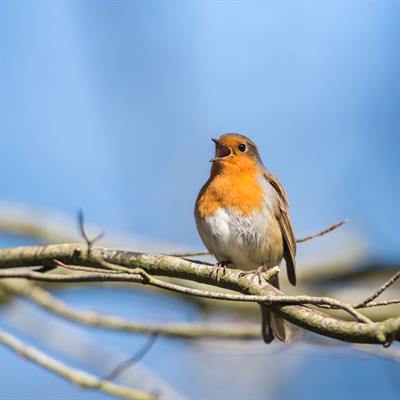
Avian behavior and cognition represent a fascinating field of study, offering insights into the evolutionary pathways that have shaped the cognitive abilities of birds. Birds, as a successful group of reptiles, have adapted to a wide range of ecological niches, developing large brains and complex behaviors akin to those of mammals. The evolutionary divergence between avian and mammalian lineages has led to unique adaptations in birds, particularly driven by the demands of flight, which necessitates advanced sensory and behavioral capabilities. This has resulted in enhanced spatial learning and memory. Despite these differences, convergent evolution has led to shared traits between birds and mammals, such as long childhoods, extensive parental care, and warm-bloodedness, as well as complex social behaviors and cognitive abilities. Birds, in particular, exhibit remarkable similarities to humans, relying on vision and hearing, and demonstrating vocal learning and rhythmic abilities. These traits make birds valuable model systems for studying human-like cognitive processes. However, while significant progress has been made in understanding avian cognition, studies often remain siloed within specific fields, highlighting the need for a more integrated approach to explore the full scope of avian behavior and cognition.
This Research Topic seeks to bridge the gap between various fields of avian learning and cognition by encouraging interdisciplinary communication and collaboration, , which we hope could lead to significant innovations through cross-field collaborations. The primary objective is to explore the diverse aspects of avian behavior, focusing on the neural mechanisms underlying these behaviors and their cognitive implications. By fostering connections among different cognitive domains and incorporating theoretical modeling, this collection aims to advance our understanding of avian cognition and its relevance to broader cognitive science. Key questions include: 1) how birds' cognitive abilities compare to those of mammals, particularly humans, and what neural adaptations support these abilities; 2) how birds’ unique phylogeny within reptiles is reflected in cognitive differences and similarities between birds and non-avian reptiles. 3) the development of avian cognitive abilities, especially from a comparative perspective with mammals and/or non-avian reptiles.
To gather further insights into the expansive field of avian behavior and cognition, this Research Topic welcomes articles addressing, but not limited to, the following themes:
• Comparative studies of avian and mammalian cognitive abilities
• Comparative studies of avian and non-avian reptiles’ cognitive abilities
• Studies on the development of avian cognitive abilities and how it compares to mammalian and reptilian cognitive development
• Neural mechanisms underlying avian learning and memory
• The role of sensory modalities in avian cognition
• Vocal learning and cultural transmission in birds
• Cognitive problem-solving and abstract reasoning in avian species
• Theoretical models of avian cognitive processes
• Interdisciplinary approaches to studying avian behavior and cognition
This Research Topic accepts the following article types, unless otherwise specified in the Research Topic description:
Articles that are accepted for publication by our external editors following rigorous peer review incur a publishing fee charged to Authors, institutions, or funders.
Keywords: Bird, Avian, Behavior, Learning, Cognition, Comparative Psychology, Animal Behavior, Animal Learning, Adaption, Species
Important note: All contributions to this Research Topic must be within the scope of the section and journal to which they are submitted, as defined in their mission statements. Frontiers reserves the right to guide an out-of-scope manuscript to a more suitable section or journal at any stage of peer review.

Manuscripts can be submitted to this Research Topic via the main journal or any other participating journal.
Submit your idea
Select the journal/section where you want your idea to be submitted: