TC
tejas chimanlal bosamia
Central Salt & Marine Chemicals Research Institute (CSIR)
Bhavnagar, India
2,413
Total downloads
15k
Total views and downloads
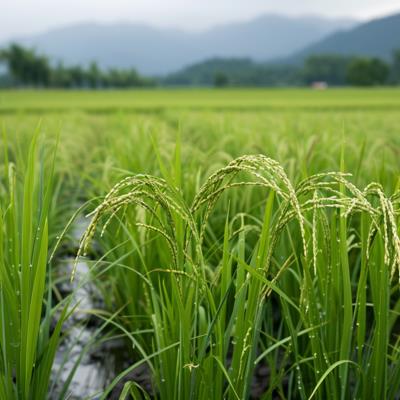
Global warming and climate change has resulted in soil degradation, and rising agricultural demands that necessitates climate resilient and nutritionally enhanced crops. Harnessing naturally resilient flora, including wild relatives and extremophytes, presents a transformative opportunity to augment crop health and stress tolerance. This approach integrates molecular breeding, genetic engineering, and biostimulant applications, creating a pathway toward sustainable and productive agriculture. Advent of next generation sequencing technologies has enabled development of high resolution genetic maps, genotyping data sets, and a large number of SNPs leading to trait discovery in important food crops like wheat, rice and maize.
The wild relatives of the above major food crops and extremophytes are also invaluable sources of genetic diversity, offering traits such as abiotic stress tolerance (heat, drought and salinity), and disease resistance. These traits can be incorporated into cultivated crops through advanced breeding and molecular approaches to improve yield stability and adaptability. Genetic engineering, particularly through tools like new breeding techniques CRISPR/Cas9, allows for precise editing of crop genomes to introduce specific resilience traits coupled with rapid generation advance.
Beyond breeding and genetic engineering, plant biostimulants (botanical and seaweeds extract) could add another dimension of crop resilience. These biostimulants, rich in bioactive compounds, minerals, and growth hormones, enhance nutrient uptake, metabolic activity, and activate stress-responsive pathways in plants. Their use primes crops to withstand adverse conditions while promoting growth under normal circumstances.
This comprehensive strategy also includes exploring epigenetic mechanisms that regulate stress memory and adaptive responses in crops. By combining molecular breeding, genetic engineering, epigenetic research, and the application of plant biostimulants, we can pioneer innovative solutions for sustainable crop improvement and resilience in the face of global challenges.
We welcome submissions on the following thematic areas:
• Utilization of wild relatives and extremophytes for crop improvement.
• Trait discovery for abiotic stress tolerance and disease resistance for major food crops.
• Advances in molecular breeding for resilience traits.
• Application of genetic engineering, CRISPR/Cas9 and other genome-editing tools for stress tolerance and yield enhancement.
• Role of plant biostimulants (botanical and seaweed extracts) in stress mitigation and improved productivity.
• Molecular mechanisms of biostimulant action in nutrient uptake and stress-responsive pathways.
• Exploration of epigenetic mechanisms in stress memory and adaptive responses.
• Role of chromatin modifications in regulating stress tolerance.
Keywords: Climate resilience, Sustainable agriculture
Important note: All contributions to this Research Topic must be within the scope of the section and journal to which they are submitted, as defined in their mission statements. Frontiers reserves the right to guide an out-of-scope manuscript to a more suitable section or journal at any stage of peer review.
Central Salt & Marine Chemicals Research Institute (CSIR)
Bhavnagar, India
Department of Plant & Environmental Sciences, Clemson University Pee Dee Research & Education Center
Florence, United States
Kongju National University
Gong, Republic of Korea
Indian Institute of Rice Research (ICAR)
Hyderabad, India
