LM
leo marcelis
Wageningen University and Research
Wageningen, Netherlands
1,307
Total downloads
11k
Total views and downloads
Submit your idea
You will be redirected to our submission process.
Manuscript Submission Deadline 16 March 2026
This Research Topic is currently accepting articles
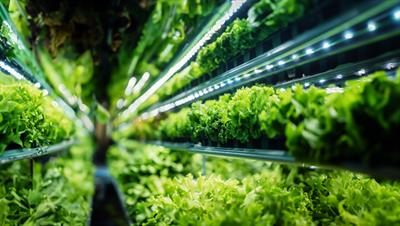
Controlled environment agriculture (CEA) – crop production in greenhouses and vertical farms – allows for highly intensified and standardized plant cultivation. High and often year-round yields are enabled by close control of environmental factors, such as light intensity and spectrum, [CO2], temperature, as well as nutrient and water availability. Such factors are often kept constant diurnally and throughout the production cycle. However, as recently highlighted in a review by Kaiser et al., 2024, "Vertical farming goes dynamic: optimizing resource use efficiency, product quality, and energy costs", there are many reasons to “go dynamic”, as this may boost the profitability and energy efficiency of various CEA operations: these include responding to requirements of the crop as well as to fluctuating market prices, by dynamically adjusting climatic conditions which may save energy and/or energy costs, increase productivity and boost product quality.
Dynamic CEA is highly complex, and its successful implementation requires more insight through targeted research. This includes topics such as: translation of well-known mechanisms in model species to crops, measurement and modelling of plant-environment interactions, development of sensors capable of crop monitoring, high-throughput phenotyping, breeding for the indoor environment, and energy saving. Plant processes considered relevant for dynamic responses of crops include, but are not limited to: photosynthesis, respiration, transpiration, dry matter partitioning, biosynthesis and breakdown of metabolites, cell division and expansion.
Studies recognizing the shortcomings of current CEA compared to dynamic CEA and reporting transformative new approaches are especially welcome. Studies investigating the effects of growth conditions that were kept constant will not be considered. Also, descriptive studies that report responses of growth, yield, or quality to a treatment will not be considered if they do not progress physiological understanding of these responses.
In this Research Topic in Frontiers in Plant Sciences, we invite authors from scientific fields including but not limited to horticulture, plant physiology, agronomy, breeding, sensor development, and modelling, to share their unique insights on “dynamic CEA”. We welcome original research papers, but do not invite literature reviews or opinion articles.
This Research Topic accepts the following article types, unless otherwise specified in the Research Topic description:
Articles that are accepted for publication by our external editors following rigorous peer review incur a publishing fee charged to Authors, institutions, or funders.
Keywords: breeding, crop monitoring, plant-environment interactions, plant physiology, postharvest physiology, vertical farm, plant factory, greenhouse
Important note: All contributions to this Research Topic must be within the scope of the section and journal to which they are submitted, as defined in their mission statements. Frontiers reserves the right to guide an out-of-scope manuscript to a more suitable section or journal at any stage of peer review.
Manuscripts can be submitted to this Research Topic via the main journal or any other participating journal.
Submit your idea
You will be redirected to our submission process.
