XZ
xu zheng
University of Electronic Science and Technology of China
Chengdu, China
350
Total downloads
3,497
Total views and downloads
Submit your idea
You will be redirected to our submission process.
Manuscript Submission Deadline 28 February 2026
This Research Topic is currently accepting articles.
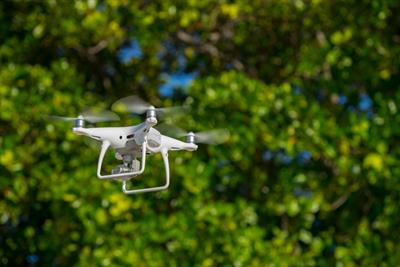
Recently, the capabilities of intelligent systems designed for crop protection and production have been empowered by the remarkable and extensive development of large language models (LLMs), such as the intelligent Internet of Things (IIoTs) and drones. The superior performance of LLMs in content generating has provided these systems with novel opportunities for fine-grained, autonomous and seamless operation. For example, drones equipped with LLMs can cooperate with each other and adaptively generate plans for pest investigation over a wide range of cropland, which can significantly raise the efficiency for crop protection by saving human labor. Additionally, the distributed irrigation system can gather and process multi-modal sensing data from IIoTs to create highly precise watering schedules. Upon the emergence of such distributed and autonomous functionalities, there is a trend in exploring novel designs and solutions for intelligent systems that will renew and facilitate crop protection and production across all stages, including sowing, irrigation, fertilizing, and harvesting. In essence, these advanced intelligent systems aim to offer a thorough and detailed understanding of crop status in a distributed and autonomous manner.
Meanwhile, the procedure of crop protection and production is expecting advanced and tailored AI technologies beyond current solutions. The requirements cover multiple components like pest investigation where images of crops should be accurately analyzed and aligned to create the overall situation for destruction. In this case, the advanced AI models for image detection towards dense and small objects, and intelligent and adaptive coordinating models for information aggregation are both pivotal. The distributed intelligent systems should also benefit crop production with timely awareness of changing conditions in soil and environment, such as the trend of decreasing humidity and temperature. This enables autonomous irrigation, greenhouse or fertilizing systems can react quickly and accurately through intelligent and fine-grained control proactively. Moreover, LLM is supposed to be added into all these components to provide seamless interactions and self-governing operations. Considering these opportunities and challenges, novel techniques in AI methods should be jointly considered and extensively investigated for the intelligent systems for crop protection and production.
This Research Topic collects new developments in various techniques tied with intelligent systems in crop protection and production, including pre-training models, IoTs, wireless communications, secure data sharing, LLMs on the edge and so on. These studies will contribute to the continuous development of intelligent systems that can adopt LLMs seamlessly for crop production. We also hope this research topic will form a forum that inspires researchers and scholars to share their innovative ideas in realizing the full potential of AI for Agriculture.
We welcome (but are not limited to) original research and reviews related to the distributed and autonomous intelligent systems for crop protection and production:
• Intelligent Internet of Things for crop monitoring
• LLM and Pre-trained models on edges for autonomous crop production
• Lightweighted AI models for quick pest investigation
• Multimedia data processing models for enhanced situation awareness in crop protection
• Distributed decision-making methods for efficient crop management
• Data sharing and communication among distributed devices for crop protection and production
• Reliable, accountable and secure data sharing for safe production through intelligent systems
• Innovative AI methods to enhance sustainability in crop production
This Research Topic accepts the following article types, unless otherwise specified in the Research Topic description:
Articles that are accepted for publication by our external editors following rigorous peer review incur a publishing fee charged to Authors, institutions, or funders.
Keywords: artificial intelligence, intelligent systems, Internet of Things, communication, Crop protection and production
Important note: All contributions to this Research Topic must be within the scope of the section and journal to which they are submitted, as defined in their mission statements. Frontiers reserves the right to guide an out-of-scope manuscript to a more suitable section or journal at any stage of peer review.
University of Electronic Science and Technology of China
Chengdu, China
University of Surrey
Guildford, United Kingdom
College of Engineering, Shenyang Agricultural University
Shenyang, China
Kennesaw State University
Kennesaw, United States
Georgia State University
Atlanta, United States
Manuscripts can be submitted to this Research Topic via the main journal or any other participating journal.
Submit your idea
You will be redirected to our submission process.
