YZ
yueqiang zhang
Southwest University
Chongqing, China
281
Total downloads
2,523
Total views and downloads
Submit your idea
You will be redirected to our submission process.
Manuscript Submission Deadline 31 March 2026
This Research Topic is currently accepting articles.
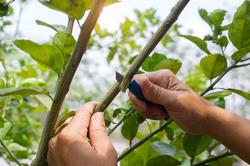
With global challenges such as environmental change, resource limitations, and population growth, enhancing crop production efficiency, nutrient absorption, and crop quality have emerged as critical objectives in modern agriculture. Grafting, a traditional yet continually evolving agricultural technique, presents significant potential for widespread application. It offers a technical pathway to enhance crop stress resistance, optimize nutrient utilization, improve quality, and promote sustainable agricultural development. By combining the desirable attributes of different individuals, grafting can significantly impact growth and productivity. For instance, utilizing high-quality scions can enhance water and nutrient uptake, which in turn improves plant growth and fruit quality. Meanwhile, stress-resistant rootstocks, tolerant to conditions like salinity and drought, can modify plant root structures and support growth in challenging environments. Studies have shown that grafting can improve photosynthetic efficiency, carbon and nitrogen metabolism, and nutrient accumulation in fruits by regulating plant hormone balance and altering nutrient transport pathways. Additionally, grafting enhances quality indicators such as soluble sugar, vitamins, and flavor in fruits, which contribute to economic optimization.
A deeper understanding of the physiological and molecular dynamics of rootstock-scion interactions will undoubtedly enhance the agronomic and genetic potential of key crops for human nutrition and health, promoting greater agricultural sustainability. However, the specific impacts of grafting on various plant species across diverse ecological environments warrant further systematic investigation.
In this Research Topic, we welcome all article types published by Frontiers in Plant Science that dissect the physiological, molecular, and agronomic mechanisms underlying grafting-mediated improvements in crop performance, stress resilience, nutrient uptake, and quality, with a particular focus on
1. Effects of grafting on plant growth and physiological processes;
2. Effects of grafting on the yield and quality of crops;
3. Effects of rootstocks on plant mineral nutrient absorption;
4. Responses of grafted variety to biotic and abiotic stresses;
5. Cross-talk among rootstock and scion.
This Research Topic accepts the following article types, unless otherwise specified in the Research Topic description:
Articles that are accepted for publication by our external editors following rigorous peer review incur a publishing fee charged to Authors, institutions, or funders.
Keywords: Grafting, Plant Growth, Physiology, Mineral Nutrient Absorption, Crop Quality, Yield, Rootstock, Scion, Stress resistance, Omics tools
Important note: All contributions to this Research Topic must be within the scope of the section and journal to which they are submitted, as defined in their mission statements. Frontiers reserves the right to guide an out-of-scope manuscript to a more suitable section or journal at any stage of peer review.
Manuscripts can be submitted to this Research Topic via the main journal or any other participating journal.
Submit your idea
You will be redirected to our submission process.
