HS
hamza sohail
Yangzhou University
Yangzhou, China
1,531
Total views and downloads
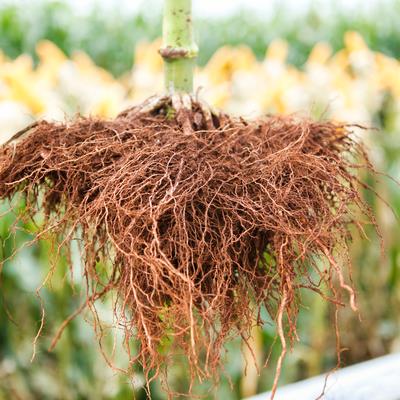
With the intensification of climate change and the rising global demand for food, developing crops that can withstand diverse abiotic stressors is a pressing challenge. Roots are central to plant performance, serving as the primary interface for water and nutrient uptake, anchorage, and interactions with the soil and rhizosphere microbiome. However, improving root traits has traditionally been hindered by the hidden and complex nature of root systems.
Recent breakthroughs in gene editing technologies, particularly CRISPR/Cas systems, provide unprecedented opportunities to precisely modify root-related genes and regulatory networks that govern stress responses. Targeting genetic determinants of root elongation, lateral root density, root hair proliferation, aerenchyma formation, and hormonal signaling (auxin, cytokinin, ABA, ethylene, GA, and JA) offers a way to enhance resilience to multiple abiotic stresses, including drought, salinity, nutrient deficiency, flooding, heat, and cold.
This Research Topic focuses on the integration of gene editing strategies to reprogram root system architecture and function under stressful environments. Contributions that link molecular editing of root traits with whole-plant physiology, rhizosphere microbiome dynamics, and above-ground stress adaptation are highly encouraged. Field-level validation of gene-edited lines, comparative omics studies connecting genotype to phenotype, and translational pipelines from model species to crops are particularly welcome.
By bridging molecular innovations with practical agricultural outcomes, this topic aims to provide sustainable solutions for crop improvement, reducing reliance on chemical inputs while enhancing productivity and resilience under climate variability.
Key themes of this Research Topic include:
• Gene editing of root traits for enhanced tolerance to abiotic stresses (drought, salinity, heat, cold, flooding, nutrient deficiency, heavy metals)
• CRISPR/Cas-based modification of root system architecture and hormonal pathways regulating stress adaptation
• Root–shoot–rhizosphere integration: linking edited root traits with whole-plant physiology and microbiome interactions under stress
• Field validation and translational studies of edited lines across crop species and environments
• Omics-driven approaches (transcriptomics, proteomics, metabolomics, epigenomics) for functional validation of root-related stress-responsive genes
• Innovative methods and perspectives for visualizing, editing, and characterizing root system traits under abiotic stress
Keywords: root system architecture, gene editing in plants, water and nutrient uptake, crisp/cas root modification, sustainable crop improvement
Important note: All contributions to this Research Topic must be within the scope of the section and journal to which they are submitted, as defined in their mission statements. Frontiers reserves the right to guide an out-of-scope manuscript to a more suitable section or journal at any stage of peer review.
