CW
changkai wen
China Agricultural University
Beijing, China
3,483
Total downloads
30k
Total views and downloads
Submit your idea
Select the journal/section where you want your idea to be submitted:
Manuscript Submission Deadline 23 February 2026
This Research Topic is currently accepting articles.
With the global population rapidly increasing and resources becoming ever more limited, the world faces unprecedented challenges. Traditional agriculture, in particular, is under mounting pressure to boost food production, protect ecosystems, and improve efficiency as climate change intensifies. The United Nations predicts that by 2050, the global population will exceed 9 billion, necessitating an increase in food production of more than 70%. However, conventional extensive farming practices have led to water and fertilizer waste, soil degradation, and environmental pollution. Meanwhile, advances in technologies such as the Internet of Things, satellite remote sensing, big data, and artificial intelligence are driving the digital transformation of agriculture and accelerating the development of precision agriculture.
Precision agriculture offers a number of important benefits, including more efficient resource utilization—reducing consumption by 20% to 50% through precise irrigation and variable fertilization, which lowers both production costs and environmental burdens. It also contributes to increased yields and improved crop quality by leveraging real-time monitoring and AI-driven decision-making, enabling yield improvements of 10% to 25% while optimizing product quality. By integrating meteorological and market data, precision agriculture enhances risk management and helps mitigate the effects of extreme weather and market fluctuations. Furthermore, it promotes sustainability by reducing pesticide use and carbon emissions, thereby supporting soil health and long-term ecological stability. As a result, precision agriculture and big data not only represent transformative technological advancements but also constitute essential strategies for addressing the challenges of global food security and environmental sustainability. Together, these innovations are rapidly reshaping the global agricultural landscape and setting a new paradigm for modern food production.
The goal of integrating precision agriculture with big data technologies is to significantly improve the quality and efficiency of agricultural production. By leveraging key technologies such as visual perception, remote sensing, intelligent control, autonomous operations, and big data analysis, it becomes possible to enhance production efficiency and reduce labor intensity across all stages of agriculture, from planting to management and harvesting. The demonstrated success and vast potential of these technologies motivate ongoing research and development, with the aim of achieving sustainable agricultural growth and meeting the increasing demands for food security and environmental protection.
In this Research Topic, we welcome all article types published by Frontiers in Plant Science that dissect the use of precision agriculture and big data technology as a modern and sustainable tool in agriculture especially those that focus on:
• Big Data Models and Intelligent Decision-Making Methods for Comprehensive Crop Production Processes
• Plant Phenotyping and Monitoring Technologies for Pests, Diseases, and Weeds
• Specialized Agricultural Sensing Materials and Intelligent Sensors
• Target Detection Technologies and Methods for Complex Agricultural Environments
• Agricultural Remote Sensing Technologies and Applications in Typical Scenarios
• Agricultural Plant Protection Drones and Their Applications in Typical Scenarios
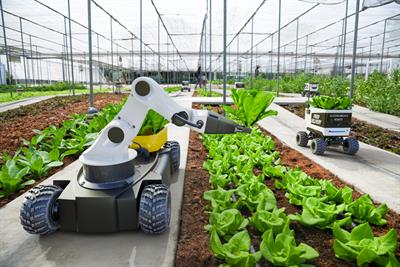
• Agricultural Specialized Robot Systems for Multiple Application Scenarios
• Energy-Efficient and Intelligent Control Theories and Methods for Agricultural Machinery Equipment
• Multi-Robot Coordination and Precision Operation Technologies for Agricultural Robots
This Research Topic accepts the following article types, unless otherwise specified in the Research Topic description:
Articles that are accepted for publication by our external editors following rigorous peer review incur a publishing fee charged to Authors, institutions, or funders.
Keywords: precision agriculture, big data, visual perception, remote sensing, specialized robot, autonomous operations
Important note: All contributions to this Research Topic must be within the scope of the section and journal to which they are submitted, as defined in their mission statements. Frontiers reserves the right to guide an out-of-scope manuscript to a more suitable section or journal at any stage of peer review.
Manuscripts can be submitted to this Research Topic via the main journal or any other participating journal.
Submit your idea
Select the journal/section where you want your idea to be submitted:
