A-
adinarayana - jagarlapudi
Indian Institute of Technology Bombay
Mumbai, India
1,747
Total views and downloads
Submit your idea
You will be redirected to our submission process.
Manuscript Submission Deadline 28 February 2026
This Research Topic is currently accepting articles.
Plant phenotyping is the measurement and analysis of various plant characteristics influenced by both the genetic background (genotypes) and the environmental conditions. It essentially refers to the quantitative description of the ontological, morphological, physiological, and biochemical plant traits. Traditional plant phenotyping is human expertise-based quantitative assessment of plant traits, making it labor-intensive, time-intensive, and subjective. This limitation hinders the identification and cultivation of productive, resilient crop varieties. High-throughput plant phenotyping (HTP) addresses this by enabling rapid, automated measurement of plant characteristics to accelerate breeding programs and study environmental responses. While distinct, there is clear convergence between HTP and precision agriculture. HTP and precision agriculture increasingly leverage shared sensing and computational technologies. Precision agriculture focuses on optimizing crop management through monitoring, data analytics, and automation. Conversely, HTP is research-driven, utilizing rapid phenotyping for genetic insight and breeding. It is primarily used to study plant responses to environmental conditions, identify desirable traits, and accelerate breeding programs for improved crop varieties.
Recent advancements in computer vision, artificial intelligence (AI), and machine learning (ML) have facilitated high-throughput, automated, and non-destructive plant phenotyping and precision agriculture. Despite their potential, these technologies are still in their early developmental stages, with significant challenges remaining. This research topic aims to provide a platform for cutting-edge developments, limitations, and future directions in computer vision and AI/ML applications for various HTP and precision agriculture applications e.g., crop breeding, cultivation, plant stress phenotyping, functional plant phenomics, disease management, weed control, and early stress detection, etc.
The latest original research or review papers of computer vision and AI/ML in either HTP or precision agriculture are welcome. Manuscripts on phenotyping in controlled or field environments, shoot or root phenotyping, and precision agriculture technologies for weed and invertebrate pest detection are also suitable. In particular, this research topic will focus on, but are not limited to, the following areas:
• HTP in controlled versus non-controlled field environments.
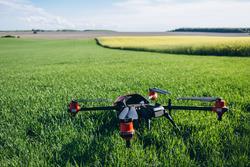
• Field-based HTP - Applications utilizing ground-based vehicles, aerial platforms (e.g., drones, aircraft), and satellite imagery.
• Farmland pattern classification, detection, and segmentation from agricultural/phenotyping imagery.
• Root architecture phenotyping employing advanced imaging modalities such as X-ray and computed tomography (CT) systems.
• Detection and counting of specific plant organs.
• Development and application of advanced imaging techniques (e.g., RGB, multispectral, hyperspectral, thermal, LiDAR, fluorescence) and associated data processing algorithms for HTP and precision agriculture.
• Data fusion of multi/hyper-spectral image data and multi-modal data sources.
• Resources and dataset benchmarks for agricultural imagery-based pattern analysis.
• Development of state-of-the-art machine vision sensors.
• High-throughput methods for characterizing biotic (e.g., diseases, pests) and abiotic (e.g., drought, salinity, nutrient deficiency) stress responses in plants.
• Novel AI/ML algorithms for weed detection and classification
• Label-efficient ML - Exploration of self-supervised, semi-supervised, and weakly supervised learning methods for agricultural and phenotyping imagery, addressing challenges of limited labeled data.
• Applications of Vision Language Models for interpreting and analyzing agricultural and phenotyping imagery.
• Transfer learning and domain adaptation for precision agriculture and HTP.
• Cloud-based learning efficient learning schemes for phenotyping advancement.
• Real-time analytics using edge devices for precision agriculture and HTP.
• Multi-objective Optimization for sustainable agricultural practices
• Dynamic Recommendation Systems for crop resource management using sensor fusion and optimization
• Decision Support Systems for IoT-enabled precision agriculture
This Research Topic accepts the following article types, unless otherwise specified in the Research Topic description:
Articles that are accepted for publication by our external editors following rigorous peer review incur a publishing fee charged to Authors, institutions, or funders.
Keywords: High-throughput plant phenotyping, precision agriculture, computer vision, machine intelligence, weed detection/control, disease/pest detection, crop breeding, crop improvement, biotic and abiotic stress phenotyping, IoT, optimization methods, multi-senso
Important note: All contributions to this Research Topic must be within the scope of the section and journal to which they are submitted, as defined in their mission statements. Frontiers reserves the right to guide an out-of-scope manuscript to a more suitable section or journal at any stage of peer review.
Manuscripts can be submitted to this Research Topic via the main journal or any other participating journal.
Submit your idea
You will be redirected to our submission process.
