FL
fábio luiz partelli
Federal University of Espirito Santo
Vitória, Brazil
662
Total downloads
4,969
Total views and downloads
Submit your idea
Select the journal/section where you want your idea to be submitted:
Manuscript Submission Deadline 9 September 2026
This Research Topic is currently accepting articles.
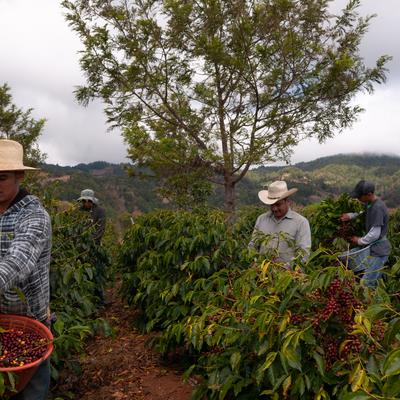
Coffee is one of the world’s most important agricultural commodities, with profound economic, social, environmental, and cultural significance—particularly in producing countries. Over the centuries, coffee cultivation has evolved into a global enterprise, increasingly supported by scientific and technological innovation.
Recent advances across diverse fields have contributed significantly to improving sustainability, productivity, and quality throughout the entire value chain. From sustainable cultivation practices and genetic improvement for resilience to biotic and abiotic stresses, to enhancements in harvesting, post-harvest handling, and beverage processing, research continues to play a critical role.
Furthermore, growing attention to the health benefits of coffee consumption and the valorization of by-products highlights the crop’s broader relevance. These advancements rely on robust scientific knowledge and technological diffusion, from the early stages of planting through to industrial transformation and product diversification. As the sector faces unprecedented challenges due to climate change and market dynamics, continued investment in innovation and research is essential to ensure the resilience and sustainability of coffee farming worldwide.
Climate change poses serious challenges to the sustainability of coffee farming, intensifying biotic and abiotic stresses such as prolonged droughts, temperature extremes, and unpredictable weather patterns. These stressors threaten yields, quality, and farmer livelihoods, demanding urgent research on adaptation and resilience strategies. Current and future scenarios call for innovative cultivation systems, improved understanding of plant physiology and stress response, and advances in genetics, biochemistry, and breeding. Enhancing tolerance to heat, cold, and water scarcity is critical. While Coffea arabica and C. canephora dominate production, other species like C. racemosa and C. zanguebariae show promise for stress resilience and unique cup profiles, highlighting the potential of the entire Coffea genus. Furthermore, sustainable practices must extend beyond cultivation, integrating harvesting, post-harvest processing, and value-added strategies to maintain quality and economic viability. Addressing climate challenges requires coordinated efforts across the coffee value chain—from farm to cup—grounded in research and technological development. In this context, this special issue invites contributions that explore innovative solutions to secure the future of coffee farming globally, emphasizing resilience, biodiversity, and sustainability across all stages of production and processing.
We welcome original research and review articles including, but not limited to, the following topics:
• Management from planting to harvest, including innovations and practices adapted to climate variability
• Actions and processes that enhance resilience to biotic (e.g., pests, diseases) and abiotic (e.g., drought, heat, cold) stresses
• Cultivation systems and crop management, focusing on sustainability and productivity in diverse environments
• Physiology, biochemistry, and chemical composition of fruits, grains, leaves, flowers, and other plant parts under different growing conditions
• Genetics and genetic improvement of coffee plants, with emphasis on tolerance to environmental stresses and quality traits
• Harvesting, post-harvest handling, fermentation, and roasting processes, including their influence on quality and the health benefits of coffee
• Exploration of underutilized Coffea species, including their agronomic potential, stress tolerance, and beverage quality
• Climate-smart technologies and digital tools (e.g., remote sensing, AI, precision agriculture) applied to coffee farming
• Soil health and nutrient management, particularly in low-input or organic systems
• Socioeconomic and policy dimensions of sustainable coffee production, including farmer adaptation strategies and value chain resilience
• Biodiversity conservation and ecosystem services in coffee landscapes, including agroforestry systems and shade-grown coffee
This Research Topic accepts the following article types, unless otherwise specified in the Research Topic description:
Articles that are accepted for publication by our external editors following rigorous peer review incur a publishing fee charged to Authors, institutions, or funders.
Keywords: Coffee, Cropping systems, Plant breeding, Sustainable coffee production, Climate change
Important note: All contributions to this Research Topic must be within the scope of the section and journal to which they are submitted, as defined in their mission statements. Frontiers reserves the right to guide an out-of-scope manuscript to a more suitable section or journal at any stage of peer review.

Manuscripts can be submitted to this Research Topic via the main journal or any other participating journal.
Submit your idea
Select the journal/section where you want your idea to be submitted: