DM
dr. meenakshi thakur
Institute of Himalayan Bioresource Technology (CSIR)
Pālampur, India
462
Total views and downloads
Submit your idea
You will be redirected to our submission process.
Manuscript Summary Submission Deadline 12 January 2026 | Manuscript Submission Deadline 2 May 2026
This Research Topic is currently accepting articles.
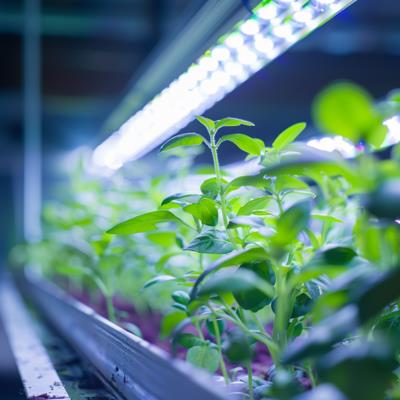
The need for sustainable agriculture is more critical than ever, especially with increasing consumer demand for high-quality, nutritious plant products. This growing urgency has spotlighted horticultural crops, including vegetables, fruits, floriculture, and medicinal and aromatic plants, within innovative cultivation systems such as hydroponics, greenhouses, polyhouses, and vertical farming. Despite their promise, the energy-intensive nature of these systems—largely due to lighting and climate control—poses a significant challenge. Emerging research into artificial photosynthesis, which involves creating or enhancing systems that mimic natural photosynthesis, offers new solutions to increase crop productivity, energy-use efficiency, and the nutritional and phytochemical quality of horticultural produce. This includes optimizing light quality, intensity, and duration using cutting-edge technologies like tunable LED systems and quantum dot photonics, along with dynamic lighting protocols tailored to specific plant growth stages.
This Research Topic aims to delve into pivotal questions at the convergence of plant physiology, environmental regulation, and commercial horticulture. Key objectives include understanding how dynamic light environments, such as spectral tuning and intensity modulation, impact growth, flowering, and yield attributes in horticultural crops. It also considers the role of artificial light treatments in enhancing secondary metabolites and improving the nutritional and pharmaceutical qualities of plants raised in hydroponic systems with optimized artificial photosynthesis. Moreover, it seeks insights from physiological monitoring tools like LI-COR systems on plant responses such as photosynthesis and light-use efficiency under a variety of lighting setups. Finally, it investigates the practicality of implementing these innovations at a commercial scale in controlled environments like polyhouses and greenhouses.
To gather further insights in the dynamics of artificial photosynthesis and light optimization within controlled environments, we welcome articles addressing, but not limited to, the following themes:
• Effects of LED spectrum modulation (including red, blue, far-red, and UV) on plant morphology, photosynthesis, and metabolite biosynthesis
• Use of LI-COR systems to quantify physiological plant responses (such as stomatal conductance, photosynthetic rate, and water-use efficiency) in varied light settings
• Field trials testing light manipulation strategies in commercial polyhouses, net houses, and greenhouses
• Comparative studies on artificial versus natural photosynthesis, assessing impacts on yield and post-harvest quality
• Advancements in metabolomic and transcriptomic understanding of artificial lighting effects on medicinal and aromatic plants
• Spectral manipulation's influence on photomorphogenesis and flowering regulation in various horticultural crops
• High-throughput phenotyping and crop modeling within dynamic controlled environment agriculture
• Integrating light optimization with nutrient management in hydroponic systems
• Assessing the economic and environmental benefits of scaling artificial photosynthesis
• Experiments or commercial pilots involving LED-assisted cultivation with startups or farming collectives
For this Research Topic, we seek high-quality original research, innovative methods, case studies, and application-driven investigations that contribute to the understanding and commercialization of artificial photosynthesis and advanced light optimization in horticulture.
This Research Topic accepts the following article types, unless otherwise specified in the Research Topic description:
Articles that are accepted for publication by our external editors following rigorous peer review incur a publishing fee charged to Authors, institutions, or funders.
Keywords: Innovative horticulture, artificial photosynthesis, horticultural lighting, LED grow lights, controlled environment agriculture, vertical farming, greenhouse technology, hydroponics, crop yield enhancement, crop quality, sustainable agriculture, tunable LED systems, quantum dot photonics, dynamic lighting protocols, plant physiology, LI-COR systems, commercial horticulture, light-use efficiency, secondary metabolites, phytochemical quality, plant photomorphogenesis, LED spectrum modulation, far-red light effects, UV light in horticulture, high-throughput phenotyping, crop modeling, nutrient management in hydroponics, post-harvest quality, plant metabolomics, transcriptomics, energy-efficient farming.
Important note: All contributions to this Research Topic must be within the scope of the section and journal to which they are submitted, as defined in their mission statements. Frontiers reserves the right to guide an out-of-scope manuscript to a more suitable section or journal at any stage of peer review.
Manuscripts can be submitted to this Research Topic via the main journal or any other participating journal.
Submit your idea
You will be redirected to our submission process.
