SK
soren k rasmussen
Independent researcher
Copenhagen, Denmark
757
Total views and downloads
Submit your idea
You will be redirected to our submission process.
Manuscript Summary Submission Deadline 11 March 2026 | Manuscript Submission Deadline 29 June 2026
This Research Topic is currently accepting articles.
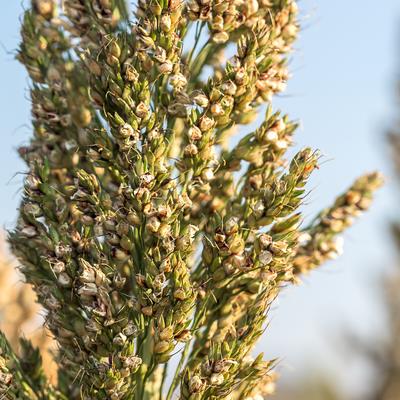
Sorghum is one of the world’s most important grain crops, used for food, feed, biofuel, and fiber. A C4 plant originating from subtropical regions, it has, over recent decades, been adapted to temperate climates above 55°N and to marginal regions without irrigation. All state-of-the-art breeding tools can be employed, and by leveraging a wide range of genetic resources, sorghum can be adapted to low temperatures during germination, saline soils, drought, and reduced nitrogen inputs. Sorghum is traditionally divided into five races with distinct specializations, including sweet sorghum that accumulates sugar in the stem, as well as types used for grain, biomass, and fiber production. Sorghum can be regarded as a future-proof crop capable of tolerating the adverse effects imposed by climate change.
This Research Topic aims to highlight recent successes in breeding sorghum for tolerance to abiotic stresses such as low temperature, salinity, and drought. We focus on sorghum as a multi-purpose crop, emphasizing trait improvement for biomass, fiber, and stem sugar, with applications for farmers, the construction industry, and biorefineries. We welcome studies encompassing classical genetics, mutation screening, site-directed mutagenesis, and hybrid development, as well as other advanced breeding methodologies to address outcrossing in this diploid species and to accelerate time to market.
We invite articles on the breeding and adaptation of sorghum for low-temperature regions and long day lengths, and for tolerance to saline soils and improved drought recovery. Target quality traits include fiber, sugar, biorefinery suitability, animal feed, and industrial products. We welcome all article types that contribute to (but are not limited to) the following topics:
• Adaptation to cool climates;
• Hybrid sorghum genetics;
• Mutation breeding;
• Biotechnology:
• Marker-assisted selection;
• Plant genetic resources;
• Field evaluation of germplasm.
This Research Topic accepts the following article types, unless otherwise specified in the Research Topic description:
Articles that are accepted for publication by our external editors following rigorous peer review incur a publishing fee charged to Authors, institutions, or funders.
Keywords: Classic Breeding, Mutation Breeding, Biotechnology, Genetics, Plant Genetic Resources, Hybrid Seed Production, Outcrossing, Marker Assisted Selection, Abiotic Stress, Salt-Tolerance, Drought-Tolerance, Cold Tolerance, Ligno-Cellulose, Fibre, Sugar
Important note: All contributions to this Research Topic must be within the scope of the section and journal to which they are submitted, as defined in their mission statements. Frontiers reserves the right to guide an out-of-scope manuscript to a more suitable section or journal at any stage of peer review.
Manuscripts can be submitted to this Research Topic via the main journal or any other participating journal.
Submit your idea
You will be redirected to our submission process.
