BA
bikash adhikari
University of Florida
Gainesville, United States
406
Total views and downloads
Submit your idea
You will be redirected to our submission process.
Manuscript Summary Submission Deadline 20 April 2026 | Manuscript Submission Deadline 8 August 2026
This Research Topic is currently accepting articles.
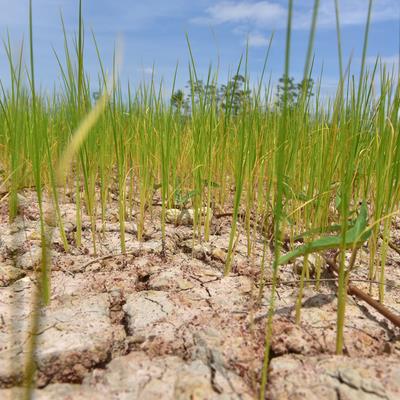
Salt stress, or salinity, poses a critical and escalating challenge in plant science and global agriculture, primarily driven by the increased use of marginal water sources, fertilizer accumulation, and drought-induced salt buildup. This adverse condition significantly compromises crop germination, growth, and development through complex disruptions in ionic, osmotic, and redox homeostasis, ultimately threatening food security. Although significant strides have been made in understanding the physiological and molecular mechanisms underpinning salt tolerance, significant translational challenges persist—most notably the difficulty in translating knowledge from controlled experimental settings to the variable, multifaceted environments encountered in open-field agriculture. Recent research underscores the need for integrative approaches that elucidate systemic root-to-shoot regulation, leverage multi-omics analyses, and consider genotype × environment × management interactions to effectively confront the complexity of salt stress.
The main aim of this Research Topic is to develop and integrate solutions to enhance salt stress tolerance and resilience in crops by fostering cross-disciplinary collaboration. It seeks to unite plant physiology, systems biology, and translational agronomy to identify, validate, and deploy key traits and management strategies that can withstand saline conditions. Critical questions to address include: How can physiological and molecular findings be reliably linked to whole-plant and canopy-level performance in real-world settings? What frameworks can optimize genotype × environment × management synergies? And how can actionable, evidence-based methods—ranging from novel germplasm deployment to on-farm best practices—be adopted to advance salt tolerance in agriculture?
This Research Topic focuses on actionable solutions that integrate experimental, computational, and field-based evidence to bridge the gap between laboratory discoveries and on-farm implementation. We welcome original research, reviews, and translational studies that fall within the following themes:
• Identification and validation of physiological and molecular traits underlying salt tolerance and resilience
• Integrating root, shoot, and canopy-level responses to salinity
• Multi-omics integration to unravel signaling networks (hormonal, transcriptional, metabolic) and their role in stress adaptation
• Development and field validation of marker-assisted selection, genomic pipelines, and advanced breeding strategies
• Deployment of plant management practices and the role of microbiomes, such as seed priming, grafting, biologicals/biostimulants, and decision support tools for growers
We encourage submission of original research articles, reviews, perspectives, case studies, and translational reports within the defined scope.
This Research Topic accepts the following article types, unless otherwise specified in the Research Topic description:
Articles that are accepted for publication by our external editors following rigorous peer review incur a publishing fee charged to Authors, institutions, or funders.
Keywords: Stress Physiology, Abiotic stress, Ion homeosatsis, Antioxidant defense, Genotype-environment interaction
Important note: All contributions to this Research Topic must be within the scope of the section and journal to which they are submitted, as defined in their mission statements. Frontiers reserves the right to guide an out-of-scope manuscript to a more suitable section or journal at any stage of peer review.
Manuscripts can be submitted to this Research Topic via the main journal or any other participating journal.
Submit your idea
You will be redirected to our submission process.
