
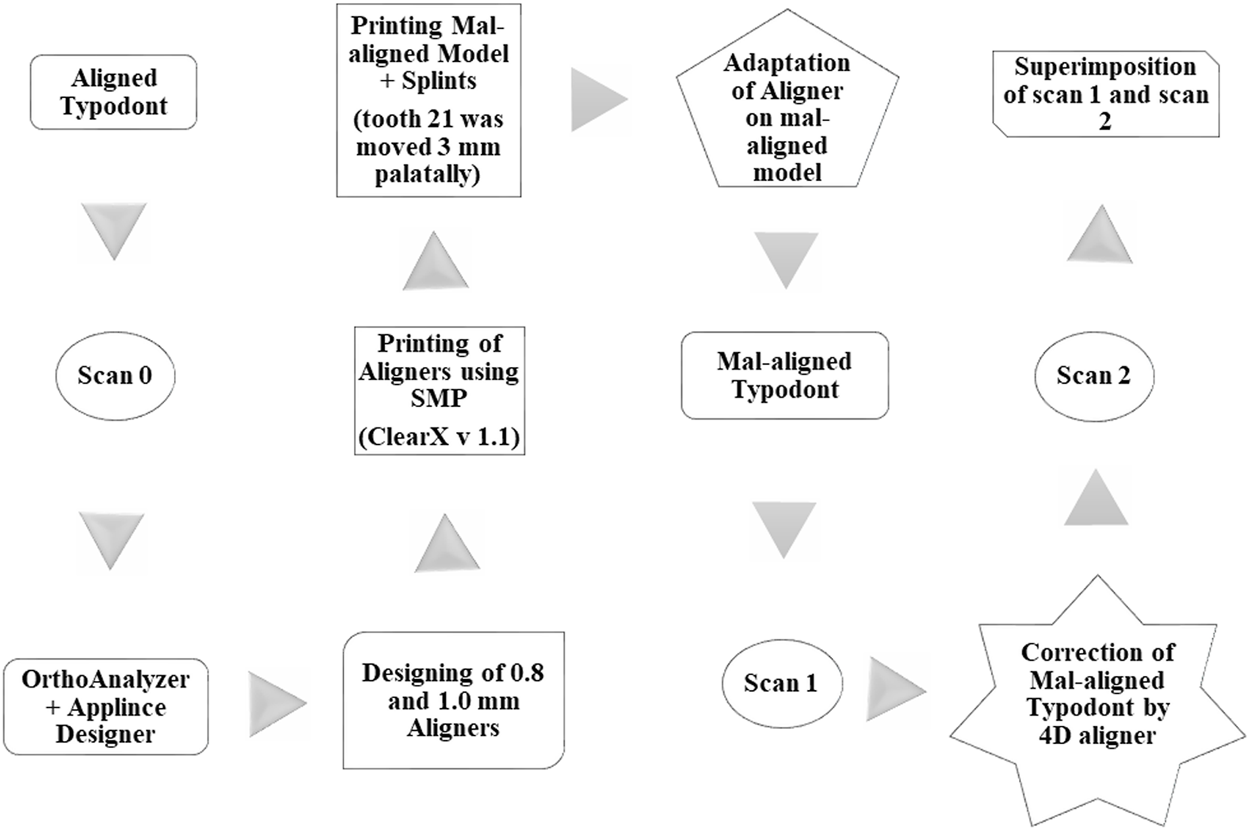
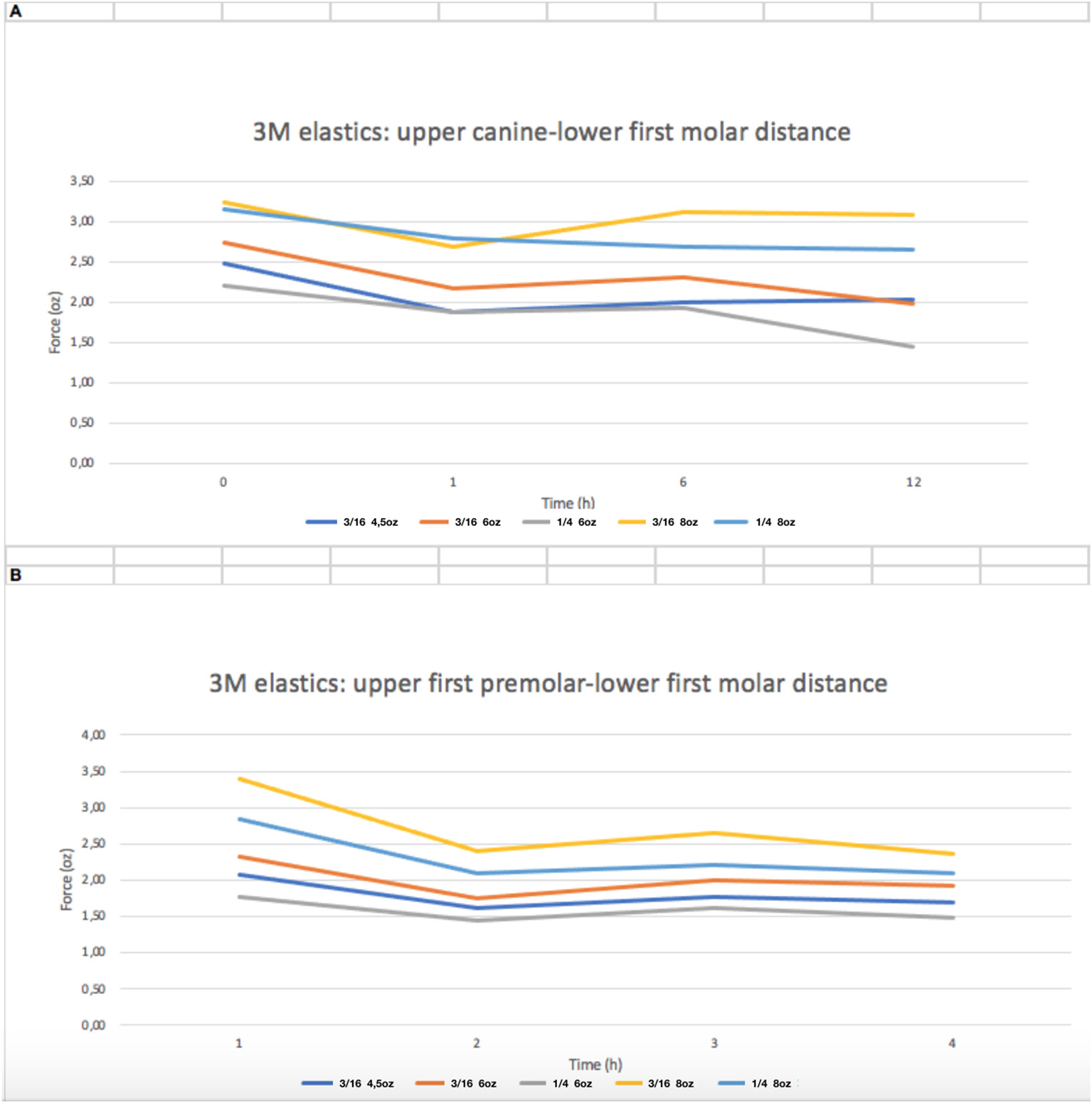
review on different clinical and technological aspects of clear aligners. We believe this article is a great starting lecture for everyone willing to know more about aligners clinical performance, but also a stimulus for young researchers looking for project ideas. The use of attachments represented also an alluring topic for different research groups, and this is not surprising since attachments are a crucial medium introduced to improve the transfer of forces and moments from the aligner to the teeth, thus substantially contributing to clear aligners' clinical effectiveness.Gazzani et al. evaluated the type of composite resin used for the application of attachments, concluding that conventional nanocomposites are the materials best suited for the clinical needs.Moreover, Ferlias et al. analyzed different shapes of attachments in an in-vitro setting to evaluate which geometry provided the highest derotational moment on an upper second premolar. This study could have a great clinical impact, since it highlights the importance in choosing the appropriate attachment geometry for various types of dental movement. Moreover., this study highlights that each attachment has some side-effects: for example, a vertical rectangular attachment seems to provide the greatest rotational moment, but at the cost of higher intrusion and inclination movement.Elshazly et al. presented a highly innovative in-vitro study by evaluating the forces produced by 3D-printed aligners made of shape memory polymers, so-called "four dimensional aligners". Indeed, the possibility to directly 3D printing the aligners -avoiding the steps of printing the models, thermoforming and then refining the aligners -the possibility to have materials with a high shape memory, and the possibility to have different thickness of the walls within the same aligner represent an incredible advantage over conventional produced aligners. Studies like the one presented in this Special Issue show the future direction in the clinical use of aligners, which will probably become the "new-normal" in the near future. Furthermore, biomaterials' innovation means the possibility to have materials that carry a biological effect. Crawford et al., presented the possible application of nanoparticles releasing nitric oxide for tooth movement modulation. Many researchers studied methods to influence tooth movement acting at a biochemical level, with alternating fortune. However, the use of locally injected nanoparticles with the ability to release active ingredients could be a promising technology. Crawford et al. obtained a significant result in Sprague-Dawley rats, inhibiting tooth movement for one week to achieve an "orthodontic anchorage effect"; nevertheless, further studies are needed to better understand the biological mechanism and to optimize nitric oxide treatment efficacy and longevity.Even old materials like elastomers, which are extensively used in daily practice, may reveal new features and clinically useful information: Castroflorio et al. evaluated the forces produced by different types of Class II intermaxillary elastics, concluding that 3/16" 4.5 oz elastics are the most reliable ones in terms of declared force and overtime degradation.Biomaterials and digital workfolw deeply changed the way Orthodonitcs is planned and practiced.The articles in this Special Issue demostrated that this is case and that their use will play a increasing role and will have a even larger inpact for the future of the profession.
3 Authors
- BL
Björn Ludwig
Department of Orthodontics, University of Homburg/Saar, Germany
- LK
Luisa Krause
Department of Orthodontics, University of Homburg/Saar, Germany
- AV
Adith Venugopal
Department of Orthodontics, Saveetha Dental College and Hospitals, Saveetha Institute of Medical and Technical Sciences, Saveetha University, India
2,843 views
6 citations
7 Authors
- TC
Tommaso Castroflorio
Department of Surgical Sciences, Specialization School of Orthodontics, Dental School, University of Turin, Italy
- AS
Ambra Sedran
Department of Surgical Sciences, Specialization School of Orthodontics, Dental School, University of Turin, Italy
- FS
Francesca Spadaro
Department of Surgical Sciences, Specialization School of Orthodontics, Dental School, University of Turin, Italy
- GR
Gabriele Rossini
Department of Surgical Sciences, Specialization School of Orthodontics, Dental School, University of Turin, Italy
- GC
Giovanni Cugliari
Department of Medical Sciences, University of Turin, Italy
- VQ
Vincenzo Quinzi
Department of Life, Health and Environmental Sciences Postgraduate School of Orthodontics, University of L'Aquila, Italy
- AD
Andrea Deregibus
Department of Surgical Sciences, Specialization School of Orthodontics, Dental School, University of Turin, Italy
1,283 views
1 citations

7 Authors
- TC
Tommaso Castroflorio
Department of Surgical Sciences, Specialization School of Orthodontics, Dental School, University of Turin, Italy
- AS
Ambra Sedran
Department of Surgical Sciences, Specialization School of Orthodontics, Dental School, University of Turin, Italy
- FS
Francesca Spadaro
Department of Surgical Sciences, Specialization School of Orthodontics, Dental School, University of Turin, Italy
- GR
Gabriele Rossini
Department of Surgical Sciences, Specialization School of Orthodontics, Dental School, University of Turin, Italy
- GC
Giovanni Cugliari
Department of Medical Sciences, University of Turin, Italy
- VQ
Vincenzo Quinzi
Department of Life, Health and Environmental Sciences Postgraduate School of Orthodontics, University of L'Aquila, Italy
- AD
Andrea Deregibus
Department of Surgical Sciences, Specialization School of Orthodontics, Dental School, University of Turin, Italy