YL
yuan li
Shaanxi Normal University
Xi'an, China
978
Total downloads
6,451
Total views and downloads
It is estimated that more than 70% of the global freshwater resources are used for agriculture, and the utilization rate of irrigation water is only 43%. In addition, climate change and population growth do impose additional pressure on resources, such as water supply, which is vital for agricultural production. Before the rise of the Internet of Things (IoT) and big data, soil sensing and field communication technologies were unreliable and costly. In recent years, agricultural researchers and farmers are witnessing the modern applications of artificial intelligence (AI) systems and solutions. The era of smart irrigation (SI) has begun as precision irrigation meets the Internet of Things, allowing for more data capture and higher levels of automation. Technologies such as the Internet of Things (IoT), smartphone tools, and sensors enable farmers to better grasp the exact conditions of their fields, including soil temperature, nutrients, water requirements, weather conditions, and more. Smart irrigation is emerging as a new scientific discipline that uses data-intensive methods to increase agricultural productivity while reducing environmental impact. Modern agricultural operations generate data from a variety of sensors to better understand the environmental factors and the crops, allowing for more accurate and efficient decision-making of farming practices.
Although wireless sensor network has been proven to help save water, scientific research and applications are still inadequate, and some technical difficulties still exist, especially in smart irrigation monitoring and control strategies. Improving water use efficiency coupled with intelligent IoT sensors is still an urgent problem to be solved. Hence, it is urgent to combine big data, IoT, and new sensor technology in smart irrigation.
Here, we propose a research topic that focuses on recent advances and research on the theory and application of big data, IoT, and new sensor technology in smart irrigation. Our goal is to optimize the efficiency of agricultural water resource utilization. Besides, we also welcome studies that introduce unconventional water resources for irrigation and irrigation in unconventional soil. In this topic, we welcome all article types published by Frontiers in Plant Science that present the recent research relevant to smart irrigation. This topic will cover, but not be limited to, the following subthemes:
• Big data in smart irrigation
• Smart irrigation system based on IoT and machine learning
• Smart fuzzy irrigation system
• Intelligent IOT sensor coupled precision irrigation model for agriculture
• Long-range real-time monitoring for Precision Irrigation
• Smart irrigation monitoring and control strategies for improving water use efficiency
• Sustainable groundwater management for large-scale irrigation
• Unconventional water resources for irrigation, such as wastewater, salt water, etc.
• Irrigation of unconventional soil, including saline soil, alkali soil, sandy soil, polluted soil
• Physiological and agronomical crop performance under the above description
• Other potential effects of smart irrigation on eco-environment
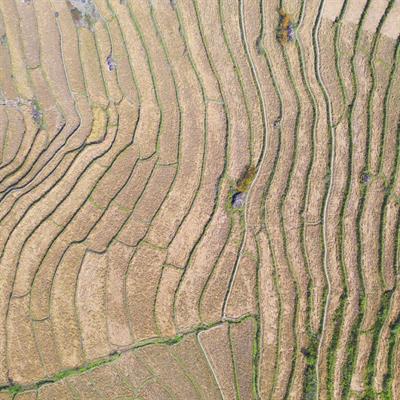
Keywords: sustainable farming, crop estimation, sensor technology, smart irrigation, water monitoring, Internet of Things (IoT), big data
Important note: All contributions to this Research Topic must be within the scope of the section and journal to which they are submitted, as defined in their mission statements. Frontiers reserves the right to guide an out-of-scope manuscript to a more suitable section or journal at any stage of peer review.
Shaanxi Normal University
Xi'an, China
Shoolini University
Solan, India
Agricultural University of Athens
Athens, Greece
University of Trás-os-Montes and Alto Douro
Vila Real, Portugal
Northeast Normal University
Changchun, China
