JL
jingsong li
Hebei Academy of Agriculture and Forestry Sciences (HAAFS)
Shijiazhuang, China
994
Total downloads
10k
Total views and downloads
Soil salinity is a global problem that greatly restricts agriculture production, and salt stress is one of the traditional hotspots in plant research. In the past decades, efforts have been made to understand the salt toxicity to plants, in both natural and controlled environments. However, there is an interaction effect between plants and soil, and the mechanistic understanding of plant-soil interaction under saline condition is not well known. For saline land restoration, it is increasingly important to understand how plants adapt to saline environments and, in turn, change the soil environment for vegetation flourishing. It is suggested that, for both halophytes and glycophytes, plant establishment may contribute to a positive feedback effect on the soil environment in saline ecosystems. Thus, the latest research on the molecular and physiological mechanisms of the interaction of plants and soil under saline conditions is essential to fill the existing knowledge gap.
The goal of this research topic is to comprehensively understand the mechanistic interaction effect between plants and soil under saline conditions. It mainly focuses on the role of plants in this interaction, including how plants respond to the saline environment (both for the natural and artificially altered environment), and how plants change soil environment, as well as the subsequent impacts. Specifically, plant molecular biology and biochemical pathways, root morphology, root exudates, soil microorganisms, and plant-induced changes in soil properties are all within scope. Those findings will contribute to clarifying plant functions and their feedback mechanisms in saline soils.
We welcome original research articles, reviews, and perspective pieces that provide novel mechanistic insights into these areas. Manuscripts should contribute to understanding the interaction between plants and soil under saline environments. Subject areas may include, but are not limited to:
1. The mechanism of plant physiological and morphological changes with soil salinity in a field environment;
2. Mechanisms of plant adaptation to heterogeneous soil salinity, with a focus on root regulation;
3. Mechanisms by which natural or artificial vegetation contributes to saline soil restoration;
4. New mechanistic information on root exudates and soil microecology in saline environments.
Please note that the following types of submissions will not be considered: soil research without mechanistic insights into vegetation, hydroponic experiments, and modelling studies or meta-analyses.
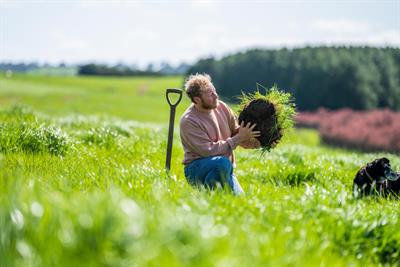
Keywords: salt stress, saline soil, plant physiology, root characteristics, rhizosphere, microorganism, soil property, crop production
Important note: All contributions to this Research Topic must be within the scope of the section and journal to which they are submitted, as defined in their mission statements. Frontiers reserves the right to guide an out-of-scope manuscript to a more suitable section or journal at any stage of peer review.
Hebei Academy of Agriculture and Forestry Sciences (HAAFS)
Shijiazhuang, China
Center for Agricultural Resources Research, Institute of Genetics and Developmental Biology, Chinese Academy of Sciences (CAS)
Shijiazhuang, China
Shandong Agricultural University
Taian, China
University of Karachi
Karachi, Pakistan
