MP
madhusmita panigrahy
Siksha O Anusandhan University
Bhubaneswar, India
3,407
Total downloads
22k
Total views and downloads
Submit your idea
Select the journal/section where you want your idea to be submitted:
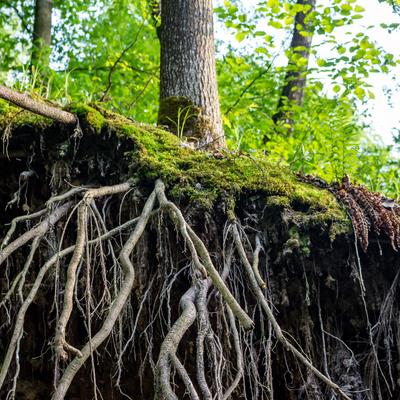
Roots have always been of importance as a significant contributing factor to plant's productivity. Root apex is supposed to be the brain of a plant, initially proposed by Charles Darwin with the "Root-brain hypothesis" in his book "Power of Movement in Plants" which ran into controversies and was subsequently ignored for nearly more than a century. Nevertheless, these concepts again got recent support due to the renaming of the transition zone as the "brain-like" command center in the past few decades. Researches in plant roots are mainly woven around root structure, growth, association, nutrient acquisition, and stress response. However, a lot remains to be discovered about signaling in roots.
Recent advances in photomorphogenesis signals, light perception, temperature signaling, stress response, root circadian clock and its operation mechanism, integration of light and hormone signals for root architecture, and defense mechanisms in roots are potential areas of current research to understand root biology. Apart from these, mobile signals such as proteins, RNA, sucrose, jasmonic acid, and circadian mobile signals like ELF4 from shoot to root indicate new horizons to explore in root studies. The possibility of the existence of noble photoreceptors in the infrared (IR), near IR, or ultra-violet region of the spectrum in the roots required further research. Similarly, signaling mechanisms in neighbor root detection (interspecific or within species) plant-microbe interaction bears agronomic importance to improve nutrient uptake.
Following research areas inter-wound among light signaling, circadian clock, primary and secondary metabolites, hormone pathways, microbe interaction, and stress tolerance for understanding root biology including root growth, development, and defense are the main focus of the research topic
• Sensing and signaling of abiotic factors such as light, temperature, humidity, gravity, etc. in roots
• Advances in Circadian clock organizations and operations in roots
• Advances in clock and hormone signaling for stress tolerance in roots
• Advances in meristematic cell development in root response to abiotic and biotic stresses
• Advances in root-microbe interaction, association and signaling
• Genetics and epigenetic mobile signals in roots
• Root-shoot, root-root interaction, and signaling for plant growth, development, and defense
• Signaling mechanisms for efficient nutrient uptake
• Involvement of roots in improving plant reproductive ability
• Molecular approach for a better understanding of root formation
This Research Topic accepts the following article types, unless otherwise specified in the Research Topic description:
Articles that are accepted for publication by our external editors following rigorous peer review incur a publishing fee charged to Authors, institutions, or funders.
Keywords: growth, development, circadian clock, photomorphogenesis, signaling, symbiosis, temperature, hormone, association, root-shoot, gravitropic, exudate, metabolite, Exudates, Metabolites
Important note: All contributions to this Research Topic must be within the scope of the section and journal to which they are submitted, as defined in their mission statements. Frontiers reserves the right to guide an out-of-scope manuscript to a more suitable section or journal at any stage of peer review.
Siksha O Anusandhan University
Bhubaneswar, India
National Institute of Science Education and Research (NISER)
Bhubaneswar, India
National Institute of Science Education and Research (NISER)
Bhubaneswar, India
University of Tuscia
Viterbo, Italy
Department of Biotechnology and Life Sciences, University of Insubria
Varese, Italy
Manuscripts can be submitted to this Research Topic via the main journal or any other participating journal.
Submit your idea
Select the journal/section where you want your idea to be submitted:
