NM
nuno mariz-ponte
LAQV, REQUIMTE, Department of Chemical Sciences–Applied Chemistry Lab, Faculty of Pharmacy, University of Porto
Porto, Portugal
1,400
Total views and downloads
Submit your idea
Select the journal/section where you want your idea to be submitted:
Manuscript Submission Deadline 28 February 2026
This Research Topic is currently accepting articles.
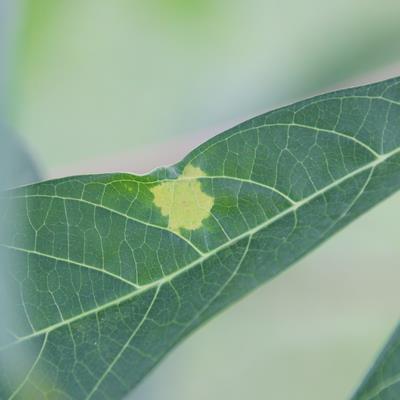
Plant diseases continue to pose a significant threat to global agriculture, leading to substantial losses in crop yield and quality. As the global population rises and climate change alters environmental conditions, the urgency for sustainable and innovative strategies to manage plant diseases intensifies. A deeper understanding of host-pathogen interactions presents a critical opportunity to develop effective, durable plant protection approaches.
These interactions are governed by complex molecular and ecological mechanisms, which underlie both disease progression and resistance in plants. Advances in research have highlighted a variety of innovative control strategies, including the use of peptides, biopolymers, plant specialized metabolites, microbial compounds, RNA interference (RNAi), essential oils, nanoparticles, and biological control agents (BCAs). In parallel, plant breeding—enhanced by new breeding techniques—offers a promising avenue for developing crops with increased resistance or tolerance to biotic stresses.
Although many of these strategies have demonstrated effectiveness in both in vitro and in vivo settings, their broader application is often limited by insufficient assessments of environmental impact and toxicological safety. This disconnect underscores the need for integrative research that bridges laboratory innovation with real-world implementation.
This Research Topic aims to connect cutting-edge developments in plant pathology, molecular biology, and agricultural technology. By focusing on host-pathogen interactions, the collection seeks to uncover novel protective molecules and reveal the underlying mechanisms driving plant resistance.
Emphasizing a multidisciplinary approach, the topic incorporates state-of-the-art technologies such as CRISPR-based gene editing, OMICs tools including metabolomics and next-generation sequencing (NGS), and precision agriculture techniques alongside emerging biocontrol solutions. Through elucidating the mechanisms of action and evaluating scalability and environmental impact, this collection aspires to provide transformative insights.
Ultimately, it strives to promote practical, sustainable strategies that address the urgent challenges of plant disease management and contribute to building resilient agricultural systems.
We welcome submissions on, but not limited to, the below:
- Investigate molecular and ecological mechanisms of host-pathogen interactions
- Identify and characterize novel plant-protective compounds and resistance traits
- Explore sustainable disease control strategies, including biological agents and natural products
- Evaluate the environmental and toxicological impact of innovative plant protection methods
- Integrate advanced tools such as CRISPR, OMICs (e.g., metabolomics, transcriptomics), and precision agriculture
- Demonstrate the scalability and real-world application of promising plant disease management solutions
This Research Topic accepts the following article types, unless otherwise specified in the Research Topic description:
Articles that are accepted for publication by our external editors following rigorous peer review incur a publishing fee charged to Authors, institutions, or funders.
Keywords: host-pathogen interactions, plant disease management, molecular plant immunity, sustainable agriculture, biocontrol strategies
Important note: All contributions to this Research Topic must be within the scope of the section and journal to which they are submitted, as defined in their mission statements. Frontiers reserves the right to guide an out-of-scope manuscript to a more suitable section or journal at any stage of peer review.
LAQV, REQUIMTE, Department of Chemical Sciences–Applied Chemistry Lab, Faculty of Pharmacy, University of Porto
Porto, Portugal
Department of Agricultural Engineering, Federal University of Viçosa
Viçosa, Brazil
University of Porto
Porto, Portugal
The Franciszek Górski Institute of Plant Physiology, Polish Academy of Sciences
Krakow, Poland
Manuscripts can be submitted to this Research Topic via the main journal or any other participating journal.
Submit your idea
Select the journal/section where you want your idea to be submitted:
