AI
alejandro isabel luna-maldonado
Autonomous University of Nuevo León
San Nicolás de los Garza, Mexico
7,191
Total downloads
59k
Total views and downloads
Submit your idea
Select the journal/section where you want your idea to be submitted:
Plant phenotyping is the process of systematically measuring and analyzing plant characteristics and traits. In the context of agriculture, phenotyping plays a crucial role in improving crop productivity, resilience, and quality. With advancements in technologies such as high-throughput phenotyping, remote sensing, genomics, and artificial intelligence, the potential for plant phenotyping to revolutionize agricultural practices has never been greater. This research topic calls for innovative studies that focus on the integration of novel techniques and their application in modern plant breeding, precision agriculture, and sustainable farming practices.
Key Areas of Interest: We invite contributions in, but not limited to, the following areas of research:
1. Technological Advancements in Phenotyping:
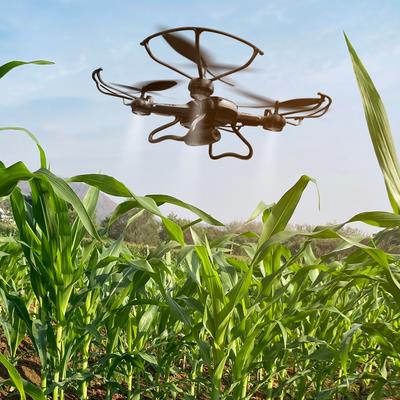
• Development and application of high-throughput phenotyping platforms (e.g., imaging systems, drones, robotics).
• Use of non-invasive techniques such as hyperspectral imaging, UAV-based remote sensing, and LiDAR for phenotypic data collection.
• Integration of machine learning and AI to enhance data analysis and interpretation in plant phenotyping.
2. Genetics and Genomics Integration with Phenotyping:
• Integrating phenotypic data with genomic data to identify markers linked to desirable traits in crops.
• Phenomic approaches in plant breeding for accelerating the selection of traits like disease resistance, drought tolerance, and high yield.
3. Phenotyping for Crop Stress and Resilience:
• Development of tools and methods for assessing plant responses to biotic (e.g., pest resistance) and abiotic stress (e.g., drought, salinity, heat).
• Evaluating genetic and environmental interactions influencing plant stress tolerance.
4. Precision Agriculture and Crop Management:
• Utilizing phenotypic data for site-specific management practices such as variable rate irrigation, fertilization, and pest control.
• Application of phenotyping in the management of soil health, water use efficiency, and sustainable farming practices.
5. Plant Phenotyping for Climate Change Adaptation:
• Exploring phenotyping techniques to identify crops with enhanced resilience to the changing climate.
• Predicting how climate variables such as temperature fluctuations and rainfall patterns will affect crop phenotypes.
6. Data Standardization, Integration, and Interpretation:
• Developing standardized methodologies for data collection and sharing across research communities.
• Effective data integration from multiple sources (e.g., genomics, remote sensing, field trials) for comprehensive phenotype assessment.
7. Automated Phenotyping Systems:
• Design and implementation of autonomous systems for large-scale phenotyping in both controlled and field environments.
• Real-time data acquisition and processing for continuous monitoring of plant growth and health.
8. Ethical, Environmental, and Socio-Economic Impacts:
• Assessing the ethical implications of new phenotyping technologies in agricultural settings.
• Exploring the socio-economic benefits and challenges associated with adopting advanced phenotyping tools in developing countries.
The integration of advanced plant phenotyping techniques holds the promise of transforming agriculture by accelerating crop improvement, ensuring sustainable production, and helping farmers adapt to environmental challenges. This research topic seeks to foster collaboration among researchers, technologists, breeders, and agronomists to push the boundaries of plant phenotyping in agriculture. Contributions that explore innovative solutions, new technologies, and their practical applications are highly encouraged.
We welcome original research articles, reviews, and case studies that address these challenges and offer new insights into the future of plant phenotyping for agriculture.
This Research Topic accepts the following article types, unless otherwise specified in the Research Topic description:
Articles that are accepted for publication by our external editors following rigorous peer review incur a publishing fee charged to Authors, institutions, or funders.
Keywords: phenotyping technologies, precision agriculture, high-throughput imaging, plant stress resilience, AI-driven analysis
Important note: All contributions to this Research Topic must be within the scope of the section and journal to which they are submitted, as defined in their mission statements. Frontiers reserves the right to guide an out-of-scope manuscript to a more suitable section or journal at any stage of peer review.
Manuscripts can be submitted to this Research Topic via the main journal or any other participating journal.
Submit your idea
Select the journal/section where you want your idea to be submitted:
