XY
xing yang
Anhui Science and Technology University
Chuzhou, China
607
Total downloads
17k
Total views and downloads
Submit your idea
You will be redirected to our submission process.
Manuscript Submission Deadline 16 February 2026
This Research Topic is currently accepting articles.
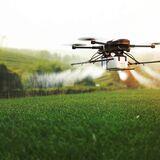
Plant pests and diseases are responsible for major global crop losses, posing serious threats to food security and sustainable agriculture. Traditional detection methods are often slow, labor-intensive, and lack precision, while traditional pest control methods depend heavily on chemical inputs, adversely impacting ecosystems and increasing resistance. Emerging smart technologies—combining AI, advanced sensors, robotics, and IoT— are reshaping plant protection approaches. AI-driven imaging and machine learning now offer rapid and accurate identification of pests and diseases, and autonomous machinery enables precise interventions. These innovations reduce pesticide reliance, lower environmental impact, and enhance resource efficiency. Despite these advances, challenges remain in terms of scalability, real-world deployment, and farmer adoption. This Research Topic highlights cutting-edge advancements in intelligent detection and treatment systems, fostering interdisciplinary research to bridge the gap between technology development and sustainable field applications.
This Research Topic aims to explore integrative solutions that merge smart detection technologies with precision plant protection machinery. Specific areas of interest include enhancing AI model robustness for diverse field conditions, optimizing sensor-based early warning systems, and developing cost-effective autonomous machinery for small-scale farms. By compiling advances in AI, robotics, and agroecology, we aim to accelerate the transition from reactive to proactive, data-driven pest and disease management—minimizing chemical inputs while maximizing crop productivity and sustainability.
We welcome original research, reviews, and case studies on:
• AI/ML models for pest/disease detection (e.g., deep learning, transfer learning, UAV/drone-based imaging).
• Sensor technologies (hyperspectral, multispectral, LiDAR, IoT-enabled devices) for real-time monitoring.
• Smart machinery (autonomous sprayers, robotic harvesters, AI-guided weeding systems) with closed-loop detection-to-action workflows.
• Decision-support tools integrating AI predictions with precision agriculture practices.
• Sustainability assessments of smart technologies (e.g., reduced pesticide use, energy efficiency, socio-economic impacts).
• Scalable solutions for resource-limited settings (e.g., low-cost sensors, mobile apps, farmer-friendly interfaces).
This Research Topic accepts the following article types, unless otherwise specified in the Research Topic description:
Articles that are accepted for publication by our external editors following rigorous peer review incur a publishing fee charged to Authors, institutions, or funders.
Keywords: Sustainable pest management, Early disease detection, AI-driven diagnostics, Precision spraying, Plant protection machinery, Crop health monitoring
Important note: All contributions to this Research Topic must be within the scope of the section and journal to which they are submitted, as defined in their mission statements. Frontiers reserves the right to guide an out-of-scope manuscript to a more suitable section or journal at any stage of peer review.
Manuscripts can be submitted to this Research Topic via the main journal or any other participating journal.
Submit your idea
You will be redirected to our submission process.
